Monday, March 9, 2026 78° Today's Paper
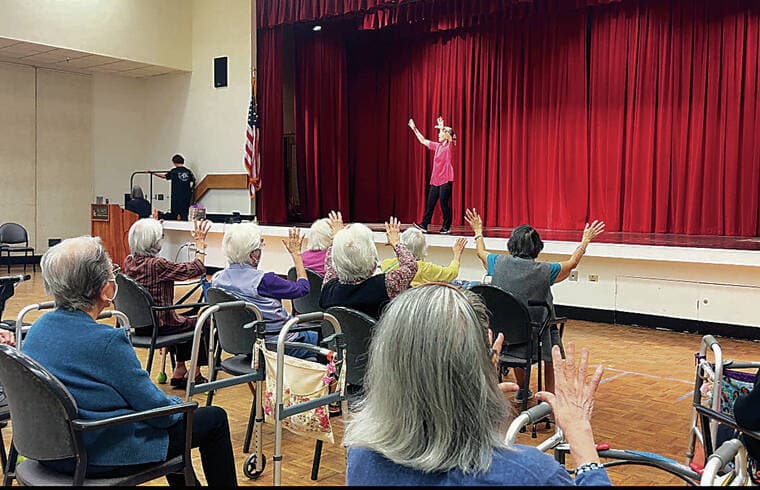
To expand geriatric care, JABSOM has been working with clinics and community organizations to promote “age-friendly” health systems. JABSOM students interact with Kuakini Home residents and emphasize staying active.
Select an option below to continue reading this premium story.
Already a Honolulu Star-Advertiser subscriber? Log in now to continue reading.
From as low as $12.95 /mo.
Hawaii has the longest life expectancy in the United States — a point of pride that physicians say is also creating an urgent challenge.
As the state’s population ages faster than the national average, doctors say the health care system is not structured to meet the growing demand for geriatric care, leaving kupuna facing long waits for appointments and physicians struggling with overwhelming caseloads.
“We have a higher percentage of people over the age of 65, but we also have a lot of what we call ‘super-agers’ — people in their 80s, 90s and beyond,” said Kamal Masaki, chair of the Department of Geriatric Medicine at the University of Hawaii John A. Burns School of Medicine. “Our growth rate is higher than the national average … We know the aging population in Hawaii is really going to continue expanding over the next few decades.”
At the same time, Masaki said, the state faces shortages across nearly every part of elder care.
“It’s not just physicians,” she said. “It’s nursing, nurse practitioners, social workers, pharmacists — even the front-line staff like certified nursing assistants. The entire workforce that takes care of older patients is short.”
The 2025 Hawaii Physician Workforce Report suggests the state actually may have more geriatric specialists than needed, estimating a statewide demand of 32.4 full-time geriatrician positions compared with a supply of 46.7. On Oahu, for example, demand is listed at 22.8 with a supply of 40.9.
Stay in touch with breaking news, as it happens, conveniently in your email inbox. It's FREE!
But physicians working in the field say those numbers don’t reflect the reality patients face.
Masaki said the estimates rely heavily on national modeling and do not capture the state’s unique demographic trends.
“Geriatrics is a critical shortage specialty across the United States,” she said, adding that the shortage is expected to worsen as the number of geriatricians decreases each year while the population continues to age.
Even on Oahu, she said, patients often wait months for appointments.
“The number of geriatricians is not enough to keep up with demand,” she said.
One of the state’s main efforts to build the workforce is the geriatric fellowship at JABSOM, one of the largest programs of its kind in the country.
The fellowship has seven funded training positions each year, and nearly half of its graduates over the past decade have stayed to practice in Hawaii or the Pacific.
Even so, shortages remain severe — particularly outside Oahu.
On Hawaii island, for example, there are only three practicing geriatricians. Kauai has three. Maui currently has none.
One of the physicians serving Hawaii island is Kaimana Kalei, a Hilo-born doctor who practices at the Veterans Affairs clinic and chose geriatrics after helping care for his grandmother.
“I wanted to give back to my community,” he said. “Taking care of kupuna is important in our culture.”
But the demand is overwhelming. Kalei said he manages about 900 patients — more than half of whom are kupuna.
Even though he specializes in geriatrics, he is primarily working as a primary care physician.