PHILADELPHIA — Zack Wheeler’s return to the Philadelphia Phillies rotation faces renewed scrutiny as his fastball velocity remains stubbornly below pre-injury levels, while the team’s bullpen strategy evolves and Jake Burger of the Texas Rangers experiments with unconventional vision aids to gain a competitive edge in notoriously dark stadiums like Houston’s Minute Maid Park. Wheeler, recovering from venous thoracic outlet syndrome and a subsequent 10-pound weight loss, saw his four-seam fastball average just 92.7 mph in his second Triple-A rehab start—down from 96.1 mph in 2023 and well below the velocity that once made him a two-time All-Star. Meanwhile, Burger, who boasts 20/20 vision, is testing amber-tinted contacts during batting practice to better track spin in low-light conditions, a tactic borrowed from other hitters who’ve struggled in dome environments.
Key Takeaways: Wheeler’s Struggles, Burger’s Vision Experiment, and Bullpen Shakeups
- Zack Wheeler’s fastball velocity remains 3+ mph below his 2023 average of 96.1 mph, raising concerns about his effectiveness upon return.
- Jake Burger is testing amber-tinted contacts during batting practice to improve ball-tracking in dark, closed-roof stadiums like Houston’s Minute Maid Park.
- The Phillies’ bullpen is in flux, with manager Rob Thomson emphasizing flexibility and high-leverage roles for relievers like Jakob Junis.
- Pitching adjustments are in focus across MLB, from Simeon Woods Richardson ditching his curveball for a splitter to Bryce Elder adding a cutter.
- Wheeler is expected to make at least one more rehab start before a potential return, though his struggles with strike-throwing persist.
Wheeler’s Rehab: Velocity Lags, Strike Command Questioned
A Fastball That’s Lost Its Zip
Zack Wheeler’s rehab assignment with the Lehigh Valley IronPigs has been underwhelming, to say the least. In six innings across two starts, Wheeler’s four-seam fastball has averaged just 92.7–93.3 mph, a stark decline from his 2023 average of 96.1 mph and his career norm. His fastball topped out at just 93.9 mph in his most recent outing—a far cry from the elite velocity that once made him a feared ace. The drop-off is particularly alarming given the physical toll of his injury: a blood clot leading to venous thoracic outlet syndrome forced Wheeler to shed 10 pounds during recovery, leaving him at roughly 195 pounds—10 below his typical pitching weight. Wheeler’s manager, Rob Thomson, has downplayed concerns, noting that the right-hander is still working through his conditioning. ‘We’re not there yet,’ Thomson said after Wheeler’s second rehab start. ‘We’ll see how he responds in the next outing.’
Strike-Throwing Woes Add to the Pressure
Beyond the velocity drop, Wheeler’s command has been erratic. In his most recent appearance, he threw just 26 of 49 pitches for strikes, a troubling trend for a pitcher whose strike-throwing was once a hallmark. His fastball generated only one swing-and-miss out of 35 four-seamers, a stark contrast to his 2023 performance when his four-seamer posted a 12.5% whiff rate. The Phillies, who traded for Wheeler in 2021 expecting him to anchor their rotation, now face a dilemma: Does Wheeler need more minor-league tune-ups, or will his struggles continue upon a return to the majors? Analysts like FanGraphs’ lead writer for the Phillies beat have sounded alarms, suggesting two potential outcomes—either Wheeler gets injured again or he struggles worse than Taijuan Walker, the pitcher he’s slated to replace. Wheeler is scheduled for at least one more rehab start before a potential activation, with a bullpen session planned for Sunday or Monday.
Jake Burger’s Vision Experiment: A Hitters’ Hack for Dark Stadiums
Texas Rangers third baseman Jake Burger isn’t just tinkering with his swing this spring—he’s experimenting with a radical visual aid to combat the challenges of playing in some of MLB’s darkest stadiums. Burger, who has 20/20 vision, has been testing amber-tinted contact lenses during batting practice to improve his ability to track spin in venues with limited lighting, particularly Houston’s Minute Maid Park and Seattle’s T-Mobile Park when the roof is closed. ‘Houston and Seattle, especially with the roof closed, it’s dark and I feel like I can’t pick up spin in those places,’ Burger explained. ‘I was like, “OK, let’s try and figure something out.” And I came up with these.’
‘Houston and Seattle, especially with the roof closed, it’s dark and I feel like I can’t pick up spin in those places. I was like, “OK, let’s try and figure something out.” And I came up with these.’
Burger received the contacts ahead of the Rangers’ exhibition games against the Royals on March 23–24 and has continued refining his technique in the batting cage and during fielding drills. Unlike sunglasses or amber-tinted Oakley glasses—which Burger rejected due to the nose piece interfering with his swing—the contacts offer a subtler solution. The brightening effect is designed to enhance contrast, helping hitters differentiate between fastballs, curveballs, and sliders in environments where lighting is already a disadvantage. While Burger hasn’t used them in game situations yet, the experiment reflects a growing trend among hitters to adopt unconventional tools to gain an edge. Other players, including former All-Stars like Joey Votto, have similarly explored vision aids or training regimens to combat the challenges of modern ballparks.
Bullpen Shakeups and Pitching Adjustments: The Phillies and Rangers in Flux
Phillies’ Manager Searches for Reliable Late-Inning Arms
The Philadelphia Phillies’ bullpen, a strength during their 2022 World Series run, is undergoing a period of transition as manager Rob Thomson looks to solidify roles for the stretch run. Thomson has made it clear that no reliever is guaranteed a high-leverage spot, emphasizing that performance will dictate usage. ‘I think it’s a conversation that we’ll have with the staff,’ Thomson said. ‘It’s six, seven games in. We still have a long way to go, but we need to get these guys right to get to where we want to get to. These are guys that we’re going to go with because we think they are good.’
‘I think it’s a conversation that we’ll have with the staff. It’s six, seven games in. We still have a long way to go, but we need to get these guys right to get to where we want to get to. These are guys that we’re going to go with because we think they are good.’
So far, Jakob Junis has emerged as the Phillies’ most trusted late-inning option, boasting the team’s highest leverage index (1.59 gLI), three saves or holds, and a 21% strikeout-to-walk rate. Junis’ sinker-slider combination has been particularly effective, generating ground balls and weak contact. However, Thomson’s comments suggest that roles remain fluid, with younger arms like Andrew Saalfrank and Seranthony Domínguez also in the mix for opportunities. The Phillies, who entered the season with World Series aspirations, can’t afford another bullpen meltdown like the one that derailed their 2023 campaign.
Pitching Arsenal Tweaks: From Richardson’s Splitter to Elder’s Cutter
Across the league, pitchers are fine-tuning their arsenals in an effort to stay ahead of hitters. Simeon Woods Richardson, the 23-year-old Minnesota Twins starter, has made one of the most drastic changes: nearly phasing out his curveball in favor of an increased splitter usage. Richardson, who lacks the elite velocity of many of his peers, has long relied on deception to generate whiffs. His curveball, historically his secondary pitch, posted a career 7% swinging-strike rate and a 37 Stuff+ rating, ranking in the bottom tier among MLB curveballs. By doubling down on his splitter—a pitch that induces weak contact and chases hitters out of the zone—Richardson is prioritizing efficiency over flash. ‘That’s pitching,’ Richardson said. ‘At the end of the day, that’s what I grew up watching. I don’t have 100 [miles per hour]. So you’ve got to get creative in different ways.’
‘That’s pitching. At the end of the day, that’s what I grew up watching. I don’t have 100 [miles per hour]. So you’ve got to get creative in different ways.’
Meanwhile, Atlanta Braves starter Bryce Elder has added a cutter to his repertoire, a pitch famously mastered by Greg Maddux. Elder initially hesitated, fearing the cutter would disrupt his slider, which he considers his ‘swing-and-miss’ pitch. But after consulting with Maddux—a former Braves pitching coach—Elder embraced the change. ‘Oh, you’re a swing-and-miss pitcher?’ Maddux quipped, highlighting the irony of a pitcher who relies on a pitch that generates whiffs questioning the value of a pitch that induces weak contact. Elder’s cutter has added a new dimension to his game, giving him a four-pitch mix that keeps hitters guessing.
Not to be outdone, Baltimore Orioles prospect Brandon Young has introduced a sinker to his arsenal this spring, a pitch that FanGraphs’ STUPH models grade as his best offering (56 botOvr, 127 Pitching+). Young threw the sinker 12% of the time in his most recent start against the White Sox, generating weak contact and inducing a 1-2-3 inning. ‘It’s just a little something different, another heater that I can throw to both sides,’ Young said. ‘Puts a little wrinkle in. Two-seam, sinker, I don’t even know what it is, really, but just something different to keep them off. It’s been good to me.’
‘It’s just a little something different, another heater that I can throw to both sides. Puts a little wrinkle in. Two-seam, sinker, I don’t even know what it is, really, but just something different to keep them off. It’s been good to me.’
Oneil Cruz’s Left-Handed BP Pitcher: A New Weapon for the Pirates’ Slugger
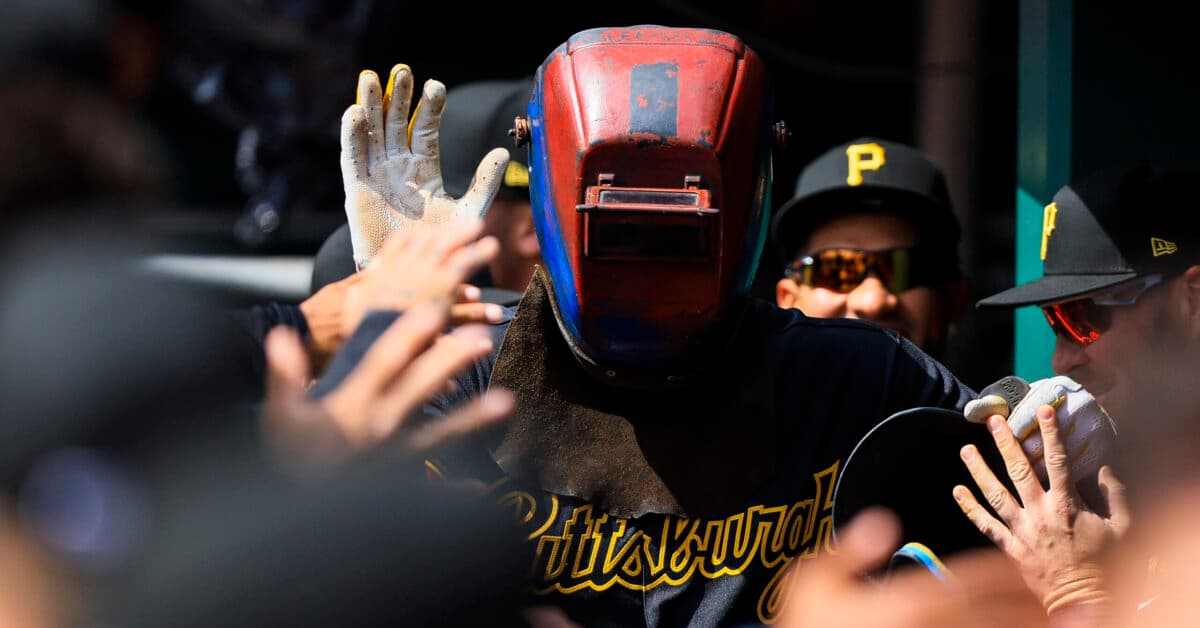
Pittsburgh Pirates superstar Oneil Cruz, known for his prodigious power and platoon splits, has taken an unconventional approach to addressing his struggles against left-handed pitching. Cruz, who batted just .200 with a .600 OPS against southpaws in 2023, hired a left-handed batting-practice pitcher in the Dominican Republic this offseason to help him better see breaking balls and changeups. The experiment reflects Cruz’s commitment to eliminating weaknesses from his game as the Pirates push for a playoff push. While Cruz’s power potential remains unmatched—he led MLB in average exit velocity (95.3 mph) in 2023—his platoon splits have been a glaring liability. By facing consistent left-handed pitching in BP, Cruz hopes to improve his recognition and timing against tougher matchups.
Why These Adjustments Matter: The Margins in a 162-Game Season
The tweaks and experiments unfolding this spring are more than just footnotes in the MLB season—they represent the relentless pursuit of competitive edges in a league where small improvements can translate to playoff berths. Wheeler’s velocity drop, for instance, isn’t just a mechanical issue; it’s a potential season-altering problem for a Phillies team that expects him to anchor a rotation competing for a World Series. Similarly, Burger’s vision experiment underscores how hitters are adapting to the league’s architectural shifts, with more stadiums incorporating retractable roofs and darker designs to enhance fan experience. Meanwhile, pitching adjustments like Richardson’s splitter and Elder’s cutter highlight the cat-and-mouse game between arms and bats, where a single pitch can be the difference between a strikeout and a game-tying home run.
For teams like the Phillies, who entered 2024 with championship aspirations, every detail matters. Wheeler’s health and performance will determine whether they’re buyers at the trade deadline or sellers. For Burger and Cruz, marginal gains in vision and timing could be the difference between a playoff push and another early exit. And for pitchers like Young and Richardson, the smallest tweak to their arsenal could mean the difference between a rotation spot and a trip to the minors.
What’s Next? Wheeler’s Timeline, Burger’s Game Debut, and More Pitching Experiments
The Phillies will closely monitor Wheeler’s progress in his next rehab start, scheduled for Wednesday against the IronPigs. If his velocity and command stabilize, he could rejoin the big-league club as soon as late April. However, given the severity of his injury and the 10-pound weight loss, a cautious approach is likely. The Rangers, meanwhile, will continue evaluating Burger’s amber contacts, with a potential game debut in the coming weeks if the lenses prove effective. For Richardson, Elder, and other pitchers making mechanical adjustments, the early-season results will determine whether their changes stick—or if they revert to their old ways.
Frequently Asked Questions
Frequently Asked Questions
- Why is Zack Wheeler’s fastball velocity down 3+ mph this season?
- Wheeler’s velocity decline stems from a combination of venous thoracic outlet syndrome, which caused a blood clot, and a 10-pound weight loss during recovery. His fastball averaged 96.1 mph in 2023 but sat at 92.7–93.3 mph in his first two rehab starts this spring.
- How do amber-tinted contacts help hitters like Jake Burger?
- Amber-tinted contacts enhance contrast in low-light conditions, helping hitters better track spin and differentiate between pitch types in dark stadiums like Houston’s Minute Maid Park. Burger, who has 20/20 vision, is testing them during batting practice before potential in-game use.
- What pitching adjustments are MLB teams making this season?
- Pitchers are experimenting with new pitches and tweaks to their arsenals, from Simeon Woods Richardson ditching his curveball for a splitter to Bryce Elder adding a cutter. These changes reflect a league-wide emphasis on deception and efficiency in an era of advanced scouting and analytics.