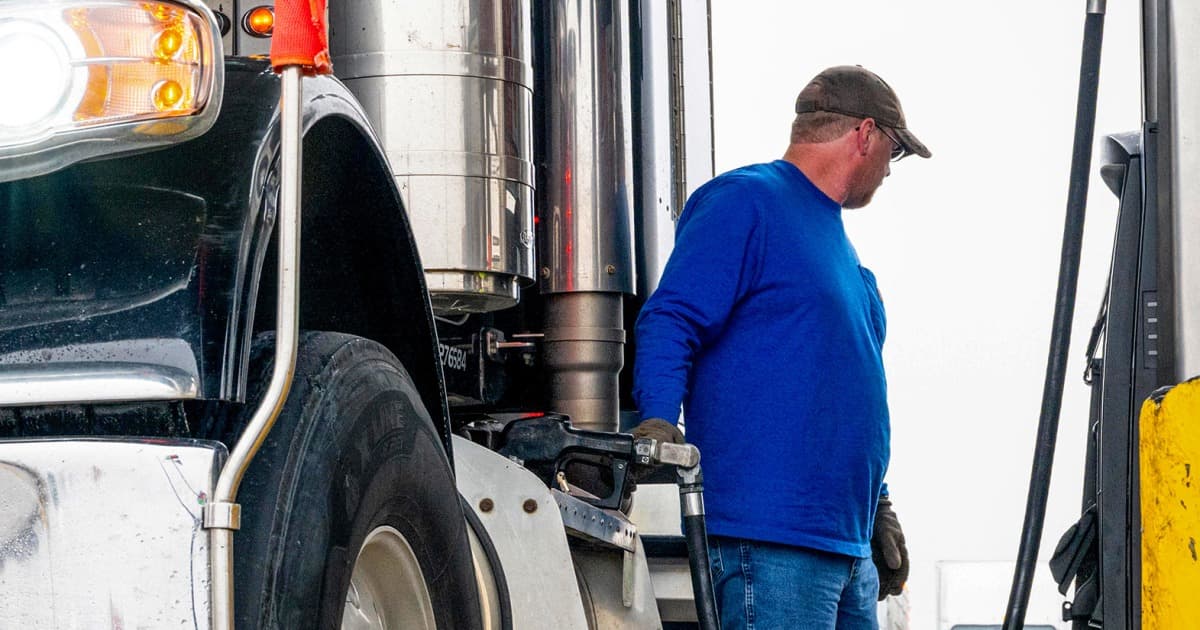
The national average price of diesel fuel surged to $5.04 per gallon on Tuesday, marking the first time since December 2022 that the critical industrial fuel has breached the $5 threshold. The sharp increase—up 38% from just $3.65 a month ago—reflects the escalating geopolitical fallout from Iran’s blockade of the Strait of Hormuz, a chokepoint for roughly 20% of the world’s seaborne oil shipments. While most Americans don’t drive diesel-powered vehicles, the fuel’s outsized role in powering global logistics means its soaring cost is already radiating through the economy, from grocery shelves to construction sites.
Why Diesel Prices Matter More Than Gasoline for the U.S. Economy
Diesel fuel, a heavier distillate of crude oil, is the backbone of the global supply chain. Unlike gasoline, which powers most passenger cars, diesel fuels the trucks that haul 70% of U.S. freight, the tractors that plant and harvest crops, and the ships and planes that move goods across continents. When diesel prices spike, the effects are indirect but pervasive: food prices climb as shipping costs rise, construction projects slow as material costs balloon, and airlines tack on fuel surcharges that lift airfare prices.
The Strait of Hormuz: A Global Oil Artery Under Siege
The Strait of Hormuz, a narrow waterway between Iran and Oman through which 21% of the world’s petroleum liquids pass, has become a flashpoint in the escalating tensions between the U.S.-led coalition and Iran. In April 2024, Iran seized or threatened multiple commercial vessels in the strait, including a Marshall Islands-flagged tanker and an Israeli-linked container ship. The disruptions have sent oil prices climbing by nearly 15% in the past month, with Brent crude futures breaching $90 per barrel—levels not seen since the 2022 Ukraine war. Analysts at Goldman Sachs now warn that if the conflict escalates, oil could surge to $100 per barrel, further straining an already fragile inflation landscape.
How Fertilizer and Food Prices Are Caught in the Crossfire
The Strait of Hormuz isn’t just a route for crude oil; it’s also a critical transit point for key agricultural inputs. About 30% of the world’s urea, sulfur, and ammonia—a primary ingredient in nitrogen-based fertilizers—pass through the strait annually. With shipments disrupted, fertilizer prices have jumped by 20% in the U.S. over the past two months, according to data from the U.S. Department of Agriculture. For farmers like John Boyd Jr., a fourth-generation Virginia soybean and corn grower, this double whammy of higher diesel and fertilizer costs is devastating.
“My tractor takes 100 gallons of diesel to fill up. At $5.04 a gallon, that’s $504 per tank—money I don’t have to spare. And with fertilizer up 20%, my input costs are through the roof. This isn’t just a bump in the road; it’s a direct threat to my family’s farm.”
Boyd’s experience is far from isolated. The American Farm Bureau Federation estimates that rising fuel and fertilizer costs could add $50,000 to the annual expenses of a mid-sized farm this year, pushing many operations to the brink of insolvency. The ripple effect is already visible in food prices: the U.S. Bureau of Labor Statistics reported a 4.1% year-over-year increase in food-at-home prices in March, with dairy and fresh produce seeing some of the steepest hikes.
From Farmers’ Fields to Supermarket Shelves: The Hidden Costs of Diesel Inflation
While the average American motorist may not notice the diesel price surge at the pump, the economic impact is quietly accumulating across the economy. Paul Dietrich, chief investment strategist at Wedbush Securities, warns that diesel inflation is a “stealth tax” on consumers—a regressive burden that disproportionately affects low- and middle-income households. Unlike income taxes, this levy doesn’t go toward public services; it simply drains disposable income.
The Domino Effect on Shipping, Airlines, and Construction
The logistics industry, which relies heavily on diesel, is already passing costs to consumers. FedEx and UPS have introduced surcharges for shipments to and from the Middle East, with rates climbing by up to 10% for some routes. Meanwhile, airlines like Delta and United have raised fuel surcharges on international flights, citing the 30% increase in jet fuel prices over the past month. The construction sector is also feeling the pinch: the Associated General Contractors of America reports that diesel fuel now accounts for 12% of total project costs in some regions, up from 8% a year ago.
Gasoline Prices Follow Diesel Higher, Squeezing Household Budgets
While diesel prices grab headlines for their role in supply chains, the average price of regular gasoline has also climbed sharply, reaching $3.79 per gallon on Tuesday—up 30 cents from a month ago. The increase is driven by the same geopolitical forces affecting diesel, as refineries divert more crude oil to diesel production, reducing gasoline output. For consumers already grappling with stubborn inflation in groceries and rent, the higher fuel prices are the latest blow to purchasing power. The Federal Reserve’s preferred inflation gauge, the Personal Consumption Expenditures (PCE) index, showed a 2.5% year-over-year rise in February, well above the central bank’s 2% target.
Can the Conflict in the Strait of Hormuz Be Resolved Before Prices Spike Further?
The escalation in the Strait of Hormuz is the latest chapter in a decades-long standoff between Iran and Western powers. The U.S. and Israel have accused Iran of using its naval forces to disrupt shipping lanes in retaliation for sanctions and perceived threats. While the Trump administration has downplayed the economic fallout, insisting that oil prices will plummet once hostilities cease, experts warn that the damage to global supply chains could linger. Maritime insurance rates for vessels transiting the strait have already doubled, and some shipping companies are rerouting cargo around Africa’s Cape of Good Hope—a detour that adds 10-14 days and thousands of dollars in fuel costs to voyages.
“The idea that this is temporary ignores the structural changes happening in global energy markets. Even if the immediate conflict subsides, the perception of risk in the Strait of Hormuz will keep oil prices elevated for months, if not years.”
Michael Adjemian, a professor at the University of Georgia’s Department of Agricultural and Applied Economics, notes that diesel price inflation is often gradual but persistent. “Diesel inflation doesn’t hit consumers in one dramatic spike,” he said. “It seeps into the economy slowly, appearing first in refrigerated foods, then in delivery fees, and eventually in every receipt at the grocery store. By the time it’s obvious, it’s already baked into the system.”
Key Takeaways: What Americans Need to Know About the Diesel Price Surge
- Diesel prices have surged 38% in one month to $5.04/gallon, driven by Iran’s blockade of the Strait of Hormuz.
- The rise threatens to inflate food, shipping, and construction costs, with food prices already up 4.1% year-over-year.
- Farmers and construction firms are among the hardest hit, facing soaring fuel and fertilizer costs.
- Gasoline prices have also climbed to $3.79/gallon, compounding inflation pressures on household budgets.
- Experts warn the economic fallout could last months, even if the conflict in the strait is resolved.
What’s Next for Energy Prices and the U.S. Economy?
The outlook for diesel and oil prices remains precarious. OPEC+ nations, which include Saudi Arabia and Russia, are expected to meet in early June to discuss production cuts aimed at stabilizing prices. However, any decision to reduce output could further tighten global oil supplies, pushing prices higher. Meanwhile, the U.S. Strategic Petroleum Reserve, which has been tapped multiple times in recent years, remains at historically low levels, limiting the government’s ability to curb price spikes. For now, economists are bracing for inflation to persist, with Goldman Sachs predicting that U.S. consumer prices could rise by 3.5% in 2024—well above the Fed’s target.
Frequently Asked Questions About Rising Diesel Prices
Frequently Asked Questions
- Why are diesel prices rising so much faster than gasoline prices?
- Diesel prices are more sensitive to geopolitical disruptions because the fuel is critical for global supply chains. The Strait of Hormuz blockade disproportionately affects diesel supply chains, as refineries prioritize gasoline production, reducing diesel output.
- How will higher diesel prices affect my grocery bill?
- Diesel is used to transport food from farms to stores. As fuel costs rise, shipping and refrigeration expenses increase, leading to higher prices for perishable goods like dairy, fresh produce, and meat. These costs often appear on shelves within 2-4 weeks of a fuel price spike.
- Can the Federal Reserve do anything to lower diesel prices?
- The Federal Reserve controls interest rates but has no direct influence over oil or diesel prices. However, higher fuel costs contribute to inflation, which may prompt the Fed to keep interest rates elevated to curb spending and price increases.