
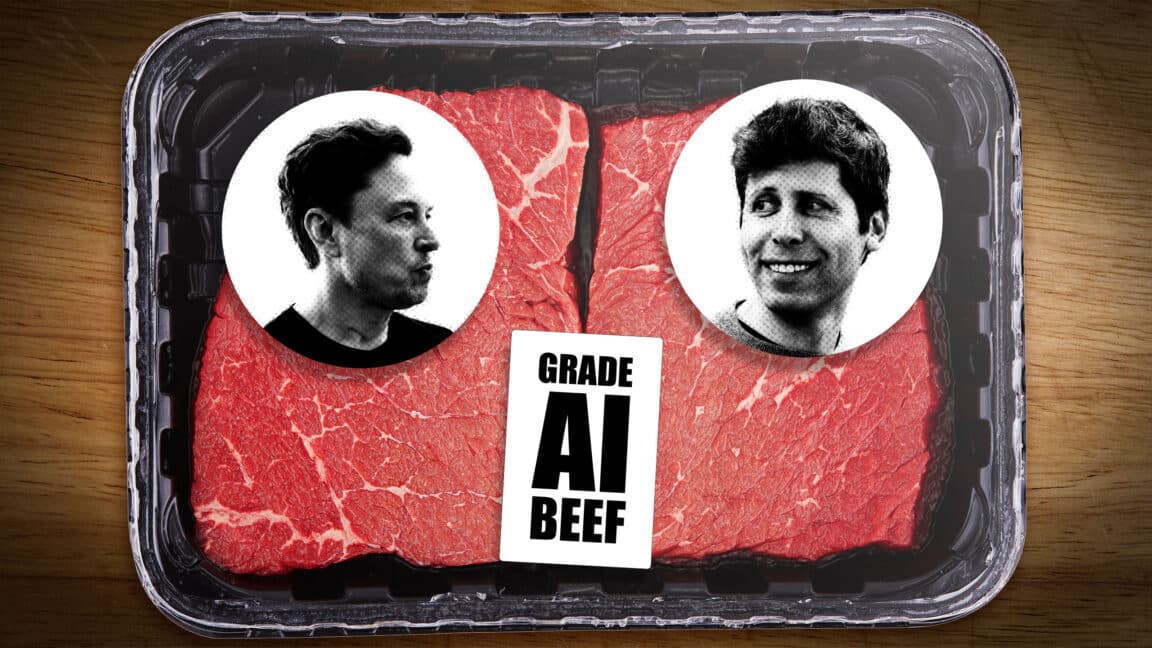
In a dramatic pivot to his legal offensive against OpenAI and its CEO Sam Altman, Elon Musk has filed a revised lawsuit proposal that would waive his right to any financial compensation—potentially totaling $134 billion—while demanding sweeping corporate reforms. The move, disclosed in a recent court filing, seeks to redirect the lawsuit’s focus from personal enrichment to what Musk describes as the preservation of OpenAI’s founding nonprofit mission. U.S. District Judge S. James Otero previously rejected Musk’s attempt to pursue damages under a continuous accrual theory, calling the legal argument an 'end run' around statutory limitations. Now, Musk’s legal team is attempting to salvage the case by redefining the remedies to align with California’s charitable trust laws, which they argue grant courts broad authority to intervene in cases of alleged mismanagement of nonprofit assets.
Musk’s Radical Legal Strategy: Waiving $134 Billion in Damages to Pursue Nonprofit Preservation
Elon Musk’s latest legal maneuver in his sprawling lawsuit against OpenAI represents one of the most unconventional strategies in modern corporate litigation. In a March filing, Musk’s attorneys proposed that he would forfeit any claim to financial damages—even those calculated to exceed $134 billion—if the court grants his primary demands: the removal of Sam Altman and other key executives from OpenAI’s board, the reversal of the company’s 2019 restructuring into a capped-for-profit entity, and the complete unwinding of what Musk alleges is a systematic conversion of OpenAI’s nonprofit resources into private, for-profit interests. The filing explicitly states that Musk’s goal is 'to prevent the subordination of a public charity—one he co-founded and for which he was the primary supporter during its formative years—to private, for-profit interests.' This marks a stark shift from his earlier allegations of breach of contract and fraud, which primarily sought monetary damages.
The Financial Stakes: Why $134 Billion Looms Over the Case
The figure of $134 billion cited in Musk’s filings does not represent a direct monetary claim but rather the estimated value of OpenAI’s profits since its 2019 restructuring into a hybrid nonprofit-for-profit model. According to court documents, Musk’s expert financial analysts project that OpenAI’s for-profit ventures—including its partnerships with Microsoft and other tech giants—have generated approximately $134 billion in cumulative revenue over the past five years. Musk’s attorneys argue that these profits, which they contend were derived from the misuse of OpenAI’s nonprofit assets, should be returned to the charity under California’s charitable trust laws. Critics, however, question the legal feasibility of such a remedy, noting that OpenAI’s for-profit entities operate as separate corporate structures with their own funding and revenue streams.
The remedies Musk intends to seek are strictly tied to his purpose in bringing this lawsuit: to prevent the subordination of a public charity—one he co-founded and for which he was the primary supporter during its formative years—to private, for-profit interests.
OpenAI Responds: Lawsuit is ‘Baseless’ and a Distraction from Mission
OpenAI has forcefully rejected Musk’s revised legal strategy, calling the lawsuit 'baseless' and an attempt to undermine the organization’s progress in artificial intelligence development. In a public statement, OpenAI spokesperson Hannah Wong stated that the lawsuit 'distracts from our mission to ensure that artificial general intelligence benefits all of humanity.' The organization’s legal team has argued that Musk’s claims misrepresent OpenAI’s corporate structure, which was legally approved by California’s Attorney General in 2019. OpenAI’s restructuring allowed it to form a for-profit subsidiary, OpenAI Global, LLC, which operates under strict governance agreements to ensure that any profits are reinvested in the nonprofit’s mission. 'Elon’s lawsuit ignores the fact that OpenAI’s nonprofit and for-profit entities have operated in full compliance with California law,' Wong said. The trial, which is expected to begin later this month, will test these competing narratives in front of a jury.
The Core Allegations: Fraud, Breach of Trust, and the ‘Wealth Machine’ Accusation
At the heart of Musk’s lawsuit are allegations that OpenAI’s leadership, including CEO Sam Altman and former president Greg Brockman, made false promises to donors, employees, and the public about the organization’s nonprofit status. Musk claims that these leaders solicited 'donations, labor, and public goodwill under solemn promises that OpenAI would operate as a nonprofit for the benefit of humanity,' only to later convert those assets 'into a wealth machine for themselves, Microsoft, and Silicon Valley insiders.' These allegations have gained traction beyond Musk’s lawsuit; a recent *New Yorker* investigation into Altman’s leadership cited Musk’s claims as part of a broader critique of OpenAI’s governance. Musk’s filings accuse Altman of engaging in 'self-dealing' and violating fiduciary duties by prioritizing profits over the nonprofit’s original mission.
The Role of California’s Charitable Trust Laws
Musk’s legal team is leaning heavily on California’s charitable trust statutes to justify the extreme remedies he is seeking. Under California law, specifically the Uniform Supervision of Trustees for Charitable Purposes Act (Government Code § 17200 et seq.), courts have broad equitable authority to remedy breaches of charitable trust. Musk’s attorneys cite a section of the statute that allows a plaintiff with standing to seek injunctions, damages, or other remedies for such breaches. However, legal experts note that the statute’s language is broad and has rarely been tested in cases involving modern tech corporations like OpenAI. 'The statute is designed to prevent the misuse of charitable assets, but it’s unclear how it applies to a company like OpenAI, which operates as a hybrid nonprofit with for-profit subsidiaries,' said Sarah Johnson, a nonprofit law professor at Stanford University. The outcome of Musk’s case could set a precedent for how charitable trust laws are applied to tech startups that blend nonprofit and for-profit models.
What’s at Stake: The Future of OpenAI’s Nonprofit Mission
The lawsuit raises critical questions about the future of OpenAI’s governance and its commitment to its nonprofit roots. Founded in 2015 by Musk, Altman, Brockman, and others, OpenAI was established as a nonprofit research lab with the mission of ensuring that artificial intelligence is developed in a safe and beneficial manner for humanity. In 2019, the organization restructured to allow a capped-for-profit entity, OpenAI Global, LLC, to raise capital while maintaining its nonprofit mission. This model has allowed OpenAI to attract billions in investment from Microsoft and other backers, fueling its rapid growth into one of the world’s most influential AI labs. However, critics like Musk argue that this restructuring has diluted the nonprofit’s original purpose, enabling Altman and his team to prioritize profit-driven ventures, such as the development of advanced AI models like GPT-4, over broader public benefit initiatives. The lawsuit could force OpenAI to revert to a fully nonprofit structure or face significant legal and reputational consequences.
Legal Experts Weigh In: Is Musk’s Strategy a Long Shot or a Bold Precedent?
Legal scholars are divided over the merits of Musk’s revised legal strategy. Some argue that his attempt to waive damages in favor of structural reforms is a creative but risky approach that could backfire if the court finds his allegations insufficient. 'Musk is essentially saying, ‘I don’t want your money; I want your company to change,’ which is unusual but not unheard of in cases where plaintiffs seek injunctive relief,' said David Hoffman, a corporate law professor at the University of Pennsylvania. Others, however, question whether Musk has standing to bring a charitable trust claim, given that he resigned from OpenAI’s board in 2018 and no longer holds a formal role in the organization. 'Standing is a major hurdle here,' said Lisa Fairfax, a law professor at George Washington University. 'Musk will need to prove that he has a direct interest in the nonprofit’s assets, which could be difficult given his departure from the board.' The trial’s outcome may hinge on how the jury interprets California’s charitable trust laws and Musk’s motivations for pursuing the case.
Key Takeaways: What This Lawsuit Means for OpenAI, AI Ethics, and Nonprofit Governance
- Elon Musk has proposed waiving up to $134 billion in potential damages to focus his lawsuit on restructuring OpenAI back into a fully nonprofit entity.
- OpenAI denies wrongdoing, arguing that its hybrid nonprofit-for-profit model complies with California law and its original mission.
- The lawsuit hinges on California’s charitable trust statutes, which grant courts broad authority to remedy breaches of nonprofit governance.
- Legal experts debate whether Musk has standing to bring the case, given his resignation from OpenAI’s board in 2018.
- The trial, expected to begin this month, could set a precedent for how tech nonprofits balance profit-driven ventures with their original public benefit missions.
Broader Implications: Could This Case Redefine Nonprofit Governance in Silicon Valley?
Beyond the specifics of the OpenAI lawsuit, Musk’s case has sparked broader conversations about the governance of tech nonprofits and the ethical implications of blending nonprofit missions with for-profit ambitions. OpenAI is not alone in this model; other high-profile organizations, such as the Chan Zuckerberg Initiative and Stripe’s nonprofit arm, have adopted similar structures to attract investment while maintaining a public benefit focus. However, Musk’s lawsuit raises questions about whether such models inherently create conflicts of interest or enable mission drift. 'This case could force a reckoning for the tech industry’s approach to nonprofit governance,' said Vivek Wadhwa, a technology and policy expert at Harvard’s Kennedy School. 'If the court sides with Musk, it could embolden other stakeholders to challenge the governance of hybrid nonprofits, leading to increased scrutiny and potential reforms. If it sides with OpenAI, it could validate the hybrid model and encourage more tech leaders to adopt it.'
What’s Next: Trial Timeline and Potential Outcomes
The lawsuit is expected to go to trial later this month, with both sides preparing for a contentious legal battle. OpenAI has filed motions to dismiss Musk’s claims, arguing that his allegations are legally insufficient and that his proposed remedies are disproportionate. Meanwhile, Musk’s legal team is likely to present evidence of alleged misconduct by OpenAI’s leadership, including internal communications and financial records that they claim demonstrate a pattern of self-dealing. The trial could last several weeks, with the jury tasked with determining whether OpenAI breached its fiduciary duties as a nonprofit and, if so, what remedies are appropriate. Potential outcomes range from a full victory for Musk—resulting in the unwinding of OpenAI’s for-profit conversion—to a complete dismissal of his claims. A middle-ground outcome could involve court-ordered governance reforms or financial penalties that fall short of Musk’s demands.
Frequently Asked Questions
- What is the basis of Elon Musk’s lawsuit against OpenAI?
- Musk’s lawsuit alleges that OpenAI’s leadership, including CEO Sam Altman, breached their fiduciary duties by converting the nonprofit’s assets into for-profit ventures, violating California’s charitable trust laws. He seeks to unwind OpenAI’s 2019 restructuring and remove Altman from the board.
- How much money is Elon Musk potentially waiving in this lawsuit?
- While Musk is not seeking direct damages, his filings reference potential damages of up to $134 billion, representing OpenAI’s estimated profits since its 2019 restructuring into a hybrid nonprofit-for-profit model.
- What is OpenAI’s response to Musk’s lawsuit?
- OpenAI calls the lawsuit baseless and argues that its hybrid structure complies with California law and its original nonprofit mission. The organization has stated that the lawsuit distracts from its work in advancing AI for humanity’s benefit.


