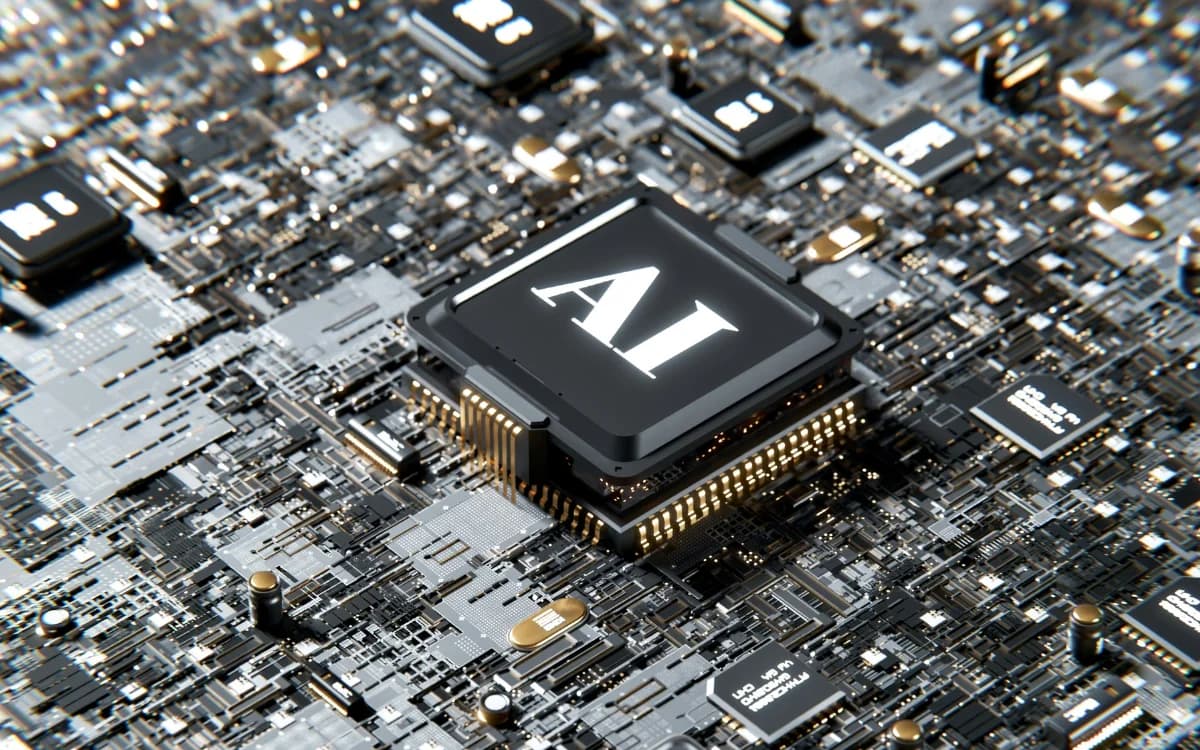
In a landmark move to redefine the future of artificial intelligence computing, NVIDIA Corporation and Marvell Technology, Inc. have forged a groundbreaking strategic partnership valued at $2 billion. Announced today, the collaboration integrates Marvell’s cutting-edge custom XPUs (accelerator processors) and silicon photonics technology into NVIDIA’s expansive AI factory and AI-RAN ecosystems through NVIDIA NVLink Fusion™, a rack-scale platform designed to deliver unprecedented scalability and flexibility for next-generation AI infrastructure. The partnership arrives at a critical inflection point in AI development, where surging demand for token generation and the race to build high-performance AI factories are reshaping global technology infrastructure.
Why This $2B Partnership Marks a Turning Point in AI Computing Infrastructure
The alliance between NVIDIA—widely regarded as the global leader in AI and accelerated computing—and Marvell, a 30-year veteran in data infrastructure semiconductors, signals a major shift in how AI systems are designed, deployed, and scaled. At the heart of this collaboration is NVLink Fusion, a platform that enables customers to construct semi-custom AI infrastructure fully compatible with NVIDIA’s existing architecture. This means organizations can now seamlessly integrate Marvell’s high-performance components—including custom XPUs, advanced networking solutions, and optical interconnects—into NVIDIA’s robust AI ecosystem, which includes GPUs, DPUs, networking platforms, and storage systems. For businesses racing to build specialized AI compute environments, this compatibility eliminates integration barriers and accelerates time-to-market.
The Role of NVLink Fusion in Building Scalable AI Factories
NVLink Fusion is not just a networking protocol; it is a rack-scale platform that enables heterogeneous AI infrastructure to operate as a unified system. By allowing Marvell’s XPUs and networking components to interface directly with NVIDIA’s NVLink interconnect and Spectrum-X switches, customers can now build AI factories capable of scaling to exaFLOP levels—exceeding the computational demands of today’s largest language models. Jensen Huang, NVIDIA’s founder and CEO, emphasized the urgency of this capability in a statement: *“The inference inflection has arrived. Token generation demand is surging, and the world is racing to build AI factories.”* This partnership directly addresses that demand by providing the tools necessary to scale AI workloads efficiently and cost-effectively.
Silicon Photonics and Optical Interconnects: The Backbone of Next-Gen AI Networks
Beyond processor integration, the partnership extends into silicon photonics and advanced optical interconnects—technologies critical for reducing latency and increasing bandwidth in AI data centers. Marvell brings deep expertise in high-performance analog, optical digital signal processing (DSP), and silicon photonics to the table, complementing NVIDIA’s existing portfolio that includes ConnectX network interface cards and BlueField data processing units (DPUs). Together, they aim to transform telecommunication networks into AI-native infrastructure using NVIDIA Aerial AI-RAN for 5G and future 6G networks. This could enable real-time AI inference at the edge, a game-changer for applications such as autonomous vehicles, smart cities, and industrial automation.
How Marvell’s XPUs and NVIDIA’s AI Stack Create a Unified Ecosystem
Marvell’s role in this partnership is pivotal. The company specializes in custom silicon solutions designed for high-speed data movement, storage, and processing—core requirements for AI infrastructure. By aligning its XPUs and NVLink Fusion-compatible networking with NVIDIA’s AI computing stack, Marvell is enabling customers to develop semi-custom AI systems that leverage the best of both companies’ strengths. Matt Murphy, Marvell’s chairman and CEO, highlighted this synergy: *“Our expanded partnership with NVIDIA reflects the growing importance of high-speed connectivity, optical interconnect, and accelerated infrastructure in scaling AI. By connecting Marvell’s leadership in high-performance analog, optical DSP, silicon photonics, and custom silicon to NVIDIA’s expanding AI ecosystem through NVLink Fusion, we are enabling customers to build scalable, efficient AI infrastructure.”*
The Economic and Strategic Implications of the $2B Investment
The $2 billion investment by NVIDIA into Marvell is more than a financial commitment—it is a strategic endorsement of Marvell’s technology and market position. For Marvell, this infusion of capital will accelerate R&D into next-generation semiconductors, particularly in areas like silicon photonics and AI-optimized networking. For NVIDIA, the partnership strengthens its already dominant position in the AI chip market by expanding its ecosystem to include Marvell’s specialized components, reducing reliance on a single supply chain. Analysts suggest this could drive down costs for customers while improving performance, making advanced AI more accessible to enterprises, cloud providers, and telecom operators.
Moreover, the collaboration aligns with broader industry trends. The global AI infrastructure market is projected to exceed $50 billion by 2027, driven by surging demand for generative AI, real-time analytics, and edge computing. Companies like NVIDIA and Marvell are positioning themselves at the forefront of this transformation, ensuring their technologies remain indispensable in the next wave of digital innovation.
Transforming Telecom Networks: The AI-RAN Revolution for 5G and 6G
One of the most transformative aspects of this partnership is its focus on telecommunication networks. The NVIDIA Aerial AI-RAN platform, when combined with Marvell’s networking and optical solutions, could redefine how 5G and future 6G networks operate. Traditionally, telecom infrastructure has been optimized for voice and data transmission, but AI-RAN (Artificial Intelligence Radio Access Network) integrates AI directly into the radio access layer. This enables dynamic spectrum allocation, predictive maintenance, and ultra-low-latency processing—capabilities essential for enabling applications like holographic communication, immersive AR/VR, and mission-critical IoT.
Challenges and Opportunities in Integrating AI into Telecom Networks
However, integrating AI into telecom networks is not without its challenges. Operators must grapple with issues such as power efficiency, heat dissipation, and the need for interoperability across diverse hardware. The NVLink Fusion platform and Marvell’s silicon photonics solutions are designed to address these pain points by providing high-bandwidth, low-latency interconnects that can handle the massive data throughput required for AI workloads. Additionally, the partnership’s focus on modular design allows telecom providers to upgrade their infrastructure incrementally, reducing capital expenditures and deployment risks.
The Broader Impact on AI Infrastructure and Market Competition
This partnership arrives at a time when the AI infrastructure market is becoming increasingly competitive. While NVIDIA dominates the AI chip market with a share estimated at over 80% in data center GPUs, competitors like AMD, Intel, and emerging players are investing heavily in alternative architectures. The NVIDIA-Marvell collaboration strengthens NVIDIA’s ecosystem by offering customers more flexibility in designing custom AI solutions. It also pressures rivals to innovate, particularly in areas like silicon photonics and heterogeneous computing, where Marvell has long-standing expertise.
For enterprise customers, the expanded ecosystem means greater choice. Businesses can now select best-of-breed components—whether NVIDIA’s GPUs or Marvell’s XPUs—while ensuring seamless integration. This modular approach not only accelerates deployment but also allows for easier upgrades as AI workloads evolve. Cloud providers like AWS, Microsoft Azure, and Google Cloud, which already rely heavily on NVIDIA’s GPUs, may benefit from the added flexibility, enabling them to optimize their infrastructure for specific AI workloads such as large language model training or real-time inference.
Key Takeaways: What This Partnership Means for AI’s Future
- NVIDIA and Marvell are merging their technologies via a $2 billion partnership to accelerate AI infrastructure development using NVLink Fusion.
- The collaboration enables scalable, semi-custom AI factories capable of handling surging token generation demands for generative AI models.
- Marvell’s custom XPUs and silicon photonics will integrate with NVIDIA’s AI stack, offering customers unprecedented flexibility in AI system design.
- The partnership aims to transform telecom networks into AI-native infrastructure, paving the way for 5G/6G advancements and edge AI applications.
- This deal strengthens NVIDIA’s market dominance while pushing competitors to innovate in AI networking and silicon photonics.
The Road Ahead: Challenges and Long-Term Vision
While the partnership holds immense promise, its long-term success will depend on execution. Integrating two complex ecosystems—NVIDIA’s software stack and Marvell’s hardware—requires meticulous coordination to ensure compatibility and performance. Additionally, the global semiconductor supply chain remains vulnerable to geopolitical tensions, particularly between the U.S. and China, which could impact production timelines. However, both companies have a track record of innovation and collaboration, making them well-positioned to navigate these challenges.
Looking ahead, the partnership could set a new standard for AI infrastructure development. As AI models grow more sophisticated and data-intensive, the need for high-performance, scalable compute will only intensify. By combining NVIDIA’s leadership in AI accelerators with Marvell’s expertise in connectivity and silicon photonics, the collaboration could redefine what’s possible in areas such as scientific computing, drug discovery, and climate modeling. The ultimate goal, as Huang noted, is to enable a future where AI infrastructure is not just powerful but also accessible and adaptable to the evolving needs of businesses and researchers worldwide.
Frequently Asked Questions About the NVIDIA-Marvell AI Partnership
Frequently Asked Questions
- What is NVLink Fusion, and why is it important for AI infrastructure?
- NVLink Fusion is a rack-scale platform developed by NVIDIA that enables heterogeneous AI infrastructure to operate as a unified system. It allows customers to integrate custom accelerators like Marvell’s XPUs with NVIDIA’s GPUs and networking components, ensuring seamless scalability and performance for AI workloads such as large language model training and real-time inference.
- How will this partnership benefit telecom companies?
- The partnership aims to transform telecom networks into AI-native infrastructure using NVIDIA Aerial AI-RAN. This integration enables telecom operators to deploy real-time AI inference at the edge, supporting applications like autonomous vehicles, smart cities, and immersive AR/VR experiences while improving network efficiency and reducing latency.
- What are the financial terms of the $2 billion investment by NVIDIA in Marvell?
- NVIDIA has committed $2 billion to Marvell as part of the strategic partnership. While the exact structure of the investment—whether it is an equity stake, convertible debt, or direct funding—was not disclosed in the announcement, it is intended to accelerate R&D and strengthen the collaboration between the two companies.