
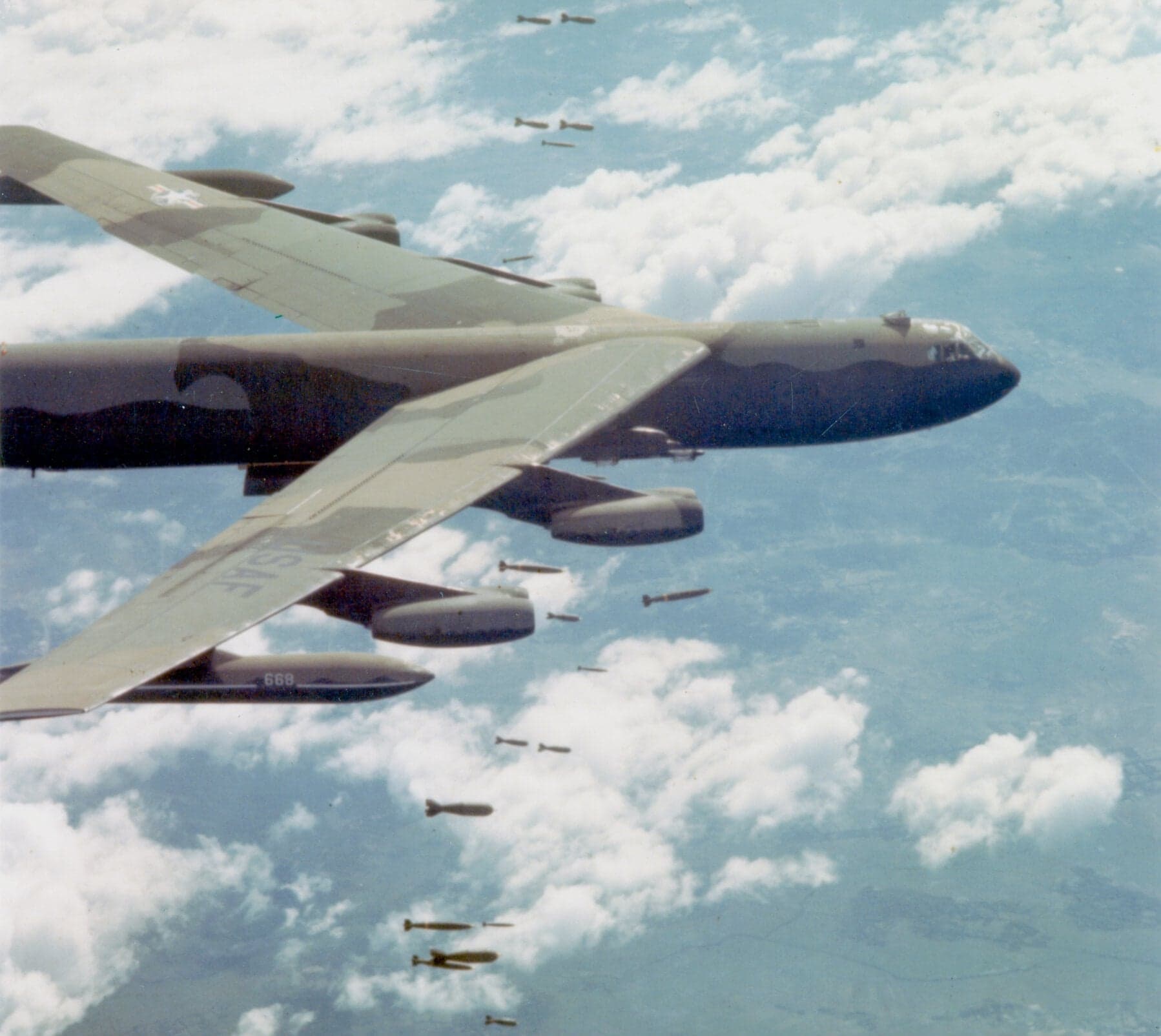
President Donald Trump escalated tensions with Iran on Monday, issuing an ultimatum that if Tehran does not accept a deal by Tuesday’s deadline, the U.S. would launch a catastrophic four-hour military strike targeting critical infrastructure—including power plants and bridges—aimed at pushing the country ‘back to the Stone Age.’ The blunt warning sent shockwaves through global oil markets, where Brent crude briefly surged past $117 per barrel, reflecting fears of a potential disruption to 20% of the world’s oil supply passing through the Strait of Hormuz. Amid the geopolitical turmoil, two U.S. companies stand to benefit disproportionately: Lockheed Martin, the world’s largest defense contractor, and Venture Global, a leading liquefied natural gas (LNG) exporter.
Key Takeaways: Why Iran’s Crisis Could Benefit These Two Stocks
- President Trump’s Tuesday ultimatum to Iran threatens airstrikes on critical infrastructure, risking disruption to 20% of global oil supply.
- Lockheed Martin, with a $194 billion backlog and 30.7% free cash flow growth, stands to gain from increased defense spending and orders for precision munitions.
- Venture Global’s Gulf Coast LNG exports surged 181% in 2025, positioning the company to capitalize on European and Asian buyers pivoting away from Middle East energy routes.
- Historical patterns show defense and LNG stocks often outperform during geopolitical flare-ups, offering a potential hedge against volatility.
The Geopolitical Flashpoint: Why the Strait of Hormuz Matters More Than Ever
The Strait of Hormuz is the world’s most critical chokepoint for oil transit, with approximately 20% of global petroleum supply—roughly 21 million barrels per day—passing through its narrow waters each day. A blockade or sustained conflict in the region would send oil prices soaring, trigger global supply shortages, and exacerbate inflationary pressures already straining consumers and businesses worldwide. Iran has repeatedly threatened to disrupt this vital shipping lane in response to sanctions or military threats, including in 2019 when it seized a British-flagged oil tanker and in 2021, when it conducted drone and missile strikes near Saudi oil facilities. The Trump administration’s latest ultimatum—delivered on Monday—escalates the risk of a direct confrontation, with the president’s vow to ‘bomb Iran back to the Stone Age’ signaling a willingness to employ overwhelming force.
A History of Escalation and De-escalation in U.S.-Iran Relations
U.S.-Iran relations have been marked by decades of tension, punctuated by brief periods of diplomacy and prolonged standoffs. The 1979 Iranian Revolution severed ties, and the subsequent hostage crisis froze relations for decades. More recently, the 2015 nuclear deal (JCPOA) temporarily eased sanctions, but President Trump withdrew from the agreement in 2018, reimposing stringent economic penalties. Iran responded by gradually abandoning key nuclear commitments, enriching uranium to near-weapons-grade levels and attacking oil tankers in the Persian Gulf. The cycle of escalation and de-escalation has created a volatile environment where military posturing—such as Trump’s latest warning—can trigger immediate market reactions.
Lockheed Martin: The Defense Giant Poised for a Spending Surge
Lockheed Martin (NYSE: LMT) is the Pentagon’s largest supplier of fighter jets, missiles, radar systems, and other advanced military hardware. The company’s portfolio includes the F-35 Lightning II, a next-generation stealth fighter that has become the backbone of U.S. air superiority and a key export for allied nations. With a record $194 billion backlog at the end of 2025—a 6% year-over-year increase—the company is already positioned for growth. Total sales for the trailing 12 months reached $75.05 billion, a 6% increase from 2024, while free cash flow surged 30.7% to $6.9 billion, providing ample capital for shareholder returns and research and development.
Financial Strength and Shareholder Returns
Lockheed Martin’s financial health is underscored by its ability to deliver consistent returns. In the first quarter of 2025 alone, the company returned $1.5 billion to shareholders through dividends and buybacks. The trailing price-to-earnings (P/E) ratio stands at 29, slightly above its five-year average of 25.7 but in line with peers like Boeing and Raytheon Technologies, which are also benefiting from geopolitical demand. The forward annual dividend yield is 2.17%, with an expected payout of $13.50 per share, providing income stability amid market volatility. Quarterly revenue grew 9% year-over-year in the most recent period, outpacing broader industrial sectors and demonstrating the resilience of defense spending.
How Geopolitical Risks Could Fuel Orders for Lockheed Martin
A sustained military campaign against Iran would accelerate orders for precision-guided munitions, aircraft replenishment, and advanced radar systems—all core components of Lockheed Martin’s business. The company’s space division, while facing short-term headwinds, benefits from increased demand for satellite-based intelligence and communications. Historical precedent suggests that defense stocks often rally on geopolitical threats: in previous flare-ups, Lockheed Martin’s shares rose 3% to 4% on days following escalatory rhetoric or military actions. Analysts note that the company’s earnings are underpinned by long-term contracts with the U.S. government, providing a buffer against short-term market fluctuations.
Venture Global: The LNG Exporter Set to Fill the Middle East’s Energy Gap
Venture Global (NYSE: VG) operates two major liquefied natural gas (LNG) export terminals on the U.S. Gulf Coast—Cameron LNG in Louisiana and Plaquemines LNG in Texas. These facilities convert domestically produced natural gas into a transportable liquid form, allowing it to be shipped to Europe, Asia, and other global markets. With geopolitical tensions threatening to disrupt Middle Eastern energy routes, U.S. LNG exporters like Venture Global are poised to fill the void. The company’s 2025 financial results reflect this potential: revenue surged 177% year-over-year to $13.8 billion, while net income climbed 53% to $2.3 billion. Consolidated adjusted EBITDA more than doubled, rising 198% to $6.3 billion.
Record-Breaking Exports and Market Share Growth
Venture Global exported a record 1,409 trillion British thermal units (TBtu) of LNG in 2025, an 181% increase from the prior year. This growth was driven by strong demand from Europe, which has sought to reduce its reliance on Russian gas following the invasion of Ukraine, and from Asia, where countries like Japan and South Korea are expanding their import capabilities. The company’s trailing P/E ratio of 18.01 and earnings per share (EPS) of $0.92 make it a relative bargain compared to other energy infrastructure stocks. With a market capitalization of $40.7 billion, Venture Global trades at a premium to its peers, reflecting its rapid growth and strategic importance in the global energy transition.
Why U.S. LNG Exporters Could Be the Big Winners in a Crisis
The Middle East accounts for nearly 30% of global oil exports and a significant share of LNG shipments, particularly to Europe and Asia. Any disruption to these routes—whether through conflict, sanctions, or blockades—would force buyers to seek alternative suppliers. The U.S., with its abundant natural gas reserves and rapidly expanding export capacity, is uniquely positioned to capitalize. Venture Global’s Q4 2025 revenue alone hit $4.4 billion, up 193% year-over-year, with 478 TBtu sold. The company’s full-year 2026 adjusted EBITDA guidance remains robust at $5.2 billion to $5.8 billion, underscoring its ability to weather market volatility. Unlike integrated oil majors, Venture Global’s pure-play LNG model offers higher revenue growth (177% vs. mid-single digits for upstream peers) and lower payout ratios, leaving room for reinvestment and expansion.
The Risks: What Could Derail These Investment Theses?
While Lockheed Martin and Venture Global are well-positioned to benefit from geopolitical tensions, investors must consider the significant risks that could undermine their gains. A sudden de-escalation or diplomatic breakthrough could reverse oil price spikes and reduce defense spending urgency, leading to a pullback in both stocks. Prolonged conflict could also stoke inflation, raising interest rates and increasing borrowing costs for companies like Venture Global, which carries a substantial debt load with an enterprise value of $78.7 billion. Lockheed Martin’s elevated P/E ratio of 29 reflects high expectations, and any failure to meet these projections could trigger a sell-off. Additionally, the broader market’s reaction to geopolitical risks—including potential recessions or energy price shocks—could dampen appetite for even the most resilient stocks.
Historical Precedent: How Defense and Energy Stocks React to Geopolitical Crises
Historical data suggests that defense and energy stocks often outperform during periods of geopolitical instability, though the performance can be volatile. During the 2014 Russia-Ukraine crisis, oil prices surged nearly 30%, and defense stocks like Lockheed Martin rose 12% over three months. Similarly, after the 2020 assassination of Iranian General Qasem Soleimani, Brent crude jumped 5% in a single day, while Lockheed Martin’s shares climbed 3% within a week. Energy infrastructure stocks, including LNG exporters, have also seen gains during supply disruptions, though their performance is more closely tied to oil and gas prices. Investors should note, however, that these rallies are often short-lived if tensions ease or if markets reassess the long-term implications of the crisis.
Should Investors Buy on Any Post-Rhetoric Dip?
Given the potential for volatility, many analysts recommend a measured approach: buying on any post-rhetoric dip rather than chasing the initial surge. Lockheed Martin and Venture Global are not speculative bets; they are companies with verifiable earnings engines that have historically rewarded patience during geopolitical flare-ups. Lockheed Martin’s $194 billion backlog and Venture Global’s record LNG shipments provide tangible evidence of their resilience. While extreme volatility is likely, the underlying fundamentals of these stocks—strong cash flows, diversified contracts, and strategic importance to U.S. energy and defense policy—suggest they are better positioned than most to weather the storm. For savvy retail investors, these stocks offer a rare opportunity to balance risk and reward in an increasingly uncertain geopolitical landscape.
Frequently Asked Questions About Trump’s Iran Threat and Its Market Impact
Frequently Asked Questions
- What would happen to oil prices if the Strait of Hormuz is disrupted?
- A disruption to the Strait of Hormuz, through which 20% of global oil supply passes, would likely cause Brent crude prices to surge well above current levels, potentially exceeding $150 per barrel. This would exacerbate inflation, strain global supply chains, and pressure economic growth, particularly in energy-importing nations.
- How does Venture Global benefit from U.S. LNG exports?
- Venture Global operates two major LNG export terminals on the Gulf Coast, converting U.S. natural gas into a transportable liquid for global markets. As Middle Eastern energy routes face disruption, European and Asian buyers increasingly turn to U.S. LNG, boosting Venture Global’s revenue and market share.
- What is Lockheed Martin’s exposure to Iran-related military spending?
- Lockheed Martin supplies the U.S. military with fighter jets, missiles, and radar systems that would be critical in a sustained campaign against Iran. The company’s $194 billion backlog and long-term contracts with the Pentagon provide stability, while potential orders for precision munitions and aircraft replenishment could drive additional revenue.


