By DANIEL JONES, US CONSUMER AND REAL ESTATE EDITOR
Published: 23:36 GMT, 8 March 2026 | Updated: 03:12 GMT, 9 March 2026
Wall Street is bracing for another turbulent week after oil prices surged above $100 a barrel on Sunday night as the war with Iran continues to disrupt global energy supplies.
The spike has already begun hitting Americans in their wallets. The national average price of gasoline has climbed to $3.45 a gallon on Sunday, according to AAA - up about 16 percent in just a week since the conflict began.
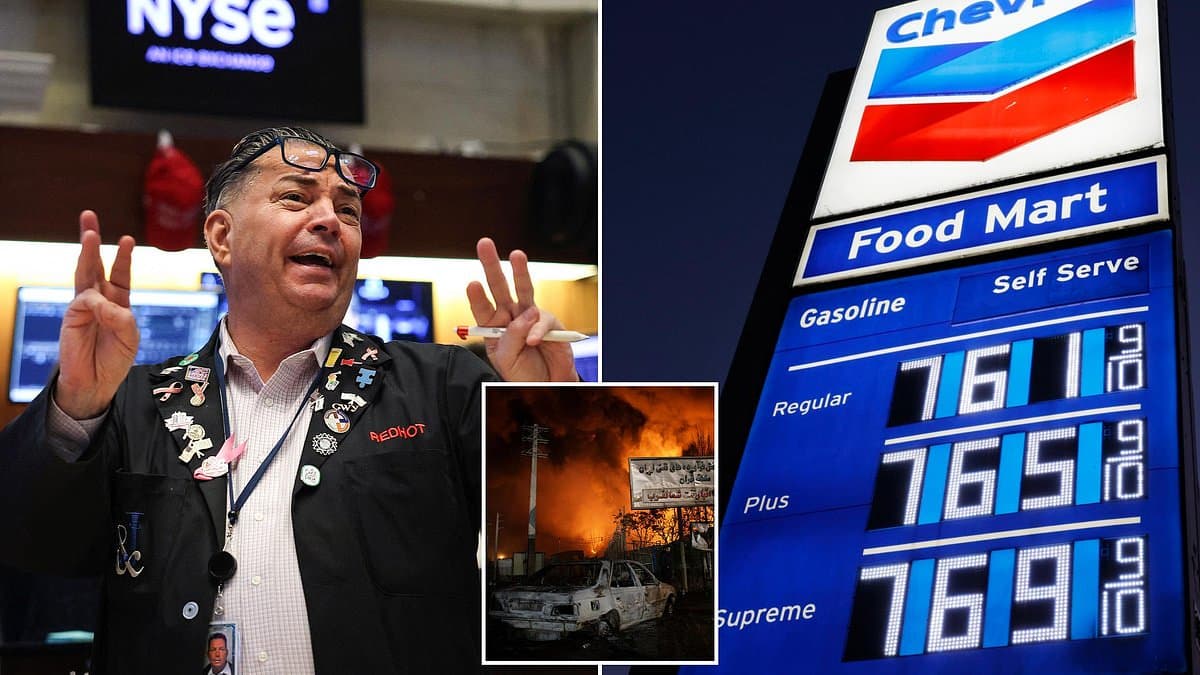
In California, the statewide average has jumped above $5 a gallon. Drivers at the Chevron station at 901 N Alameda Street in Los Angeles were facing $8.21 for a gallon of regular gas.
Oil markets reacted to the ongoing closure of the Strait of Hormuz, the narrow shipping channel controlled by Iran through which roughly one-fifth of the world’s oil normally flows.
Because tankers cannot safely pass through the strait, producers across the Middle East have begun cutting output.
US crude oil surged above $108 a barrel, the first time it has crossed the $100 mark since Russia’s invasion of Ukraine in 2022. Global benchmark Brent crude also surged above $107 a barrel.
Wall Street reacted immediately. Dow futures plunged nearly 900 points Sunday evening, signaling a sharp drop when US markets reopen Monday morning.
Those tied to the S&P 500 and Nasdaq also slid around 1.5 percent.
High gas prices are displayed at a downtown Chevron gas station in Los Angeles this week
A trader works on the floor of the New York Stock Exchange following the opening bell on Thursday in New York City. Stocks have fallen as markets react to volatile oil prices sparked by the escalating Middle East conflict - and are set to fall more next week
Futures allow traders to bet on where the market will open the next day, meaning the sharp declines suggest investors expect stocks to fall when trading officially begins.
The jump is fueling fears that higher fuel costs could ripple through the entire economy, raising prices for everything from groceries to airline tickets while slowing growth.
But President Donald Trump on Sunday called the increase 'a very small price to pay for USA, and World, Safety and Peace.
'ONLY FOOLS WOULD THINK DIFFERENTLY,' he posted to his Truth Social page.
Markets are already coming off a rough week. The Dow fell about 3 percent last week, its worst performance since the tariff turmoil of April 2025, while the S&P 500 dropped 2 percent and the Nasdaq slipped more than 1 percent.
The spike in oil prices is being seen as a potential turning point for the economy.
Many analysts view $100 oil as a danger zone, where rising energy costs begin to significantly hurt consumer spending and business activity unless prices quickly fall again.
The surge comes after oil had already been climbing sharply.
US crude soared more than 35 percent last week, marking the largest weekly gain since the contract began trading in 1983.
Investors fear price rise will continue if Iran targets energy infrastructure or continues blocking shipping through the Strait.
How are soaring gas prices and oil turmoil changing the way you live and budget right now?
Fire breaks out at the Shahran oil depot after US and Israeli attacks, leaving numerous fuel tankers and vehicles in the area unusable in Tehran, Iran, on Sunday
Iran has warned vessels that the waterway is unsafe and has threatened to attack tankers trying to pass through it.