
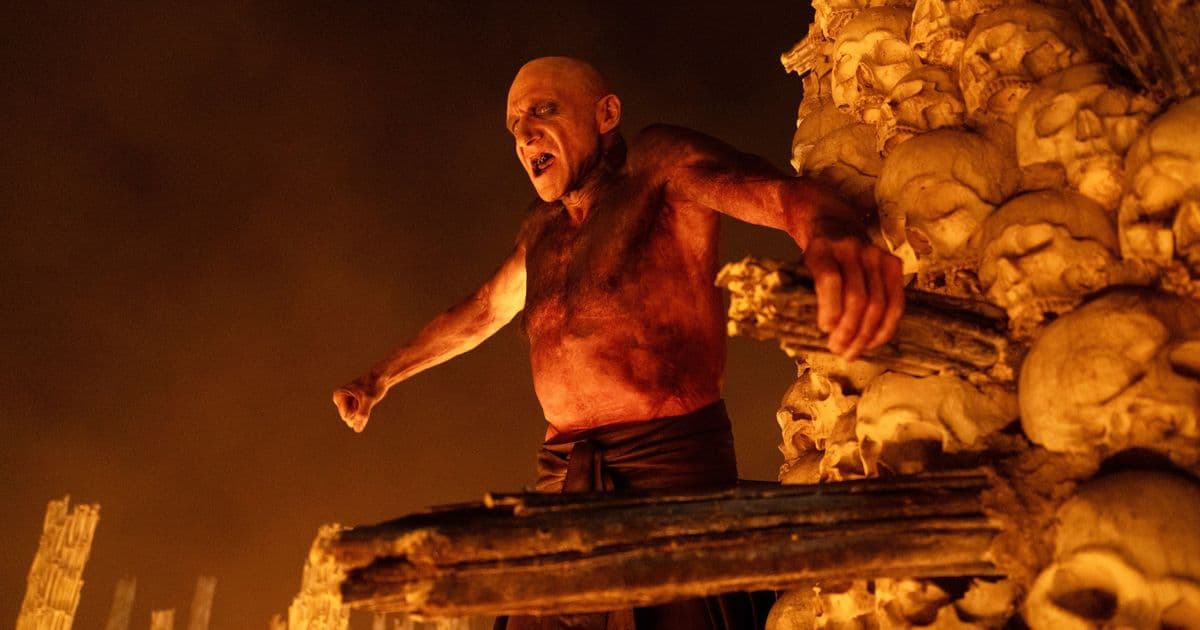
In a landmark moment for genre cinema, Amy Madigan secured a Best Supporting Actress Oscar at the 98th Academy Awards for her chilling portrayal of Aunt Gladys in *Weapons*, a role that blurred the line between witch and matriarch with eerie precision. The victory, though narrow in a tightly contested category, underscores a seismic shift in the Academy’s long-standing reluctance to embrace horror—even as it celebrated Michael B. Jordan’s transformation into a cinematic vampire in *Sinners*, the first such performance to win Best Actor. These wins, alongside *Nosferatu*’s record-breaking 16 nominations, suggest that Hollywood’s most prestigious awards may finally be opening its doors to the genre’s most daring talents.
Why Amy Madigan’s Oscar Win Marks a Turning Point for Horror at the Academy Awards
For decades, the Academy Awards operated under an unspoken hierarchy that relegated horror to the technical categories or, at best, the supporting acting races—if it was acknowledged at all. Madigan’s triumph, however, follows a pattern of gradual erosion in that resistance. Her victory came just two years after *The Substance*—a body-horror satire starring Demi Moore—garnered critical acclaim and a surprise Best Actress nomination, and one year after *Nosferatu* (2024) shattered the ceremony’s nomination record with 16 nods, including Best Picture and Best Director for Robert Eggers.
A Legacy of Horror’s Fringe Recognition at the Oscars
The Academy’s relationship with horror has been a study in contradictions. While films like *The Exorcist* (1973), *Jaws* (1975), and *The Silence of the Lambs* (1991) claimed top honors, most genre entries were either ignored entirely or consigned to the “craft” categories. Ruth Gordon’s 1968 win for *Rosemary’s Baby*—a role eerily reminiscent of Madigan’s Aunt Gladys—remains the exception rather than the rule. Even *Get Out* (2017), a cultural phenomenon that revitalized the genre’s legitimacy, only secured a Best Picture nomination, losing to *The Shape of Water*, a fantasy-drama with horror elements.
Madigan’s win, then, is less a bolt from the blue than the culmination of a slow-burn evolution. Her performance in *Weapons*, a Southern Gothic nightmare dripping with practical effects and psychological dread, was championed by critics and industry insiders alike, who framed it as a career-defining showcase of her range. The Academy’s decision to honor her—amid stiff competition from Teyana Taylor and Wunmi Mosaku, both of whom delivered powerhouse turns in genre-adjacent projects—signals that voters are increasingly willing to reward horror for its artistic merit, not just its shock value.
The Ripple Effect of *Sinners* and the Genre’s Newfound Prestige
Michael B. Jordan’s victory in *Sinners* further cements this shift. As the first vampire to win Best Actor—a role that required him to navigate themes of immortality, power, and existential dread—Jordan’s win was as much about the Academy’s growing comfort with horror as it was about his transformative performance. The film itself, a Southern Gothic gangster musical steeped in Hoodoo horror, defies easy categorization, yet its success at the awards demonstrates that voters are increasingly receptive to genre-blending narratives that transcend traditional Oscar bait.
Industry analysts point to several factors behind this change. First, the rise of streaming has democratized horror, exposing Academy voters to a wider array of international and independent films. Second, the pandemic-era boom in horror’s popularity—driven by films like *Barbarian* (2022) and *M3GAN* (2022)—proved that the genre could command both box office and critical attention. Finally, the Academy’s own efforts to diversify its membership, particularly through its 2024 voter expansion, have included more genre-savvy filmmakers and critics, who are more likely to advocate for horror’s inclusion.
The Performers Poised to Follow in Madigan and Jordan’s Footsteps
With the door now ajar, which horror performances could be next to walk through it? The most immediate contender is Ralph Fiennes in *28 Years Later: The Bone Temple*, a sequel that doubles down on the franchise’s body-horror roots while introducing a meditative, almost Shakespearean dimension. Fiennes, a four-time Oscar nominee who has yet to win, delivers a tour-de-force as Dr. Ian Kelson, a scientist grappling with guilt and survival in a post-apocalyptic wasteland. Critics have praised his ability to balance the film’s grotesque set pieces—a skinning sequence that recalls *The Fly*’s visceral horror—with moments of dark humor and tenderness, particularly in his dynamic with Samson (Chi Lewis-Parry), a feral Alpha who becomes an unlikely ally.
“Fiennes imbues Kelson with a humanity that grounds the film’s chaos,” wrote *Vulture* critic Alison Willmore. “His musical performance in the film’s climax—a showstopping number that defies genre conventions—is the kind of bravery the Oscars adore, even if its inclusion feels like a long shot.”
Rachel McAdams and Dylan O’Brien: Can a ’90s Throwback Break Through?
Another strong candidate is Rachel McAdams in *Send Help*, Sam Raimi’s gory, CGI-laden homage to ’90s horror-comedies. McAdams plays Linda, a seemingly meek protagonist who undergoes a radical transformation into a deranged villain, a role that demands equal parts physical comedy and psychological menace. Her performance is a masterclass in tonal whiplash, transitioning seamlessly from underdog to antagonist while maintaining a core of vulnerability that makes her descent into madness unsettling rather than cartoonish. Dylan O’Brien, her co-star, also delivers a career-best turn as a morally ambiguous survivor, adding another layer of complexity to a film that defies easy genre classification.
Jack O’Connell and the Case for Genre’s Underrated Heavyweights
The *Sinners* ensemble also offers potential awards fodder, particularly Jack O’Connell as Sir Lord Jimmy Crystal, a sadistic psychopath whose unhinged energy steals every scene he’s in. O’Connell, a British actor known for his work in *Unbroken* and *SAS: Rogue Heroes*, has long flown under the radar in awards conversations, but his performance here—layered with menace, dark charisma, and a hint of tragic pathos—could finally thrust him into the spotlight. Industry insiders note that his nomination would be a long shot given the film’s genre trappings, but his work is emblematic of horror’s growing recognition as a breeding ground for transformative acting.
The Expanding Horizon: Upcoming Horror Performances to Watch
Beyond the current awards cycle, the horizon for horror’s Oscar potential is expanding. Mubi’s acquisition of *Teenage Sex and Death at Camp Miasma*—a campy, surreal horror-comedy directed by Jane Schoenbrun (*We’re All Going to the World’s Fair*)—has already sparked whispers of a Best Actress nod for Gillian Anderson, who plays a reclusive former Final Girl. Anderson’s reputation as a dramatic powerhouse, paired with the film’s cult appeal, makes it a dark-horse contender, particularly if the Academy continues its recent trend of rewarding genre films with critical praise.
Robert Eggers’ *Werwulf*, a next-wave werewolf epic set in the same universe as *Nosferatu*, is poised to dominate the technical categories, with potential nods for cinematography, costume design, and makeup. However, Eggers’ track record—including an Oscar nomination for *The Lighthouse* and a Best Director win at Cannes for *Nosferatu*—could position the film to vie for major categories, particularly if the Academy seeks to further legitimize horror as a director-driven art form.
Damian McCarthy and the Irish Invasion of Genre Cinema
Irish filmmaker Damian McCarthy, whose *Oddity* (2024) earned critical acclaim and a theatrical release after initial streaming plans were scrapped, returns with *Hokum*, a folk-horror thriller that premiered to rave reviews at SXSW. Given the Oscar-winning pedigree of distributor Neon (*Parasite*, *Everything Everywhere All at Once*), mainstream recognition is at least plausible. McCarthy’s ability to blend psychological horror with Irish folklore—evident in his previous work—could make *Hokum* a sleeper hit in the awards conversation, particularly if voters are eager to diversify the genre’s representation.
- Amy Madigan’s Oscar win for *Weapons* breaks the Academy’s long-standing reluctance to honor pure horror performances.
- Michael B. Jordan’s Best Actor victory in *Sinners* as the first vampire to win the category signals a genre-friendly shift.
- Ralph Fiennes (*28 Years Later: The Bone Temple*) and Rachel McAdams (*Send Help*) are top contenders for future nominations.
- Upcoming films like *Werwulf* and *Teenage Sex and Death at Camp Miasma* could further expand horror’s awards footprint.
- The Academy’s voter expansion and genre-savvy new members are accelerating horror’s acceptance.
What This Means for the Future of Horror and the Oscars
The implications of Madigan and Jordan’s wins extend far beyond a single awards season. For the first time in its history, the Academy appears willing to engage with horror not as a novelty or a guilty pleasure, but as a legitimate artistic medium capable of delivering profound performances, thematic depth, and technical innovation. This shift aligns with broader cultural trends, including the rise of prestige horror on platforms like MUBI and the growing influence of international genre cinema (e.g., *Talk to Me*, *When Evil Lurks*, *The Roundup*).
However, challenges remain. The Academy’s voter base is still overwhelmingly skewed toward older, white men, a demographic that has historically viewed horror with skepticism. Additionally, the genre’s association with shock value and lowbrow entertainment persists in some quarters, making sustained recognition an uphill battle. That said, the momentum is undeniable. Films like *Hereditary* (2018) and *Talk to Me* (2023) have already proven that horror can command both critical acclaim and box office success, while directors like Ari Aster, Jennifer Kent, and Robert Eggers have elevated the genre’s artistic credibility.
For horror fans and industry professionals alike, the message is clear: now is the time to advocate for the genre’s inclusion. Whether through social media campaigns, critical essays, or grassroots support for indie horror releases, the push for recognition must be relentless. Madigan’s victory was not a fluke but the result of years of passionate advocacy by fans and critics who refused to accept horror as a second-class art form. If the past two awards cycles are any indication, the next generation of genre performers may not have to wait decades for their moment—they may only have to wait a few years.
Frequently Asked Questions
Frequently Asked Questions
- Has the Academy Awards ever nominated a horror film for Best Picture?
- Yes, but rarely. *The Exorcist* (1973), *Jaws* (1975), *The Silence of the Lambs* (1991), and *Get Out* (2017) all received Best Picture nominations, with the latter winning Best Original Screenplay. *Parasite* (2019) and *Everything Everywhere All at Once* (2022) also incorporated horror elements while winning top honors.
- Who was the last horror actor to win an Oscar?
- Anthony Hopkins won Best Actor for *The Silence of the Lambs* (1991) as Hannibal Lecter, though his performance is often classified as a psychological thriller. More recently, *The Substance*’s Demi Moore received a Best Actress nomination in 2024 for her role in a body-horror satire.
- Why has the Academy historically overlooked horror performances?
- The Academy has long favored dramas and biopics, viewing horror as either a commercial genre or a vehicle for special effects rather than serious acting. Additionally, the genre’s association with shock value and lowbrow entertainment has made it a harder sell for voters who prioritize prestige. Recent shifts in voter demographics and the rise of prestige horror may be changing this perception.


