
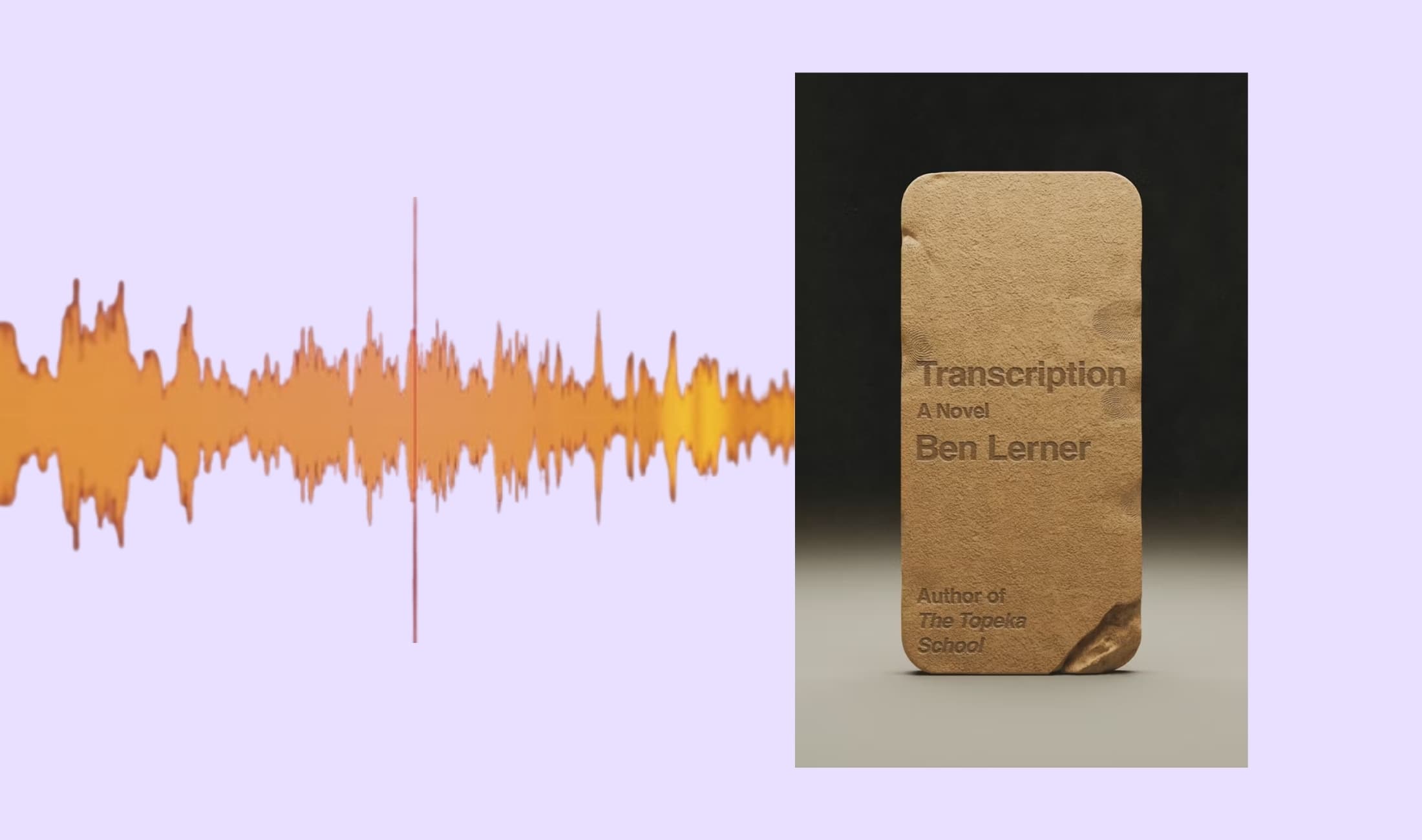
In the sprawling landscape of contemporary American literature, few writers have cultivated a persona as deliberately enigmatic—or as widely debated—as Ben Lerner. The celebrated novelist, poet, and essayist, whose autofictional protagonists often bear a striking resemblance to his own life, has long been associated with the raw, confessional energy of works like *The Topeka School* and *10:04*. Yet with his 2023 novel *Transcription*, Lerner pivots toward a quieter, more introspective mode, abandoning the boozy, womanizing *Adam* of his earlier books in favor of a narrative that feels almost meditative in its tenderness. The novel unfolds in three distinct sections, each a fragment of a larger puzzle, weaving together interviews, eulogies, and the harrowing silence of a child’s refusal to eat. It is a work that interrogates the boundaries between fiction and truth, the fragility of memory, and the quiet devastation of modern parenting amid a world reshaped by screens and pandemic trauma.
- Ben Lerner’s *Transcription* marks a departure from his earlier, more performative autofiction, adopting a gentler, more introspective tone.
- The novel’s three-part structure weaves interviews, memorials, and a child’s eating disorder into a meditation on storytelling, grief, and digital life.
- Lerner’s autofictional narrator grapples with the unreliability of memory and the blur between fiction and lived experience.
- The pandemic’s shadow looms over the book, but it resists sentimentalization, instead embedding Covid-era anxieties into the fabric of family and technology.
- *Transcription* is both a meditation on gentle parenting and a commentary on the way digital culture has reshaped human connection.
How Ben Lerner’s Autofiction Evolves in Transcription
Ben Lerner has built his literary reputation on autofiction—works that blur the line between memoir and fiction, often featuring protagonists who share his biography, his name, or his obsessions. In *Leaving the Atocha Station* (2011) and *The Topeka School* (2019), the fictional *Adam* (later *Ben*) embodies Lerner’s own youthful excesses: prodigious drinking, serial relationships, and a self-aware intellectualism that oscillates between arrogance and vulnerability. These books cemented Lerner’s status as a chronicler of millennial alienation, a writer who could dissect the anxieties of contemporary masculinity while remaining ironically detached from his own persona.
Yet *Transcription* (2023) represents a tonal and thematic shift. Where Lerner’s earlier work often reveled in the performative excesses of its narrator—think of *Adam*’s drunken poetry readings or his fixation on performance as a form of survival—*Transcription* is restrained, even tender. The novel’s unnamed protagonist, a writer who may or may not be Lerner himself, embarks on a project to record conversations with his mentor, Thomas, a figure who bears the unmistakable imprint of John Berger, the late British artist and critic. The act of transcription—both literal and metaphorical—becomes a framework for exploring how memory distorts, how fiction intervenes in truth, and how the digital age has altered our relationship with presence and absence.
From Boozy Narrators to Gentle Parenting: A Departure in Style
Lerner’s earlier autofictional narrators were often defined by their performative masculinity, their swaggering intellect, and their reluctance to commit to anything—least of all stability. *Adam* in *The Topeka School* is a teenage debater who weaponizes charm and wit, while the narrator of *10:04* floats through New York’s art scene with a mix of detachment and hyper-awareness. These characters were, in many ways, avatars for Lerner’s own literary persona: the prodigy who critiques the systems that elevate him even as he benefits from them.
“I first became conscious of this quiet but crucial technique, somewhere between a child's game, a CBT exercise, and a religion. Eventually I'd call this ‘fiction.’”
In *Transcription*, however, the protagonist’s authority is not performative but fragile. He is a man in his forties, grappling with the death of his mentor, the cognitive decline of his father-in-law, and the inexplicable refusal of his granddaughter to eat. The novel’s second section, set at a memorial conference for Thomas, finds the narrator accused of fabricating an interview with his late mentor—a charge he denies with a shrug, framing the act as the natural process of storytelling. “You call this fiction,” he muses, “but it is more.” This meta-commentary on the nature of fiction is less a celebration of artifice and more an acknowledgment of its necessity in making sense of pain.
The Three Acts of Transcription: Interviews, Memorials, and a Child’s Silence
*Transcription* is divided into three loosely connected acts, each a fragment of a larger narrative. The first section follows the unnamed narrator as he attempts to record an interview with Thomas, his mentor. The attempt fails when the narrator’s phone falls into the sink and breaks, forcing him to reconstruct the conversation from memory. This failure sets the tone for the novel: a meditation on the unreliability of memory, the way stories are reconstructed rather than remembered.
The second act takes place after Thomas’s death, at a memorial conference where the narrator is confronted by attendees who question the authenticity of his final interview with Thomas. The confrontation is both comic and tragic—a reminder that fiction, even when rooted in reality, is always subject to scrutiny and skepticism. The narrator’s defense is simple: “I call her Eva in this book,” he says of his daughter. “You call this fiction, but it is more.” It’s a line that encapsulates Lerner’s approach to autofiction: the truth of the story lies not in its factual accuracy but in its emotional resonance.
Thomas’s Daughter: The Enigma of Emmie’s Refusal to Eat
The final act of *Transcription* is the most devastating. It shifts focus to Max, Thomas’s son, and his young daughter Emmie, who has been diagnosed with failure to thrive (FTT), a condition marked by a child’s refusal to eat sufficient calories. The section is narrated by Max, who struggles to understand his daughter’s behavior—is it a refusal of privilege, a hunger strike, or an eating disorder? The answer never comes, despite visits to specialists and endless speculation. Instead, the novel lingers on the absurdity and heartbreak of the situation: Max and his wife stock their shopping cart with candy, Nutella, and soda, exclaiming, “It looked like we were shopping for Halloween. It looked like we were kidnappers.” The scene is both darkly comic and deeply empathetic, a testament to Lerner’s ability to balance levity and pain.
Emmie’s recovery begins only after her parents allow her to eat during screen time, a solution that feels both pragmatic and indicting in a world where digital life has become inescapable. Max, despite his initial resistance, eventually embraces the compromise, reflecting on the way life “went online after Covid anyway.” The pandemic’s shadow looms over this section, not as a central theme but as an ambient presence, a reminder of how the digital world has reshaped even the most intimate aspects of family life.
Memory, Digital Life, and the Blurring of Fiction and Reality
One of the most compelling threads in *Transcription* is its exploration of memory in the digital age. The novel’s narrator grapples with the loss of his phone, a symbol of the way technology mediates our relationship to the past. Thomas, whose first memory is of the radio, suffers from cognitive decline, while Max’s daughter requires screens to eat. The novel is littered with digital metaphors—“glitching,” “cellular,” “scrolling through the day’s disasters”—that underscore the way technology has infiltrated every aspect of human experience.
“The air is alive with messages. Messengers, angels,” Thomas says during his interview, a line that resonates with the novel’s broader themes. The proliferation of screens, recordings, and digital artifacts has blurred the line between fiction and truth, erasing context and leaving only fragments. In this way, *Transcription* is as much about the pandemic’s aftermath as it is about the way we construct narratives in a world where every moment is mediated by technology.
Transcription as Pandemic Fiction: Resisting Sentimentality
The pandemic is never the central focus of *Transcription*, but it haunts the novel’s margins. Thomas’s death from Covid is mentioned in passing, and the way Max says goodbye to his father over a “virtual visit” feels both mundane and devastating. The novel avoids the traps of much pandemic fiction—either the sentimentalization of suffering or the glamorization of resilience—and instead embeds the virus’s impact into the fabric of the story. Thomas’s miraculous recovery from Covid, after being given a “1% chance” to live, is treated as a grim miracle, a moment of grace in a world defined by uncertainty.
This restraint is one of *Transcription*’s greatest strengths. Lerner resists the urge to make the pandemic the novel’s raison d’être, instead using it as a backdrop for exploring the quieter, more insidious ways the virus has altered human connection. The digital mediation of grief, the fragility of memory, and the way families navigate loss in a world where presence is no longer guaranteed—these are the novel’s true concerns.
The Legacy of Ben Lerner: A Writer Who Listens
Ben Lerner has often been compared to Philip Roth, another writer who blended autofiction with a keen eye for the absurdities of modern masculinity. Yet where Roth’s work was often ferocious, Lerner’s is tender, even gentle. His narrators are flawed but not cynical, intellectual but not pretentious, and always aware of the artifice of their own stories. In *Transcription*, Lerner’s narrator reflects on the way Thomas’s listening made space for others, a quality Lerner seems to have internalized. “If I am a storyteller,” Thomas muses in a line Lerner attributes to Berger, “it is because I listen.”
This emphasis on listening is central to Lerner’s project in *Transcription*. The novel is not just a story about a man recording conversations or a child refusing to eat; it’s a meditation on the way stories are constructed, the power of fiction to make sense of pain, and the importance of bearing witness. In an era where digital life has made it easier than ever to perform authenticity while avoiding true connection, *Transcription* is a quiet rebellion—a reminder that the most powerful stories are the ones that listen.
Why Transcription Resonates in the Age of Digital Distraction
*Transcription* arrives at a moment when the boundaries between online and offline life have collapsed entirely. The novel’s characters are tethered to screens, whether for sustenance, memory, or connection. Emmie’s recovery hinges on screen time; the narrator’s interview is lost when his phone breaks; Thomas’s first memory is of the radio. In this way, *Transcription* is a novel about the way digital life has reshaped human experience—not just in the ways it’s transformed communication or work, but in the way it’s altered the most intimate aspects of our lives.
Lerner’s novel is also a commentary on the way fiction itself has evolved in the digital age. Autofiction, once a niche form, has become a dominant mode of contemporary storytelling, blurring the line between memoir and fiction, between performance and authenticity. *Transcription* is both a product of this moment and a critique of it—a reminder that behind every story, no matter how mediated, there is a human experience worth listening to.
Frequently Asked Questions About Ben Lerner’s Transcription
Frequently Asked Questions
- Is Ben Lerner’s Transcription autobiographical?
- While *Transcription* is an autofictional work—meaning it draws heavily from Lerner’s life and experiences—it is not a direct memoir. The novel blends real events with imagined scenarios, a technique Lerner has used in his previous books like *The Topeka School* and *10:04*.
- What is the significance of the title Transcription?
- The title refers to the act of recording conversations and memories, both literally (with a phone) and metaphorically (through storytelling). It also nods to the way memory is reconstructed, often imperfectly, in the mind.
- How does Transcription address the pandemic?
- The pandemic’s shadow looms over the novel, particularly in its depiction of digital life and the way Covid has altered human connection. However, the virus is not treated as a central theme but rather as an ambient presence, shaping the characters’ experiences without dominating the narrative.


