
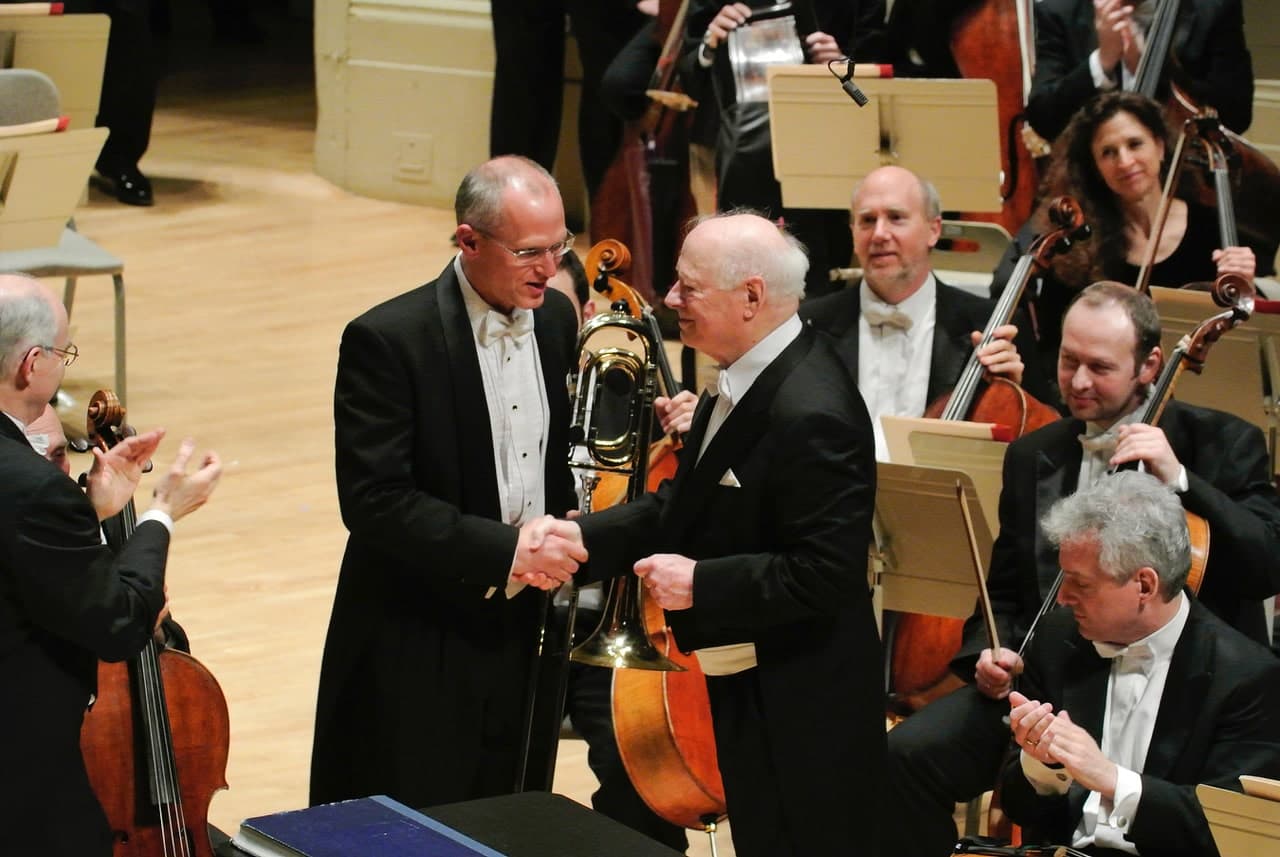
The embattled leadership of the Boston Symphony Orchestra will confront mounting criticism Wednesday as its board of trustees holds a high-stakes meeting with musicians, following the abrupt dismissal of music director Andris Nelsons—a decision that has sent shockwaves through the classical music world and drawn sharp rebukes from former orchestra members. The gathering at Symphony Hall comes amid an escalating crisis of confidence, with allegations of a breach of institutional trust, administrative turmoil, and a deteriorating workplace culture threatening the 145-year-old ensemble’s artistic legacy and financial stability.
- The Boston Symphony Orchestra’s board of trustees faces a pivotal meeting with musicians amid fallout over the sudden dismissal of music director Andris Nelsons.
- Former orchestra members accuse the board of violating a 'sacred trust,' citing administrative upheaval and a toxic work environment.
- Questions persist about the board’s long-term vision for the orchestra, including succession planning and strategies to address declining audiences and funding.
How the Sudden Dismissal of Andris Nelsons Exposed Deep Rifts at the Boston Symphony Orchestra
A Decision Announced in Minutes, Not Months
The Boston Symphony Orchestra’s announcement on [insert date if known, otherwise generalize] that it had terminated the tenure of music director Andris Nelsons—one of the most respected conductors of his generation—caught nearly everyone by surprise. While the board claimed the decision was the culmination of a years-long process, musicians were informed of the change just minutes before it became public. This lack of transparency has fueled accusations of a rushed and secretive process, further eroding trust between leadership and the orchestra’s players, staff, and stakeholders.
Nelsons, who had led the BSO since 2014 and was set to conclude his tenure in 2026, had cultivated a reputation for artistic excellence and a deep commitment to the orchestra’s Tanglewood summer festival. His departure, coupled with the abrupt exits of several senior administrators in recent years, has left many questioning whether the board is prioritizing stability or pursuing an unarticulated agenda that may not align with the orchestra’s historic mission.
The ‘Sacred Trust’: Why Retired Musicians Are Leading the Backlash
During my years as a BSO member, it was the people who made the institution—BSO, Inc.—what it was. The players, of course, stood at the top of that list, for without them there is no music... Today, that sacred trust has been broken.
The most vocal critique has come from Douglas Yeo, a retired bass trombonist who served from 1985 to 2012. In a searing letter to the board, Yeo—a former John Moors Cabot chair—expressed outrage over what he described as a betrayal of the institution’s founding principles. ‘The influence [of the BSO] extended far beyond the many reminders of the BSO in my home—photographs, framed tour posters, concert programs, and the like,’ Yeo wrote. ‘My years in the orchestra profoundly informed my teaching and my engagement with others, and I remain deeply proud to have contributed, in some measure, to its long history of music-making in Symphony Hall, at Tanglewood, and around the world.’
Yeo’s letter underscores a generational divide among BSO stakeholders. Many retired musicians, who view the orchestra as a lifelong legacy, see the dismissal as symptomatic of deeper governance failures. The board’s perceived opacity, they argue, contrasts sharply with the transparent leadership that has historically defined institutions like the BSO.
Administrative Turmoil: A Board in Crisis or a Strategy in the Making?
Senior Management Exits and the Consolidation of Power
The BSO’s administrative shakeups extend beyond the podium. Over the past three years, key figures in senior management have exited abruptly, often under the euphemistic banner of ‘retirement.’ Industry observers note that these departures align with the arrival of CEO Chad Smith, who has centralized authority in ways that some insiders describe as authoritarian. ‘It is difficult to imagine that a change on the podium will address these deeper issues,’ Yeo wrote, highlighting concerns that the board’s focus on artistic leadership is a distraction from systemic failures.
Smith, who assumed the presidency in [insert year if known, otherwise generalize], has overseen a restructuring that critics argue prioritizes cost-cutting and top-down control over the collaborative culture that has long defined the BSO. Former staffers, speaking on condition of anonymity, describe a workplace where dissent is discouraged and institutional memory is undervalued—a far cry from the ‘sacred trust’ that Yeo and others claim once defined the orchestra.
The Broader Challenges Facing American Orchestras—and Why This Matters
The Boston Symphony Orchestra’s turmoil is not an isolated incident. Since the September 11, 2001, terrorist attacks, American orchestras have faced existential threats: shrinking audiences, declining philanthropic support, and the existential shock of the COVID-19 pandemic, which forced months-long closures and furloughs. The BSO, like its peers, has grappled with these pressures while trying to maintain its position as one of the world’s leading cultural institutions. Yet the board’s handling of Nelsons’ dismissal has raised a critical question: Can an orchestra navigate these challenges without stable, transparent leadership that commands the respect of both musicians and patrons?
A Legacy at Risk: Tanglewood and the BSO’s Cultural Capital
The Boston Symphony Orchestra’s reputation is inseparable from its storied history and two iconic venues: Symphony Hall in Boston and Tanglewood in the Berkshires, where the orchestra’s summer festival draws tens of thousands of visitors annually. Nelsons played a pivotal role in expanding Tanglewood’s reach, including innovative programming that attracted younger audiences. His sudden departure threatens to destabilize a cornerstone of the orchestra’s brand and financial health. ‘What concrete strategy exists to address declining audiences and philanthropy?’ Yeo’s letter asks, a question that now hangs over the BSO with urgent weight.
Who Will Step Into the Breach? The Succession Crisis
With Nelsons’ tenure abruptly terminated, the BSO board faces an unenviable task: finding a successor capable of restoring confidence while navigating the orchestra’s financial and reputational challenges. Industry analysts note that the pool of conductors willing to take on such a high-profile role—especially one fraught with institutional uncertainty—is limited. ‘What conductor of stature would willingly step into an environment now perceived as unstable, where artistic priorities appear secondary?’ Yeo’s letter underscores a harsh reality: the BSO may struggle to attract top-tier talent unless it can articulate a clear, credible vision for its future.
A Historic Institution at a Crossroads
Founded in 1881 by Henry Lee Higginson, the Boston Symphony Orchestra has long been a pillar of American cultural life, its history intertwined with the nation’s musical evolution. From the tenure of legendary conductors like Serge Koussevitzky and Charles Munch to the modern era of Nelsons, the orchestra has been a training ground for generations of musicians and a beacon for classical music enthusiasts worldwide. Yet the board’s actions have placed that legacy in jeopardy. As Yeo wrote, ‘The breach of trust—a trust reaching back to the orchestra’s founding in 1881—is profound and deeply damaging.’
What’s Next? The Path Forward for the BSO
The Wednesday meeting between the board and musicians is unlikely to resolve the BSO’s crisis, but it may offer a glimpse into whether the leadership is willing to confront its failures. Key demands from stakeholders likely include greater transparency, a clear articulation of the board’s long-term strategy, and concrete steps to address the toxic workplace culture that has driven away talent. For the BSO to reclaim its standing, observers argue, the board must move beyond damage control and present a vision that aligns with the institution’s historic values—and the expectations of its musicians, patrons, and the broader classical music community.
The Global Context: How Other Orchestras Have Weathered Leadership Crises
The BSO is not alone in confronting leadership challenges. Orchestras worldwide have grappled with similar issues, from the Philadelphia Orchestra’s 2011 bankruptcy to the London Symphony Orchestra’s 2020 pay dispute with its players. In each case, the resolution required a combination of transparent governance, financial discipline, and a renewed commitment to artistic excellence. The BSO’s board now faces a reckoning: Will it repeat the mistakes of its peers, or will it seize this moment to rebuild trust and secure the orchestra’s future?
Frequently Asked Questions
- Why was Andris Nelsons dismissed from the Boston Symphony Orchestra?
- The Boston Symphony Orchestra’s board terminated music director Andris Nelsons abruptly, though the board has not provided a detailed public explanation. Critics, including retired musicians, argue the decision reflects deeper governance failures and a toxic workplace culture rather than a clear artistic or financial strategy.
- What role does the Boston Symphony Orchestra’s board of trustees play in its governance?
- The board of trustees is responsible for overseeing the strategic direction, financial health, and long-term sustainability of the Boston Symphony Orchestra. Trustees hire and evaluate key leadership, including the music director and CEO, and are tasked with preserving the institution’s artistic legacy.
- How has the COVID-19 pandemic affected American orchestras like the BSO?
- The pandemic forced American orchestras to suspend performances for months, leading to significant revenue losses from ticket sales and donations. Many institutions, including the BSO, relied on federal relief funds and emergency fundraising to survive, while also adapting to virtual and hybrid programming.


