
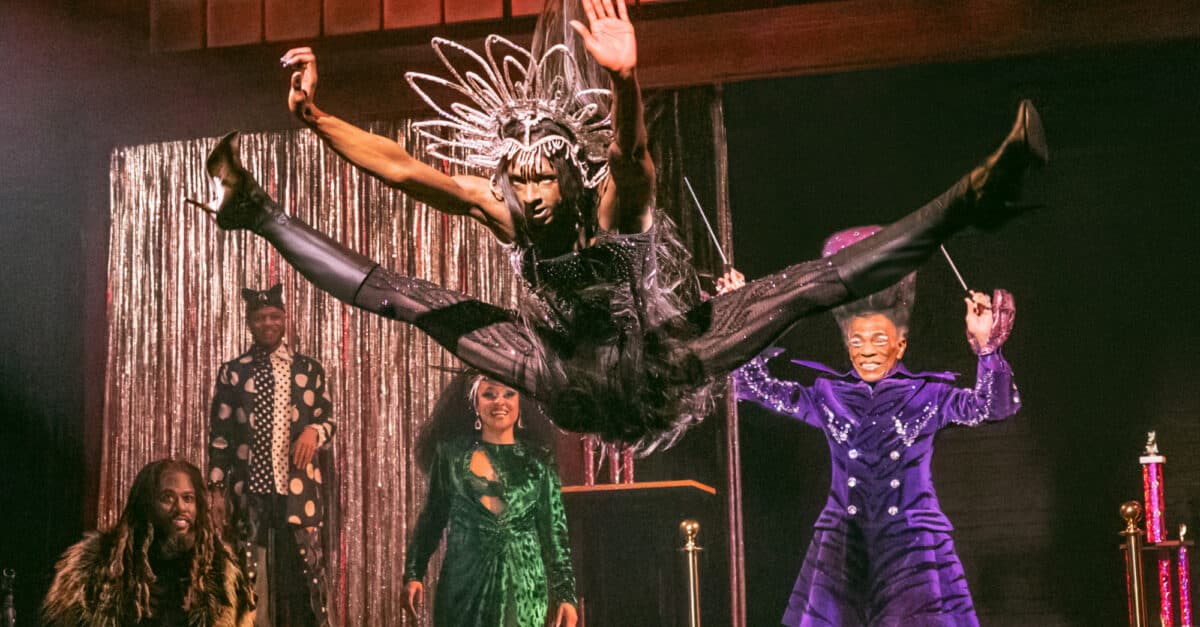
New York’s Broadway has witnessed a seismic shift in the way classics are reimagined, and none is more striking than the revival of Andrew Lloyd Webber’s *Cats* as *Cats: The Jellicle Ball*. Opening to critical acclaim, the production transforms the Tony-winning musical into a dazzling ode to Ballroom culture, where the Jellicle Cats strut down a runway in drag-inspired couture, vogueing to a reworked score that blends Lloyd Webber’s original melodies with modern dance beats. The revival, co-directed by Zhailon Levingston and Bill Rauch, features a cast led by Tony winner André De Shields and a creative team that includes vogue legend Omari Wiles, whose choreography infuses the show with the raw energy of a real Ballroom scene. While the original 1982 production captivated audiences with its whimsical cat personas and Gillian Lynne’s ballet-inspired choreography, this revival strips away the kitsch to expose the grit and glamour of a subculture that has shaped queer identity for over a century.
How the ‘Cats: The Jellicle Ball’ Revival Merges Musical Theater with Ballroom Culture
When Andrew Lloyd Webber’s *Cats* first premiered on Broadway in 1982, it was a spectacle of leotards, leg warmers, and choreographed ballet—an era-defining interpretation of T.S. Eliot’s *Old Possum’s Book of Practical Cats*. Nearly 40 years later, the musical is back with a radical reinterpretation that leans into Ballroom culture, the underground LGBTQIA+ subculture that emerged in 1920s New York City and flourished in the 1980s. This revival, titled *Cats: The Jellicle Ball*, reimagines the Jellicle Cats not as feline ballerinas but as drag ball contestants competing for the title of “Top Cat” in a celebration of self-expression, resilience, and community.
The Evolution of Ballroom Culture in Theater
Ballroom culture, which originated in Harlem’s drag balls of the 1920s, became a cornerstone of queer Black and Latino life in the decades that followed. The scene was immortalized in the 1990 documentary *Paris Is Burning*, which chronicled the lives of its participants—many of whom were Black and Latino LGBTQIA+ individuals navigating poverty, racism, and homophobia. The culture gave birth to vogueing, a highly stylized dance form that mimics the poses of fashion models, and introduced “categories” where contestants compete in themes ranging from “realness” to “banjee” to “butch queen.”
While *Cats* has always been a plotless musical centered on a tribe of cats gathering for an annual ball, the connection to Ballroom was not immediately obvious in its original staging. The 1982 production, directed by Trevor Nunn and choreographed by Gillian Lynne, leaned into a fantastical, quasi-balletic aesthetic that reflected the disco-era’s love of glitter and glamour. By contrast, *Cats: The Jellicle Ball* embraces the raw, unapologetic energy of Ballroom, where the runway is a literal stage and the cats are contestants vying for rebirth—mirroring the Ballroom scene’s tradition of “shantaying” (celebrating) those who have fought through adversity.
A Cast of Legends and Icons
The revival’s cast is a who’s who of Broadway veterans, drag royalty, and Ballroom legends. Leading the ensemble is Tony winner André De Shields, reprising his role as Old Deuteronomy, the wise and benevolent leader of the Jellicle Cats. The cast also includes Chasity Moore as Grizabella, a role she originated Off-Broadway, and Sydney James Harcourt as Rum Tum Tugger, a part he played in the 2016–2017 revival. Drag icon Leiomy Maldonado, known as the “Wonder Woman of Vogue,” joins the production as Mavacity, while Kya Azeen (a *Pose* alum) and Bryson Battle (*The Voice*) bring their star power to Etcetera and Jellylorum, respectively.
The creative team behind *Cats: The Jellicle Ball* is equally star-studded. Vogueing choreography is handled by Omari Wiles and Arturo Lyons, the latter of whom co-founded the House of Ninja, a legendary Ballroom house. Costume designer Qween Jean, a prominent figure in Ballroom fashion, outfits the cast in garments that blend haute couture with the bold, gender-fluid aesthetics of drag. Scenic designer Rachel Hauck transforms the Shubert Theatre into a Ballroom paradise, complete with a runway that extends into the audience and onstage seating on either side—an immersive experience that places spectators at the heart of the action.
The Musical and Theatrical Reinvention of a Classic
Lloyd Webber’s score, which includes iconic numbers like “Memory” and “The Jellicle Ball,” has been reimagined with modern dance beats by arranger Trevor Holder. The result is a fusion of classic musical theater and contemporary club music, reflecting the show’s newfound identity as a celebration of queer nightlife. The original 1982 production’s choreography was rooted in ballet and modern dance, but *Cats: The Jellicle Ball* embraces vogueing as its primary movement language—a style that emphasizes sharp, angular poses, dramatic floorwork, and the illusion of floating.
Why the Ballroom Revival of ‘Cats’ Matters for LGBTQ+ Representation
The decision to reinterpret *Cats* through the lens of Ballroom culture is more than just a creative choice; it’s a political statement. Ballroom has long been a space of resistance for LGBTQIA+ communities, particularly those of color, who have used the scene as a means of survival, self-expression, and collective joy. By centering this subculture in a high-profile Broadway production, *Cats: The Jellicle Ball* brings mainstream visibility to a community that has historically been marginalized in both theater and society.
From Underground to Onstage: The Journey of Ballroom in Theater
While Ballroom culture has influenced drag performances for decades—most notably through shows like *RuPaul’s Drag Race*—its integration into a classic musical like *Cats* is groundbreaking. The original 1982 production was a product of its time, reflecting the broader cultural trends of the era. Today, however, the conversation around representation has evolved, and productions like *Cats: The Jellicle Ball* reflect a growing demand for stories that center queer and Black voices. The revival also aligns with a broader trend in Broadway toward reimagining classics through a contemporary lens, as seen in recent productions like *Moulin Rouge! The Musical* and *& Juliet*.
The Role of Sensitivity and Authenticity in the Production
To ensure the production remained faithful to Ballroom culture, the creative team consulted with sensitivity specialists and gender consultants. Dramaturg Josephine Kearns and sensitivity specialist Ann James worked closely with the cast and crew to navigate the nuances of the scene, from the correct terminology for Ballroom roles to the historical significance of vogueing. “This is not a caricature of Ballroom—it’s a celebration of it,” Kearns said in an interview. “We wanted to honor the roots of the culture while also making it accessible to a Broadway audience.”
What Critics Are Saying About ‘Cats: The Jellicle Ball’
Early reviews of *Cats: The Jellicle Ball* have been overwhelmingly positive, with critics praising the production’s bold reinvention, immersive staging, and powerful performances. *The New York Times* called it “a seismic shift in how we think about classic musicals,” while *Variety* described the choreography as “a masterclass in vogueing.” The *New York Post* hailed André De Shields’ performance as “a tour de force of charisma and wisdom,” and noted that the revival’s blend of Lloyd Webber’s score with modern dance beats “feels like a homecoming for the music.”
Not all critics were unanimous in their praise, however. Some theatergoers accustomed to the original *Cats* have struggled with the departure from its whimsical, child-friendly aesthetic. “It’s not the *Cats* I remember, but that’s the point,” wrote *The Hollywood Reporter*. “This production is for those who see the beauty in the grit, the glamour in the struggle.”
The Future of ‘Cats’ and the Broader Impact on Broadway
With *Cats: The Jellicle Ball*, Andrew Lloyd Webber’s musical enters a new chapter—one that embraces the fluidity of identity and the power of collective storytelling. The revival arrives at a time when Broadway is increasingly focused on diversity, equity, and inclusion, and its success could pave the way for more classics to be reimagined through contemporary cultural lenses. As for *Cats* itself, the show’s longevity speaks to its universal themes of belonging and renewal, which resonate just as deeply in a Ballroom scene as they did in a 1980s ballet studio.
Key Takeaways
- Broadway’s *Cats: The Jellicle Ball* reimagines the 1982 Tony-winning musical through the lens of Ballroom culture, blending vogueing, drag aesthetics, and Lloyd Webber’s iconic score.
- The revival features a cast led by Tony winner André De Shields and drag icon Leiomy Maldonado, with choreography by vogue legend Omari Wiles and a creative team that includes Ballroom fashion designer Qween Jean.
- Ballroom culture, which originated in 1920s Harlem and was immortalized in the 1990 documentary *Paris Is Burning*, has long been a space of resistance and self-expression for LGBTQIA+ communities of color.
- Critics have praised the production’s bold reinvention, immersive staging, and powerful performances, though some purists have struggled with the departure from the original *Cats* aesthetic.
- The revival arrives at a pivotal moment for Broadway, reflecting a broader push for diversity and inclusion in classic storytelling.
Frequently Asked Questions
Frequently Asked Questions
- What is Ballroom culture, and how does it relate to ‘Cats: The Jellicle Ball’?
- Ballroom culture is an underground LGBTQIA+ subculture that originated in 1920s New York City and flourished in the 1980s. The scene gave birth to vogueing and inspired categories where participants compete in themes of fashion, gender, and identity. In *Cats: The Jellicle Ball*, the Jellicle Cats are reimagined as Ballroom contestants, with the musical’s annual ball transformed into a runway competition.
- Who are some of the key cast members in the revival?
- The revival features Tony winner André De Shields as Old Deuteronomy, Chasity Moore as Grizabella, and drag icon Leiomy Maldonado as Mavacity. Other standout performers include Sydney James Harcourt as Rum Tum Tugger, Kya Azeen (*Pose* alum) as Etcetera, and Bryson Battle (*The Voice*) as Jellylorum.
- How has the original *Cats* score been reworked for this production?
- The score, which includes iconic numbers like “Memory” and “The Jellicle Ball,” has been augmented with modern dance beats by arranger Trevor Holder. The result is a fusion of classic musical theater and contemporary club music, reflecting the show’s newfound identity as a celebration of queer nightlife.


