Dolly Parton, the country music legend who turned an impoverished East Tennessee childhood into a six-decade career as a singer, songwriter, actress, businesswoman and philanthropist, has died at 80. Her family announced her death Tuesday, with her nephew Brian Seaver saying she had asked him years ago to make the announcement when the time came. Parton leaves behind more than 100 million records sold, 11 Grammy Awards and an entertainment empire that stretched from music and movies to Dollywood and children's literacy.
What Happened
Seaver announced Parton's death in a video posted to her Instagram. He did not give a cause of death. Seaver, who served as Parton's head of security for more than two decades after his father held the role, said the moment was one Parton had prepared him for years earlier. He also said the family believed she was now with her late husband, Carl Dean, her parents and other loved ones. Tributes quickly followed. President Donald Trump ordered U.S. flags lowered to half-staff nationwide for one week as stars across the entertainment industry mourned the country icon.
Parton's Final Years
Parton's death followed a period in which she had acknowledged health challenges. In May, she canceled a Las Vegas performance and said she had been undergoing treatment for kidney stones for several years. She also said her immune and digestive systems had been struggling over the previous few years and that doctors were working to rebuild and strengthen them. Just days before her death, Parton said she was still recovering from the loss of Dean, who died in March 2025 at age 82. But she made clear that she still intended to work. "Even though I’m still healin’," Parton said, "I’m still workin’!" She said she had many things she still wanted to accomplish and planned to keep working as long as she could.
From a One-Room Cabin to Country Royalty
Parton was born Jan. 19, 1946, in a one-room cabin near Sevierville, Tennessee. She was the fourth of 12 children in a family that struggled financially. Her father, Robert Lee Parton, worked on the family farm and took construction jobs to supplement the family's income. He could not read or write. Her mother, Avie Lee Parton, ran the household and introduced her daughter to Appalachian music. Church became Parton's first stage. By 13, she was appearing on local radio and television, and she performed at the Grand Ole Opry, where she met Johnny Cash. After graduating from Sevier County High School in 1964, Parton moved to Nashville. She initially built her reputation as a songwriter before establishing herself as a performer.
"Jolene" Changed Everything
Parton released her first record, "Hello, I'm Dolly," three years after leaving high school. Her career accelerated after she became a regular on Porter Wagoner's shows. In 1974, she reached No. 1 on the country charts with "Jolene," a song she wrote after drawing inspiration from a woman who flirted with her husband during their early marriage. The hit was followed by four more country chart-toppers. Among them was "I Will Always Love You," which Parton wrote and performed before Whitney Houston turned it into a massive hit in 1992. Parton also won her first Grammy for "Here You Come Again."
Hollywood, Dollywood and a Business Empire
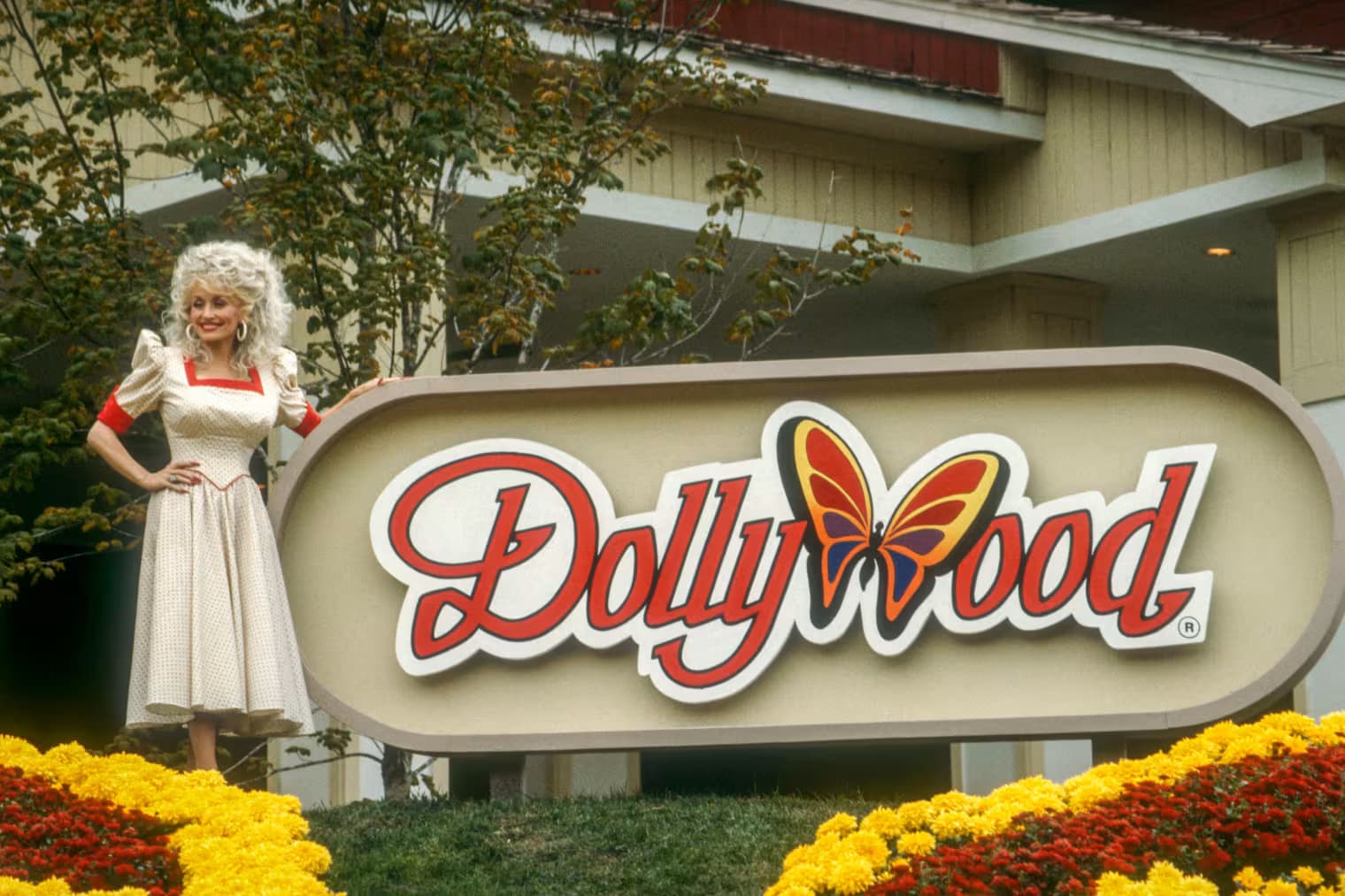
Parton's appeal quickly moved beyond country radio. She starred in films including "9 to 5," "Steel Magnolias" and "The Best Little Whorehouse in Texas." For "9 to 5," she also wrote and performed the title song. She earned a star on the Hollywood Walk of Fame in 1984 and became one of America's most recognizable entertainers. In 1986, she opened Dollywood in the Great Smoky Mountains near her hometown. The 165-acre park features roller coasters, a bald eagle sanctuary, music and crafts tied to Appalachian heritage. Parton also became a formidable businesswoman, maintaining creative control in an industry dominated by men. Her fortune was estimated at $650 million, according to the source material.
A Philanthropic Legacy That Reached Millions
Parton's influence extended far beyond entertainment. She established the Dollywood Foundation to support poverty relief and education in East Tennessee. Her most enduring philanthropic project may be the Imagination Library, which provides free books to children. Since its creation, the program has distributed more than 300 million books across the United States, Canada, Australia, the United Kingdom and the Republic of Ireland. The program was inspired by her father, whose inability to read and write Parton believed limited his opportunities. She later recalled how proud he was to participate in the effort and hear children call her the "Book Lady." Parton also donated $1 million to coronavirus research at Vanderbilt University in 2020. The research contributed to work that led to the development of Moderna's COVID-19 vaccine.
A Star Who Refused to Fit One Label
Parton's public identity crossed traditional lines. She openly discussed her Christian faith while supporting LGBTQ rights, including marriage equality and transgender people. She also generally avoided partisan politics. In 2016, she said Hillary Clinton was highly qualified to be president but later stressed that she was not endorsing either Clinton or Donald Trump. Her humor was part of her public persona. Asked about her appearance, she once joked, "It costs a lot of money to look this cheap." Behind the glamour, she remained closely tied to her Tennessee roots. She and Dean never had children, and Parton said that having no children gave her the freedom to devote herself to her work.
The Love Story With Carl Dean
Parton's marriage to Carl Dean lasted from 1966 until his death in 2025. Dean largely stayed out of the spotlight while Parton became one of the world's most recognizable entertainers. After his death, Parton described their relationship as a love that had lasted more than 60 years. Their private partnership became one of the few constants in a career defined by constant reinvention, from country music and Hollywood to business and philanthropy.
What Comes Next
Parton's death closes the life of an entertainer whose influence reached well beyond the music charts. Her songs, films, Dollywood and charitable programs will continue to carry her name and her connection to East Tennessee. Her family has not provided details about her death. The tributes now underway are likely to reflect the extraordinary breadth of her career, from "Jolene" and "I Will Always Love You" to the millions of children reached through the Imagination Library.
FAQ
How old was Dolly Parton when she died?
Dolly Parton was 80 years old when her family announced her death Tuesday.
What was Dolly Parton known for?
Dolly Parton was known as a country singer, songwriter, actress, businesswoman and philanthropist. She sold more than 100 million records and won 11 Grammy Awards.
What caused Dolly Parton's death?
Parton's family announced her death but did not provide a cause of death. In May, Parton had said she was receiving treatment for kidney stones and dealing with immune and digestive health problems.
Did Dolly Parton have children?
No. Parton and her husband, Carl Dean, did not have children. Parton said that not having children gave her more freedom to focus on her career.
What is Dolly Parton's biggest philanthropic project?
The Imagination Library is one of Parton's signature philanthropic efforts. The program has mailed more than 300 million free books to children in several countries.