
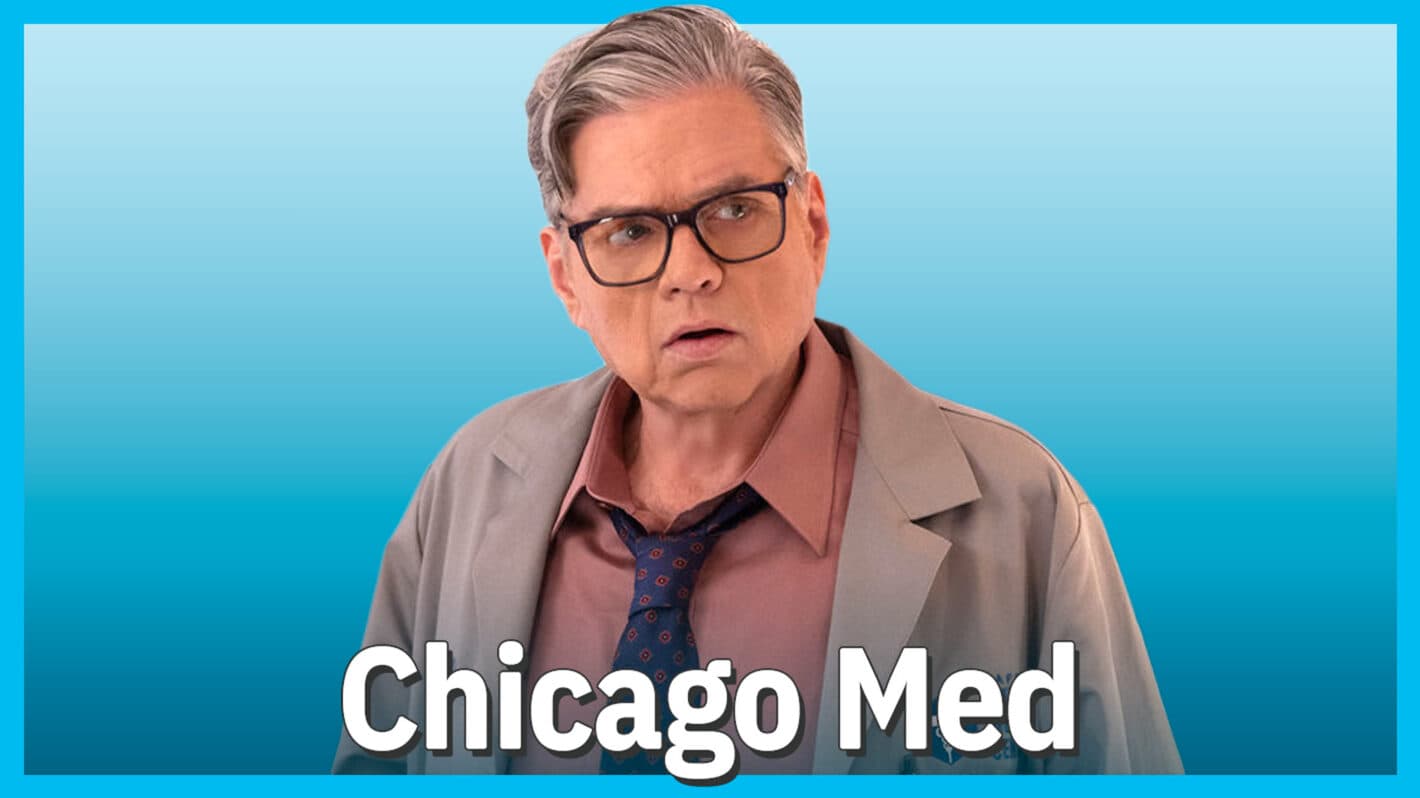
In a dramatic and emotionally charged turn of events, Dr. Daniel Charles—one of the most beloved characters in NBC’s long-running medical drama *Chicago Med*—suffers a sudden stroke in Season 11, Episode 16, titled “The Book of Charles.” The episode, which aired on April 4, 2024, delivers a shocking cliffhanger for fans who have followed Platt’s character since the show’s debut in 2015. The moment is the culmination of a season in which Charles has grappled with professional setbacks, personal demons, and mounting health concerns, all while trying to maintain his reputation as the hospital’s empathetic but firm Chief of Psychiatry. Behind the scenes, actor Oliver Platt and showrunner Allen MacDonald revealed the depth of the character’s unraveling, the creative choices behind the explosive confrontation with Sharon Goodwin, and the medical stakes of Charles’ sudden collapse.
- Dr. Daniel Charles suffers a stroke in Chicago Med Season 11 Episode 16 after a traumatic shift involving patient confrontations and professional allegations.
- Showrunner Allen MacDonald confirms the health crisis was foreshadowed throughout the season, particularly around Charles’ medication non-compliance.
- Oliver Platt and Epatha Merkerson (Sharon Goodwin) filmed an emotionally intense fight scene that left both actors deeply moved and disturbed.
- The episode explores themes of mental health, caregiver burnout, and the fragility of professional identity under pressure.
How a Traumatic Shift Unraveled Dr. Charles’ Emotional and Physical Health
The events of “The Book of Charles” unfold during a single, harrowing 12-hour shift at Gaffney Memorial Hospital’s psychiatric ward. Charles, known for his calm demeanor and sharp clinical insights, faces a series of professional and personal challenges that chip away at his stability. The episode opens with Charles answering calls on the hospital’s suicide prevention hotline—a role that hits close to home given his own history of depression. When a caller disconnects mid-conversation, Charles is haunted by the man’s final words, replaying the moment in his mind as he tries to focus on his patients. His distress is palpable, setting a tone of mounting tension.
Patient Conflicts and Professional Accusations Push Charles to the Brink
Charles’ troubles escalate when he encounters three patients who challenge his authority and empathy. First, a man refuses to acknowledge he was sexually assaulted by a fellow inmate, dismissing Charles’ gentle probing as invasive. The psychiatrist’s frustration grows when he realizes the patient’s denial is rooted in shame and fear of retaliation. Next, a young woman named Sage accuses Charles of emotional manipulation, arguing that he derives a sense of purpose from fixing broken people. Her claim that he needs sick patients to feel whole strikes a nerve. The confrontation culminates when Sage deliberately swallows drain cleaner in an attempt to force a life-saving surgery—a desperate act that leaves Charles visibly shaken. ‘You’re not helping anyone,’ she tells him, her words echoing in his mind long after the shift ends.
A Daughter’s New Relationship Triggers Familial Tension
Personal turmoil adds another layer to Charles’ unraveling. His adult daughter, Anna (played by Hannah Riley), has begun a new relationship following her suicide attempt in the Season 11 finale. To Charles, the timing feels reckless, and he voices his disapproval during a heated argument in the hospital parking lot. Anna, now more assertive and self-aware, pushes back against what she perceives as his overprotectiveness. ‘I’m not her patient,’ she tells him. ‘I’m your daughter.’ The exchange leaves both characters emotionally raw, with Charles questioning whether he’s failing as a father as much as he’s failing as a doctor.
The Explosive Fight Between Dr. Charles and Sharon Goodwin: A Turning Point
Amidst the chaos, Sharon Goodwin (Epatha Merkerson)—the hospital’s steadfast CEO—receives a call requesting a reference for Charles to step into a new administrative role. Charles initially resists, insisting he belongs on the front lines of patient care. But when Sage files an official complaint against him for verbal abuse, the hospital’s HR protocols force Sharon to initiate a formal investigation. Though Sharon assures Charles she trusts him implicitly, his perception shifts. ‘You’re calling me a liar,’ he accuses her during a blazing confrontation in her office. Their argument, which Platt described as one of the most intense he’s ever filmed, marks a turning point in Charles’ emotional trajectory. ‘Epatha and I were so traumatized shooting that scene,’ Platt admitted. ‘And yet it was also really fun because we’d never really gone there. … Charles is the one who’s losing it a bit, and very much I think the instigator of this row.’
“Epatha and I were so traumatized shooting that scene. And yet it was also really fun because we’d never really gone there. … Charles is the one who’s losing it a bit, and very much I think the instigator of this row. It felt very strange to us to do that, to be yelling at each other in character.” — Oliver Platt on the emotional intensity of the Charles-Goodwin confrontation
A Stroke in Real Time: How the Episode Concludes with a Medical Crisis
As the episode reaches its climax, Charles’ physical health deteriorates in tandem with his mental state. During a moment of respite in his office, he experiences blurred vision and dizziness. In a disorienting sequence, he collapses to the floor—only to find himself standing in his childhood home, face-to-face with his late mother. ‘You sure it’s not a nightmare?’ she asks, her presence both comforting and haunting. The scene abruptly cuts back to reality: Charles is sprawled on the floor of his office, having suffered a stroke. Showrunner Allen MacDonald confirmed the diagnosis to TV Insider but remained deliberately vague about the severity. ‘It’s something that we’ve been kind of setting up the whole season,’ MacDonald explained. ‘Oliver and I particularly paid close attention to earlier in the season that Charles was having trouble with his medication, and he went to his doctor and tried to see what was going on.’
Foreshadowing and Season-Long Build-Up
The stroke does not come out of nowhere. Throughout Season 11, subtle clues have hinted at Charles’ deteriorating health. In earlier episodes, he struggles to manage his medication regimen, citing side effects and forgetfulness. He also brushes off concerns from colleagues like Dr. Crowe (Marina Squerciati), who notices his erratic behavior and declining concentration. These moments, though minor in isolation, take on new weight in hindsight. MacDonald emphasized that the show’s writing team intentionally wove these threads together to create a sense of inevitability. ‘We wanted to make sure the audience felt like this wasn’t just a random event,’ he said. ‘Charles has been under immense pressure, and his body is starting to reflect that.’
Behind the Scenes: Platt’s Commitment to Authentic Portrayal
For Oliver Platt, inhabiting the role of Dr. Daniel Charles over nine seasons has been both a privilege and a challenge. The character’s arc—from a reserved, highly respected psychiatrist to a man on the verge of burnout—reflects real-world issues faced by healthcare professionals, particularly in high-stress environments like emergency psychiatry. Platt, known for his nuanced performances in films like *The Ice Storm* and *A Beautiful Mind*, brings a quiet intensity to Charles, particularly in moments of vulnerability. In interviews, he has spoken about drawing from personal experiences and observations of doctors who sacrifice their own well-being for their patients. ‘Playing Charles has made me more aware of the toll that caregiving takes on people,’ Platt reflected. ‘We don’t always talk about how doctors deal with their own trauma while trying to help others.’
The Ripley Connection: A Rare Moment of Light in the Darkness
Amid the episode’s bleak tone, there is one bright spot: Charles’ relationship with his former patient Ripley (Luke Mitchell). Once a troubled young man with a violent past, Ripley has undergone significant personal growth, entering therapy and embracing a more stable life. In a rare tender moment, Charles tells Ripley he’s proud of his progress and shares a hug. The exchange serves as a reminder of the positive impact Charles has had on others, even as his own life unravels. For fans, it underscores the complexity of the character—capable of both deep empathy and profound fragility.
What’s Next for Dr. Charles? The Implications of a Stroke in the One Chicago Universe
With Charles’ health crisis unresolved, the immediate question for viewers is: How severe is his stroke, and will he recover? In the *One Chicago* universe—comprising *Chicago Med*, *Chicago Fire*, and *Chicago P.D.*—major health crises for beloved characters are not uncommon. From the death of Dr. Connor Rhodes (Colin Donnell) in Season 3 to the near-fatal shooting of Detective Jay Halstead (Jesse Lee Soffer) in *Chicago P.D.*, the franchise has a history of testing its characters’ resilience. MacDonald, however, remained tight-lipped about Charles’ long-term prognosis. ‘We’re not going to sugarcoat it—this is a serious situation,’ he said. ‘But we want to explore what it means for Charles to face his own mortality and how that changes him, whether he lives or not.’
The Broader Themes: Burnout, Accountability, and the Cost of Empathy
Beyond its immediate plot impact, Charles’ stroke serves as a narrative device to explore larger themes central to *Chicago Med* and the medical drama genre as a whole: the cost of empathy, the pressures of professional accountability, and the silent epidemic of healthcare worker burnout. Studies show that physicians, particularly those in psychiatry and emergency medicine, experience burnout at rates significantly higher than the general population, with symptoms including emotional exhaustion, depersonalization, and reduced sense of accomplishment. Charles’ collapse symbolizes the breaking point many caregivers face when the emotional labor of their work outweighs their capacity to cope. According to a 2023 report from the Mayo Clinic, nearly 63% of physicians reported at least one symptom of burnout, a statistic that underscores the real-world stakes of Charles’ fictional crisis.
Fan Reactions and the Future of Chicago Med
The announcement of Charles’ stroke has sparked widespread discussion among fans, many of whom have followed Platt’s character since the show’s inception. Social media platforms erupted with theories about his recovery, potential return, or even an unexpected exit. Platt, known for his active engagement with fans, shared his own emotional investment in the storyline. ‘This isn’t just a job for me,’ he said. ‘Charles feels like family. I’m as curious as anyone about what happens next.’ Meanwhile, the show’s writers are reportedly exploring multiple narrative paths, from a full recovery arc to a more permanent shift in the character’s role—or absence—within the series. As *Chicago Med* enters its 12th season, the fallout from Charles’ stroke will undoubtedly shape the hospital’s dynamic, particularly in the psychiatric wing where he has been a cornerstone for nearly a decade.
Key Takeaways: What Viewers Need to Know About Dr. Charles’ Stroke
- Dr. Daniel Charles suffers a stroke in *Chicago Med* Season 11, Episode 16 after a traumatic shift filled with patient confrontations and professional accusations.
- The episode foreshadowed Charles’ health crisis throughout the season, including his struggles with medication and erratic behavior.
- Oliver Platt and Epatha Merkerson’s explosive fight scene was one of the most intense in the show’s history, reflecting the characters’ deep emotional investment.
- Charles’ stroke highlights real-world issues of physician burnout, particularly in high-stress specialties like psychiatry.
- Showrunner Allen MacDonald has left Charles’ prognosis open-ended, teasing potential long-term consequences for the character and the hospital.
Frequently Asked Questions
- Will Dr. Charles recover from his stroke in Chicago Med?
- Showrunner Allen MacDonald has not confirmed Charles’ full recovery or fate. While the diagnosis is a stroke, the severity and long-term implications remain deliberately ambiguous, leaving room for multiple narrative outcomes in future episodes.
- Was Dr. Charles’ stroke foreshadowed in earlier episodes?
- Yes. Throughout Season 11, subtle clues were woven into episodes, including Charles’ struggles with medication, erratic behavior, and declining concentration. Showrunner Allen MacDonald confirmed these moments were intentional build-up.
- How has Oliver Platt described his experience filming Charles’ emotional scenes?
- Platt called the intense fight scene with Epatha Merkerson one of the most emotionally taxing experiences of his career. He noted that while deeply moving, it was also challenging to portray such raw conflict in character as seasoned professionals.


