
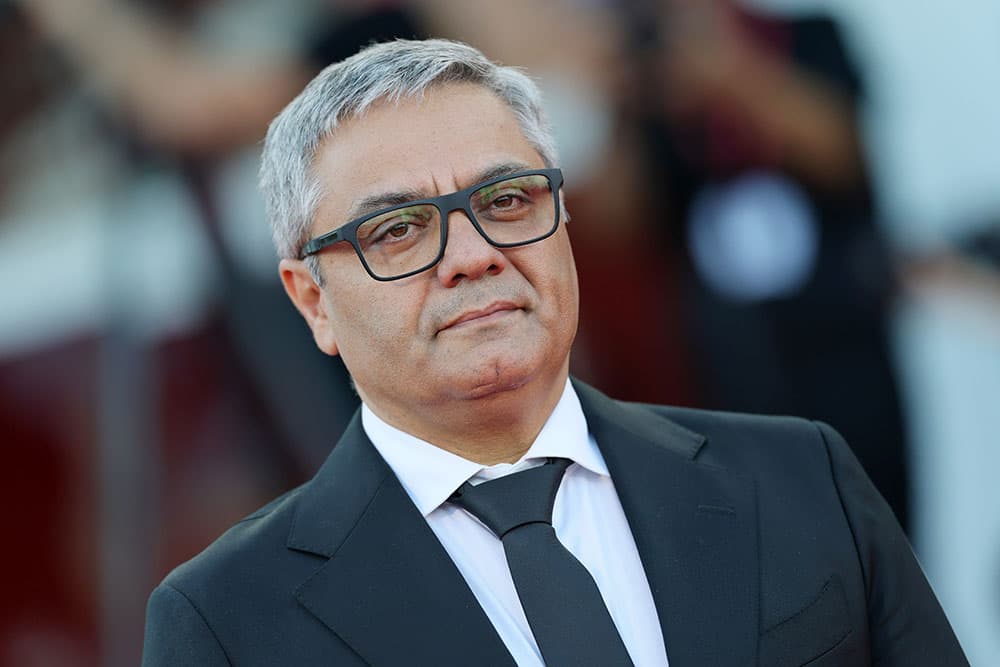
Iranian auteur Mohammad Rasoulof has spoken out on the death of Iran’s supreme leader Ayatollah Ali Khamenei, who was killed on Saturday in a combined U.S. and Israeli military strike. In a social media post that marks the first public comment by a major Iranian director on Khamenei’s death, Rasoulof called him “the most hated figure in the contemporary history of Iran.”
Rasoulof, who escaped to Germany in May 2024 after receiving a jail and flogging sentence from Iranian authorities for making “Sacred Fig” — which won the special jury prize at Cannes — said that “death was a cheap end” for Khamenei in an impassioned Instagram post on Sunday. He added that Khamenei, who died at 86, represented “the darkest possible dimensions of modern human existence under the shelter of fake religion and holiness.”
The second leader of the Islamic Republic, Khamenei ruled with an iron fist since rising to power in 1989. He had recently become known for suppressing protests, which in January caused thousands of killings as popular anger mounted amid hardships caused by economic sanctions and widespread corruption.
Besides Khamanei, the U.S. and Israeli airstrikes also killed Iran’s chief of army staff and defense minister, according to Iran’s state state-run IRNA news agency and other news outlets.
Rasoulof is among Iran’s most prominent directors, even though his films have been banned from screening in his home country. In 2011, the year he won two prizes at Cannes with his censorship-themed film “Goodbye,” he was sentenced with fellow director Jafar Panahi to six years in prison and a 20-year ban on filmmaking for alleged anti-regime propaganda. His sentence was later suspended and he was released on bail. In 2017, Iranian authorities confiscated Rasoulof’s passport upon his return from the Telluride Film Festival where his film “A Man of Integrity,” about corruption and injustice in Iran, had screened.
Meanwhile, the U.S. and Israel escalated their attack against Iran on Monday, pounding the country as Iranian forces hit back with missiles and drones against Israel and neighboring Gulf states with U.S. military bases.
Khamanei’s death has prompted some celebrations in the Iranian capital of Tehran, where it was cheered with fireworks and dancing in the streets on Saturday. However, there have also been protests on the part of Khamenei supporters.
Iranian regime change is considered a complicated matter due to the regime’s deep roots in the country — despite widespread opposition — and the political vacuum could evolve in unpredictable ways.


