
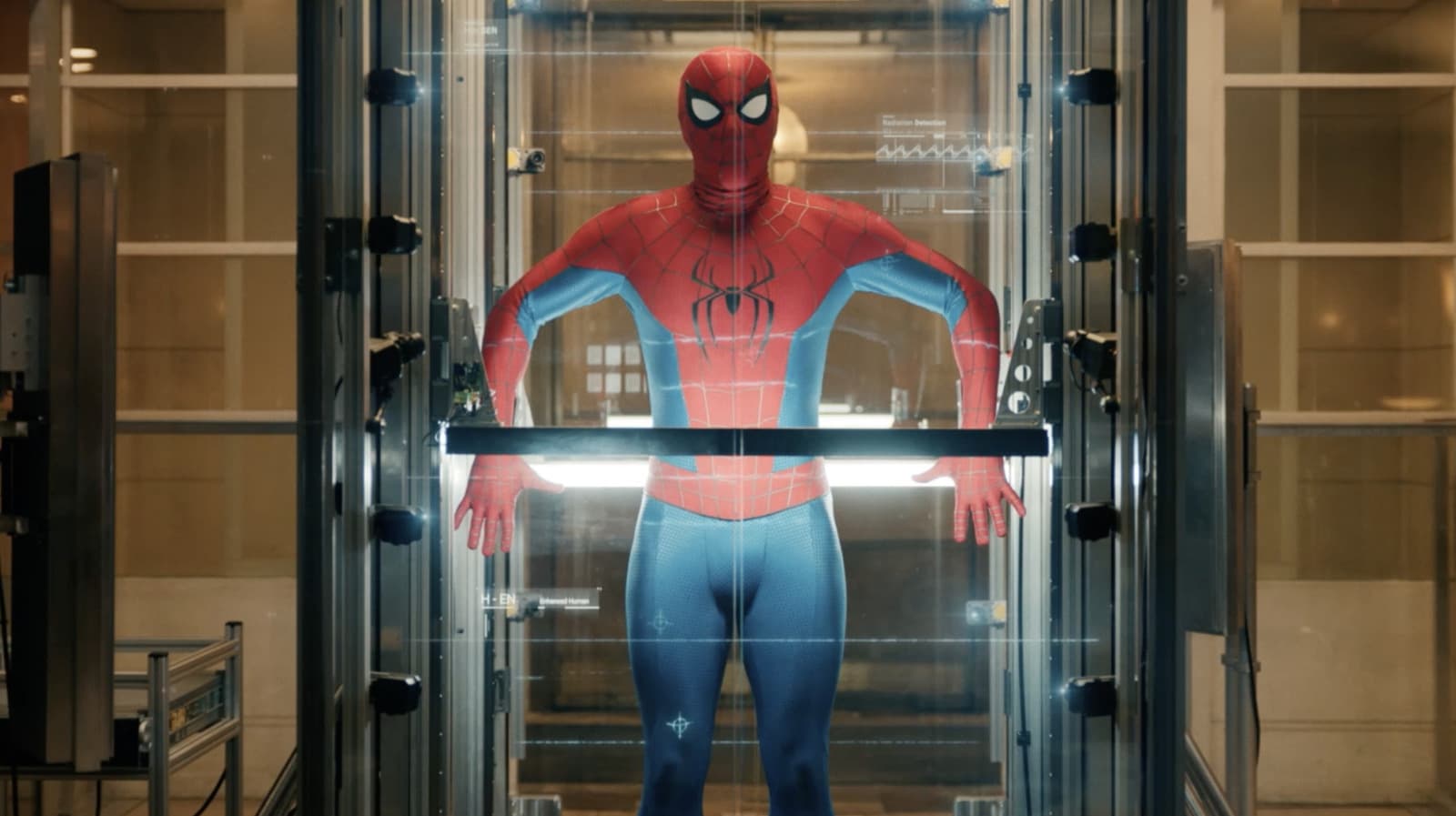
Tom Holland’s Spider-Man is about to undergo a radical transformation that could redefine the Marvel Cinematic Universe. The first trailer for *Spider-Man: Brand New Day*—set for a July 31, 2026, release—debuts a Peter Parker whose powers are evolving in ways unseen in previous films, drawing directly from Marvel’s acclaimed 2005–2006 comic book arc *The Other*. This storyline, which follows Peter’s physical and psychological rebirth after a near-death encounter with the vampiric villain Morlun, suggests Holland’s web-slinger may soon sport organic web shooters, heightened senses, and even the ability to commune with arachnids. The trailer’s cryptic visuals—including a cocoon-wrapped Parker and a face-to-face meeting with Mark Ruffalo’s Hulk—hint at a narrative pivot that inverts the formula of Sam Raimi’s *Spider-Man 2*, where Peter grappled with *losing* his powers. Instead, *Brand New Day* appears poised to explore what happens when Spider-Man gains *too much*, a narrative gamble that could reshape the MCU’s approach to its flagship hero.
From Comic Page to Big Screen: How 'The Other' Is Reshaping Spider-Man’s Future
The seeds for *Spider-Man: Brand New Day*’s narrative were planted over two decades ago in Marvel Comics’ *The Other*, a four-issue arc penned by writer Peter David and artist Rick Leonardi. The story begins with Peter Parker suffering from debilitating blackouts and a sudden deterioration of his powers—symptoms that eerily mirror the trailer’s depiction of Holland’s Parker, who stumbles through city streets disoriented, his eyes briefly turning black as he shatters an attacker’s sword. In the comics, Peter’s decline culminates in a brutal fight with Morlun, a near-immortal predator who feeds on the life force of Spider-People. Mortally wounded, Peter is reborn through a grotesque, almost monstrous transformation, sprouting new appendages and abilities under the guidance of *The Great Weaver*, a spider-deity who imbues him with enhanced powers to level the playing field.
The Biology of Spider Powers: Organic Webs and Beyond
One of the most striking alterations to Spider-Man’s mythos in *The Other* is the introduction of organic web shooters. Unlike the mechanical web-slingers Tony Stark provided in *Spider-Man: Homecoming*, Peter’s new abilities manifest as biological organs, visible as fleshy protrusions on his wrists. The trailer confirms this evolution, showing Parker waking inside a cocoon of biological webbing—a direct callback to the comic’s climax, where he emerges from a massive web sac suspended above Brooklyn Bridge. Fans of the MCU may recall a similar concept teased in *Spider-Man: No Way Home*, where Peter’s mechanical webs malfunctioned, forcing him to rely on organic alternatives. *Brand New Day* appears to double down on this idea, positioning Peter’s newfound biology as both a gift and a curse.
But biological webs are just the beginning. In the comics, Peter’s transformation grants him a suite of new abilities, including night vision, enhanced tactile sensitivity through his webbing, and the power to communicate with regular spiders—a skill that could add a layer of eerie symbiosis to Holland’s portrayal. The trailer offers a fleeting glimpse of these changes, particularly in a scene where Peter’s eyes briefly turn black, a visual cue tied to his evolving physiology. While the full extent of these powers remains under wraps, early promotional material suggests the film may blend elements from *The Other* with other comic arcs, such as *Spectacular Spider-Man* Vol. 2 #20, which also featured organic web shooters. This hybrid approach could create a Spider-Man unlike any seen in the MCU before.
A Monster Reborn: The Dark Side of Spider-Power
Peter’s transformation in *The Other* isn’t merely cosmetic—it’s visceral. The comics depict his body mutating in unsettling ways, including the growth of sharp teeth and stingers on his wrists, traits that could translate to the screen in *Brand New Day*. These changes reflect a darker, more primal version of Spider-Man, one that blurs the line between hero and monster. The trailer’s inclusion of a meeting with Mark Ruffalo’s Bruce Banner—long a figure of scientific and existential inquiry in the MCU—hints at a narrative thread where Peter’s new powers are tied to scientific experimentation or supernatural forces. Given the MCU’s past flirtations with biological horror (*WandaVision*, *Moon Knight*), this direction feels both timely and thematically rich, offering a chance to explore Spider-Man’s identity beyond the classic red-and-blue suit.
Inverting the Raimi Formula: What Happens When Spider-Man Gains Too Much?
Sam Raimi’s *Spider-Man 2* (2004) famously depicted Peter Parker struggling with the loss of his powers, a metaphor for his emotional and physical exhaustion as Peter Parker. *Spider-Man: Brand New Day* appears to flip this trope on its head, presenting a hero overwhelmed by *too many* abilities. This narrative choice aligns with modern superhero storytelling, where characters are increasingly defined by their limitations rather than their strengths. For Holland’s Peter, who has spent years balancing high school life, Avengers duties, and personal loss, the sudden acquisition of supernatural powers could serve as a crucible for his character, forcing him to confront new threats—both external and internal. The MCU has already laid groundwork for this shift, with *Spider-Man: Far From Home* teasing Peter’s vulnerability and *No Way Home* testing his resilience in a multiversal crisis. *Brand New Day* may push these themes further, framing Peter’s evolution as a crisis of identity rather than just a power-up.
The Great Weaver and Spider-Theology: Is There a Cosmic Stakes to Peter’s Transformation?
At the heart of *The Other* is *The Great Weaver*, a spider-deity who orchestrates Peter’s rebirth. While the comics frame this as a cosmic intervention, the MCU has rarely dabbled in overt spirituality, preferring to ground its mythology in science or multiversal mechanics. The trailer’s inclusion of a scene with Bruce Banner—who, alongside his Hulk persona, has been tied to gamma radiation and cosmic entities like the *World War Hulk* storyline—suggests *Brand New Day* may explore a scientific or pseudo-scientific explanation for Peter’s transformation. This could tie into the MCU’s broader exploration of alternate dimensions, as seen in *Loki* and *Doctor Strange in the Multiverse of Madness*, or position Peter’s powers as a byproduct of his frequent exposure to unstable energies (e.g., the Infinity Stones, the Nexus Events). Alternatively, the filmmakers might lean into the supernatural, framing *The Great Weaver* as a metaphor for Peter’s subconscious or the collective will of the spider-people across dimensions.
The Role of Villains: Morlun and Beyond in *Brand New Day*
No Spider-Man story is complete without a formidable foe, and *The Other* introduces one of the hero’s most terrifying: Morlun, a vampiric vampire-like predator who hunts Spider-People across dimensions. In the comics, Morlun nearly kills Peter before *The Great Weaver* intervenes, setting the stage for his rebirth. The MCU has yet to introduce Morlun, though the trailer’s dark, cocooned aesthetic hints at his presence. Given Marvel Studios’ penchant for multiversal storytelling, Morlun could serve as the catalyst for Peter’s transformation, or even as the film’s primary antagonist. Other potential villains could include *The Inheritors*, a family of superpowered beings who also prey on Spider-Totems, or even a new threat drawn from the *Brand New Day* comic storyline, which introduces the villain *Menace* (a dark reflection of Miles Morales). The film’s villain roster remains a mystery, but the trailer’s tone suggests a horror-tinged confrontation with something ancient and inescapable.
Key Takeaways: What Fans Can Expect from *Spider-Man: Brand New Day*
- Peter Parker’s powers are evolving organically, with biological web shooters, night vision, and spider communication teased in the trailer.
- The film adapts Marvel’s *The Other* comic arc, which follows Peter’s near-death rebirth and acquisition of new, unsettling abilities.
- *Brand New Day* inverts the *Spider-Man 2* formula, focusing on Peter’s struggle to control *too many* powers rather than losing them.
- A meeting with Mark Ruffalo’s Hulk suggests a scientific or cosmic explanation for Peter’s transformation, tying into broader MCU mythology.
- The trailer’s dark, cocooned aesthetic hints at a villain like Morlun, positioning Peter’s evolution as a fight for survival.
- Release date: July 31, 2026, marking a pivotal moment for Tom Holland’s Spider-Man in Phase 5 of the MCU.
How *Brand New Day* Fits Into the MCU’s Larger Spider-Man Saga
Tom Holland’s Spider-Man has been a cornerstone of the MCU since his debut in *Captain America: Civil War* (2016), but his character arc has grown increasingly complex. After the multiversal upheavals of *No Way Home* and the emotional gut-punch of *Far From Home*, Holland’s Peter Parker is at a crossroads. *Spider-Man: Brand New Day* arrives at a critical juncture in the MCU’s Phase 5, following the debut of *Deadpool & Wolverine* and the upcoming *Thunderbolts* film, both of which are expanding the boundaries of superhero storytelling. With *The Marvels* and *Blade* still to come, *Brand New Day* could serve as a bridge between Holland’s Peter and the next generation of Spider-People, including Shameik Moore’s Miles Morales in Sony’s animated *Spider-Man: Beyond the Spider-Verse*. The film’s emphasis on biological and cosmic horror also aligns with Marvel Studios’ recent push toward darker, more mature narratives, as seen in *Moon Knight* and *Loki*.
Why This Evolution Matters for Superhero Storytelling
Spider-Man has long been a symbol of resilience, but *Spider-Man: Brand New Day* signals a shift toward exploring the *cost* of power. In an era where superhero fatigue is a growing concern, films that subvert expectations—like *The Batman* or *Joker*—have thrived by focusing on the psychological toll of their protagonists. *Brand New Day*’s emphasis on Peter’s physical and emotional transformation could provide a fresh lens through which to view the character, particularly as he navigates adulthood, responsibility, and the weight of his legacy. Moreover, the film’s potential blend of biological horror and cosmic mythology reflects a broader trend in modern comics adaptations, where the line between hero and monster is increasingly blurred. For audiences, this could mean a Spider-Man who is as vulnerable as he is formidable, a dynamic that could resonate in an era of economic uncertainty and existential dread.
Frequently Asked Questions
Frequently Asked Questions
- What is the *Spider-Man: Brand New Day* trailer about?
- The trailer teases Tom Holland’s Peter Parker undergoing a radical physical and power-based transformation, adapting Marvel’s *The Other* comic arc. Key elements include organic web shooters, night vision, and a cocoon-wrapped Parker waking up in Brooklyn.
- When does *Spider-Man: Brand New Day* come out?
- The film is scheduled for a July 31, 2026, theatrical release, following Sony Pictures’ typical mid-summer slot for major Spider-Man films.
- Will *Brand New Day* introduce Morlun, the villain from *The Other*?
- The trailer’s dark aesthetic and Parker’s cocooned state strongly suggest Morlun’s involvement, though Marvel Studios has not confirmed the villain’s presence. Morlun is a key figure in *The Other* arc.


