
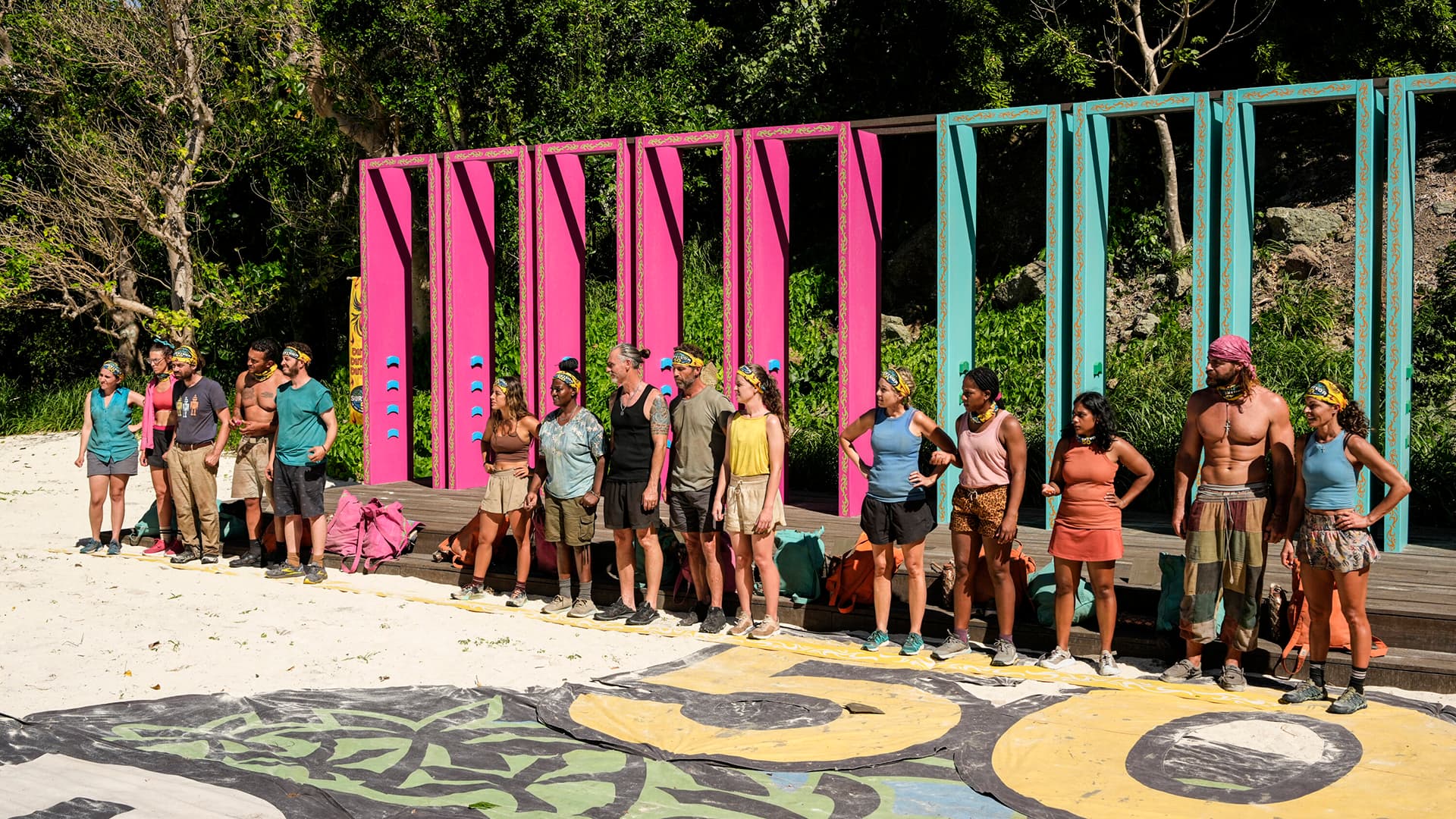
Halfway through Survivor 50, the landmark returnee season has become a battleground for fan expectations, producer-imposed twists, and the enduring legacy of the game’s most iconic players. With 17 contestants still standing—an unprecedented merge size—the season’s chaotic Blood Moon twist exposed the tension between Survivor’s competitive roots and CBS’s relentless push for novelty. Four Defector critics, including staff writers Luis Paez-Pumar and Kelsey McKinney, convened to dissect the season’s most polarizing moments, from Genevieve’s unlucky rock draw to Jeff Probst’s cringe-inducing meta-commentary, while debating who might ultimately walk away with the $1 million prize.
- Survivor 50’s 17-person merge is the largest in franchise history, amplifying strategic chaos and fan frustration over unplanned tribal splits.
- The Blood Moon twist, voted on by fans but executed without warning, backfired by forcing players into pre-existing alliances, undermining fair competition.
- Critics reserve particular scorn for Jeff Probst’s meta-commentary, including his insistence that fan-driven twists justify the season’s overstuffed format.
- Genevieve’s ousting—drawn by a literal raffle—epitomizes Survivor’s shift from skill-based gameplay to a high-stakes game of chance under producer interference.
- Predictions for the finale skew toward Cirie Fields and Rizo, but lingering twists and CBS’s Mr.Beast cameos threaten to overshadow strategic play.
How the Blood Moon Twist Exposed Survivor’s Identity Crisis
Survivor 50’s midseason merge wasn’t just large—it was structurally unsound. For the first time in franchise history, 17 players converged on a single beach, only to be immediately split back into three tribes of five after a single immunity challenge. The twist, dubbed the Blood Moon, was billed as a fan-voted spectacle, but its execution revealed a fundamental disconnect between Survivor’s competitive ethos and CBS’s appetite for spectacle. By forcing players into tribes without time to establish trust or alliances, the twist turned the game into a referendum on preexisting relationships rather than strategic innovation.
The Genevieve Gambit: Luck Over Skill?
Genevieve’s ousting in Episode 6 crystallized the Blood Moon’s flaws. After surviving multiple idol finds—only to be stymied by a Billie Eilish-themed "Boomerang Idol" planted by production—she landed on a tribe with Aubry, Christian, and Rick Devens, the exact coalition primed to eliminate her. Her exit, decided by a rock draw, felt less like a defeat and more like a raffle. As Luis Paez-Pumar noted, "There are two ways to watch Survivor: as a reality show, it’s undefeated. As a competition, it’s a glorified raffle." Her post-exit interviews underscored the absurdity: a player with two idols and top-tier social game fell victim not to a flaw in her strategy, but to the whims of a twist that prioritized drama over fair play.
Jeff Probst’s Meta Trap: When the Host Becomes the Villain
No figure embodies Survivor 50’s identity crisis more than host Jeff Probst, whose meta-commentary has shifted from guiding the narrative to justifying it. His insistence that fan-voted twists like the Blood Moon represent "what the fans want" has drawn ire from critics and players alike. As Jae Towle Vieira wrote, "Jeff’s framing of production’s worst decisions as ‘What The Fans Want’ rankles me worse than wet jeans or mushroom coffee." Even Probst’s forays into pop culture—rapping, shilling for Applebee’s, and dedicating half an episode to the soft rock icon Zac Brown—have felt less like harmless host antics and more like desperate bids to manufacture relevance in an era where Survivor’s cultural cachet has waned.
The problem with doing these split tribal councils with no warning or build-up is that the game defaults to preexisting relationships. There’s not enough time to build trust and voting blocks in one afternoon, so what else can you go on?
Returnee Seasons: Nostalgia vs. Innovation in Survivor 50
Survivor 50’s premise—bringing back 20 all-stars from across the franchise’s 40-year history—was meant to revitalize a show struggling to retain its cultural footprint. But the execution has exposed a tension between nostalgia and innovation. Veteran players like Cirie Fields, Ozzy Lusth, and Colby Donaldson now compete alongside newer faces like Rizo and Joe, creating a generational clash that’s both exhilarating and uneven. As Rachelle Hampton observed, "Watching the way they interact with the elder statesmen of the game is hilarious and, at times, deeply poignant."
Cirie Fields: The Ultimate Survivor Protagonist Remains Underrated
Cirie Fields, a three-time returning player, has once again become the show’s unintended star. Her polyamorous joke about her alliance with Ozzy and Rizo—"I’m in a poly relationship now with Ozzy and Rizo"—went viral for its audacity, but her strategic acumen remains underrated by casual viewers. Kelsey McKinney praised her as "a massive threat" who somehow remains likable, a testament to Fields’ ability to blend humor with cutthroat gameplay. Yet her looming elimination, predicted by multiple critics, highlights how Survivor’s twists often punish its most skilled players.
The New Guard: Rizo, Joe, and the Rise of the Moralist Faction
While elder statesmen like Cirie and Ozzy dominate the strategic conversation, the season’s breakout stars skew younger and more idealistic. Rizo, or the "RizGod," has become a fan favorite despite—or because of—his unapologetic twerp energy. Rachelle Hampton called him "brainrot personified" but admitted, "I remain charmed!" Meanwhile, Joe and his "moralist crew"—a coalition of players who prioritize honor over strategy—have become the season’s most polarizing figures. Kelsey McKinney dismissed them outright: "I don’t care about honor and integrity. This isn’t church! It’s a boring game to watch."
The Twist Epidemic: Why Survivor’s Producers Can’t Resist Meddling
Survivor has always thrived on innovation, but Season 50’s reliance on twists—from the Blood Moon to the Billie Eilish idols—has crossed into self-parody. Luis Paez-Pumar lamented the season’s "levels of bullshit," pointing to examples like the Applebee’s ad Probst filmed mid-season and his rap performance in Episode 3. These stunts, paired with the show’s expanded runtime (1.5 hours per episode), have left fans and players alike exhausted by the meta-layer that now surrounds the game. As Jae Vieira put it, "What I wouldn’t give for a host, executive producer, and/or showrunner with even a modicum of restraint!"
Midseason Predictions: Who Will Outlast the Twists and Win $1 Million?
With the merge officially underway, the second half of Survivor 50 promises to be a high-stakes chess match—or, more accurately, a high-stakes game of rock-paper-scissors. Critics are divided on who will emerge victorious, but several themes emerge: Cirie Fields’ strategic brilliance makes her the odds-on favorite if she can avoid the idols and advantages that felled her in past seasons, while Rizo’s unpredictability and alliance with Ozzy give him a path to the end. However, the season’s reliance on twists and CBS’s financial incentives (including Mr.Beast cameos) threaten to overshadow pure gameplay.
Why Aubry Could Be the Sleeper Pick
Aubry Bracco, a finalist from Season 33: Millennials vs. Gen X, has flown under the radar this season despite her proximity to power. Kelsey McKinney noted that production seemed to be crafting a winners edit for Aubry after Genevieve gifted her a jacket—a subtle hint that CBS may be grooming her for a redemption arc. Her strategic resume, paired with her ability to navigate tribal politics, makes her a dark horse contender if the season pivots back to pure gameplay.
The Dark Horses: Christian, Emily Flippen, and the Art of the Fake-Out
Christian Hubicki and Emily Flippen have emerged as the season’s most unpredictable players. Christian’s alliance with Devens and Jonathan created one of the most volatile blocs in recent Survivor history, while Flippen’s financial analyst background has translated into sharp strategic maneuvering. Jae Vieira hopes to see them "fool some dummy with the fake idol they planted," a nod to their tendency to weaponize misdirection. If either can survive the upcoming purges, they could become the season’s ultimate dark horse.
The Future of Returnee Seasons: Can Survivor Reclaim Its Edge?
Survivor 50’s struggles raise questions about the franchise’s long-term viability. Returnee seasons were once a surefire way to boost viewership, but the format’s repetition—seeing the same players cycle through alliances—has led to fatigue. The Blood Moon twist, while innovative in concept, highlighted how producer interference can undermine the game’s core appeal: the illusion of player agency. As Luis Paez-Pumar wrote, "I just wish the producers of Survivor allowed the players of Survivor to actually play Survivor without so many levels of bullshit."
Key Takeaways from Survivor 50’s Midseason Chaos
- Survivor 50’s 17-person merge is the largest in franchise history, but the Blood Moon twist exposed the risks of unplanned tribal splits and preexisting alliances dictating outcomes.
- Genevieve’s ousting epitomized the season’s shift from skill-based gameplay to sheer luck, with her rock draw serving as a metaphor for how twists can erase strategic merit.
- Jeff Probst’s meta-commentary and pop culture stunts have shifted focus from gameplay to production shenanigans, alienating fans who crave strategic depth.
- Cirie Fields remains the season’s most compelling player, but her strategic prowess is constantly undermined by Survivor’s reliance on idols and advantages.
- Returnee seasons must balance nostalgia with innovation to survive; otherwise, twists like the Blood Moon risk turning the game into a spectacle rather than a competition.
Frequently Asked Questions About Survivor 50’s Midseason Chaos
Frequently Asked Questions
- Why did Survivor 50 split the merge into three tribes?
- The Blood Moon twist, voted on by fans, forced the 17 remaining players into three tribes of five after a single immunity challenge. Producers framed it as a dramatic experiment, but the lack of time to build alliances turned the twist into a referendum on preexisting relationships rather than strategy.
- Who is most likely to win Survivor 50?
- Critics are split between Cirie Fields and Rizo, who have both demonstrated strategic acumen and alliance-building skills. However, the season’s reliance on twists could derail either player’s path to victory. Aubry Bracco is also a dark horse if CBS pushes a redemption narrative.
- Will Jeff Probst’s meta-commentary continue?
- Probst’s insistence on framing production decisions as "what the fans want" has drawn backlash, but his meta-commentary is likely to persist as long as CBS prioritizes spectacle over gameplay. Fans hoping for a return to form may need to wait until after Probst’s eventual retirement.


