
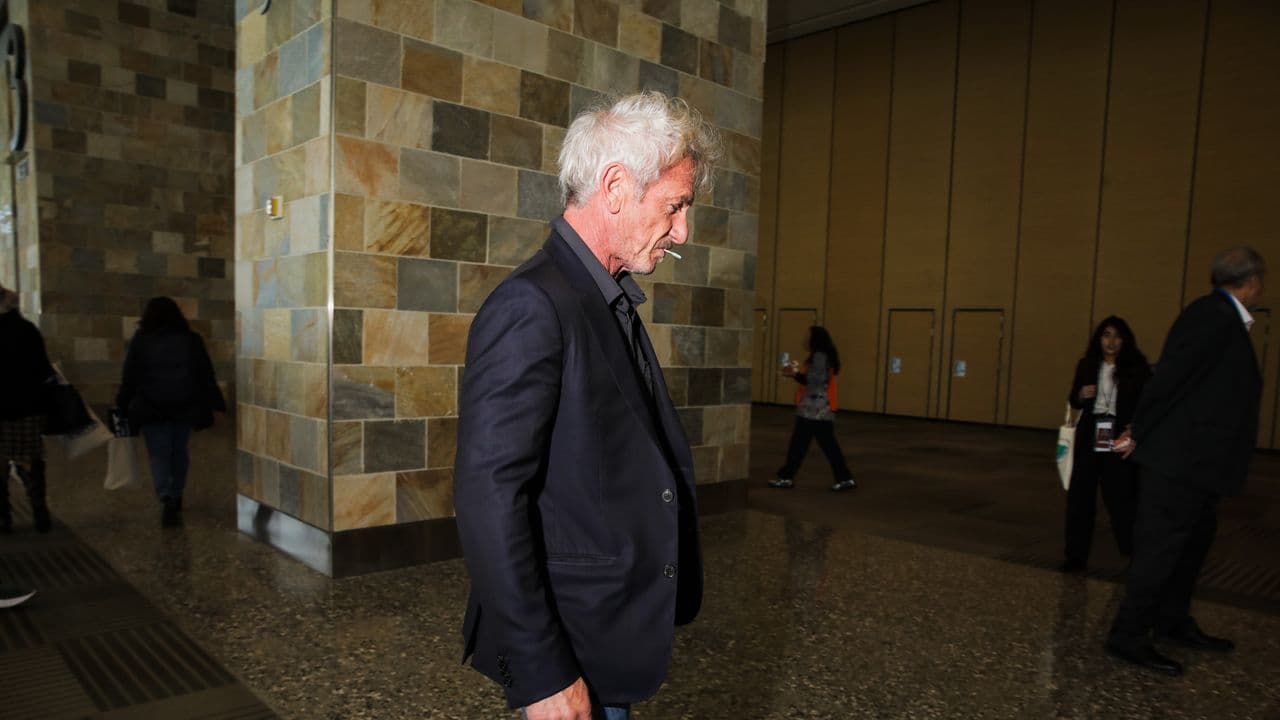
Sean Penn made history at the 2026 Academy Awards—not by walking the red carpet alongside his peers, but by winning Best Supporting Actor for his role as the corrupt military leader Col. Steven J. Lockjaw in Paul Thomas Anderson’s *One Battle After Another* and then failing to attend the ceremony at all. His absence, combined with those of Brad Pitt, Connor Storrie, and other high-profile stars, underscored a growing disconnect between Hollywood’s glamorous traditions and the personal, political, or creative priorities of some of its most celebrated figures. While Anderson’s film dominated the night—taking home Best Picture, Best Director, and Best Original Screenplay—Penn’s victory became a symbol of a deeper rift: one where individual activism, artistic integrity, and even logistical challenges can outweigh the allure of Oscar night.
Key Takeaways: Why the Biggest Stars Didn’t Show Up to the 2026 Oscars
- Sean Penn won Best Supporting Actor but was absent, reportedly traveling to Europe and Ukraine, continuing his long-standing activism and opaque personal projects.
- Brad Pitt, a two-time Oscar nominee, skipped the ceremony for the second time in a decade, with his representatives citing his commitment to a private sculpture project.
- Connor Storrie and Lewis Hamilton, both associated with major Oscar-nominated films (*Heated Rivalry* and *F1*, respectively), were also notable absences due to scheduling conflicts and international commitments.
- Hailee Steinfeld missed the ceremony due to pregnancy, with Michael B. Jordan acknowledging her absence during his acceptance speech for Best Actor.
- The absences reflect broader shifts in how modern stars engage with the Academy Awards—prioritizing personal, political, or creative pursuits over traditional red-carpet rituals.
Sean Penn’s Oscars Boycott: A History of Activism and Alienation
Sean Penn’s decision to skip the 2026 Oscars was not an impulsive act but the latest chapter in a decades-long critique of the Academy and Hollywood’s institutional inertia. Penn, a six-time nominee and two-time winner, has long viewed the Oscars as a self-congratulatory echo chamber that avoids meaningful engagement with global crises. His absence from the 2024 ceremony—which followed his public feud with the Academy over their refusal to let him speak about Ukraine—was a turning point. In 2024, Penn accused the Academy of "extraordinary cowardice" for limiting artistic expression and cultural diversity, arguing that the institution had become complicit in stifling dissent. His absence in 2026, then, was not just a personal snub but a deliberate statement, amplified by his reported trip to Ukraine, a country he has supported publicly since Russia’s full-scale invasion in 2022.
Penn’s activism in Ukraine dates back to at least 2022, when he met with President Volodymyr Zelenskyy and offered to melt down his 2004 Best Actor Oscar (from *Mystic River*) to be repurposed as bullets for the war effort. While the offer was symbolic—Oscars are made of gold-plated bronze and would not be suitable for military use—it crystallized Penn’s belief that art should serve urgent humanitarian causes. His absence from the 2026 Oscars, therefore, was not just about rejecting Hollywood’s rituals but reaffirming his commitment to a cause he views as more consequential than trophies.
The Academy’s Shifting Relationship with Political Speech
Penn’s public criticism of the Academy in 2024 came at a time when the institution was already under pressure to address its perceived timidity in the face of global conflicts. The 2024 Oscars had been marred by controversy after producers censored political speeches, including Penn’s planned remarks about Ukraine. The incident reignited debates about whether the Academy Awards should serve as a platform for activism or remain a neutral celebration of cinematic achievement. While the Academy has since taken steps to highlight films with social themes—such as *One Battle After Another*, which centers on a fictionalized account of the Iraq War—Penn’s boycott underscores the limitations of such gestures in satisfying critics who demand systemic change.
The Academy’s response to Penn’s absence in 2026 was muted but telling. Kieran Culkin, who presented Penn’s award, delivered a dry quip: "Sean couldn’t be here this evening, or didn’t want to," accepting the Oscar on his behalf without further elaboration. The moment was emblematic of Hollywood’s awkward dance with political dissent: acknowledging the absence without engaging with its underlying critique. For Penn, the silence spoke volumes—reinforcing his view that the Academy remains more interested in optics than substance.
Brad Pitt’s Oscars Absence: From Sculpture Studios to Silent Nominations
Brad Pitt’s decision to skip the 2026 Oscars marked the second time in a decade that he has opted out of the ceremony, despite being one of the most decorated actors of his generation. Pitt, who produced *F1* (the Best Picture nominee) but was not in attendance, has a history of prioritizing creative pursuits outside of acting. In 2017, when *Moonlight* won Best Picture, Pitt was famously "holed up creating a sculpture" in Los Angeles for nearly two weeks, a project that delayed his red-carpet appearance. His absence in 2026 followed a similar pattern, with representatives citing his commitment to a private art endeavor.
Pitt’s relationship with the Academy has been defined by quiet consistency rather than outspoken criticism. Unlike Penn, he has not publicly lambasted the institution, yet his absences suggest a personal calculus that places artistic exploration above awards-season obligations. His presence in *F1*—both as a producer and a cameo as himself—highlighted his deep involvement in the film’s production, yet it was not enough to compel him to attend the Oscars. The move underscored a broader trend among A-list actors who view the ceremony as secondary to their creative or personal projects.
The Role of Scheduling Conflicts in Oscar Absences
For some stars, the Oscars simply did not fit into an already packed schedule. Lewis Hamilton, who produced *F1* and played himself in the film, was unable to attend after competing in the Chinese Grand Prix in Shanghai. Hamilton, a seven-time Formula 1 World Champion, had a rare podium finish in China, marking his first since joining Ferrari—a milestone that likely took precedence over a night at the Dolby Theatre. His absence was a reminder of how global commitments, even in entirely different industries, can collide with Hollywood’s most prestigious event.
Similarly, Connor Storrie, who stars in *Heated Rivalry* alongside Hudson Williams, skipped the Oscars despite attending other high-profile events in Los Angeles that weekend, such as CAA’s Pre-Oscar party. Storrie’s absence, while less scrutinized than Penn’s or Pitt’s, reflected the unpredictable nature of awards season, where personal appearances are often secondary to promotional obligations or private matters.
Hailee Steinfeld’s Pregnancy and the Changing Face of Oscar Attendance
Hailee Steinfeld’s absence from the 2026 Oscars was one of the most sympathetic explanations for a no-show, tying her personal life to the broader narrative of how modern stardom intersects with life events. Steinfeld, nominated for her role in *Sinners* (the film with the most Oscar nominations that year), was expecting her first child with Buffalo Bills quarterback Josh Allen. Her pregnancy, announced months earlier, made her absence inevitable, yet it also highlighted the evolving expectations for celebrities navigating awards season in an era where work-life balance is increasingly prioritized.
Michael B. Jordan, who won Best Actor for his role in *Sinners*, acknowledged Steinfeld’s absence during his acceptance speech, saying, "[Hailee’s] getting ready to have a baby right now." The moment was a rare example of the Oscars addressing a personal milestone on stage, reflecting a cultural shift toward normalizing life events—whether pregnancies, health issues, or family commitments—in spaces that were once strictly professional.
The Broader Implications: Are the Oscars Still the Ultimate Prize for Stars?
The 2026 Oscars’ notable no-shows raise a fundamental question: In an era where stars can amass wealth, influence, and cultural capital without the validation of an Academy Award, what does the ceremony truly represent? For Penn, Pitt, and others, the answer appears to be increasingly little. The absences suggest that the Oscars, once the pinnacle of Hollywood achievement, are now just one of many platforms where stars can be recognized—or ignored.
This shift is particularly pronounced among actors who view the Academy as an outdated institution. Penn’s attacks on the Academy’s "cowardice" and his preference for direct activism over ceremonial participation reflect a generational divide. Younger stars, raised in the era of social media and viral fame, may see the Oscars as less relevant than viral moments, brand deals, or political advocacy. Even for established names like Pitt, the allure of the ceremony seems to be waning in favor of more personal or creative pursuits.
Yet the Oscars remain a cultural touchstone, a night where the industry’s elite gather to celebrate its highest achievements. The absences in 2026 did not diminish the ceremony’s significance but rather exposed its limitations. The Academy, for all its attempts to modernize, still struggles to reconcile its traditional image with the demands of a new generation of artists who prioritize impact over applause.
The Academy’s Response: A Delicate Balance Between Tradition and Change
In the wake of the 2026 Oscars’ high-profile absences, the Academy has faced a delicate balancing act. On one hand, it must preserve the prestige and exclusivity of the ceremony, which remains a cornerstone of Hollywood’s self-mythology. On the other, it must adapt to a rapidly changing cultural landscape where stars are increasingly vocal about their disillusionment with institutionalized recognition.
The Academy has taken steps to address criticism, including expanding its membership to include more diverse voices and highlighting films with social themes. However, gestures like these may not be enough to satisfy critics like Penn, who view the institution as fundamentally flawed. For the Academy, the challenge going forward will be to make the Oscars feel relevant not just as a celebration of past achievements but as a platform for the future of cinema and societal progress.
What’s Next for Sean Penn, Brad Pitt, and Hollywood’s Most Elusive Stars?
Sean Penn’s post-Oscars itinerary—reportedly including a trip to Ukraine—suggests that his activism will remain a priority, even as he continues to work in Hollywood. His next project, rumored to involve a collaboration with Paul Thomas Anderson, could further blur the lines between art and activism, particularly if it engages with global conflicts. For Penn, the Oscars are no longer a barometer of success; his work speaks for itself.
Brad Pitt, meanwhile, shows no signs of slowing down his artistic pursuits. Whether through his production company, Plan B Entertainment, or his ongoing work in sculpture and other visual arts, Pitt appears to be prioritizing projects that align with his creative vision over awards-season obligations. His absence from the 2026 Oscars was not an anomaly but a continuation of a pattern that suggests the ceremony is no longer the ultimate validation for him.
For the Academy, the 2026 Oscars may be remembered as a turning point—a moment when the institution’s relevance was questioned not just by critics but by some of its brightest stars. Whether that leads to meaningful change remains to be seen, but one thing is clear: the era of unquestioning deference to the Oscars is over.
Frequently Asked Questions About the 2026 Oscars No-Shows
Frequently Asked Questions
- Why did Sean Penn skip the 2026 Oscars after winning Best Supporting Actor?
- Sean Penn did not attend the 2026 Oscars despite winning Best Supporting Actor for *One Battle After Another*. His absence was reportedly due to a trip to Europe and Ukraine, continuing his long-standing activism and personal projects. Penn has been a vocal critic of the Academy, accusing it of cowardice in 2024 for limiting political speech at the ceremony.
- Has Brad Pitt ever attended the Oscars before?
- Brad Pitt has attended the Oscars in the past but skipped the 2026 ceremony for the second time in a decade. He was notably absent in 2017, when *Moonlight* won Best Picture, with his representatives citing his commitment to a private sculpture project.
- Will the Academy change its policies after so many high-profile no-shows at the 2026 Oscars?
- The Academy has not announced any policy changes in response to the 2026 Oscars no-shows. However, the absences have reignited debates about the institution’s relevance and its ability to engage with modern stars who prioritize activism or personal projects over ceremonial participation.


