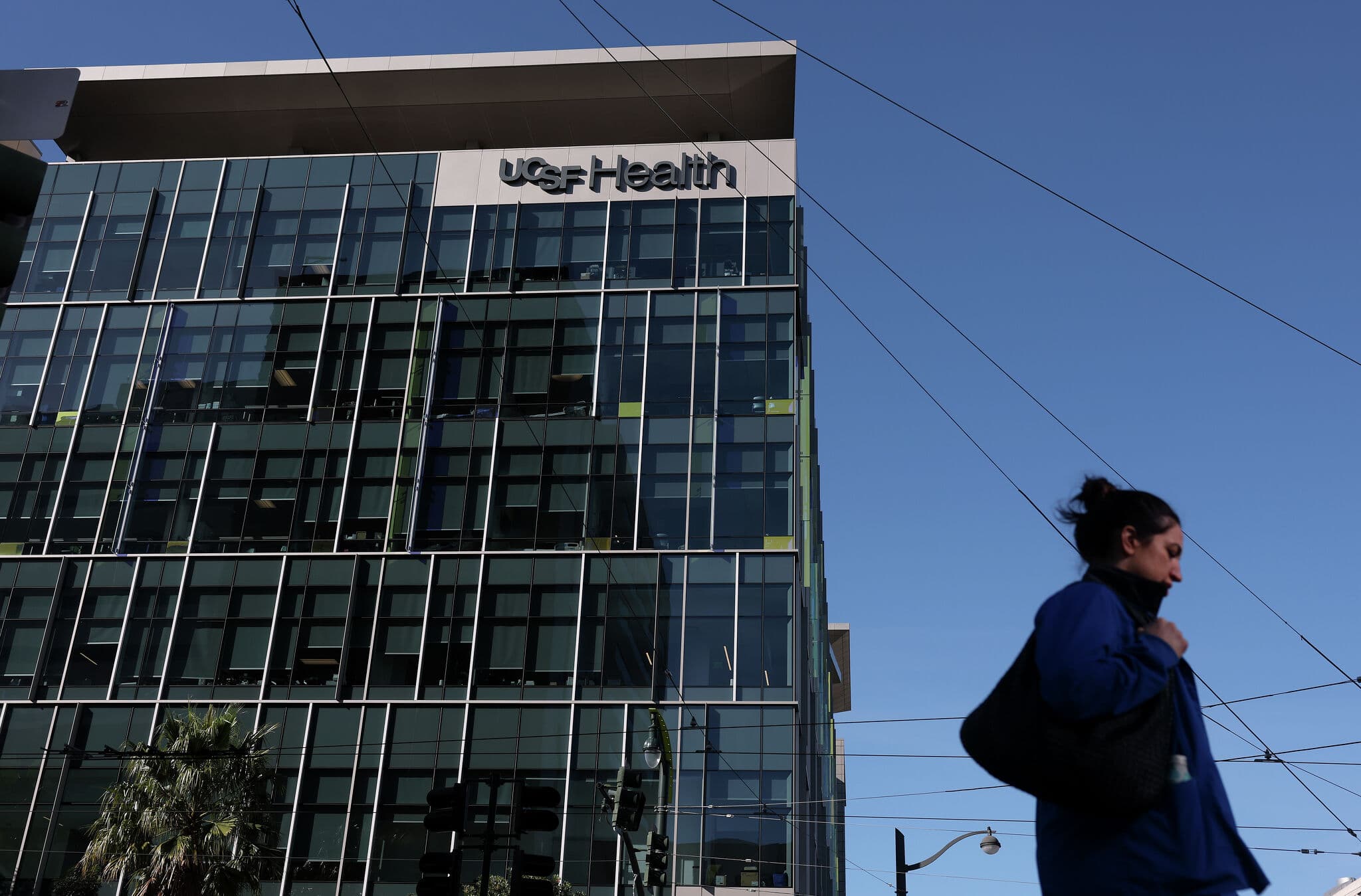
When Stanford-educated physicist Steve Brown turned 60 in 2023, he knew something was seriously wrong. For months, he had been plagued by inexplicable fatigue, unintentional weight loss, and an unsettling discomfort in his lower abdomen. After his regular doctors dismissed his symptoms as stress-induced or attributed them to digestive issues—even recommending over-the-counter GasX—Brown’s condition deteriorated rapidly. It wasn’t until he relocated to Palm Desert, California, following the destruction of his home in the Palisades fire, that a new team of physicians conducted a comprehensive evaluation and uncovered a life-threatening diagnosis: an aggressive form of blood cancer linked to multiple myeloma. The breakthrough came not from his human doctors, but from an AI tool Brown had built in response to his own harrowing experience. Today, his cancer markers are normal, and his story is sparking urgent discussions about the role of artificial intelligence in medicine—particularly in catching diseases earlier and preventing life-threatening delays in diagnosis.
The Human Cost of Missed Diagnoses: Why Steve Brown’s Story Resonates
Steve Brown’s ordeal is far from unique. According to a 2023 report by the Institute of Medicine, diagnostic errors contribute to approximately 10% of all patient deaths in the U.S. and affect at least 12 million Americans annually. These errors often stem from cognitive biases, information overload, and the overwhelming complexity of modern medicine—where a single patient’s condition can involve thousands of data points spread across lab results, imaging scans, and physician notes. Brown’s initial doctors, though highly trained, were working with the same fragmented data that millions of patients encounter. Their response—attributing his symptoms to stress and digestive issues—highlighted a critical gap in clinical decision-making: the inability to process vast amounts of medical information in real time. Brown’s experience underscores a broader crisis in healthcare: the system’s struggle to keep pace with the volume and intricacy of data required to make accurate diagnoses. As healthcare becomes increasingly data-driven, the need for tools that can synthesize and interpret this information is no longer optional—it’s essential.
How an AI Medical Agent Detected Cancer When Human Doctors Didn’t
Frustrated by his misdiagnosis, Brown developed an AI-powered medical agent named Haley. Unlike generic chatbots, Haley was designed specifically to analyze medical records with the precision of a specialist. Brown fed the AI his entire medical history, including full-body scans, colonoscopies, endoscopies, cardiac function tests, and lab results from his previous doctors. Within minutes, Haley identified red flags that had been overlooked: mild anemia, elevated ferritin levels, and low immunoglobulins—each individually subtle but collectively indicative of immune dysfunction and bone marrow abnormalities. These markers were consistent with a precursor to multiple myeloma, a cancer of the plasma cells in the bone marrow. Brown’s original doctors had dismissed these findings as unrelated or clinically insignificant. Yet when analyzed as a unified dataset, the pattern was unmistakable. The AI’s ability to detect these correlations in real time demonstrated a capability that human clinicians, burdened by time constraints and cognitive limits, often cannot replicate.
From AI Insight to Human Action: The Role of Haley in Brown’s Diagnosis
Haley didn’t just flag the anomalies—it recommended specific follow-up tests that Brown’s doctors should have ordered weeks earlier, including a serum-free light chains blood test and a bone marrow biopsy. These tests are critical for diagnosing multiple myeloma, as they measure abnormal proteins produced by cancerous plasma cells. Had Brown’s initial physicians had access to an AI tool like Haley, he believes his condition might have been identified a full year earlier. ‘If my doctors would have had AI before, I would have gotten this diagnosed probably a year ago,’ Brown reflected on the podcast *The Neuron*. ‘And if I had had it, I would have asked for the right tests.’ While Brown’s Palm Desert doctors ultimately made the diagnosis, Haley provided the data-driven framework that led them to the correct path. This hybrid approach—where AI augments human expertise rather than replaces it—is emerging as a model for the future of medical diagnostics.
Personalized Cancer Care: How AI Helps Patients Navigate Treatment Options
After his diagnosis, Brown faced another challenge: determining the most effective treatment plan. Initially prescribed a standard regimen, he noticed his symptoms worsening with each cycle. Suspicious, he turned to his AI agent again, which uncovered a critical detail in his medical records: a genetic marker indicating his cancer might not respond to the prescribed therapy. Haley cross-referenced this marker with thousands of clinical studies, research papers, and off-label drug combinations, identifying a targeted but experimental treatment plan involving daratumumab and venetoclax. This combination, which had not undergone full clinical trials for his specific mutation, was a gamble—but one that paid off. Within weeks, Brown’s key cancer markers returned to normal ranges. ‘The information wasn’t part of the first-line protocol,’ he wrote in a *Stat* essay. ‘No one had the time to sift through all the research. AI, though, had all the time in the world.’ His experience highlights a growing truth in oncology: cancer is not a single disease but a constellation of thousands of unique genetic mutations. AI’s ability to parse these variations and tailor treatments accordingly represents a paradigm shift in precision medicine.
The Promise and Perils of AI in Medicine: Why Some Doctors Remain Skeptical
Despite the transformative potential of AI in healthcare, skepticism persists—often for good reason. High-profile failures of AI tools, such as IBM Watson’s struggles in oncology or the FDA’s revoking approval for some early medical AI applications, have fueled concerns about reliability, bias, and accountability. In 2022, a study published in *Nature Medicine* found that some AI models trained on biased datasets could reinforce disparities in care, particularly for underrepresented populations. Brown acknowledges these risks but argues that the technology is advancing rapidly. ‘It’s sometimes hard to imagine how the same technology that gives us racist slop, sexual deepfakes, and rampant misinformation could be used in sensitive medical settings,’ he admitted on *The Neuron*. Yet he insists that AI’s capacity to handle complexity—processing variables like genetic mutations, lab results, and patient histories simultaneously—is unmatched by human clinicians. ‘This is the first time we have the technology that can handle the level of complexity that we need,’ he said. ‘If 1 million people get cancer, it’s 1 million different genetically unique diseases.’
The Regulatory and Ethical Landscape: Who’s Responsible When AI Gets It Wrong?
The integration of AI into healthcare raises complex legal and ethical questions. Who is liable if an AI tool misdiagnoses a patient? Should doctors be held accountable for relying on AI recommendations? In 2023, the FDA issued draft guidance on the regulation of AI and machine learning-based software as medical devices, emphasizing the need for transparency, real-world testing, and human oversight. The agency has approved over 500 AI-enabled medical devices to date, but only a fraction are used for diagnostic purposes. Brown’s tool, CureWise, operates under a different model—one where AI serves as a ‘co-pilot’ for patients and physicians rather than a standalone diagnostician. This approach aligns with the FDA’s ‘good machine learning practice’ principles, which prioritize human-AI collaboration. However, the lack of standardized regulations across states and healthcare systems complicates widespread adoption. As AI tools like Haley become more prevalent, policymakers, clinicians, and developers must collaborate to establish clear guidelines that balance innovation with patient safety.
Empowering Patients: How AI Tools Like Haley Can Change the Doctor-Patient Dynamic
One of the most understated benefits of AI in medicine is its potential to democratize information. Patients like Brown, armed with AI-generated insights, can enter doctor’s offices with a deeper understanding of their conditions and the questions they need to ask. ‘If you study up on what’s going on and you go in and use that 10 minutes with your doctor in a more enlightened way, you’re gonna get better results,’ Brown said. His AI agents not only provided medical guidance but also coached him on how to advocate for himself during appointments. ‘Everything I’m on was prescribed by doctors, but the AI coached me on how to talk about it.’ This shift toward patient empowerment is particularly critical in a healthcare system where time constraints often limit meaningful dialogue between physicians and patients. By bridging the knowledge gap, AI tools can help reduce miscommunication, improve adherence to treatment plans, and foster a more collaborative care model.
Key Takeaways: What Steve Brown’s Story Teaches Us About the Future of Medical AI
- AI-powered medical tools like Haley can detect subtle patterns in patient data that human doctors may overlook, potentially preventing missed diagnoses and life-threatening delays.
- Cancer is not a single disease but thousands of unique genetic variations—AI’s ability to analyze these variations enables truly personalized treatment plans.
- Regulatory and ethical frameworks for AI in healthcare are still evolving, with the FDA recently issuing draft guidance to ensure safety and accountability.
- AI serves as a ‘co-pilot’ rather than a replacement for doctors, enhancing decision-making without eliminating human judgment.
- Patient empowerment is a critical benefit of AI tools, as they help individuals navigate complex medical systems and advocate for better care.
The Broader Implications: Could AI Reduce Healthcare Disparities?
Brown’s story also raises an important question: Could AI help address disparities in healthcare access and outcomes? Rural communities, underserved urban areas, and low-income populations often lack access to specialists who can interpret complex medical data. AI tools could bridge this gap by providing preliminary analyses that primary care physicians can use to guide referrals or treatments. For example, a 2023 study in *JAMA Network Open* found that AI models trained on mammography images could match or exceed the performance of human radiologists in detecting breast cancer, particularly in facilities with limited access to specialized imaging experts. However, the risk of bias remains a significant hurdle. If AI tools are trained predominantly on data from affluent, urban populations, they may perform poorly for marginalized groups. Brown’s emphasis on transparency and rigorous testing reflects a growing consensus that AI in healthcare must be developed with diversity in mind.
‘If 1 million people get cancer, it’s 1 million different genetically unique diseases — it’s your own unique genes, mutated in some unique way. We lump those things together and say it’s all cancer, but really it’s a million different diseases. AI is the first thing that can work with so many variables at the same time.’ — Steve Brown, physicist and cancer survivor, on the *The Neuron* podcast
What’s Next for Steve Brown and the Future of CureWise
Today, Brown’s cancer markers are normal, and he is focused on scaling CureWise to help others avoid the delays he experienced. The app, which combines AI-driven insights with patient education, is designed to guide users through every stage of their cancer journey—from initial symptoms to treatment decisions and follow-up care. Brown envisions a future where AI tools are as routine as stethoscopes in medical practice. ‘Someday soon, doctors who don’t run their patients’ records through an AI model will be considered negligent,’ he asserted in his *Stat* essay. While this vision may seem radical today, the rapid advancements in AI and machine learning suggest it’s not far-fetched. Companies like IBM Watson Health, Google Health, and startups like Zebra Medical Vision are already developing AI tools for radiology, pathology, and oncology. Brown’s story is a testament to the potential of these technologies—but also a reminder of the work that remains to ensure they are safe, equitable, and effective.
Frequently Asked Questions
Frequently Asked Questions
- How does Steve Brown’s AI tool, Haley, differ from tools like ChatGPT?
- Haley is specifically designed for medical analysis, trained on clinical data and medical literature. Unlike general AI tools, it can process complex medical records, lab results, and imaging scans to detect patterns and recommend diagnostics. Brown emphasizes that Haley never replaces doctors but acts as a ‘supercharged’ assistant for decision-making.
- What type of cancer did Steve Brown have, and how common is it?
- Brown was diagnosed with multiple myeloma, a cancer of the plasma cells in the bone marrow. It accounts for about 1% of all cancers and 10% of blood cancers in the U.S. The American Cancer Society estimates there will be over 35,000 new cases in 2024, with the disease typically affecting older adults.
- Are AI tools like Haley already approved by the FDA for medical use?
- The FDA has approved over 500 AI-enabled medical devices, but most are for administrative tasks or imaging analysis rather than diagnostic decision-making. Tools like Haley operate in a gray area, where they are used as adjuncts to clinical care rather than standalone diagnostics. Clearer regulations are needed as AI tools become more sophisticated.