In a groundbreaking discovery that blurs the line between marine ecosystems and human health, a team of Chinese researchers has presented compelling evidence that a virus known to devastate shrimp and other seafood populations may also be the cause of a rare but potentially blinding eye disease in humans. The covert mortality nodavirus (CMNV), long a scourge in global aquaculture, has now been linked to persistent ocular hypertension viral anterior uveitis (POH-VAU), a condition characterized by elevated intraocular pressure and severe inflammation of the uvea. The findings, published in the prestigious journal Nature Microbiology, raise urgent questions about the growing intersection of oceanic pathogens and human medicine—and whether CMNV could become a silent but significant threat to public eye health.
How a Shrimp Virus May Be Triggering a New Human Eye Disease
Persistent ocular hypertension viral anterior uveitis, or POH-VAU, is an emerging eye disorder marked by chronic inflammation of the uvea—the middle layer of the eye—and persistently high intraocular pressure, which can lead to optic nerve damage and irreversible blindness if untreated. While viral anterior uveitis is commonly associated with herpes simplex and varicella-zoster viruses, a growing number of POH-VAU cases in China have shown no connection to these known pathogens. This discrepancy prompted a team of researchers led by Dr. Xiao-Hong Huang of Sun Yat-sen University in Guangzhou to investigate whether an aquatic virus might be responsible.
The Case for CMNV as a Human Pathogen
The researchers analyzed clinical data from 70 patients diagnosed with POH-VAU between January 2022 and April 2025, comparing their eye tissue samples to those of a healthy control group. Using advanced electron microscopy and genetic sequencing, they detected viral particles in the eye tissues of all POH-VAU patients—particles that closely matched the size, shape, and molecular structure of CMNV. Genetic analysis revealed a 98.96% genetic identity between the viral material isolated from human eyes and CMNV samples collected from infected shrimp and other aquatic species. This high degree of similarity strongly suggests cross-species transmission.
Further supporting the link, all 70 patients tested positive for antibodies targeting CMNV, indicating prior exposure to the virus. To test for causality, the researchers inoculated mice with CMNV. Within weeks, the animals developed ocular inflammation and elevated intraocular pressure—clinical features indistinguishable from POH-VAU in humans. While animal models do not always perfectly replicate human disease, these findings provide the strongest experimental evidence to date that CMNV may directly cause POH-VAU.
From Aquaculture to Ophthalmology: The Rise of an Aquatic Pathogen
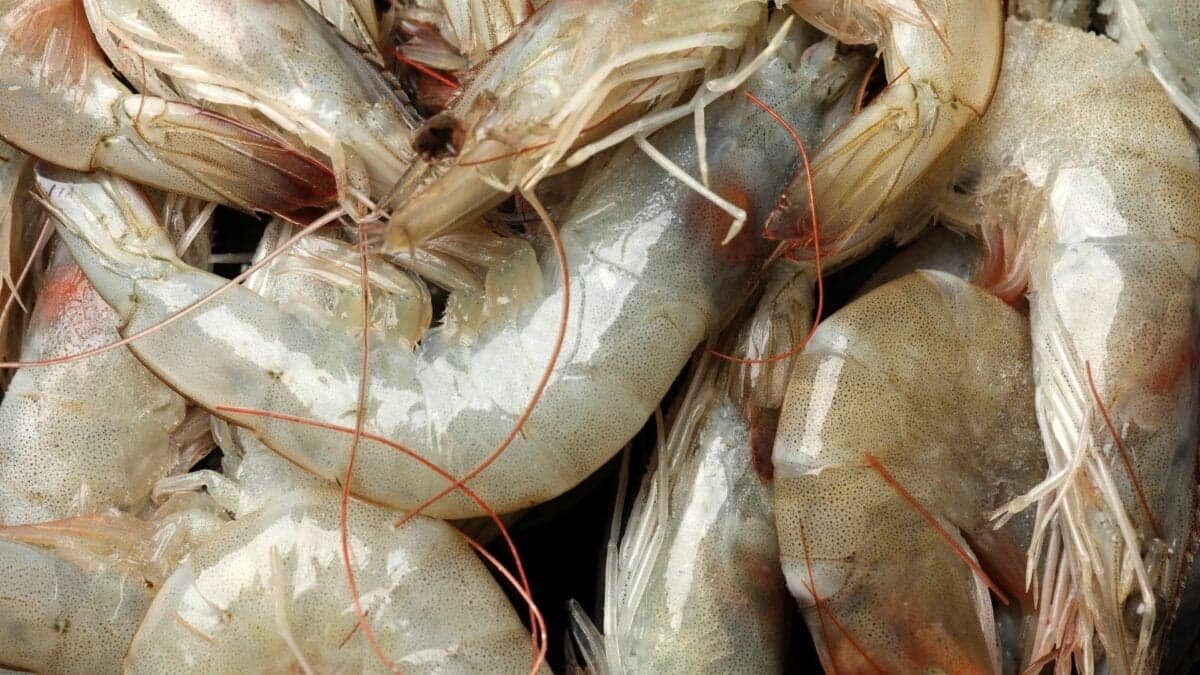
The covert mortality nodavirus (CMNV) was first identified in 2014 during outbreaks in shrimp farms across China and has since spread to aquaculture operations in Australia, India, and Southeast Asia. Known for causing rapid mortality in shrimp populations—often within days of infection—CMNV has become a major economic concern, disrupting marine food chains and threatening food security in regions dependent on seafood. Its recent detection in 49 different aquatic species, including fish, mollusks, and crustaceans, across waters spanning the Indo-Pacific, Atlantic, and even parts of the Americas and Europe, has expanded its ecological footprint.
“This study reveals that an aquatic animal virus is associated with an emerging human disease—one that could signal a new pathway for zoonotic transmission from marine ecosystems.”
Dr. Huang and her colleagues emphasize that this discovery challenges the long-held assumption that zoonotic diseases primarily emerge from terrestrial animals and environments. While land-based spillover events—such as COVID-19 from bats or avian flu from poultry—have dominated public health discussions, CMNV demonstrates that the ocean, too, may harbor pathogens capable of crossing into human hosts.
How Is CMNV Spreading to Humans?
Direct Seafood Exposure Remains the Primary Pathway
Of the 70 POH-VAU patients studied, approximately 71% reported recent direct contact with raw shrimp, squid, or other seafood, typically through handling or consumption. The virus appears to gain entry through breaks in the conjunctiva or corneal surface, leading to localized infection and inflammation. Given the high global consumption of seafood—over 170 million tons annually, according to the UN Food and Agriculture Organization—even a small risk of transmission could translate to a significant public health burden.
Could Person-to-Person Transmission Occur?
While the study did not find definitive evidence of human-to-human transmission, researchers identified several POH-VAU cases with no clear exposure to raw seafood. This raises the unsettling possibility that CMNV may be spreading between people through bodily fluids or contaminated surfaces—a pattern seen with other viral uveitis cases. However, the team cautions that more research is needed to determine whether such transmission is possible or if these cases represent undetected seafood exposure.
Global Implications: A Growing Threat to Public Health and Food Systems
The potential for CMNV to cause human disease arrives at a time when global seafood consumption is at an all-time high and aquaculture is expanding rapidly to meet demand. In 2022, global aquaculture production reached 130.9 million tons, with shrimp farming alone valued at over $37 billion annually. The spread of CMNV across multiple continents and species not only threatens food security but also raises the specter of a new zoonotic threat—one that could emerge in coastal communities, seafood markets, or even through international trade.
Public health experts warn that CMNV could become a silent epidemic, particularly in regions where raw or undercooked seafood is a dietary staple, such as China, Japan, and parts of Southeast Asia. The disease’s insidious onset—often presenting as mild eye redness or discomfort before progressing to severe vision loss—could delay diagnosis and treatment, exacerbating outcomes.
What’s Next? Calls for Vigilance, Surveillance, and Further Research
Despite the compelling evidence linking CMNV to POH-VAU, researchers stress that additional studies are essential to confirm causality and assess the true scope of the threat. Key questions remain unanswered: How frequently does CMNV jump from aquatic animals to humans? Is the disease reversible with early treatment? And could antiviral therapies developed for shrimp be repurposed for human patients?
The World Health Organization (WHO) and the Centers for Disease Control and Prevention (CDC) have both indicated they are monitoring the situation closely. In a joint statement, the WHO noted that while the findings are concerning, they do not yet warrant a change in public health recommendations regarding seafood consumption. Still, health officials are urging clinicians worldwide to consider CMNV as a potential cause in cases of unexplained viral uveitis, particularly in patients with recent seafood exposure.
- CMNV, a virus known to devastate shrimp and other seafood, has been strongly linked to POH-VAU, a rare eye disease that can cause permanent blindness.
- Researchers found a 98.96% genetic match between CMNV in human eye tissues and aquatic sources, with 100% of patients testing positive for CMNV antibodies.
- Approximately 71% of POH-VAU cases were associated with direct contact with raw seafood, though some cases lacked clear exposure, raising concerns about possible human transmission.
- CMNV has now been detected in 49 aquatic species across multiple continents, signaling a growing ecological and public health risk.
- While more research is needed, the discovery highlights the urgent need for enhanced surveillance of marine pathogens and their potential to infect humans.
Protecting Eye Health in an Era of Emerging Pathogens
For individuals who frequently handle or consume raw seafood, eye health experts recommend wearing protective goggles to prevent viral entry through the eyes. Immediate rinsing with clean water after potential exposure is also advised. Patients experiencing persistent eye redness, pain, light sensitivity, or blurred vision—especially after seafood exposure—should seek prompt medical evaluation, as early intervention can prevent long-term complications.
Expert Reactions: A Call for Broader Vigilance
Dr. David Williams, an ophthalmologist and infectious disease specialist at Johns Hopkins University, described the findings as "a wake-up call for both marine biology and ophthalmology." He emphasized that the ocean is the largest and least explored biome on Earth and may harbor countless pathogens with the potential to cross into human populations. "We’ve only scratched the surface of marine virology," Williams said. "This study should prompt a global effort to monitor aquatic viruses, not just for their impact on fisheries, but for their potential to become the next public health crisis."
The Broader Context: Zoonotic Diseases in the Age of Climate Change
The CMNV-POH-VAU link underscores a growing scientific consensus: climate change, overfishing, and expanded aquaculture are altering marine ecosystems in ways that may facilitate the emergence of novel pathogens. Warmer ocean temperatures, for example, have been shown to increase the virulence and spread of certain viruses in aquatic species. Additionally, the globalization of seafood trade has created new pathways for pathogens to traverse international borders undetected.
This phenomenon is not isolated to CMNV. In recent years, researchers have identified several other marine viruses—including tilapia lake virus and viral hemorrhagic septicemia virus—that have jumped to humans, causing respiratory or neurological symptoms. These cases, though rare, highlight the need for a One Health approach—an integrated, interdisciplinary framework that recognizes the interconnectedness of human, animal, and environmental health.
Frequently Asked Questions
- Can cooking seafood kill the CMNV virus and prevent infection?
- While cooking seafood typically destroys most viruses, including CMNV, the study did not specifically test the virus's heat resistance. However, standard cooking temperatures (above 60°C or 140°F) are generally sufficient to inactivate most pathogens. Handling raw seafood remains the primary risk factor.
- How common is POH-VAU compared to other eye infections?
- POH-VAU is considered rare, but its true prevalence is unknown. Most cases of viral anterior uveitis are caused by herpesviruses. The rise of POH-VAU cases in China without these common causes has alarmed researchers, suggesting underdiagnosis or misclassification may be occurring.
- What should I do if I develop eye symptoms after handling raw seafood?
- Seek immediate medical attention. Symptoms like persistent redness, pain, light sensitivity, or vision changes may indicate infection. Early treatment with anti-inflammatory or antiviral eye drops can reduce the risk of permanent damage. Report your seafood exposure to your doctor.