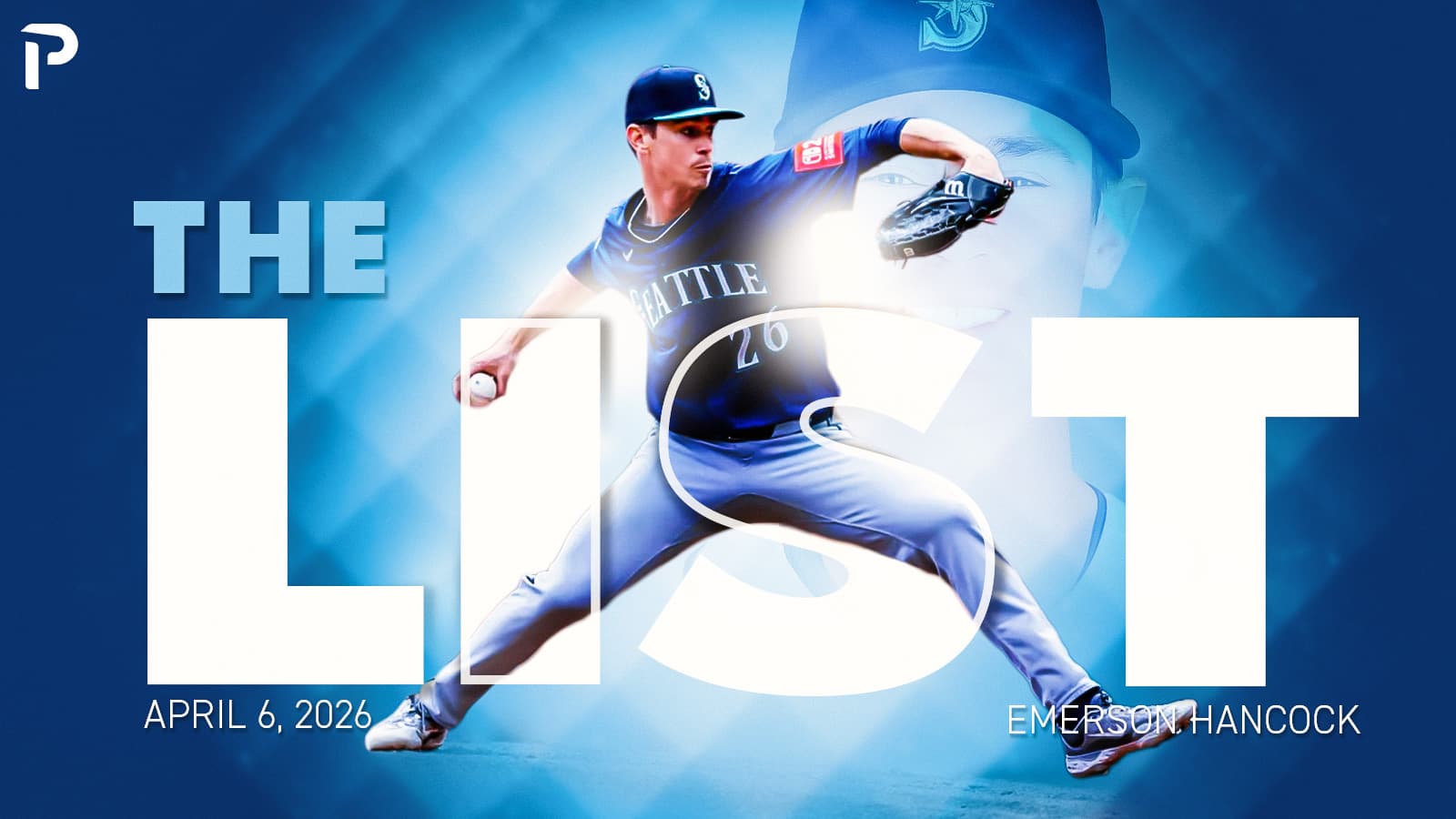
Major League Baseball’s Opening Night 2026 delivered more than just a fresh slate of games—it ushered in the first full-season edition of the definitive Top 100 Fantasy Baseball Starting Pitcher rankings, curated by one of the sport’s most respected fantasy analysts. As teams finalize their rosters and managers pore over the latest projections, the release of this updated list sends ripples through leagues nationwide, reshaping draft boards, waiver wire priorities, and long-term trade strategies. Among the headline movers are three aces—Shohei Ohtani, Paul Skenes, and Garrett Crochet—who headline a reshuffled top tier, while injury updates and prospect stashes redefine the path to championship contention.
Key Takeaways: What Fantasy Managers Need to Know About the 2026 Top 100 Pitcher Rankings
- Paul Skenes and Garrett Crochet lead the 2026 Top 100 Starting Pitcher rankings, solidifying their status as elite fantasy aces.
- Tarik Skubal ranks third, reflecting strong early-season performance and consistent ace-level ratios.
- Several high-profile pitchers, including Hunter Brown, Cade Horton, and Matthew Boyd, remain sidelined with injuries and have been removed from the active Top 100 list.
- Prospect stashes like Yoshinobu Yamamoto and Bryan Woo highlight the balance between long-term upside and immediate impact.
- Minor league options such as Nick Pivetta and Quinn Priester are identified as potential pre-All-Star Break call-ups.
How the 2026 Top 100 Starting Pitcher Rankings Work: Rules, Methodology, and Format
The 2026 Top 100 Starting Pitcher rankings follow a 5×5, 12-team Head-to-Head (H2H) format, which closely mirrors roto scoring with subtle differences in roster management. These rankings are designed to guide managers through both draft day and in-season roster moves, with a deliberate focus on upside in the back half of the list—a critical zone for waiver wire pickups and speculative stashes. Unlike traditional rankings that prioritize floor over ceiling, this system leans into the volatility of the waiver wire, where high-upside pitchers often outperform perceived safer options over the long run.
Core Principles of the Ranking System
The rankings operate under several key principles: injured players are excluded unless they are expected to return imminently; minor leaguers are only considered if they are projected to contribute before the All-Star break; and labels are streamlined to two per player (e.g., Aces, AGA, Toby, Hipster) to clarify their role on a fantasy roster. This clarity helps managers make informed decisions, especially in deeper leagues where positional scarcity and injury-prone stars can dramatically alter team outcomes.
Injuries Reshape the Top 100: Which High-Profile Arms Are on the IL?
Injuries have already played a pivotal role in reshaping the 2026 Top 100 Starting Pitcher rankings, with several marquee names sidelined before Opening Day. Hunter Brown (ranked 6th), Cade Horton (41st), Matthew Boyd (48th), Cody Ponce (55th), and Zach Eflin (57th) have all been removed from the active list and placed in a dedicated injury table. This separation allows managers to assess each pitcher’s recovery timeline and potential fantasy value without cluttering the main rankings. Brown, a breakout candidate in 2025, was expected to anchor Houston’s rotation but now faces a lengthy recovery. Meanwhile, Eflin, who posted a 3.14 ERA in 2025, is recovering from a rotator cuff strain—a particularly concerning blow for any fantasy team relying on his consistency.
Why Injuries Are the Wild Card in Early-Season Fantasy Baseball
Spring training injuries are notoriously unpredictable, often flaring up from minor issues that escalate into significant setbacks. The analyst behind these rankings has chosen to consolidate all injured pitchers into a single table rather than forcing them into arbitrary spots on the Top 100. This approach acknowledges the uncertainty and allows managers to weigh the risk of stashing these arms against their projected return. For example, Cade Horton, a top pitching prospect for the Chicago Cubs, is currently ranked as a potential top-40 arm upon return—if he can regain his form and avoid setbacks. The injury table serves as a strategic tool, not a crystal ball, but it provides the clearest possible snapshot of where these players might slot once healthy.
Prospect Stashes and Minor League SPs: Who Could Be a Waiver-Wire Game-Changer?
Fantasy baseball is as much about long-term vision as it is about short-term results, and the 2026 Top 100 rankings reflect that balance through a dedicated “loose minor league SPs to consider stashing” list. While the analyst admits their minor league coverage is not exhaustive, the list highlights pitchers who could impact fantasy rosters before the All-Star break. Green-highlighted names indicate the strongest candidates, including Quinn Priester (PIT), who is expected to join Pittsburgh’s rotation imminently, and Nick Pivetta (BOS), whose upside as a mid-rotation arm with occasional ace flashes makes him a prime stash target. The criteria here are simple: if a minor leaguer were active today, would they be an automatic add or a speculative pickup?
Top Minor League SP Stashes for 2026
- Quinn Priester (PIT) – High strikeout upside with Pirates’ rotation spot likely in June.
- Nick Pivetta (BOS) – Mid-rotation anchor with occasional ace-level starts.
- Bryan Woo (SEA) – Already ranked in the Top 100 but monitored closely for workload management.
- Yoshinobu Yamamoto (LAD) – Six-man rotation adjustment could limit starts, but elite talent remains.
- Logan Gilbert (SEA) – Injury history looms, but elite stuff in a strong rotation.
Tier-by-Tier Breakdown: Who Are the 2026 Fantasy Baseball Aces and Sleepers?
The 2026 Top 100 Starting Pitcher rankings are divided into four distinct tiers, each reflecting a different level of risk, upside, and role clarity. The top tier features the unquestioned aces of the fantasy world—Skenes, Crochet, and Skubal—whose consistency and dominance make them cornerstones of any championship team. The second tier includes pitchers with elite talent but lingering questions about workload, health, or role, such as Max Fried (NYY) and Shohei Ohtani (LAD). Meanwhile, the third and fourth tiers are populated by pitchers who are either on the verge of greatness or treading water, where small adjustments in pitch usage or role could vault them into the top half of the rankings.
Tier 1: The Uncontested Aces
At the summit of the 2026 rankings are three pitchers who have separated themselves as the premier fantasy assets in the game. Paul Skenes (PIT) retains his position as the top-ranked starter despite Opening Day jitters, a testament to his overwhelming talent and Pirates’ rotation certainty. Garrett Crochet (BOS) follows closely, with Boston’s bullpen-to-rotation transition proving seamless—his elite fastball-slider combination makes him a lock for 200+ strikeouts and a sub-3.00 ERA. Tarik Skubal (DET) rounds out the trio, with Detroit’s revamped rotation providing a home run-friendly park that only enhances his already dominant stuff. These three pitchers are the foundation of fantasy success, offering both elite performance and minimal risk of injury or role change.
Tier 2: Aces with Something to Prove
The second tier is home to pitchers with elite talent but lingering uncertainties. Bryan Woo (SEA) is compared to Zack Wheeler for his ability to rack up strikeouts and wins in Seattle’s pitcher-friendly environment, though his durability remains a question. Yoshinobu Yamamoto (LAD) is back in a six-man rotation, a move that could limit his starts but also enhance his efficiency and longevity. Cristopher Sánchez (PHI) has seen a slight dip in fastball velocity, but his sinker-heavy approach remains a groundball machine. Max Fried (NYY) continues to defy expectations with absurdly safe ratios and strong win potential, while Shohei Ohtani (LAD) remains a fantasy Swiss Army knife despite his two-way role. Jacob deGrom (TEX) and Logan Gilbert (SEA) headline the injury-risk category, with deGrom’s neck stiffness and Gilbert’s 2025 strain history creating hesitation.
Tier 3: Stay Healthy or Stay Home
Pitchers in Tier 3 are defined by their ability to stay on the field and deliver consistent results. Logan Webb (SF) returned to form with a typical outing, while Freddy Peralta (NYM) continues to defy his “Professor Chaos” reputation with oddly consistent production. George Kirby (SEA) is on the cusp of greatness, with his slider generating strikeouts at elite rates—if he can refine his pitch mix, a 30% strikeout rate is within reach. Tyler Glasnow (LAD) remains a volatile but dominant force when healthy, while Joe Ryan (MIN) showed flashes of brilliance in his Opening Day start, though a velocity dip in his second outing raised questions about early-season adjustments. Chris Sale (ATL) headlines the injury-risk category here, with his history of freak incidents and durability concerns making him a high-upside, high-risk proposition.
Tier 4: One Adjustment Away from Greatness
The fourth tier is where fantasy managers can find hidden gems and breakout candidates. Cam Schlittler (NYY) has quietly become a top-20 arm thanks to an expanded arsenal that includes a sharper cutter and improved sinker. Jesús Luzardo (PHI) has gained three extra inches of sink on his sinker, making him a groundball machine against right-handed hitters—a drastic improvement over his previous four-seam reliant approach. Framber Valdez (DET) remains maddeningly inconsistent, but his curveball has shown promise early in 2026. Nolan McLean (NYM) has quietly become one of the most improved pitchers in baseball, with his sweeper and curveball now elite offerings, and his cutter helping neutralize left-handed hitters. These pitchers are one tweak away from becoming fantasy difference-makers.
How Early-Season Movement Reflects Long-Term Strategy
The volatility of the early-season rankings is by design. The analyst behind the Top 100 acknowledges that the back half of the list—typically the waiver wire—is where the most dramatic shifts occur. Pitchers who show even the slightest hint of upside are aggressively moved up the rankings, while injured arms are shuffled to the injury table. For example, a pitcher ranked in the 80s could leap to the 60s with a strong opening week, reflecting the fluid nature of fantasy baseball where a single dominant start can redefine a player’s value. This approach rewards managers who stay active on the waiver wire and adapt quickly to changing circumstances.
Beyond the Top 100: Daily Updates and In-Depth Analysis
To stay ahead of the curve, the analyst recommends following a daily SP Roundup that tracks pitcher performances, injuries, and workloads in real time. This granular approach ensures that the weekly Top 100 updates are informed by the latest data and trends. For those seeking a deeper dive into the methodology, a 75,000-word primer on the Top 400 Starting Pitchers was published in February, offering a comprehensive breakdown of player archetypes, pitch usage, and projection models. While some details may have shifted, the foundational insights remain invaluable for managers looking to refine their strategies.
Fantasy Baseball Strategy: How to Use the 2026 Starting Pitcher Rankings
The 2026 Top 100 Starting Pitcher rankings are more than just a list—they’re a roadmap for navigating the complexities of fantasy baseball. Managers in 12-team leagues should prioritize the top tier for their core rotation, as these pitchers offer the safest path to consistent production. However, the real value lies in the middle and back tiers, where speculative stashes and injury-replacement options can turn a mediocre team into a contender. The key is to balance upside with risk, using the injury table and minor league stash list to identify pitchers who could return value before the trade deadline or fantasy playoffs.
Frequently Asked Questions About the 2026 Top 100 Starting Pitcher Rankings
Frequently Asked Questions
- Why were Hunter Brown and Cade Horton removed from the Top 100 rankings?
- Both pitchers are currently sidelined with injuries and were excluded from the active Top 100 list to reflect their uncertain availability. They have been placed in a dedicated injury table, where their potential return value can be assessed separately.
- How often are the Top 100 Starting Pitcher rankings updated?
- The rankings are updated weekly, with daily SP Roundups providing real-time insights into pitcher performances, injuries, and emerging trends. This ensures the weekly list reflects the latest data and roster trends.
- What criteria are used to stash minor league starting pitchers?
- Minor leaguers are stashed based on their projected impact before the All-Star break, with a focus on pitchers who could immediately contribute in a 12-team league. Green-highlighted names are considered the strongest candidates.