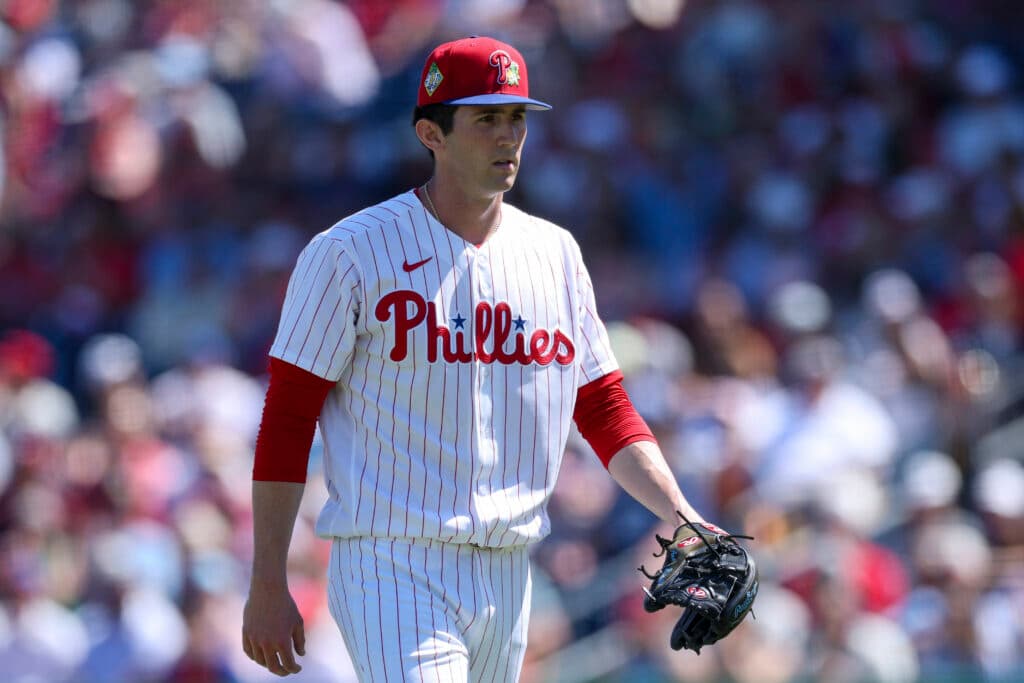
Andrew Painter, the Philadelphia Phillies’ highly touted pitching prospect, will finally make his long-awaited major league debut on Opening Day as the team’s fifth starter. The 22-year-old right-hander, selected 13th overall in the 2021 MLB Draft, will take the mound on April 1 against the Miami Marlins at loanDepot Park, marking a pivotal moment in his career after years of hype, setbacks, and rehabilitation. His arrival in the rotation comes amid a reshuffled Phillies lineup still reeling from the loss of ace Zack Wheeler, who remains sidelined following thoracic outlet syndrome surgery.
Why Andrew Painter’s Debut Matters for the Philadelphia Phillies and MLB Prospects
Andrew Painter’s Opening Day start is more than a personal milestone—it’s a test of resilience for both the pitcher and the Phillies’ organizational philosophy. Once regarded as one of baseball’s most promising pitching prospects, Painter’s journey from top-10 draft selection to delayed MLB debut reflects the volatile nature of prospect development in modern baseball. His presence in the rotation also underscores the Phillies’ strategic flexibility, as they navigate injuries, service time decisions, and the balance between winning now and investing in future talent.
From Top Prospect to Tommy John Survivor
Painter’s path to the majors has been anything but linear. Drafted out of high school in 2021 from Christian Brothers Academy in New Jersey, he was widely viewed as a can’t-miss arm with elite pitchability and a fastball that sat in the mid-90s. His 2022 minor league season was dominant: in 87 innings across High-A and Double-A, he posted a 1.56 ERA, striking out 95 batters while walking just 21. Baseball America ranked him the No. 3 prospect in the Phillies’ system and No. 10 overall in MLB. Scouts compared his command and poise to that of early-career Justin Verlander.
That promise nearly reached fruition in 2023, when Painter was on track to break camp with the Phillies as a 19-year-old. But elbow soreness derailed those plans in March, and by July, he underwent Tommy John surgery—sending him into a two-year recovery tunnel. He missed the entire 2023 and 2024 seasons, a brutal blow for a prospect on the fast track. When he returned in 2024, he pitched sparingly in the minors, making 22 Triple-A starts with a 5.40 ERA, a 23.4% strikeout rate, and a 9.7% walk rate—numbers that fell short of expectations for a former top prospect.
A Slow Rebuild and a Shifting Prospect Perception
Despite the setback, the Phillies retained faith in Painter, adding him to the 40-man roster in November 2024 to protect him from the Rule 5 Draft. His spring performance in 2025—four starts with a 2.31 ERA and a .188 opponents’ batting average on balls in play (BABIP)—suggested he had regained some command and confidence, even if his strikeout rate (18.6%) remained below elite levels. Baseball America’s 2025 top-100 list ranked him between No. 25 and No. 50, down from top-10 projections but still a credible major league arm with upside.
The Phillies’ Rotation Puzzle: Injuries, Service Time, and Strategic Flexibility
Painter’s arrival in the rotation is directly tied to the absence of Zack Wheeler, the Phillies’ former ace and two-time All-Star. Wheeler underwent surgery for thoracic outlet syndrome in October 2024 and has been on the injured list since, with no clear timeline for a return. His first rehab assignment began in late March, with a scheduled start in a minor league game on April 1, per The Philadelphia Inquirer’s Scott Lauber. While Wheeler is expected to need several weeks to build up, his return will force the Phillies to make tough decisions about roster configuration and service time allocation.
Six-Man Rotation? A Return to the Bullpen? What’s Next for the Rotation
The Phillies’ rotation is currently slated as: Cristopher Sánchez (Opening Day starter), Aaron Nola, Jesús Luzardo, Taijuan Walker, and Andrew Painter. But with Wheeler nearing a return, the team faces a logistical challenge. Unless they adopt a six-man rotation—a rarity in baseball but used by teams like the Tampa Bay Rays—they will need to either option Painter back to Triple-A Lehigh Valley or find another role for him. Taijuan Walker, a former rotation stalwart with the Marlins, has been optioned to the bullpen before and could be asked to do so again.
Manager Rob Thomson emphasized the fluidity of the situation during a recent media session. “We’re going to see how things play out,” Thomson told reporters. “Andrew has earned the opportunity, but we also have to be realistic about Wheeler’s progress and the need to keep everyone sharp. There might be some adjustments, and that’s okay.” Painter, for his part, has said he’s focused on helping the team win, regardless of the role.
“I’m just excited to be here and contribute,” Painter told reporters in Clearwater. “I know there are a lot of moving parts, and I’m not going to worry about what happens beyond my starts. I just want to go out and pitch well.”
The Stakes of Painter’s MLB Debut: Service Time, Prospect Incentives, and Long-Term Impact
Painter’s presence on the Opening Day roster carries significant implications beyond the 2025 season. Because he is under team control and has not yet accrued a full year of major league service time, his debut triggers early conversations about service time manipulation—a practice some teams use to delay a prospect’s MLB arrival to preserve an extra year of club control. While the Phillies have not been accused of such tactics, Painter’s rapid ascension to the rotation could be seen as a sign of respect for his talent and readiness.
Even more consequential is the potential for Painter to impact the Phillies’ future draft capital through the Prospect Promotion Incentive (PPI). If Painter finishes in the top three of Cy Young Award voting during his pre-arbitration years or wins Rookie of the Year in 2026, the Phillies would receive a compensatory draft pick—a valuable asset in a competitive free agent market. Such a pick could be used to draft another high-upside arm or position player, reinforcing the organization’s pipeline.
How Painter Fits Into a Phillies Rotation Built on Pitching Depth
The Phillies’ rotation strategy under president of baseball operations Dave Dombrowski has increasingly relied on pitching depth, a philosophy tested by injuries and aging veterans. Wheeler, Nola, and Walker were once the core of a formidable staff, but injuries and performance fluctuations have forced the team to adapt. Luzardo, acquired from the Marlins in a 2022 trade, adds left-handed depth, while Sánchez, a homegrown product, has emerged as a reliable mid-rotation arm.
Painter’s addition represents both a risk and an opportunity. If he proves dominant early, he could stabilize the back end of the rotation and reduce pressure on the bullpen. If not, the Phillies may need to explore trade or free-agent reinforcements before the July 31 deadline. The organization’s willingness to give Painter the Opening Day nod signals confidence, but the margins in MLB pitching are razor-thin.
Key Takeaways: What to Watch for in Andrew Painter’s 2025 Debut and Beyond
- Andrew Painter makes his highly anticipated MLB debut on Opening Day as the Phillies’ fifth starter, fulfilling years of prospect hype after overcoming Tommy John surgery.
- His presence in the rotation is directly tied to the absence of Zack Wheeler, whose return will force the Phillies to make tough roster and service time decisions.
- Painter’s upside could trigger valuable draft compensation through the Prospect Promotion Incentive if he excels in his pre-arbitration seasons.
- The Phillies’ rotation remains in flux, with potential for role changes, bullpen shifts, or a six-man rotation depending on Wheeler’s recovery.
- Painter’s early performance will be scrutinized not just for wins and ERA, but for strikeout rates, walk suppression, and ability to handle high-leverage situations.
The Broader Context: Where Painter Stands Among MLB Pitching Prospects in 2025
Though no longer considered a top-five prospect in baseball, Painter remains one of the most intriguing young arms in the game. His 2025 debut places him in a class with pitchers like Hunter Brown (Astros), Eury Pérez (Marlins), and Gavin Williams (Guardians)—pitchers who debuted later than expected due to injuries but now carry significant upside. Scouts note that Painter’s fastball-slider combination remains potent, though his changeup development will be key to sustained success at the major league level.
What’s Next for the Phillies in 2025?
Beyond the rotation, the Phillies enter the season with high expectations, fresh off a 2024 division title and a playoff run that fell just short of the World Series. The lineup features MVP-caliber talent like Bryce Harper and Trea Turner at the top, with young stars like Bryson Stott and Alec Bohm anchoring the middle. But pitching remains the X-factor. If Painter and Wheeler stay healthy, and if Nola and Luzardo build on strong finishes to 2024, the Phillies could have one of baseball’s deepest rotations by midseason. If injuries resurface, however, they may need to pivot quickly—possibly to the trade market or waiver wire.
Frequently Asked Questions About Andrew Painter’s Debut and the Phillies’ Rotation
Frequently Asked Questions
- Why did Andrew Painter not debut in 2023?
- Painter suffered elbow soreness in spring training 2023, which led to Tommy John surgery in July. That procedure forced him to miss the entire 2023 and 2024 seasons while recovering.
- What will happen to Andrew Painter’s roster spot when Zack Wheeler returns?
- The Phillies will likely need to option Painter to Triple-A unless he outperforms Taijuan Walker or the team adopts a six-man rotation. Painter could also move to the bullpen, as Walker did in previous seasons.
- How could Andrew Painter impact the Phillies’ draft picks?
- If Painter finishes top three in Cy Young voting during his pre-arbitration years or wins Rookie of the Year in 2026, the Phillies would receive a compensatory draft pick through the Prospect Promotion Incentive program.