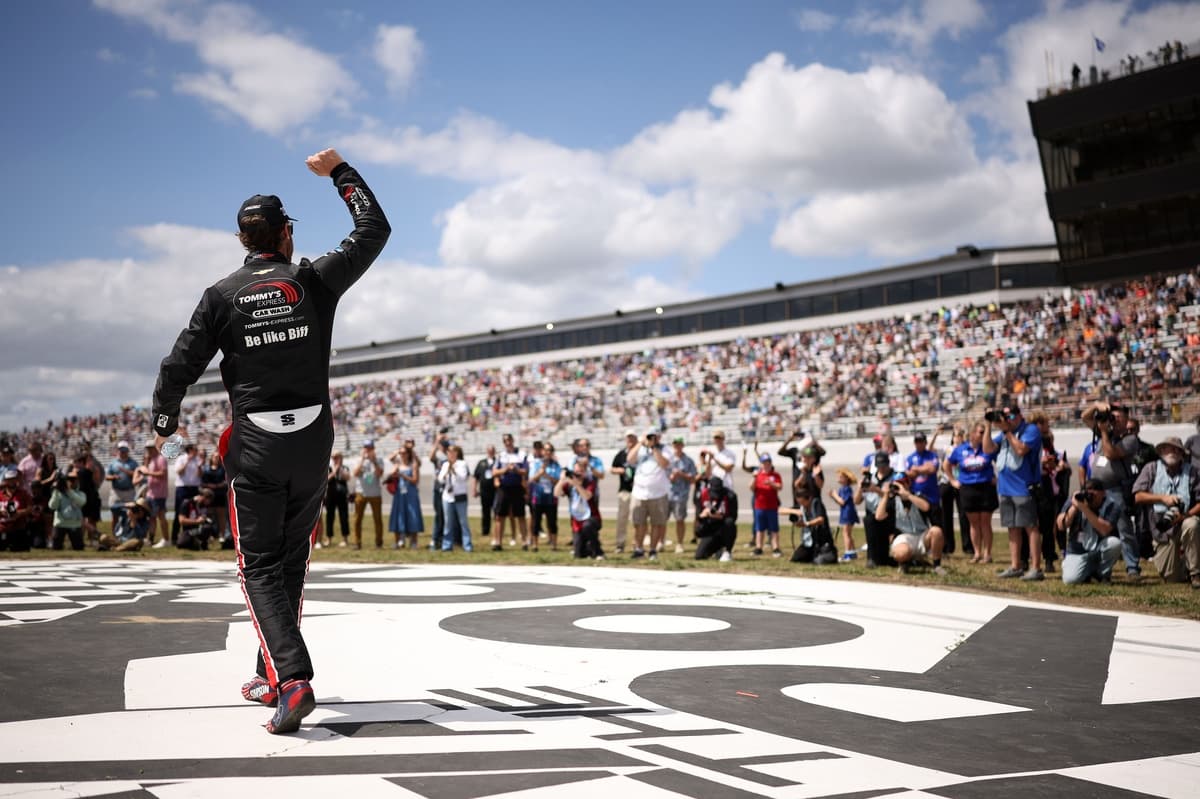
Garrett 'Cleetus McFarland' Mitchell’s long-awaited NASCAR O’Reilly Series debut at Rockingham Speedway ended in a 32nd-place finish, six laps behind winner William Sawalich, but the YouTube star’s chaotic yet determined performance left the racing world divided on whether he’s ready for the superspeedway gauntlet at Talladega Superspeedway later this month. While McFarland survived spins, near-collisions, and what he called 'the hardest thing I have ever done,' Richard Childress Racing (RCR) acknowledged his effort but conceded they still have work to do before NASCAR grants approval for high-speed draft racing at Talladega and Daytona.
Why Cleetus McFarland’s NASCAR Debut Matters for Superspeedway Approval
NASCAR requires drivers like McFarland—who lack extensive stock car experience—to complete an evaluation process at a challenging intermediate track like Rockingham before being cleared to compete in the high-stakes draft racing of Talladega and Daytona. The sanctioning body’s concern isn’t just about McFarland’s raw speed but his ability to manage tires, avoid chaos in multi-car traffic, and execute safe pit stops—a critical component NASCAR insisted on seeing during his Rockingham run. 'They’ll look at everything,' RCR’s vice president of O’Reilly Series operations, Danny Lawrence, told Motorsport.com. 'They might ask us to run another race because the thing about it is we didn’t get to do a live pit stop. There were a lot of things they wanted to see happen that didn’t happen.'
The Rockingham Rollercoaster: Spins, Near-Collisions, and a Fight for Position
McFarland’s 250-lap ordeal at the 1.014-mile Rockingham Speedway was a masterclass in controlled chaos. From a three-wide start where he nearly spun sideways in Turn 1 to narrowly avoiding contact with Blake Lothian, the internet personality-turned-racer admitted he pushed too hard, too soon. 'I had a ton of confidence, and then I spun out,' McFarland said after his early-race mishap. 'Then about 50 laps into the race, when I was kind of on my own racing those other four guys, I got my confidence back. That carried on for a while.'
The Tire Trouble That Haunted McFarland’s Run
One of the biggest lessons from Rockingham came in the form of tire management—a skill McFarland, more accustomed to sim racing and YouTube challenges, hadn’t fully grasped. 'I was like, "I have put myself in the worst position I could possibly be in right now," and "I am way in over my head,"' he recounted after his initial spin, which accelerated tire wear and left him vulnerable for the rest of the race. His teammate Jesse Love’s strategic tire-saving approach during a caution period offered a real-time clinic. 'I got behind Jesse Love when he was saving tires,' McFarland said. 'And I could catch him, but just watching his line, I was like, ‘Shoot, I’ve been doing that wrong all day.’'
NASCAR’s Checklist: What Still Needs to Be Proven
Beyond tire management, NASCAR’s evaluation criteria for McFarland’s superspeedway readiness include: executing a flawless live pit stop, maintaining consistent racecraft under pressure, and avoiding costly errors in traffic. Rockingham didn’t feature a live pit stop opportunity, a red flag for NASCAR officials. 'When he got sideways early, we automatically went into this conservation mode of just keep rolling and don’t push it too hard,' Lawrence explained. 'It’s going to be close, but I would not be surprised if NASCAR didn’t want us to run another race before we got to Daytona and Talladega.'
Peers Weigh In: Allgaier Praises Effort but Questions Drafting Compatibility
Two-time NASCAR Xfinity Series champion Justin Allgaier, who finished ahead of McFarland, offered a measured endorsement of the YouTube star’s performance. 'I thought Cleetus did a great job,' Allgaier said. 'You know, he did a really good job this morning in the ARCA race to come home with a top-five was just trying to figure out where he needed to be at today.' However, Allgaier stopped short of endorsing McFarland as a drafting partner at superspeedways. 'Look man, I can’t answer that because I think there’s a couple that we race with weekly that I don’t know that I would want to draft with at Talladega,' he admitted, citing the inherent risks of high-speed pack racing. Allgaier did acknowledge McFarland’s improved respect for the sport: 'I think he respects more the time and effort that goes into this than he did before.'
Richard Childress Racing’s Balancing Act: Pride in Progress, Pressure to Perform
RCR, known for developing young talent like Austin Dillon and Ty Dillon, saw both promise and pitfalls in McFarland’s debut. Lawrence praised his resilience—'He did really good a couple of times where he could have spun the car out in front of everybody and didn’t'—but emphasized the need for polish. 'I think if we were to go green tomorrow, he would be way better,' Lawrence said, hinting that McFarland’s inexperience in stock car racing is still a hurdle. The team’s decision to prioritize race completion over aggressive moves reflected a cautious approach, but one that may not align with NASCAR’s superspeedway expectations.
McFarland’s Rocky Road to Talladega: Social Media Scrutiny and a Rocky Debut
McFarland’s NASCAR ambitions have been met with equal parts curiosity and skepticism since he announced his plans to transition from online content creation to the O’Reilly Series. The Rockingham weekend was no exception: viral clips of his near-spins and chaotic moments fueled debate about whether he belonged in the series. McFarland himself acknowledged the pressure, quipping, 'I know that today had to be really tough on him, especially with some of the social media stuff that he’s had going against him the past few weeks,' Allgaier noted. Yet, McFarland’s resilience shone through. After the race, he joked in a post-race address, 'PSYCH! See you guys in two weeks at Talladega. That’s right!'—a playful yet defiant declaration that underscored his determination to prove the doubters wrong.
The Talladega Question: Is McFarland Ready for the Big Leagues?
The clock is ticking. With the Talladega race just two weeks away, McFarland and RCR are in a race against time to meet NASCAR’s unspecified benchmarks. While McFarland’s 32nd-place finish at Rockingham technically met the minimum requirement—simply finishing the race—it’s the nuances of superspeedway racing that concern officials. Talladega’s draft racing, where cars run inches apart at 200 mph, demands precision, patience, and an almost sixth sense for traffic. Lawrence’s comment that NASCAR 'might ask us to run another race' suggests the evaluation process isn’t over. 'Everything happens so fast there that we all want to be prepared when we do take him there,' he said. For McFarland, the stakes couldn’t be higher: a shot at superspeedway glory could cement his legitimacy, while another misstep might relegate him to the sidelines indefinitely.
Key Takeaways: What McFarland’s Debut Taught NASCAR, RCR, and Fans
- McFarland survived a chaotic debut at Rockingham but finished 32nd, highlighting both his grit and the steep learning curve ahead.
- NASCAR’s approval for Talladega hinges on additional evaluation, particularly live pit stops and tire management—two areas where McFarland struggled.
- RCR admits they ‘need to be better,’ signaling that while McFarland’s effort was noted, his racecraft isn’t yet race-ready for superspeedways.
- Peers like Justin Allgaier praised McFarland’s attitude but questioned his readiness for high-speed pack racing, where one mistake can trigger a multi-car pileup.
- McFarland’s social media-driven persona and viral moments added scrutiny to his NASCAR ambitions, but his determination to compete at Talladega remains unwavering.
The Road Ahead: Another Race or Direct to Talladega?
As the NASCAR community debates McFarland’s readiness, the timeline for his superspeedway debut remains uncertain. If NASCAR insists on another evaluation race, McFarland could face a tough choice: return to a lower-tier series for more seat time or lobby for a waiver based on his ARCA East success (where he finished fourth earlier that day). RCR’s Lawrence left the door open for either scenario: 'Well, they’ll look at everything.' For McFarland, the message is clear—his NASCAR journey is far from over, but the clock is ticking on his chance to prove he belongs in the big leagues.
Frequently Asked Questions About Cleetus McFarland’s NASCAR O’Reilly Series Debut
Frequently Asked Questions
- Why did NASCAR require Cleetus McFarland to race at Rockingham before Talladega?
- NASCAR mandates evaluation races for drivers lacking extensive stock car experience, particularly for superspeedways like Talladega where drafting and high-speed pack racing demand specialized skills. Rockingham, an intermediate track, tests tire management, racecraft, and the ability to avoid chaos—key areas of concern for officials.
- What specific areas does NASCAR want to see improved in McFarland’s driving?
- NASCAR officials have emphasized live pit stop execution, tire conservation, and maintaining race position without causing cautions as critical benchmarks. McFarland’s early spin at Rockingham and inability to execute a live pit stop during the debut raised red flags for his superspeedway readiness.
- Could McFarland still race at Talladega even if NASCAR denies approval?
- While unlikely, NASCAR has historically granted waivers for drivers who demonstrate sufficient skill in related series. However, with McFarland’s lack of superspeedway experience and the high risks of Talladega’s draft racing, denial would likely force him to compete in another evaluation race before being cleared.