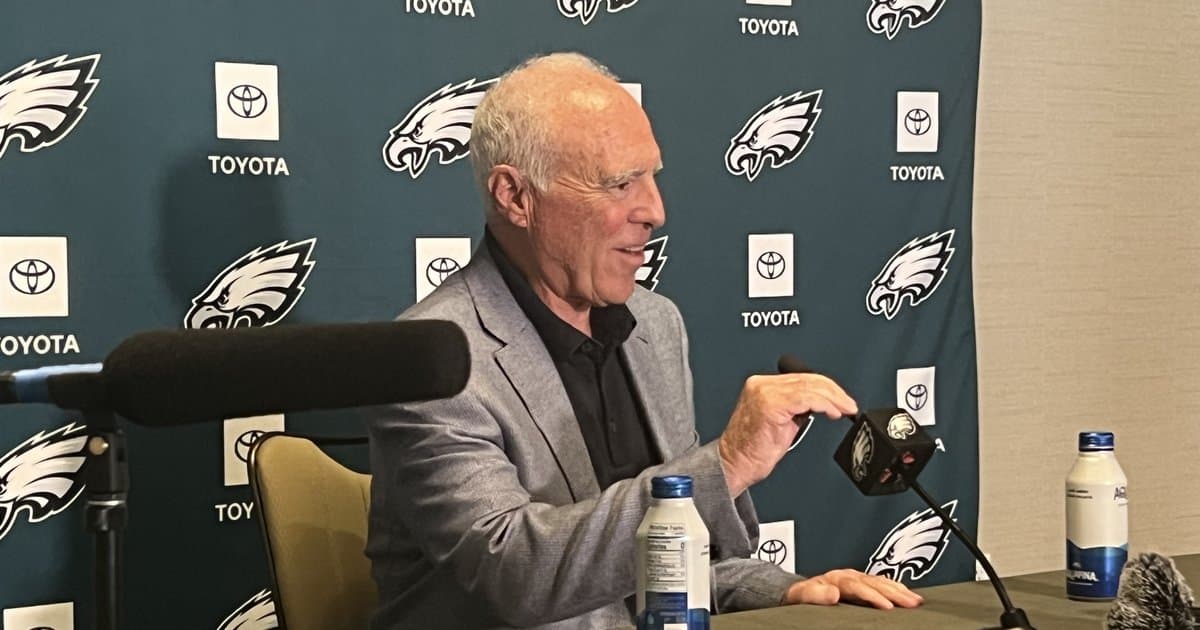
For the first time since evidence surfaced last summer, Philadelphia Eagles owner Jeffrey Lurie publicly confirmed the team’s pursuit of a new stadium to replace Lincoln Financial Field, with an ambitious target completion date of 2032. Speaking Tuesday at the NFL’s annual owners meetings in Phoenix, Lurie acknowledged the franchise is in the exploratory phase of a potentially transformative project that could redefine the city’s sports landscape—and possibly its skyline—while addressing the challenges of an aging venue in a competitive division.
- The Eagles are actively researching a new stadium, with a goal of completing construction by 2032 when the team’s lease at Lincoln Financial Field expires.
- Lurie emphasized exploratory research, including studying stadiums in Nashville, Buffalo, Madrid, and Barcelona, to maximize fan amenities and long-term viability.
- While no definitive site or design has been chosen, a new stadium is unlikely to be outdoor-only, given requirements for hosting major events like the Super Bowl or NCAA Final Four.
Why a New Eagles Stadium Could Become a Necessity by 2032
Lincoln Financial Field, opened in 2003, is approaching its third decade as the Eagles’ home, and while the stadium has undergone significant renovations—including upgrades to premium seating, concourses, and technology—it will be the oldest venue in the NFC East by 2032. Lurie alluded to this reality during his remarks, suggesting that maintaining competitive parity within the division may require a more modern facility. ‘Once Washington’s built, it will be the oldest stadium in the division,’ Lurie noted, referencing the Commanders’ newly renovated FedExField, which reopened in 2023. ‘There’s no question our practice facility and particularly our stadium will be the oldest in the division.’ While Lurie praised Lincoln Financial Field as ‘wonderful’ and ‘still great,’ he framed the decision as a forward-looking one, driven by the need to remain relevant in an era where fan expectations for amenities, technology, and event capabilities are rapidly evolving.
The Financial and Competitive Pressures Behind the Push
The urgency to explore a new stadium is not merely about age; it’s also about the Eagles’ ability to compete for major events and revenue. A May 2025 focus group with season ticket holders, referenced by Lurie, highlighted that a new venue could position Philadelphia as a viable host for marquee sporting events, including the Super Bowl and the NCAA Final Four. Both the NFL and NCAA have increasingly favored climate-controlled or dome stadiums for these high-profile games, particularly in northern cities where weather risks are a factor. Lurie’s reluctance to commit to an open-air design—despite sidestepping the question directly—suggests the team is likely considering a roofed or fully enclosed facility. ‘We're so focused on fan amenities,’ Lurie said. ‘To me, that's the number one thing... The rest is architecture design and where it ends up.’
Exploratory Research: What the Eagles Are Studying Globally
Lurie’s emphasis on ‘exploratory research’ signals a methodical approach to a project that could cost hundreds of millions—or potentially over a billion dollars. The owner compared the current phase to the team’s early investigations into Lincoln Financial Field, which spanned two to three years before construction began. ‘Now our exploratory research is very much on looking at stadiums around the world and domestically,’ he explained. ‘Is there anything we can learn from Nashville and Buffalo? Is there anything we can learn from the renovations in Madrid and Barcelona?’ The cited venues—Nissan Stadium (Nashville), Highmark Stadium (Buffalo), Estadio Metropolitano (Madrid), and Camp Nou (Barcelona)—represent a mix of recently renovated and brand-new facilities, each with distinct innovations in fan experience, sustainability, and revenue generation.
Key Innovations Lurie and the Eagles Are Likely Prioritizing
- Fan amenities: Lurie repeatedly stressed the importance of ‘maximizing fan amenities,’ which could include expanded concourses, premium seating with enhanced technology, and improved accessibility.
- Artificial intelligence: Lurie specifically mentioned AI, hinting at potential applications such as personalized fan experiences, dynamic pricing, or even AI-driven stadium operations.
- Sustainability: Modern stadiums increasingly incorporate green building practices, renewable energy, and water conservation. The Eagles, known for their environmental initiatives through the ‘Go Green‘ program, may prioritize eco-friendly designs.
- Event versatility: A retractable or fixed roof would allow the stadium to host non-football events year-round, from concerts to international soccer matches, boosting revenue potential.
Could the New Stadium Stay in South Philadelphia—or Will the Team Explore Other Sites?
One of the most pressing questions surrounding the Eagles’ stadium plans is location. When asked whether a new stadium would remain in Philadelphia, Lurie deferred to fan-centric priorities. ‘Whatever is best for the fans,’ he said. ‘I mean, we don't really go on a geographical basis. It's whatever is best for the fans.’ While the team’s current complex in South Philadelphia is the most logical site—given existing infrastructure, transportation access, and the Eagles’ long-standing ties to the city—Lurie’s response leaves the door open to other possibilities. ‘It’s hard to imagine a new football stadium being anywhere other than where the sports complex already resides,’ noted one industry analyst. ‘But certainly the team will need to create leverage and competition in order to negotiate the best possible deal at any prospective site.’
The Challenges of Stadium Construction in a Major U.S. City
Building a new stadium in Philadelphia would not be without hurdles. The city has a history of contentious stadium deals, including the contentious construction of Citizens Bank Park (Phillies) and Wells Fargo Center (Sixers), which faced delays and cost overruns. Additionally, Philadelphia’s status as a ‘sanctuary city’ and its ongoing debates over public funding for sports venues could complicate negotiations. In 2023, the city council rejected a $1 billion subsidy package for the Eagles’ proposed stadium renovations, signaling that any new project would require robust public-private partnerships. Lurie’s measured approach—‘Don't rush into it’—reflects an understanding of these complexities, suggesting the team may spend the next year or two refining its vision before making a formal proposal.
How a New Stadium Could Reshape Philadelphia’s Sports and Economic Landscape
A new Eagles stadium would have ripple effects beyond the football field. The venue could become a year-round entertainment hub, attracting concerts, conventions, and international sporting events that generate millions in economic activity. Philadelphia’s bid for the 2026 FIFA World Cup, for example, would benefit significantly from a modern, FIFA-compliant stadium. Moreover, the project could spur redevelopment in South Philadelphia, creating jobs and revitalizing the area around the sports complex. ‘Hosting major events like the Super Bowl or Final Four would put Philadelphia on the map for tourism and business,’ said a local economic development expert. ‘It’s not just about the Eagles—it’s about the city’s overall competitiveness.’
What’s Next? The Timeline and What Fans Should Expect
Lurie acknowledged that definitive answers—including site selection, design, and funding—are still months or even years away. ‘I wish I could give you more permanent answers,’ he said, ‘but we're gonna take our time. And I would hope in the next year or two, we'll have some more definitive approach to where we're going.’ Fans can expect the following milestones in the coming months:
Short-Term: 2025–2026
- Continued exploratory research, including site visits to other stadiums and consultations with architects and engineers.
- Engagement with city officials, community groups, and potential partners to gauge support and address concerns.
- Possible announcements of partnerships with technology firms for AI-driven fan experiences or sustainability initiatives.
Mid-Term: 2027–2029
- Selection of a design firm and architectural plans, with public unveiling of renderings.
- Formal discussions with the city and state about funding mechanisms, including tax incentives and public contributions.
- Potential selection of a site, whether in South Philadelphia or another location within the region.
Long-Term: 2030–2032
- Groundbreaking and construction, with a target completion date aligning with the 2032 lease expiration at Lincoln Financial Field.
- Transition planning, including the phasing out of the old stadium and integration of new technologies.
‘This is a big decision. Where's the team going to be? So I think always pays off to take it slow, really understand what's going on in the world of design, fan amenities, artificial intelligence and design. What kind of facility? So it's really exploratory.’ — Jeffrey Lurie, Eagles owner
The Broader Implications for the NFL and Other Teams
The Eagles’ stadium pursuit reflects a broader trend in the NFL, where franchises are increasingly investing in next-generation venues to stay competitive. Since 2010, the league has seen the construction of 10 new stadiums, with several more in the planning stages. Teams like the Las Vegas Raiders (Allegiant Stadium, 2020) and the Atlanta Falcons (Mercedes-Benz Stadium, 2017) have set new standards for fan experience, sustainability, and revenue generation. For Philadelphia, a new stadium could help the Eagles remain a premier destination for players, fans, and events. ‘The NFL is in a stadium arms race,’ said a sports business analyst. ‘Clubs that don’t modernize risk falling behind in both on-field competitiveness and off-field revenue.’
Public and Political Reactions: What Philadelphia’s Stakeholders Are Saying
While Lurie’s announcement was met with enthusiasm from Eagles fans, the project will require significant public buy-in. Philadelphia Mayor Cherelle Parker, who took office in January 2024, has expressed support for economic development projects but has also emphasized fiscal responsibility. ‘We’re committed to working with the Eagles on a responsible plan that benefits all Philadelphians,’ Parker said in a statement. Meanwhile, community advocates have raised concerns about displacement and the use of public funds. ‘Stadium deals often prioritize private profits over public needs,’ said a local housing advocate. ‘We’ll be watching closely to ensure any project includes community benefits.’
Key Takeaways: What Fans Need to Know About the Eagles’ Stadium Plans
- The Eagles are actively researching a new stadium, with a target completion date of 2032 when the lease at Lincoln Financial Field expires.
- A new venue is likely to prioritize fan amenities, AI integration, and event versatility (e.g., a roofed stadium to host major events like the Super Bowl).
- Location is undecided, though South Philadelphia remains the most probable site; Lurie emphasized fan experience over geography.
- The project will require years of planning, including architectural design, funding negotiations, and community engagement.
- A new stadium could boost Philadelphia’s bid for major events, spur economic development, and enhance the city’s competitiveness.
Frequently Asked Questions About the Eagles’ New Stadium Plans
Frequently Asked Questions
- When will the Eagles break ground on a new stadium?
- Lurie indicated that a groundbreaking is unlikely before 2030, with construction spanning 2030–2032. The timeline depends on finalizing design, funding, and site selection in the coming years.
- Will the new stadium have a roof?
- While Lurie did not confirm a roofed design, the need to host events like the Super Bowl suggests it will likely be enclosed. Open-air stadiums are rarely chosen for marquee events in northern cities.
- Could the new stadium be built outside Philadelphia?
- Lurie said location will be determined by what’s best for fans, but South Philadelphia is the most logical site. However, the team may explore other locations to create leverage in negotiations with the city.