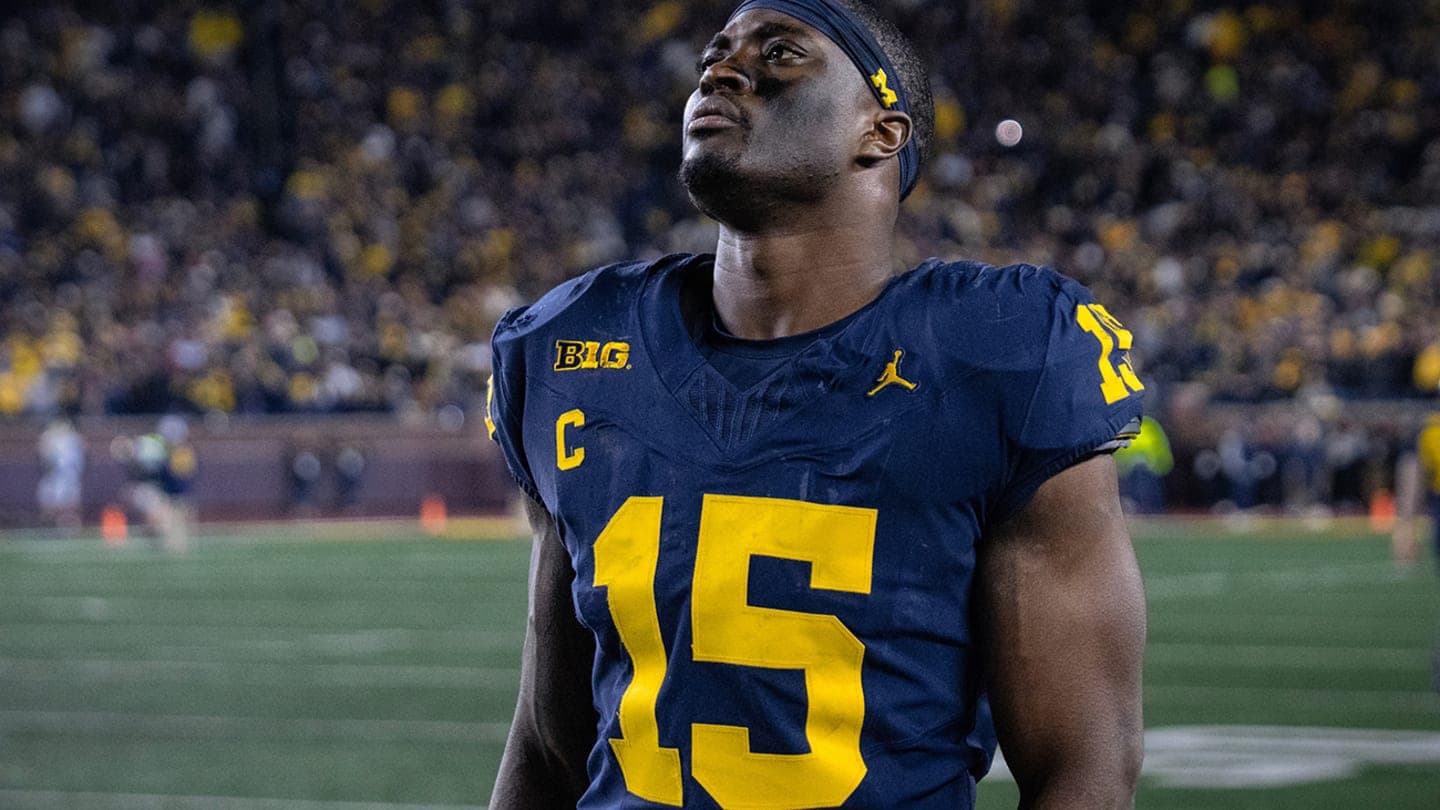
Ernest Hausmann, a 22-year-old linebacker for the University of Michigan, is set to reclaim his place on the field this Friday at Schembechler Hall—three months after a near-fatal car crash, a life-altering diagnosis of bipolar disorder, and a soul-searching trip to his birthplace in Uganda. The childhood promise scrawled on his bedroom wall, 'I will go pro,' now carries the weight of resilience, as Hausmann prepares for Michigan’s pro day, where he’ll showcase his talents to NFL scouts while sharing a story of overcoming invisible battles. His return marks not just a comeback in football, but a testament to the power of mental health awareness and the unbreakable human spirit.
From Near-Death Crash to Pro Day: The Road Back for Michigan’s Ernest Hausmann
The night of October 12, 2024, started like any other for Ernest Hausmann. The Michigan linebacker, fresh off a 24–22 victory over Northwestern at Wrigley Field and just weeks removed from a standout season where he led the Wolverines with 89 tackles, was behind the wheel of his Audi Q5, driving east on a remote Oregon highway near Lakeview. Hours earlier, he had withdrawn from the Michigan football program, his mind clouded by the weight of undiagnosed bipolar disorder and the emotional toll of an impending trip to Uganda. With his seatbelt fastened and the sunroof open to stave off exhaustion, Hausmann’s SUV veered off the road, rolling onto its side. The crash triggered his car’s automatic emergency system, alerting local sheriff’s deputies and EMTs to his location.
When Hausmann emerged from the wreckage through the sunroof—his only exit from the overturned vehicle—he was alone, disoriented, and more than 2,000 miles from his team in Ann Arbor. His phone, license, and credit cards were nowhere to be found, having been ejected during the crash. The 22-year-old was underweight, mentally exhausted, and on the verge of enlisting in the Air National Guard, believing football’s chapter was closed. Yet, in the aftermath of the wreck, Hausmann realized something profound: he was not done. The crash, which could have ended his life, instead became the catalyst for a journey back to the sport he loved—and the mental health support he desperately needed.
Bipolar Disorder: The Invisible Battle Behind Hausmann’s Withdrawal
Hausmann’s sudden departure from the Michigan football program in November 2024 left fans and analysts puzzled. He had been a key contributor, earning All–Big Ten honorable mention honors in 2024 and starting 14 games for the Wolverines. But behind the scenes, Hausmann was grappling with a condition that affects an estimated 5.7 million adults in the United States, according to the Cleveland Clinic: bipolar disorder. The diagnosis, confirmed in December 2024, explained years of undiagnosed struggles—from crippling isolation in eighth grade to the manic episodes that defined his early 20s.
The Science of Bipolar Disorder: Why Diagnosis Comes Late for Many
Bipolar disorder often hides in plain sight, with symptoms misattributed to stress, fatigue, or even poor work ethic. Dr. Andrew Nierenberg, a professor at Harvard Medical School and director of the Dauten Family Center for Bipolar Treatment Innovation, explains that the condition frequently begins with depression in the teenage years, followed by manic episodes in a person’s 20s—often triggered by major life changes or trauma. For Hausmann, the manic highs came in the form of relentless ambition: dominating on the football field, pushing his body to extremes, and burying his emotions under a facade of invincibility.
People with bipolar disorder will frequently experience depression first, and then can have their first manic episode in their 20s. It’s a condition that thrives on extremes—both in mood and behavior—and without intervention, it can derail lives in ways that are hard to predict.
From Isolation to Action: Hausmann’s Realization That Help Was Needed
Hausmann’s bipolar disorder manifested in subtle, yet destructive ways during his high school years in Columbus, Nebraska. After moving to a second-floor bedroom in eighth grade, he retreated into a routine of isolation—working out relentlessly, attending school and practice, then sequestering himself in his room. ‘I didn’t realize that isolation really was depression,’ Hausmann admits. ‘I didn’t really know that that was the word for it until I didn’t want to be with people. I just didn’t want to talk to people at all.’ His teammates’ outgoing nature starkly contrasted with his withdrawal, but it wasn’t until he arrived at Nebraska that he began addressing his mental health, seeking help from the team psychologist.
A Childhood Defined by Poverty, Adoption, and the Promise of a New Life
Hausmann’s journey to Michigan’s football field—and ultimately to self-discovery—began long before he set foot in Ann Arbor. Born in Uganda to parents diagnosed with AIDS, Hausmann was one of 23 children in a family struggling to survive. When he was 2, his biological uncle, a minister in Columbus, Nebraska, connected his future adoptive parents, Bob and Teresa Hausmann, with the family. The adoption process would take two years, involving members of Congress due to the rarity of Ugandan adoptions in the U.S. at the time. ‘They saw that firsthand over the two years it took to get Ernest—at one point involving members of Congress in their effort,’ Bob recalls.
The Physical and Emotional Hurdles of Early Childhood
When Hausmann arrived in Nebraska at age 5, he carried the scars of his early life—literally. A faulty penicillin shot administered in Uganda had damaged his hip, leaving him unable to walk normally. Football wasn’t an immediate option, but Hausmann found solace in watching the game. ‘The first question I asked [Bob],’ he says, ‘was, *How do I get on TV?*’ His determination was evident from the start. By age 7, he was scoring six goals in a single soccer game on a hobbled leg. At 8, he joined a travel soccer team, and by fourth grade, he was playing football and baseball. The ‘I will go pro’ sign taped to his bedroom wall became a daily reminder of his ambition.
From Nebraska to Michigan: A Transfer Fueled by Ambition and Mental Health Support
Hausmann’s path to Division I football was swift. As a true freshman at Nebraska in 2022, he became the fifth true freshman to start a game at linebacker in 30 years, tallying 54 tackles in seven starts. But the coaching staff’s departure after Nebraska fired Scott Frost in 2022 led Hausmann to enter the transfer portal, seeking a program that could help him ‘maximize my potential.’ Michigan, fresh off its first national title in 26 years, was the perfect fit. ‘He was a worker. A great teammate. He put the time in and he was always going to help the guys around him,’ says Chris Partridge, Michigan’s former linebackers coach (now with the Seattle Seahawks). ‘He just sees things the right way. Understanding what everyone around him is doing is a real strength of his.’
The Trip to Uganda That Changed Everything
In March 2025, Hausmann traveled to Uganda for the first time since his adoption—a trip organized by his godfather, Mike Owens, a local philanthropist who had supported the Hausmann family during their adoption process. The trip was twofold: to meet Hausmann’s biological parents, Paul and Olive, who had survived AIDS thanks to vaccines, and to participate in Owens’s charity, One Million Wells, which builds clean water infrastructure in impoverished communities. For Hausmann, the experience was a double-edged sword. On one hand, he connected with his roots and witnessed the tangible impact of Owens’s work, digging a well 20 feet from his parents’ home. On the other, he was confronted with the stark reality of poverty in a way he had never experienced in the U.S.
The Weight of Privilege and the Burden of Guilt
Hausmann’s trip to Uganda was emotionally overwhelming. In a country where over 20% of the population lives below the poverty line, according to the World Bank, Hausmann grappled with the guilt of his own privilege. ‘You hear about the guilt aspect, but to feel it, it’s two different things,’ he says. ‘And, unfortunately, when I felt it, I didn’t understand what it was going to do to me.’ The corruption he encountered while managing the well project—workers demanding more pay mid-project, shoddy labor—added another layer of disillusionment. ‘The obsession with helping people back home,’ he reflects, ‘is what got me into trouble with my mental health.’ The trip left him questioning his purpose, his identity, and whether his dreams of playing in the NFL were selfish in the face of global suffering.
A Diagnosis and a Return: How Ernest Hausmann Found His Way Back
By the time Hausmann returned from Uganda, he was in crisis. The crash in Oregon, the diagnosis of bipolar disorder, and the emotional fallout from his trip converged into a perfect storm. Yet, in the chaos, he found clarity. ‘Too many to count. Too many to count,’ Hausmann says when asked how many people are out there who need the help he ultimately found. ‘I believe that there are so many things that people struggle to talk about.’ His decision to return to Michigan’s pro day is more than a step toward the NFL; it’s a commitment to using his platform to destigmatize mental health struggles in sports.
Key Takeaways: The Resilience of Ernest Hausmann
- Ernest Hausmann’s return to Michigan football at pro day marks a triumph over near-fatal adversity, including a car crash, a bipolar disorder diagnosis, and a life-changing trip to Uganda.
- Bipolar disorder, a condition affecting 5.7 million U.S. adults, often goes undiagnosed for years, with symptoms frequently misattributed to stress or poor work ethic.
- Hausmann’s adoption from Uganda at age 5, following a two-year legal battle, shaped his perspective on privilege and purpose, culminating in a transformative trip to his birthplace in 2025.
- His mental health struggles—from isolation in high school to manic episodes in college—highlight the importance of early intervention and support systems in sports.
- Hausmann’s story underscores the dual power of resilience and advocacy, as he aims to inspire others by sharing his journey toward healing and self-discovery.
Frequently Asked Questions About Ernest Hausmann’s Journey
Frequently Asked Questions
- What is bipolar disorder, and how does it affect athletes?
- Bipolar disorder is a mental health condition characterized by extreme mood swings, including emotional highs (mania) and lows (depression). For athletes, the manic episodes can manifest as hyperfocus, reckless behavior, or physical overexertion, while depression may lead to withdrawal or burnout. Early diagnosis and treatment are critical to managing symptoms and maintaining performance.
- How did Ernest Hausmann’s adoption from Uganda impact his life?
- Hausmann’s adoption at age 5 followed a two-year legal battle, making him one of the first Ugandan children adopted by an American family. The experience shaped his worldview, instilling a sense of purpose but also guilt over his privilege. A 2025 trip to Uganda to meet his biological parents and work on clean water projects further deepened his emotional journey.
- What can we expect from Ernest Hausmann at Michigan’s pro day?
- Hausmann will participate in drills and positional workouts at Michigan’s pro day this Friday, showcasing his skills to NFL scouts. Beyond football, he plans to share his story of resilience, aiming to inspire others while pursuing his dream of playing in the NFL. His performances in 2024—leading Michigan with 89 tackles—highlight his readiness for the next level.