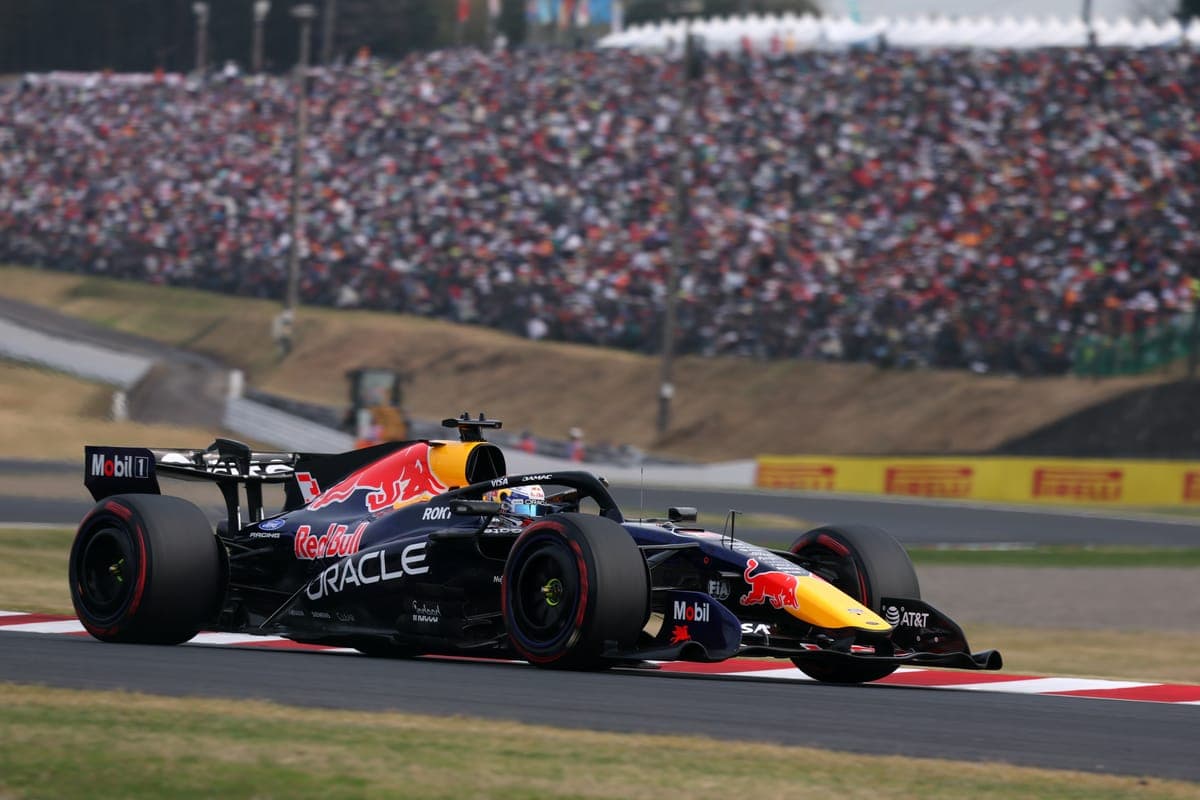
- Red Bull's Max Verstappen fails to reach Q3 at Suzuka, marking a rare intra-team defeat to rookie teammate Isack Hadjar
- McLaren shows significant improvement with Oscar Piastri securing P3, signaling a shift in the pecking order
- Aston Martin suffers another blowout performance, finishing last for the Japanese home Grand Prix
- Arvid Lindblad delivers top-10 performance as youngest driver on grid; contrasts with veteran frustrations
- Ferrari lacks straight-line speed, ending qualifying behind Mercedes and McLaren despite strong starts
At the iconic Suzuka Circuit during the 2026 Formula One Japanese Grand Prix, dramatic highs and lows unfolded in Saturday's qualifying session. Reigning champion Max Verstappen failed to advance past Q2—an uncharacteristic misstep that handed his younger teammate Isack Hadjar bragging rights in the Red Bull camp. Meanwhile, McLaren staged a notable comeback with Oscar Piastri grabbing third on the grid, pushing Ferrari into unfamiliar territory behind the Silverstone-based squad.
Despite the sweeping technical changes introduced in F1 2026—particularly concerning hybridized power units and complex energy management systems—the legendary challenge of Suzuka remained evident in qualifying trim. Drivers were forced to juggle aerodynamics, tire degradation, and evolving strategies across three distinct sectors, all while coping with the physical and mental demands of Japan’s fastest permanent racing venue. While overtaking opportunities remain limited, the strategic importance of grid placement was magnified once again, especially given recent upgrades to the DRS zones along the long back straight.
Why Max Verstappen's Early Exit Spells Bigger Questions for Red Bull
Verstappen's failure to progress beyond Q2 sent shockwaves through the paddock—not because it lacked precedent, but due to the rarity of such setbacks for one of the sport’s most dominant figures. Racing Bulls, Red Bull’s satellite program duo, managed to outrace the factory team's lead driver, highlighting a potential disparity emerging between experience and adaptation to the new chassis-energy dynamics.
"I'm not even frustrated anymore," Verstappen told reporters after exiting Q2. "I'm beyond that, so that's a bit... I don't know the right word in English."
His remarks underscored a growing sense of disillusionment, echoing similar concerns voiced earlier in the year about driver relevance under battery-heavy regulations. Fans and analysts alike have noted Verstappen’s muted reactions over the past several races, raising speculation about future career plans. Whether this marks a temporary dip or a longer-term trend remains to be seen, but his reaction suggests something deeper than a simple off-day.
How McLaren Rose From Mid-Pack to Title Contenders in One Session
Piastri Leads McLaren's Resurgence in Final Qualifying Push
Oscar Piastri delivered McLaren’s strongest performance of the weekend by claiming third place on the grid—a feat made all the more impressive considering Ferrari’s competitiveness throughout free practice sessions. For much of qualifying, Piastri lagged behind Charles Leclerc and Lewis Hamilton, yet a near-flawless lap in Q3 flipped the script entirely.
"Nice to get in the top three," Piastri said post-session, reflecting modestly on what could become a pivotal result in the constructors' championship chase.
Team principal Andrea Stella later acknowledged that the car “finally clicked” with Piastri’s setup preferences, particularly after struggles linking driver feedback with real-world pace. With Lando Norris falling short in fourth and unable to match the consistency of his teammate, this qualifying session gave McLaren renewed confidence ahead of Sunday’s race, where track position and pit strategy may play decisive roles.
Aston Martin's Disastrous Home Showing Raises Alarm Bells
For the Honda-engineered Aston Martin AMR26, competing at their home grand prix proved less celebratory than expected—and more catastrophic. Both Fernando Alonso and Lance Stroll were eliminated in Q1, finishing 21st and 22nd respectively, behind newer entries including Cadillac and the revived Sauber-Alfa Romeo lineup piloted by Valtteri Bottas.
According to Alonso, vibrations returned without explanation on Saturday morning, complicating any hopes of extracting competitive performance. Despite showing marginal improvements during Friday running, the AMR26 continued to suffer from poor aerodynamic balance and compromised handling characteristics that left the two-time world champion visibly dissatisfied.
"Driver skill is not really needed anymore," Alonso lamented, pointing toward an increasingly technology-dependent format dominated by energy deployment algorithms rather than raw racing instinct.
The performance gap against midfield teams like Haas and Williams—who themselves faced challenges—suggests structural issues extend beyond setup tweaks. As Honda prepares to transition away from F1 beyond 2027, questions surrounding engine development and integration with Aston Martin’s chassis design continue to mount.
Emerging Stars Take Center Stage Amid Veteran Struggles
Arvid Lindblad Proves Talent Trumps Experience Under New Rules
At just 19 years old, Arvid Lindblad demonstrated why he earned promotion to Red Bull’s junior team by reaching P10 in qualifying—an achievement matched only by seasoned racers. Unlike peers burdened by preconceptions of legacy setups, Lindblad approached the 2026 car dynamics with fresh eyes and minimal mechanical bias.
"Full send," Lindblad chuckled when asked about his mindset entering Q2, contrasting sharply with Leclerc’s complaints about losing straight-line speed when pushing hard in corners.
Hadjar, too, impressed with an eighth-place finish. Though trailing Verstappen in raw stats, his ability to maximize a difficult car showcased resilience and adaptability critical in F1’s shifting landscape. These performances signal that talent alone isn’t enough—it must align with understanding the intricacies of the era’s unique powertrain system.
Ferrari Slips Behind as Mercedes Claims Pole Once Again
Kimi Antonelli secured pole position for Mercedes, continuing the team’s dominance since transitioning to the Gen3 era. His teammate George Russell struggled once again, exiting Q2 behind multiple midfield runners and missing key timing windows necessary for peak performance.
Ferrari, despite improvements in traction control and corner entry feel, remained vulnerable on the straights—an issue that plagued both Leclerc and Hamilton. Though both drivers logged competitive laps, neither found the outright pace required to challenge Mercedes’ top-end acceleration advantage.
"It’s just we’re not very quick," Hamilton summarized succinctly, adding that energy deployment inefficiencies cost crucial milliseconds in sector transitions.
With Piastri joining them on the front row, expectations are mounting for a stronger showing from Maranello next season. If current trends hold, Ferrari risks slipping further behind unless significant upgrades arrive soon.
Midfield Mayhem: Team Dynamics Shift Across All Levels
Elsewhere, midfield battlelines sharpened. Nico Hülkenberg’s Q3 miss, attributed largely to a lock-up at 130R, denied Audi a top-ten starting slot and highlighted ongoing inconsistency with brake-by-wire calibration. Teammate Gabriel Bortoleto fared better, locking into ninth and maintaining Audi’s upward trajectory in the constructors’ standings.
Carlos Sainz edged Alexander Albon in Q2, though the Williams driver expressed frustration over persistent energy-related inconsistencies affecting his sector times across three consecutive weekends. Albon’s comment that “you can be quicker in every corner and finish the lap slower” speaks directly to the complexity embedded within the 2026 regulations, where optimization trumps outright speed.
Frequently Asked Questions
- Why did Max Verstappen fail to reach Q3 at Suzuka?
- Verstappen struggled with inconsistent lap execution at critical points, particularly at Degner 2 and Spoon corners. Technical difficulties and energy deployment issues likely contributed to his elimination in Q2.
- What caused Aston Martin's poor performance at the Japanese Grand Prix?
- Persistent vibration issues, aerodynamic inefficiencies, and ineffective energy usage plagued the AMR26 throughout the weekend. These problems hindered both drivers despite some Friday improvements.
- Who stood out among younger drivers in F1 2026 qualifying?
- Arvid Lindblad earned 10th place, demonstrating remarkable adaptation to the complex ruleset, while Isack Hadjar outpaced his experienced teammate Verstappen, finishing eighth overall.