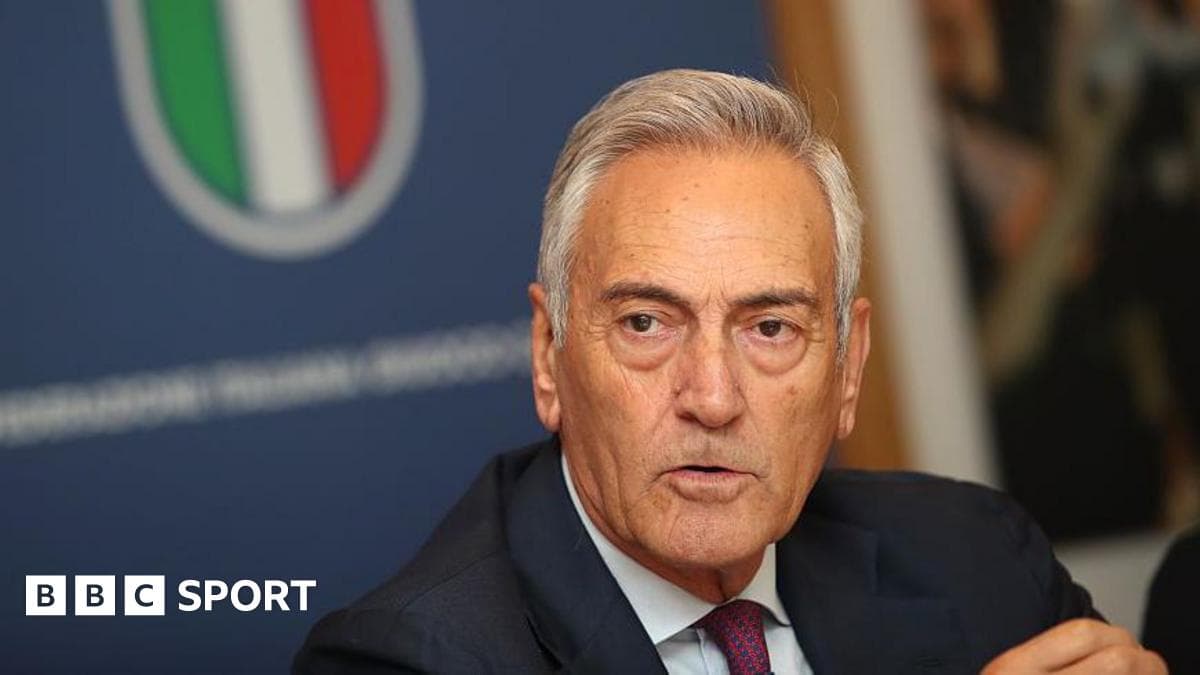
Gabriele Gravina, the embattled president of Italy’s national football federation (FIGC), announced his resignation on Thursday, capping a week of seismic upheaval in Italian football following the national team’s humiliating failure to qualify for the 2026 FIFA World Cup in the United States, Canada, and Mexico. The resignation came just 12 hours after Italy suffered its third consecutive World Cup elimination—this time a heartbreaking 4-1 penalty shootout defeat to Bosnia-Herzegovina in a play-off final played in Zurich on April 23, 2024. The exit was all the more painful given that Italy is set to co-host UEFA Euro 2032 alongside Turkey, raising urgent questions about the country’s aging stadium infrastructure and the future of its football governance. Former goalkeeper Gianluigi Buffon, a World Cup-winning legend and longtime figurehead of the Azzurri, also stepped down from his role as delegation head, citing shared responsibility for the collective failure.
- Gabriele Gravina resigned as president of the Italian Football Federation (FIGC) after Italy failed to qualify for the 2026 World Cup, marking the first time the four-time champions missed three tournaments in a row.
- Gianluigi Buffon, the 48-year-old World Cup-winning goalkeeper, resigned from his position as national team delegation head, saying the team’s failure demanded accountability.
- UEFA President Aleksander Ceferin warned Italy could lose its co-hosting rights for Euro 2032 if stadium infrastructure improvements are not completed by October 2024.
- Italy’s football infrastructure crisis has deepened, with just five stadiums expected to be ready for UEFA’s October deadline, amid ongoing disputes between clubs and public authorities.
Italy’s Heartbreaking Exit: The Third World Cup Miss in a Row
Italy’s footballing identity has long been synonymous with defensive solidity, tactical genius, and World Cup glory—most notably in 2006 when the Azzurri lifted their fourth title in Berlin. Yet the 2026 World Cup cycle has exposed a troubling regression, culminating in a humiliation that stunned the global football community. The defeat to Bosnia-Herzegovina was not just a sporting disappointment; it was a historic anomaly. No previous World Cup champion has ever missed three consecutive tournaments. Italy’s absence from Russia 2018, Qatar 2022, and now 2026 represents a collapse in competitive standards unmatched by any top-tier football nation in modern history. The play-off final in Zurich was a microcosm of Italy’s decline: a match where tactical rigidity, poor midfield control, and a failure to adapt led to a 0-0 draw in regulation, followed by a demoralizing penalty shootout loss.
The Collapse of a Golden Generation and the Rise of a New Crisis
The roots of this failure stretch back more than a decade. Italy’s last major tournament triumph came in 2016 with a European Championship quarterfinal run, but even that was underpinned by a defensive core that included veterans like Buffon, Giorgio Chiellini, and Daniele De Rossi. By the time of the 2017 Confederations Cup and the dismal Euro 2016 round-of-16 loss to Germany, cracks were already visible. The 2018 World Cup qualification failure—when Sweden eliminated Italy in a play-off—marked the first sign of systemic decay. It triggered the resignation of then-president Carlo Tavecchio and the appointment of Gravina, a former referee and longtime FIGC insider, who promised reform and a return to the top table. Yet despite initial optimism, Italy’s results under Gravina’s leadership remained inconsistent. The team qualified for Euro 2020 but crashed out in the round of 16 to Austria. Then came the 2022 World Cup qualification failure—a first for Italy in the modern era—followed by the consecutive elimination in 2024.
Gravina’s Fall: A Career Ends in Failure Amid Governance Scrutiny
Gabriele Gravina, 72, took office in October 2018 with a mandate to restore Italy’s footballing prestige. A former referee and vice-president of UEFA since 2019, Gravina was a respected administrator within European football circles. But his tenure was defined by frustration. Despite overseeing a rise in youth development through the FIGC’s "Percorso Azzurro" program, Italy’s senior team failed to transition effectively from a generation of legends to a new wave of talent. Criticism mounted over coaching instability—with managers like Roberto Mancini, Gian Piero Ventura, and now Luciano Spalletti cycling in and out—and a perceived overreliance on defensive systems that stifled creativity. Gravina’s resignation came following an emergency meeting at the FIGC headquarters in Rome, where board members reportedly acknowledged the need for a fresh start. In a terse statement, Gravina acknowledged the severity of the situation: “The main objective was to bring Italy back to the World Cup. And we didn’t succeed.”
Gianluigi Buffon’s Departure: A Symbol of End of an Era
Gianluigi Buffon’s resignation as national team delegation head sent shockwaves through Italian football. At 48, Buffon remains one of the most decorated and respected figures in the sport’s history. He made 176 appearances for the Azzurri, won the 2006 World Cup as captain, and was a cornerstone of Italy’s defensive identity for two decades. His presence alone lent gravitas and continuity to the national team setup. But in an emotional post on Instagram, Buffon framed his departure as an act of accountability. “The main objective was to bring Italy back to the World Cup,” he wrote. “And we didn’t succeed. It’s fair to leave it to those who will come after the freedom to choose the figure they think is best to play my role.” Buffon’s exit symbolized not just the end of a playing career but the closing of a chapter in Italian football’s soul—a generation that had defined greatness but could not prevent decline.
Euro 2032 in Jeopardy: Stadium Crisis Threatens Italy’s Co-Hosting Rights
The resignation of Gravina and Buffon has overshadowed an even greater existential threat to Italian football: the risk of losing co-hosting rights for UEFA Euro 2032. The tournament, co-awarded to Italy and Turkey in October 2023, is now at risk due to Italy’s inability to deliver modern, compliant stadiums. Of the 10 proposed venues, only a handful meet UEFA’s standards for hosting major matches. Rome’s Stadio Olimpico and Milan’s San Siro are considered viable, but others—including Naples’ Stadio Diego Armando Maradona and Turin’s Juventus Stadium—face delays due to funding disputes, environmental assessments, and bureaucratic hurdles. UEFA President Aleksander Ceferin, who had publicly supported Gravina, issued a stark warning in an interview with Gazzetta dello Sport: “Euro 2032 is scheduled and will take place. I hope the infrastructure will be ready. Otherwise, the tournament will not be played in Italy.” Ceferin placed blame squarely on political inertia rather than Gravina’s leadership, stating: “Perhaps it is Italian politicians who should be asking themselves why Italy has some of the worst football infrastructure in Europe.”
The Stadium Backlog: Why Italy Lags in Modernization
Italy’s stadium problem is not new, but it has become acute. The country’s top leagues, Serie A and Serie B, are dominated by aging venues, many built in the 1930s and 1950s. Unlike England, Germany, or France—where clubs have leveraged private investment and public-private partnerships to modernize—Italian clubs have struggled due to financial constraints, regulatory delays, and resistance from local authorities. The Juventus Stadium, completed in 2011, remains a rare exception. Inter Milan and AC Milan’s proposed new stadium at San Siro, originally scheduled for 2023, was postponed after legal challenges. Naples’ Stadio Maradona, home to SSC Napoli, faces environmental opposition to expansion. With just five stadiums expected to meet UEFA’s October 2024 deadline for stadium submissions, Italy risks forfeiting its co-hosting rights—a humiliation that would compound the national team’s World Cup failure.
UEFA’s Ultimatum and the Political Paralysis
UEFA’s October 2024 deadline is non-negotiable. The governing body has made it clear that if Italy cannot provide a viable list of stadiums capable of hosting Euro 2032 matches, the tournament will be relocated. This would not only strip Italy of a global showcase but also damage its reputation as a football nation. The crisis has exposed deep-seated dysfunction in Italian governance. Despite billions in potential revenue from tourism and broadcasting, successive governments have failed to prioritize sports infrastructure. Infrastructure Minister Matteo Salvini has called the stadium issue a “national emergency,” but progress remains stalled. Meanwhile, regional authorities in Lombardy and Campania have clashed with football clubs over funding models and environmental regulations. Without urgent intervention, Italy faces the unthinkable: hosting a major tournament not on its soil.
The Road Ahead: Reform, Leadership, and the Next Generation
The dual resignation of Gravina and Buffon marks a turning point for Italian football. The FIGC is now expected to appoint an interim president, with speculation centered on former player and current sporting director of Inter Milan, Beppe Chieppa, or former Juventus executive Maurizio Arrivabene. Whoever takes the helm will face an unenviable task: restoring credibility to the national team, reviving a moribund youth system, and securing Italy’s hosting rights for Euro 2032. The pathway forward demands structural reform. The FIGC’s youth academies, while improved, still lag behind those of France, Spain, and Germany. Serie A clubs, burdened by financial fair play and low broadcasting revenues, struggle to invest in infrastructure. A new national team coach will be appointed by June, with Massimiliano Allegri, Ivan Jurić, and Stefano Pioli among early candidates. Yet no tactical overhaul can compensate for systemic weaknesses in governance and infrastructure.
Lessons from Failure: What Other Nations Can Learn
Italy’s crisis offers a cautionary tale for football nations around the world. The decline of a four-time World Cup champion did not happen overnight. It resulted from a combination of poor leadership, coaching instability, youth development gaps, and political neglect. Germany, after its 2018 World Cup humiliation, underwent a comprehensive restructuring—installing a technical director, investing in youth academies, and embracing a more progressive playing style. Spain’s La Roja rebounded through a philosophy rooted in possession and technical excellence. Italy now faces a similar reckoning. The absence of a World Cup berth for three cycles has already led to soul-searching in the media and among fans. Social media erupted with outrage, memes, and calls for reform. The hashtag #AzzurriRinasci (Azzurri Reborn) trended as supporters demanded accountability. But accountability alone is not enough—Italy must act.
The Human Cost: Fans React to a National Embarrassment
For Italian football fans, the last six years have been a rollercoaster of hope and despair. The 2021 European Championship victory in London, where Italy defeated England on penalties in the final, briefly revived national pride. But the euphoria faded quickly. The subsequent World Cup absences and Euro 2024 elimination have left supporters disillusioned. In Rome, Naples, and Turin, tifosi have taken to the streets and social media to voice their frustration. “We are not Germany. We are not Argentina. We are Italy,” said one fan on Twitter. “We deserve better than this.” The emotional toll extends beyond the pitch. Clubs like AS Roma and AC Milan, once symbols of continental success, now struggle to attract top talent due to the national team’s diminished stature. Sponsors are re-evaluating their investments in Italian football, fearing further decline.
The main objective was to bring Italy back to the World Cup. And we didn’t succeed. It’s fair to leave it to those who will come after the freedom to choose the figure they think is best to play my role.
Key Takeaways: Italy’s Football Crisis in Summary
- Gabriele Gravina resigned as president of the Italian Football Federation (FIGC) following Italy’s third consecutive World Cup qualification failure—a historic first for a four-time champion.
- Gianluigi Buffon stepped down as national team delegation head, citing shared responsibility for the team’s failure to qualify for the 2026 World Cup.
- UEFA President Aleksander Ceferin warned Italy could lose its co-hosting rights for Euro 2032 if modern stadiums are not secured by October 2024.
- Italy’s stadium infrastructure crisis, rooted in political paralysis and financial constraints, threatens to derail the tournament before a ball is kicked.
- The crisis demands urgent reform in governance, youth development, and infrastructure to restore Italy’s status as a footballing powerhouse.
Frequently Asked Questions
Frequently Asked Questions
- Why did Gabriele Gravina resign as president of the Italian Football Federation?
- Gabriele Gravina resigned after Italy failed to qualify for a third consecutive World Cup, a historic first for the four-time champions. The defeat to Bosnia-Herzegovina in the 2026 World Cup play-off final ended a week of national humiliation and triggered an emergency meeting where board members acknowledged the need for a fresh start.
- What is at stake for Italy with Euro 2032 hosting rights?
- Italy risks losing its co-hosting rights for UEFA Euro 2032 if it cannot provide UEFA with five modern, compliant stadiums by October 2024. Failure to meet infrastructure standards could force UEFA to relocate the tournament, compounding the national team’s World Cup failure with a further blow to national prestige.
- Why has Italy’s football infrastructure fallen behind other European nations?
- Italy’s stadium modernization has been stifled by political inertia, regulatory delays, and disputes between clubs and local authorities. Unlike nations such as England or Germany, Italy lacks a coordinated public-private funding model, leaving clubs burdened by financial constraints and unable to upgrade aging venues.