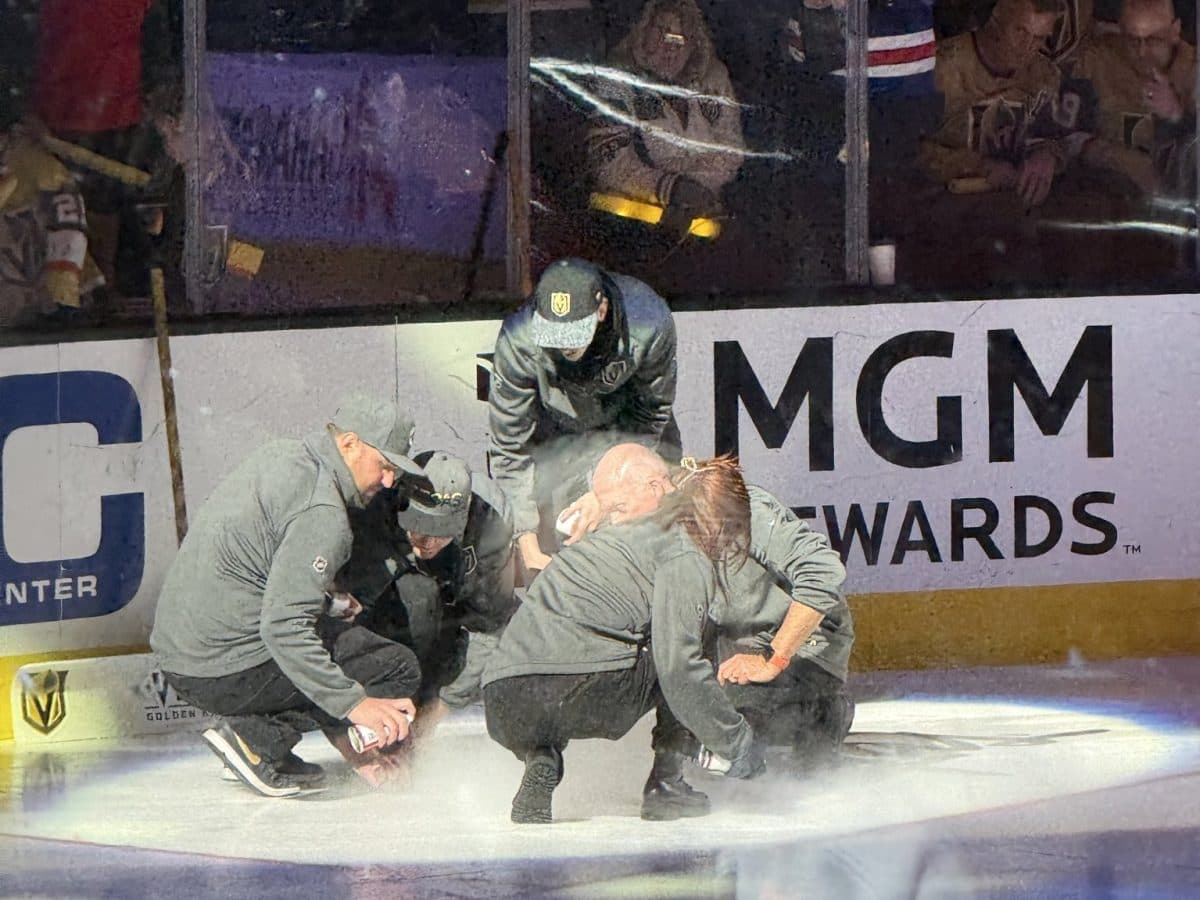
T-Mobile Arena’s second intermission became a waiting game for fans, players, and coaches during the Vegas Golden Knights’ 34-minute delay against the Calgary Flames on Thursday night. What appeared to be a routine resurfacing of the ice by the Zamboni crew instead revealed a critical flaw in the arena’s layered ice graphics—a problem triggered not by human error or equipment failure, but by the intersection of multiple upcoming high-profile events and the delicate science of ice maintenance. The disruption stemmed from stacked vinyl graphics beneath the ice surface, including the Las Vegas Convention and Visitors Authority (LVCVA) logo, which had been buried under additional layers of sponsor logos for the NHL playoffs and the NCAA Frozen Four. When the Zamboni’s blade sliced through the thin ice above the LVCVA logo, it exposed the vinyl—creating a sticky, hazardous patch that could have caused players to lose control. The incident underscores the high-stakes precision required in professional hockey arenas, where even fractions of an inch can derail a game.
How Ice Graphics Are Built at NHL Arenas Like T-Mobile Arena
At T-Mobile Arena, as in most NHL venues, the ice surface is a carefully constructed composite of layers designed both for playability and visual clarity. The foundation consists of a concrete base, on which solid painted graphics—such as blue lines, faceoff dots, and goal creases—are applied directly. These elements are permanent fixtures and remain visible through the transparent ice. For more intricate designs like logos, advertisements, and center-ice art, organizers use printed vinyl sheets that are laid over the painted base before flooding. Each sheet is typically affixed to a solid white backing to improve visibility and durability.
The Role of Event-Specific Graphics in Arena Ice Design
The NHL playoffs and the NCAA Frozen Four are both scheduled to take place at T-Mobile Arena within weeks of each other, requiring event-specific graphics to be pre-installed. As a result, multiple layers of vinyl logos and branding—including the LVCVA logo, team logos, and corporate sponsors—were stacked atop one another in certain zones of the ice. This stacking reduces the effective thickness of the ice above each graphic, especially when new layers are added on top of older ones without removing the previous ones. In most areas of the rink, this wasn’t a problem: the stacked layers were either distant from skating paths or sufficiently covered by a full inch-and-three-quarters of ice. But in one corner, the combined thickness of vinyl layers left only a fraction of an inch of ice separating the top graphic from the surface.
What Went Wrong: The Zamboni Blade’s Unexpected Encounter
During the second intermission, the Zamboni’s resurfacing pass over the corner where the LVCVA logo was buried proved disastrous. The machine’s sharpened blades, designed to shave a thin layer of ice and smooth the surface, inadvertently snagged the edge of the vinyl logo. The blade didn’t just graze the surface—it tore a slit through the thin ice and into the vinyl, exposing it to the air for the first time. Normally, the ice above buried graphics measures over an inch thick, providing a buffer against such incidents. But in this location, the combined thickness of stacked vinyl reduced that buffer to less than a quarter-inch. The damage was visible almost immediately: a small tear in the ice, revealing the white backing of the logo beneath.
Why Thin Ice Poses a Hazard to Players and the Game
The danger wasn’t just aesthetic—it was functional. When the vinyl was exposed, the surface became sticky rather than slick. Hockey skates are engineered to glide on a thin film of water created by friction and pressure. When the skate blade contacts vinyl or any non-ice surface, that glide is interrupted. The blade can catch, stick, or even tear, increasing the risk of falls, ankle injuries, or equipment damage. Referees and players reported feeling the difference as they warmed up for the third period. NHL rules mandate that the ice surface remain safe and consistent across the entire rink. An exposed or partially exposed graphic violates that standard.
The Science Behind Rapid Ice Repair in Pro Hockey
With the game on hold and the arena in full view of a national TV audience, the T-Mobile Arena ice crew sprang into action using a combination of conventional and emergency techniques. First, they attempted to patch the area with a commercial-grade adhesive remover designed to dissolve stickiness—similar to products used to remove chewing gum from floors or desks. While effective for small patches, the affected area was too large for this solution. Crews then turned to a more powerful tool: a CO2 fire extinguisher. By spraying liquid carbon dioxide onto the damaged zone, they rapidly lowered the surface temperature, causing the water used to patch the area to freeze almost instantly. This process, while effective, is labor-intensive and time-consuming. It requires repeated applications of water, followed by CO2 blasts, until the ice reaches a consistent thickness and hardness.
Could This Incident Have Been Prevented?
Arena officials and NHL staff emphasized that the delay was neither a mechanical failure nor a crew error. It was a consequence of logistical necessity. T-Mobile Arena, like many modern multi-purpose venues, hosts a variety of events year-round—from concerts to hockey games to college sports. Each event demands unique ice layouts, branding, and sponsor requirements. When the Frozen Four and NHL playoffs overlap, as they do this spring, the ice must accommodate multiple layered graphics. While arenas typically remove older layers before installing new ones, some graphics—like the LVCVA logo—are reused across seasons or events, leading to unintentional buildup.
Lessons from Other NHL Arenas
This isn’t the first time stacked ice graphics have caused delays or safety concerns. In 2022, Madison Square Garden experienced a similar issue when layered broadcast and sponsor logos led to thin ice during a Rangers game. The NHL has since encouraged arenas to adopt digital ice overlays—high-definition projections under clear ice that eliminate the need for physical vinyl layers. However, not all venues have transitioned due to cost and tradition. T-Mobile Arena, which opened in 2016, still relies on the classic layered vinyl method, though it has incorporated digital elements in some areas.
What Happens Next: Ice Maintenance Protocols and Fan Impact
Following the 34-minute delay, the game resumed with enhanced monitoring of the repaired area. Ice crew members conducted spot checks with infrared thermometers to ensure consistent surface temperature and thickness. The NHL’s director of facilities reviewed the incident and confirmed that no rule violations occurred, as the delay was caused by an unavoidable physical constraint. For fans in attendance, the disruption was an unwelcome intermission—one that tested patience during a tightly contested matchup. Social media erupted with speculation ranging from arena conspiracies to equipment malfunctions, but the true explanation lay in the intersection of sports, engineering, and event logistics.
- The 34-minute delay during the Golden Knights vs. Flames game was caused by a Zamboni blade tearing the LVCVA logo under the ice at T-Mobile Arena.
- Stacked vinyl sponsor logos for the NHL playoffs and Frozen Four reduced ice thickness in one corner to less than a quarter-inch, making it vulnerable to damage.
- Exposed vinyl creates a sticky surface that can trap skates, posing a safety risk to players and officials.
- Arena crews used CO2 fire extinguishers and rapid-freeze techniques to repair the area and resume play.
- The incident highlights the challenges of managing layered ice graphics in multi-event arenas and raises questions about the future of digital ice overlays in the NHL.
The Broader Implications for Arena Operations and NHL Scheduling
The T-Mobile Arena incident shines a light on the operational complexity behind NHL game days, particularly in arenas that host non-hockey events. The NHL’s rigorous schedule—with back-to-back games, playoffs, and special events—requires arenas to be agile. Yet, the physical constraints of ice construction remain a limiting factor. While digital ice technology exists, its adoption is not yet universal due to cost and tradition. As a result, arenas must balance visual branding demands with structural integrity, often relying on layered vinyl that can degrade over time. This incident may prompt the league to revisit its ice maintenance guidelines or encourage more venues to adopt projection-based alternatives.
Voices from the Ice: Players and Coaches React
We were ready to go out there. The refs told us to turn around, and we didn’t know what was going on. It was weird—you could feel the ice was different in that corner. — Jonathan Marchessault, Vegas Golden Knights forward
It’s one of those things you don’t expect. You see the ice crew out there working hard, and you just have to wait. At the end of the day, it’s about safety. — Bruce Cassidy, Vegas Golden Knights Head Coach
How T-Mobile Arena Plans to Prevent Future Delays
In the wake of the incident, T-Mobile Arena officials confirmed they are reviewing ice maintenance protocols, including potential adjustments to graphic layering and resurfacing schedules. One proposed solution involves scheduling deep ice resurfacing sessions between major events to ensure a consistent base layer. Another consideration is the increased use of removable vinyl graphics, which can be peeled off before new layers are added. While these changes may add operational complexity, they could prevent similar delays in future high-stakes games or playoff matchups.
Key Takeaways for Fans and Industry Observers
- The delay was caused by stacked vinyl sponsor logos under the ice, not equipment failure or human error.
- Thin ice over buried graphics can become hazardous, potentially trapping skates and endangering players.
- Emergency ice repair in NHL arenas often involves CO2 fire extinguishers to rapidly freeze damaged areas.
- Multi-event arenas face unique challenges in balancing branding, event schedules, and ice integrity.
- Future solutions may include digital ice overlays or improved vinyl layering protocols.
Frequently Asked Questions
Frequently Asked Questions
- Why did the Zamboni blade damage the LVCVA logo under the ice?
- The Zamboni blade caught the LVCVA logo because stacked sponsor logos for the NHL playoffs and Frozen Four reduced the ice thickness above it to less than a quarter-inch. The blade tore through the thin ice and into the vinyl, exposing it and creating a dangerous surface.
- Is it common for sponsor logos to be stacked under the ice at NHL arenas?
- While not common, it can happen in multi-event arenas like T-Mobile Arena, especially when high-profile events overlap. Older logos may remain under new layers, reducing ice thickness in certain spots.
- What tools do arena crews use to repair damaged ice quickly?
- Crews often use CO2 fire extinguishers to rapidly freeze patched areas, along with commercial-grade adhesive removers for small sticky spots. This process is repeated until the ice reaches a consistent thickness and hardness.