
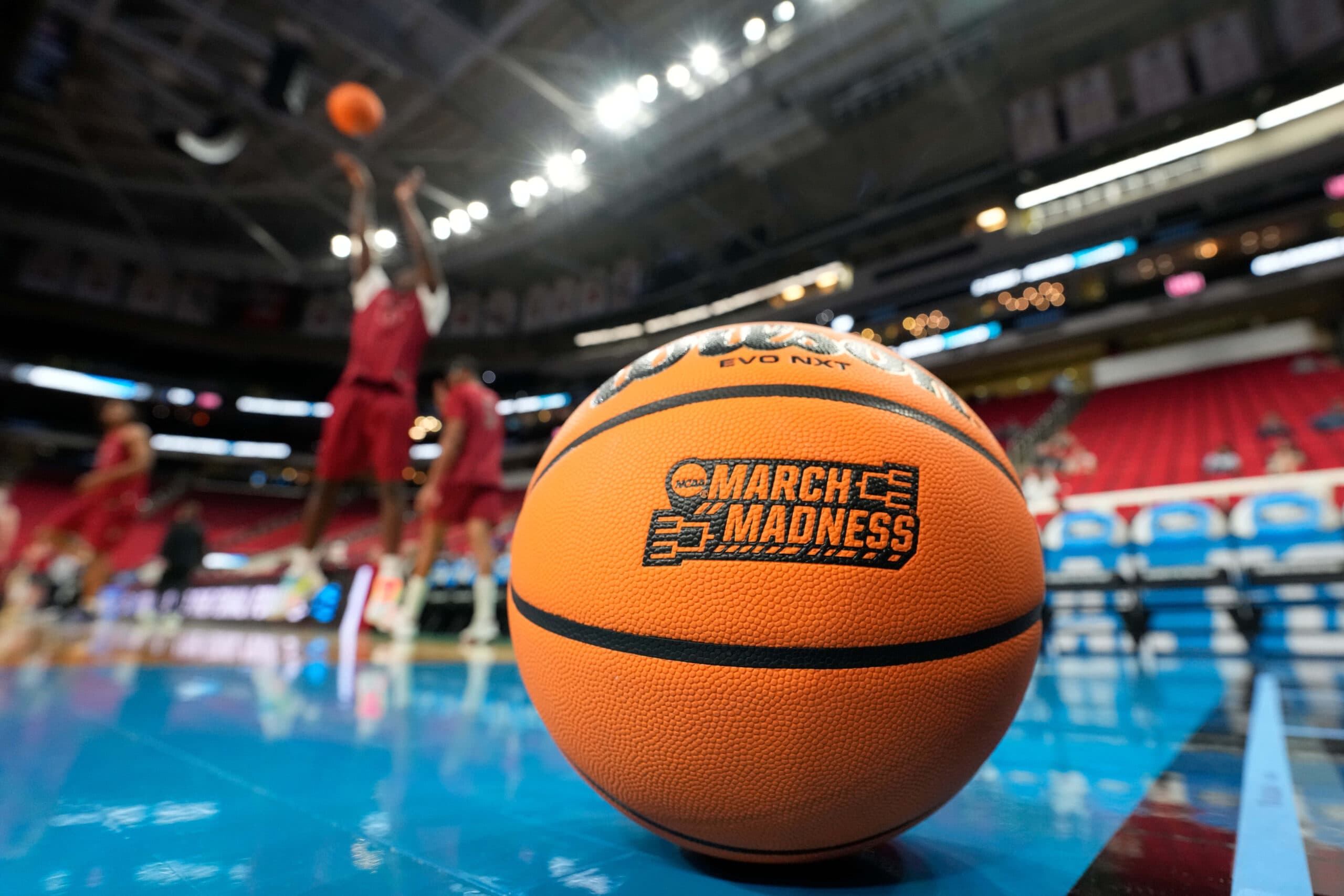
The Iowa State Cyclones kick off their 2026 NCAA Tournament run as a No. 2 seed in the South Region, facing Ohio Valley Conference champion Tennessee State on Friday at 1:50 p.m. CT in St. Louis. The game, broadcast on CBS, represents the first step in a potential march to the Sweet 16 for the Cyclones, who are seeking to build on their history of strong tournament performances under head coach T.J. Otzelberger. A victory would set up a high-stakes Sunday showdown against either the Kentucky Wildcats or Santa Clara Broncos, depending on the outcome of the Wildcats’ first-round contest against the Broncos. Iowa State’s path to advancing hinges on navigating a physical, fast-paced opening-round battle against a Tennessee State team that thrives on transition offense and opportunistic defense.
Why Iowa State’s 2026 Tournament Path Matters in the Bigger Picture of NCAA Basketball
For Iowa State, the 2026 NCAA Tournament represents more than just a chance to compete for a national championship—it’s an opportunity to validate a three-year rebuild under Otzelberger that transformed the Cyclones from a rebuilding project into a consistent contender. Since taking over in 2023, Otzelberger has guided Iowa State to two consecutive NCAA Tournament appearances, including a memorable run to the Sweet 16 in 2023, and a Big 12 regular-season title in 2025. A deep run in 2026 would cement the Cyclones’ standing among the nation’s elite programs and potentially set the stage for a run at their first Final Four since 2016. The Cyclones enter the tournament with a 24–8 record, averaging 78.7 points per game while allowing 70.1 points per contest, thanks to a balanced attack featuring sharpshooter Osun Osunniyi and versatile forward Jaren Holmes.
Iowa State’s Tournament Pedigree and Recent Trends
Iowa State’s history in the NCAA Tournament is defined by its ability to grind out wins in tight games, particularly against higher-seeded opponents. The Cyclones have reached the Sweet 16 in four of the last eight tournaments and have won at least one NCAA Tournament game in 10 of the last 14 appearances. Their 2026 seeding as a No. 2 reflects both their regular-season resume and their reputation as a team that elevates its play in March. Iowa State’s offense is built around three-point shooting, with the Cyclones ranking among the top 25 nationally in three-point attempts, led by Osunniyi, who shoots 40.2% from beyond the arc. Defensively, Iowa State applies relentless ball pressure, forcing opponents into 14.7 turnovers per game while limiting second-chance opportunities.
Breaking Down Tennessee State: The Ohio Valley’s Physical, Fast-Paced Challenge
Tennessee State enters the tournament as a confident, mid-major darling, riding a 23–9 season that culminated in winning the Ohio Valley Conference (OVC) tournament. The Tigers are a team built for March: they play at a blistering pace, averaging 78.3 possessions per game, and thrive in transition, where they generate 15.2 points off turnovers per contest. Their offensive identity revolves around pace, physicality, and efficient scoring, with the Tigers ranking in the top 40 nationally in points per game (80.5) and field-goal percentage (46%). Defensively, Tennessee State is opportunistic, forcing 14.9 turnovers per game and averaging 9.4 steals, which they convert into fast-break points at a rate of nearly two per game. While their half-court defense isn’t elite, their ability to disrupt opponents’ rhythm makes them a dangerous underdog in any matchup.
Tennessee State’s Key Players: Nkrumah and Harper Lead the Tigers’ Scoring Attack
At the heart of Tennessee State’s offensive firepower are two senior guards: Aaron Nkrumah and Travis Harper II. Nkrumah, a 6-foot-6, 175-pound guard, is the Tigers’ leading scorer at 17.6 points per game, shooting 43.7% from the field and 35.2% from three-point range. His ability to create off the dribble and knock down mid-range jumpers makes him a matchup problem for any team. Harper, a 6-foot-2 guard, complements Nkrumah with a sharper three-point stroke, shooting 40.1% from deep while also converting free throws at an 85.3% clip. Together, they form one of the most efficient backcourts in the OVC, and when both are hot, they can keep Tennessee State in any game, regardless of seed.
Tennessee State’s Rebounding and Defensive Identity
Tennessee State’s rebounding prowess is a critical component of their identity. The Tigers average 38.0 rebounds per game, good for a +4.3 rebounding margin, which allows them to control the tempo and generate extra possessions. While their half-court defense ranks just 150th nationally in adjusted defensive efficiency, their aggressive perimeter pressure—led by 6-foot-8 forward Jalen Johnson, who averages 1.8 steals per game—creates turnovers that fuel their transition offense. Tennessee State is also one of the best free-throw shooting teams in the tournament, connecting on 76.5% of their attempts, which could be decisive in close games.
Kentucky’s Wild Ride: Talent and Chaos in the Wildcats’ Tournament Hopes
The Kentucky Wildcats enter the tournament with a 21–13 record under first-year head coach Mark Pope, a season marked by both flashes of brilliance and stretches of inconsistency. Pope, a former NBA assistant and collegiate head coach at Utah Valley, inherited a roster with significant upside but also a tendency toward defensive breakdowns. Kentucky’s offense is undeniably explosive, averaging 80.8 points per game, thanks to a deep rotation of athletic guards and forwards who thrive in transition. However, their defensive lapses—allowing 73.7 points per game and struggling with foul trouble—have been a recurring issue, particularly against teams with strong ball movement.
Kentucky’s Breakout Star: Otega Oweh’s Rise to Prominence
One of the biggest reasons for Kentucky’s offensive firepower is the emergence of Otega Oweh, a 6-foot-8 forward who has developed into one of the SEC’s most versatile players. Oweh averages 18.2 points, 4.6 rebounds, and 1.8 steals per game while shooting 46.3% from the field. His ability to score in the paint, hit mid-range jumpers, and disrupt opponents defensively makes him a matchup nightmare for opposing forwards. Kentucky’s offense flows through Oweh, who often initiates the team’s fast breaks and sets the tone for their aggressive, up-and-down style of play.
Kentucky’s Youth and Defensive Vulnerabilities
Kentucky’s roster is among the youngest in the tournament, with freshman point guard Denzel Aberdeen (13.2 points, 3.6 assists per game) and sharpshooter Collin Chandler (9.9 points per game, 42.7% from three) providing instant offensive firepower. However, their lack of experience has translated into defensive breakdowns, particularly in transition and against teams that force turnovers. Kentucky’s length and athleticism make them a dangerous opponent for any high seed, but their tendency to foul and allow easy baskets could be their undoing in a must-win game.
Santa Clara’s Offensive Machine: How the Broncos Threaten High Seeds
Santa Clara enters the tournament as one of the most efficient offensive teams outside the power conferences, finishing 26–8 with an average of 82.9 points per game. The Broncos rank among the top 15 nationally in offensive efficiency, thanks to a high-octane attack that spaces the floor with multiple shooters and punishes opponents for defensive breakdowns. Their three-point shooting is particularly deadly, with the Broncos making 10.1 threes per game at a 34.6% clip, while shooting 46.8% from the field overall. Santa Clara’s ability to self-generate offense makes them a nightmare for teams that rely on slow-paced, half-court sets.
Santa Clara’s Balanced Scoring and Defensive Strengths
Santa Clara’s top three scorers—Christian Hammond (15.8 points per game, 49% FG, 40% 3P), Elijah Mahi (13.9 points per game), and Allen Graves (11.6 points per game, 6.5 rebounds)—provide a balanced attack that can overwhelm opponents from multiple angles. Graves, a versatile wing, adds defensive value with 2.0 steals per game, while center Bukky Oboye anchors the interior with efficient scoring (8.0 points per game) and a 67% field-goal percentage. Defensively, Santa Clara allows just 72.4 points per game, relying on positioning and ball pressure rather than rim protection to force turnovers (17.8 points off turnovers per night). Their ability to limit second-chance opportunities (10.8 turnovers per game) makes them one of the most disciplined mid-major teams in the tournament.
Iowa State’s Keys to Victory Against Tennessee State and Beyond
For Iowa State to advance in the tournament, they’ll need to control the pace against Tennessee State’s transition-heavy attack. Iowa State’s strength lies in their half-court execution, particularly their three-point shooting and ability to limit turnovers. Osun Osunniyi, Iowa State’s sharpshooter, must continue his hot streak from deep, while Jaren Holmes needs to use his size to disrupt Tennessee State’s interior scoring. Defensively, Iowa State must avoid foul trouble and force the Tigers into tough two-point shots, as Tennessee State’s free-throw shooting (76.5%) could be a deciding factor in close games.
- Iowa State opens the 2026 NCAA Tournament as a No. 2 seed against Tennessee State Friday at 1:50 p.m. CT in St. Louis.
- A win sets up a Sunday showdown with either Kentucky or Santa Clara in the Round of 32.
- Tennessee State’s transition offense and opportunistic defense make them a dangerous underdog.
- Kentucky’s athleticism and scoring depth contrast with Santa Clara’s efficient, three-point-heavy attack.
- Iowa State’s tournament pedigree and balanced roster position them well to navigate this challenging pod.
What Comes Next: Iowa State’s Path to the Sweet 16 and Beyond
If Iowa State can navigate their first two games, they’ll face a potential Sweet 16 matchup against either Purdue (the No. 1 seed in the South Region) or a deep run in a difficult bracket that includes teams like Kansas and Tennessee. The Cyclones’ ability to handle pressure and execute in crunch time will be critical, particularly against teams with the athleticism and firepower of Kentucky or Santa Clara. History suggests Iowa State is up to the challenge—since 2010, the Cyclones have won at least one NCAA Tournament game in nine of their 14 appearances, with four Sweet 16 runs in that span. A deep run in 2026 would not only validate Otzelberger’s rebuild but also reaffirm Iowa State’s status as a perennial contender in college basketball.
Tournament Implications: How Each Team’s Style Could Shape the Bracket
The outcome of Iowa State’s pod has broader implications for the tournament’s overall landscape. A Tennessee State upset could send shockwaves through the bracket, as the Tigers’ transition-heavy style would pose problems for teams that struggle to handle fast-paced opponents. Kentucky, with their defensive vulnerabilities, could be vulnerable to a high-scoring team like Santa Clara, whose three-point shooting and disciplined defense make them a formidable underdog. For Iowa State, advancing would set up a potential clash with a team like Purdue or Kansas, both of which boast elite offensive firepower and size advantages. The Cyclones’ ability to match up with bigger, more physical teams will be tested early and often in this tournament.
Historical Context: Iowa State’s Tournament Resume and Recent Trends
Iowa State has long been a program that punches above its weight in the NCAA Tournament, reaching the Sweet 16 in four of the last eight tournaments. Their 2023 run to the Elite Eight remains one of the most impressive recent performances by a Big 12 team, while their 2025 Big 12 regular-season title solidified their status as a program on the rise. Under Otzelberger, Iowa State has developed a reputation for playing a disciplined, efficient brand of basketball, ranking among the top 20 nationally in adjusted offensive efficiency and top 30 in adjusted defensive efficiency. This balance makes them a dangerous team in March, particularly against mid-major opponents who may struggle to match their level of execution.
Frequently Asked Questions
- When and where is Iowa State’s first game in the 2026 NCAA Tournament?
- Iowa State opens the 2026 NCAA Tournament on Friday, March 20, at 1:50 p.m. CT in St. Louis. The game against Tennessee State will be broadcast on CBS.
- What are the potential opponents for Iowa State if they win their first two games?
- A victory against Tennessee State would set up a Sunday matchup against either the Kentucky Wildcats or the Santa Clara Broncos in the Round of 32. The exact opponent depends on the outcome of Kentucky’s first-round game against Santa Clara.
- How has Iowa State performed in recent NCAA Tournaments under T.J. Otzelberger?
- Under Otzelberger, Iowa State has reached the NCAA Tournament in three consecutive years (2024–2026) and advanced to the Sweet 16 in 2023 and 2024. The Cyclones won the Big 12 regular-season title in 2025, further establishing themselves as a consistent contender.


