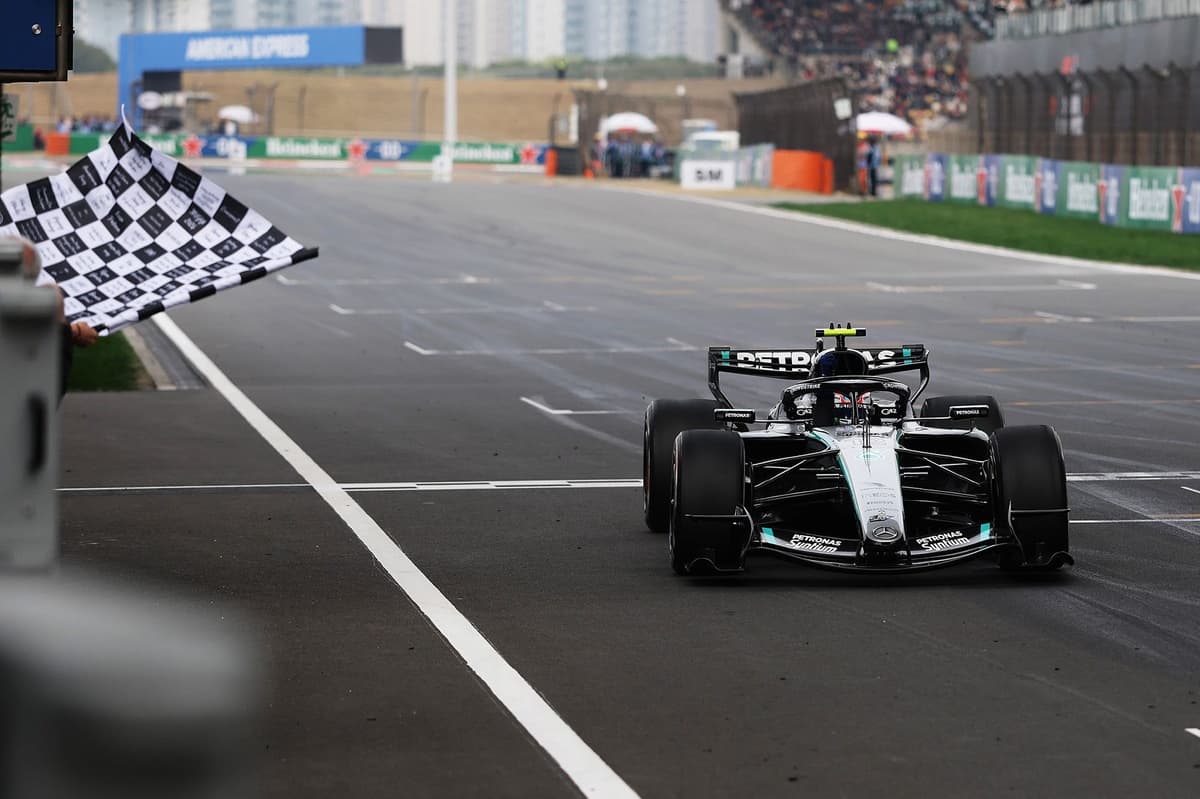
In a historic debut weekend at the Formula 1 Chinese Grand Prix, 16-year-old Kimi Antonelli delivered a masterclass in racecraft, converting pole position into his maiden Formula 1 victory while guiding Mercedes to a dominant 1-2 finish in Shanghai. The Bologna-born teenager outpaced his experienced rivals, including a resurgent Lewis Hamilton, who secured his first podium for Ferrari in a gripping three-way battle that kept fans on the edge of their seats.
Antonelli’s Breakout Moment: From Pole to Victory in Shanghai
Kimi Antonelli’s victory at the Chinese Grand Prix on Sunday marked not only his first career Formula 1 win but also the latest chapter in a meteoric rise through motorsport’s junior ranks. Starting from pole position, Antonelli faced immediate pressure from the two Ferrari cars of Lewis Hamilton and Charles Leclerc, who surged into the lead at the start. However, the young Mercedes driver’s poise under pressure allowed him to retain second place into Turn 1, setting the stage for an audacious recovery.
Antonelli’s race strategy hinged on a perfectly timed pit stop for hard compound tires on Lap 10, a move that coincided with a safety car triggered by Aston Martin’s Lance Stroll. The restart shuffled the order dramatically, with hard-shod runners including Franco Colapinto and Esteban Ocon leapfrogging the Ferrari cars. This strategic advantage gave Antonelli a clean run at the front, allowing him to build a commanding lead as Hamilton and Leclerc waged an intense duel behind him.
Despite a brief scare on Lap 53 when he locked up his tires at Turn 14, Antonelli managed to recover and cross the line 5.5 seconds clear of teammate George Russell, cementing his status as the youngest race winner in F1 history. His victory not only underscored Mercedes’ dominance in Shanghai but also signaled the arrival of a new generational talent in a sport often defined by its relentless pace of change.
Hamilton’s Ferrari Redemption: A Podium in His First Race for the Scuderia
Lewis Hamilton’s first podium with Ferrari at the Chinese Grand Prix served as a potent reminder of the seven-time world champion’s enduring brilliance. Starting from fourth on the grid, Hamilton made an electric start, overtaking both Ferraris into Turn 1 before settling into a rhythm behind teammate Charles Leclerc. The Briton’s strategic masterclass came to a head on Lap 40, when he executed a flawless inside line at Turn 1, outbraking Leclerc into Turn 3 to secure second place—a result that sent the tifosi into raptures.
A Ferrari Revival or a Flash in the Pan?
Hamilton’s podium in Shanghai arrives at a critical juncture for Ferrari, a team that has endured a turbulent start to the 2024 season. After a dismal winter testing period and inconsistent performances in the opening races, Hamilton’s arrival was seen by many as a catalyst for change. His ability to extract maximum performance from the SF-24 chassis—despite its well-documented handling deficiencies—suggests that the team’s fortunes may be turning.
Yet, the race also laid bare Ferrari’s lingering struggles. Leclerc, who started second, faded to fourth place after a pit stop gamble failed to pay off. The Monegasque driver’s frustration was palpable, particularly after he was overtaken by both Mercedes cars and a resurgent Ollie Bearman. For Ferrari, the Shanghai podium represents progress, but the road to championship contention remains fraught with challenges.
Russell’s Near-Miss and Leclerc’s Frustration: The Battle for the Silver
George Russell’s second-place finish at the Chinese Grand Prix underscored his status as one of Formula 1’s most consistent performers. The Welshman’s race was a masterclass in opportunism, as he capitalized on the early battles between the Ferraris to inherit the lead before Antonelli reasserted control. Russell’s ability to manage tire wear and maintain pace in traffic kept him in contention until the final laps, when Antonelli’s pace proved too much to overcome.
Charles Leclerc’s fourth-place finish, meanwhile, was a bitter pill to swallow. Despite starting second, Leclerc’s race unraveled after his pit crew opted for an early tire change, a decision that left him vulnerable to the charging Mercedes cars. His post-race comments—where he admitted to struggles with tire temperature management—highlighted the ongoing teething issues with the SF-24. For Leclerc, Shanghai was a missed opportunity to close the gap on Hamilton in the drivers’ championship.
Bearman’s Impressive Debut: Haas Scores First Points of the Season
Ollie Bearman’s fifth-place finish at the Chinese Grand Prix was the standout performance of the weekend for Haas, marking the team’s first points of the 2024 season. The 21-year-old Briton, who replaced an injured Nico Hülkenberg, delivered a composed and calculated drive that showcased his maturity beyond his years. Starting from 11th on the grid, Bearman capitalized on early retirements and strategic pit stops to climb the order, ultimately benefiting from Max Verstappen’s power unit failure to secure a career-best result.
Bearman’s race was not without drama, however. On Lap 1, he locked up his tires at Turn 13 while battling with Esteban Ocon, forcing an early pit stop that dropped him to the back of the field. But the young Haas driver’s recovery was nothing short of spectacular, as he sliced through the pack with relentless pace, ultimately finishing ahead of both Alpine cars and claiming his first points since his debut at the 2023 Saudi Arabian Grand Prix.
The Fallout: DNFs, Penalties, and Controversies in Shanghai
The Chinese Grand Prix was marred by a series of retirements and controversies that added to the weekend’s unpredictability. Fernando Alonso’s Aston Martin suffered from uncontrollable vibrations that forced the Spaniard to retire after just 15 laps, with the team citing concerns over driver safety. Meanwhile, McLaren’s Oscar Piastri and Lando Norris were sidelined due to unrelated powertrain issues, while Alex Albon and Gabriel Bortoleto failed to take the grid due to last-minute technical complications.
Ocon’s Costly Mistake and Colapinto’s Pivotal Role
Esteban Ocon’s race ended in disappointment after he was handed a 10-second penalty for causing a collision with Franco Colapinto. The incident occurred on Lap 23 when the two drivers made contact at Turn 3, with Ocon attempting to dive down the inside of the Alpine. Ocon’s post-race admission of fault and apology to Colapinto did little to soften the blow, as the penalty demoted him from sixth to 11th place.
Colapinto, meanwhile, emerged as one of the season’s breakout stars. The Argentine, who replaced an injured Daniel Ricciardo at Alpine, delivered a stellar performance in Shanghai, finishing seventh and outpacing his teammate Pierre Gasly. His ability to manage tire wear and navigate chaotic pit stops highlighted his potential as a future star in the Alpine lineup.
Key Takeaways from the 2024 F1 Chinese Grand Prix
- Kimi Antonelli became the youngest race winner in F1 history at just 16 years old, delivering a commanding performance for Mercedes.
- Lewis Hamilton secured his first podium for Ferrari, signaling a potential resurgence for the Scuderia in 2024.
- Ollie Bearman’s fifth-place finish marked Haas’ first points of the season, showcasing his talent and composure under pressure.
- George Russell’s second-place finish solidified his reputation as one of F1’s most consistent drivers.
- Retirements and penalties—including Alonso’s Aston Martin exit and Ocon’s collision penalty—added to the weekend’s unpredictability.
What This Means for the Rest of the 2024 Season
Antonelli’s victory in Shanghai is more than just a personal milestone; it signals the dawn of a new era in Formula 1, where teenage prodigies are not only competing but dominating at the highest level. His performance, combined with Hamilton’s podium for Ferrari, suggests that the championship fight may be far more competitive than many anticipated at the start of the season.
For Mercedes, the 1-2 finish in China reaffirms their status as title contenders, particularly as they look to close the gap on Red Bull. Ferrari, meanwhile, will take solace in Hamilton’s podium but must address their inconsistent tire management and race strategy if they hope to challenge for victories in the coming races.
Haas’ point scored by Bearman could prove pivotal in a tightly contested constructors’ championship, while Alonso’s early retirement and Ocon’s penalty serve as reminders of how quickly fortunes can change in Formula 1. As the season progresses, Shanghai may well be remembered as the race that set the tone for an unpredictable and thrilling championship.
Frequently Asked Questions About the 2024 F1 Chinese Grand Prix
Frequently Asked Questions
- How old is Kimi Antonelli and why is his win significant?
- Kimi Antonelli is 16 years old, making him the youngest race winner in Formula 1 history. His victory in Shanghai marks the arrival of a new generational talent and signals a potential shift in the sport's power dynamics.
- Did Lewis Hamilton win the Chinese GP?
- No, Lewis Hamilton finished second at the Chinese Grand Prix, securing his first podium for Ferrari with a strong drive from fourth on the grid.
- Why did Fernando Alonso retire from the Chinese GP?
- Fernando Alonso retired from the Chinese GP after experiencing uncontrollable vibrations in his Aston Martin, which the team deemed a safety risk after just 15 laps.