
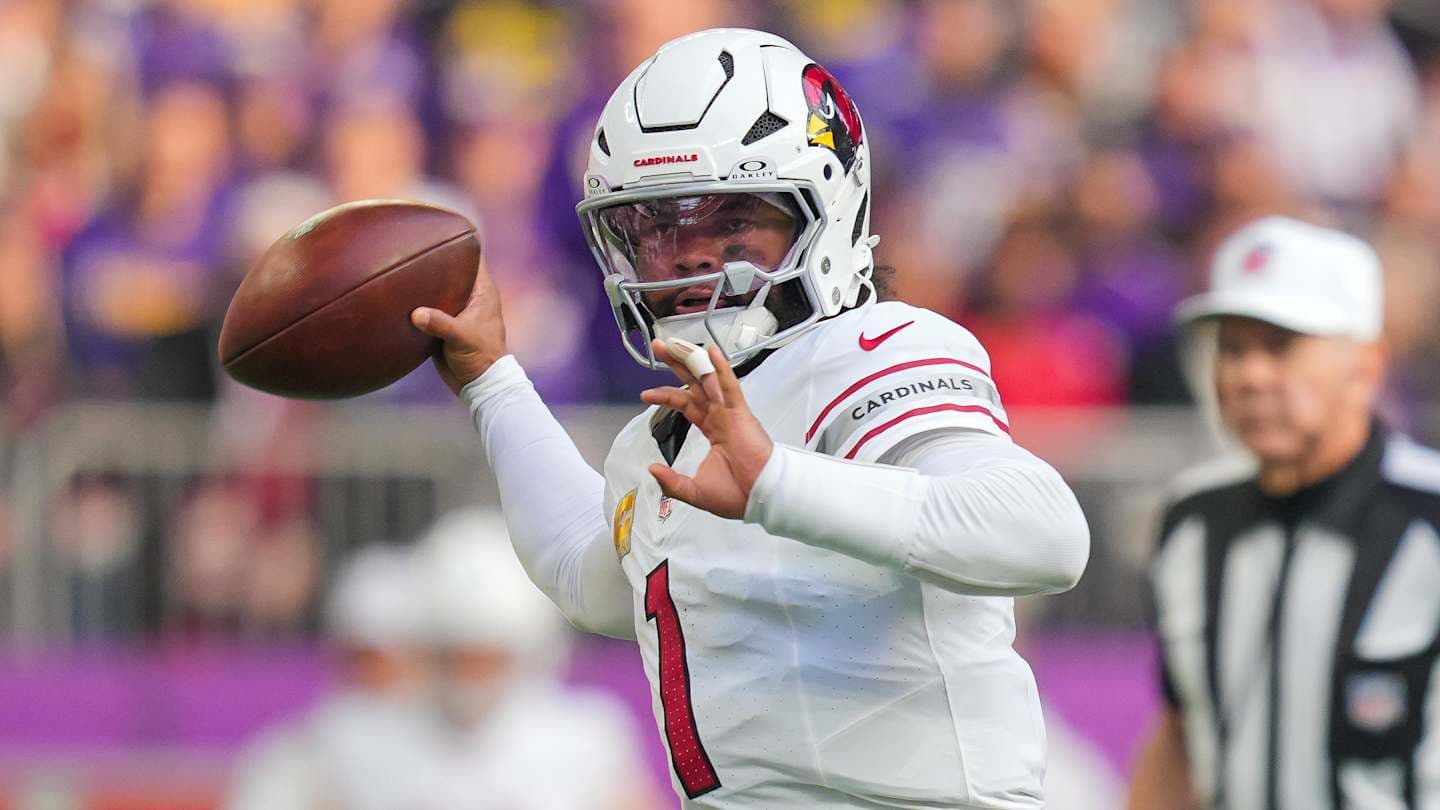
Kyler Murray’s decision to join the Minnesota Vikings on a one-year contract was not the kind of splashy move that headlines are made of, nor was it the culmination of a months-long soap opera involving trade demands and coaching firings. Instead, it was the quietest kind of professional calculation: a football-only choice made over a burger at Parlour, a Minneapolis institution Murray had visited years earlier while preparing with the Arizona Cardinals. For the 28-year-old quarterback, who once starred at Texas high school football powerhouse Allen High School, won the Heisman Trophy at Oklahoma, and was selected No. 1 overall in the 2019 NFL Draft, the decision to ink a deal with Minnesota marked the end of a six-month odyssey that included a season-ending foot injury, a coaching change in Arizona, and a sudden release that reset his career trajectory.
How Kyler Murray’s Turbulent Cardinals Exit Unfolded: Injury, Coaching Change, and a Sudden Release
Murray’s final start as a Cardinals quarterback came in a game that encapsulated the franchise’s rapid collapse. Arizona entered the contest at 2–2 after a competitive 2–0 start, but the loss to Tennessee on October 6, 2024, proved to be the inflection point. The Cardinals led 21–6 at halftime, but a series of miscues—including Emari Demercado’s goal-line fumble and a ‘Holy Roller’-style touchdown by Tyler Lockett—coupled with Murray’s foot injury, turned a winnable game into a 24–21 defeat. Murray’s foot swelled after the game, and though he avoided surgery, the injury lingered. The Cardinals lost their next two games and entered the bye week at 2–5.
The Benching, the IR Stint, and the Decision to Shut It Down
After the bye, Jacoby Brissett led the Cardinals to a 27–17 Monday Night Football victory over the Dallas Cowboys in Murray’s hometown of Bedford, Texas. Murray had practiced before the losses to the Colts and Packers, but his foot—reportedly at about 60%—wasn’t improving. Coach Jonathan Gannon named Brissett the starter, but the writing was on the wall. On November 5, Murray was placed on injured reserve to allow his foot to heal. Nearly a month later, on December 5, with the Cardinals at 3–9 and on a four-game losing streak, Murray and the team mutually agreed to shut him down for the season. The decision wasn’t just about the injury; it was about the future. Murray was set to earn $38.6 million fully guaranteed in 2026, and if he remained on the roster past March 15, 2025, $19.5 million of his 2027 salary would become fully guaranteed as well.
A Coaching Change, a Firing, and a Contract That Was Always Going to Be Problematic
The Cardinals fired Gannon on January 10, 2025, following the team’s disappointing finish. Murray, already in the crosshairs due to his contract and injury history, saw his situation deteriorate. General manager Monti Ossenfort, who inherited Murray’s deal in 2023, faced a conundrum: Murray’s 2027 guarantee made him virtually untradeable. Any team acquiring him would be locked into two guaranteed years. The only way to facilitate a trade was for Murray to agree to restructure his contract, which he was unwilling to do. The Cardinals’ leverage evaporated, and by the time the negotiating window opened in March 2025, both sides knew the relationship was over.
Why Minnesota Became Kyler Murray’s Clear Destination in a Crowded QB Market
As Murray’s future in Arizona crumbled, the Minnesota Vikings were in flux. The team, sitting at 4–8 in midseason, had watched rookie quarterback J.J. McCarthy struggle through his first year under center. The Vikings’ initial plan for 2025—bringing back veterans like Sam Darnold or Daniel Jones to compete with McCarthy—had collapsed when those players signed elsewhere. Murray emerged as the most enticing reclamation project on the market. The Vikings, led by executive vice president of football operations Rob Brzezinski and head coach Kevin O’Connell, viewed him as a potential long-term answer rather than a stopgap solution. The opportunity to build around a core that included superstar wide receiver Justin Jefferson, rising pass-catcher Jordan Addison, and a young offensive line was too compelling to pass up.
The Timeline: From a Burger Lunch to a Midnight Flight to Minneapolis
By the 24 hours before the negotiating window opened on March 10, 2025, Cardinals owner Michael Bidwill had informed Murray that Arizona would release him at the start of the league year. The conversation was cordial, but the outcome was inevitable. Murray and his agent, Erik Burkhardt, had already identified Minnesota as their top choice. The plan was simple: sign a one-year deal, compete for the job, and hope to parlay success into a long-term landing spot in 2026. They even explored hosting virtual meetings with teams that might not have interest in 2025 but could in 2026—a rare opportunity Murray would have if he became a free agent again.
Murray and Burkhardt were in Texas when Burkhardt’s phone buzzed at 3 p.m. local time. The Vikings were on the line. Executive vice president Rob Brzezinski and coach Kevin O’Connell wanted Murray in Minnesota immediately. Murray booked a 9:10 p.m. flight out of Dallas-Fort Worth International Airport on American Airlines. The flight was delayed an hour, landing in Minneapolis at 12:30 a.m. CT. Burkhardt and Murray arrived at the Omni Viking Lakes Hotel—where Murray had stayed during joint practices with the Cardinals in 2023—at 1 a.m. The Vikings wanted to start meetings at 7 a.m., so they agreed to begin Murray’s itinerary with a physical, despite his recent foot injury. By 6:30 a.m., Murray and Burkhardt met in the hotel lobby, discussed the opportunity, and were picked up by the Vikings’ staff at 7 a.m.
Murray completed part of his physical off-site and wrapped up by 9:30 a.m. He then met privately with O’Connell before joining meetings with offensive coordinator Wes Phillips, quarterbacks coach Josh McCown, and assistant coach Jordan Traylor. Later, Murray, Brzezinski, O’Connell, Burkhardt, and others had lunch in the Vikings’ draft room. After a final meeting with team doctors, O’Connell pulled Murray aside and delivered a message: the Vikings saw him as a potential long-term answer, not just a one-year Band-Aid. Murray responded, 'This is where I want to be.' The two sides then negotiated a simple one-year deal with a second-year option briefly discussed. A no-tag provision was included, giving Murray the freedom to explore other opportunities in 2026 if he excelled.
What’s Next for Kyler Murray and the Minnesota Vikings: Competition with J.J. McCarthy, a New Era with Justin Jefferson
Though Murray will compete with McCarthy for the starting job, O’Connell’s endorsement of him as a long-term solution underscored the Vikings’ confidence. The chance to grow with a core that includes Jefferson, wide receiver Jordan Addison, offensive tackle Christian Darrisaw, and a staff led by O’Connell made the opportunity irresistible. For Murray, the move represents a chance to reset his career after years of both brilliance and instability. The Vikings, meanwhile, are betting that Murray’s talent, pedigree, and experience can elevate a franchise that has struggled to consistently compete in the NFC North.
Key Takeaways: How Kyler Murray’s Move Reshapes the Vikings, Cardinals, and the NFC
- Kyler Murray signed a one-year deal with the Vikings after being released by the Cardinals, ending a chaotic six-month free-agency period marked by injury, coaching changes, and a failed contract restructure.
- The Vikings see Murray as a long-term answer at quarterback, not just a stopgap, giving them a competitive core to build around with Justin Jefferson and a young roster.
- Arizona’s front office, led by Monti Ossenfort, was unable to trade Murray due to his 2027 contract guarantees, forcing a release that allowed Murray to choose his next destination purely on football merit.
- Murray’s journey included a midnight flight to Minneapolis, a rapid-fire interview process, and a quiet celebration over a Parlour Burger—a stark contrast to the high-profile recruitment he experienced in high school.
- The move shifts the NFC North power dynamics and gives the Vikings a veteran presence to compete with rookie J.J. McCarthy while evaluating their long-term QB future.
The Bigger Picture: How Murray’s Departure Highlights the Cardinals’ Broader Front-Office Challenges
Murray’s release is just the latest chapter in the Cardinals’ ongoing struggles to build a consistent contender. Since drafting Murray first overall in 2019, Arizona has cycled through coaches, failed to develop key draft picks, and watched its roster atrophy due to cap constraints and poor roster management. The team’s 2025 free-agency approach under Ossenfort—highlighted by the signings of safety Budda Baker and tight end Trey McBride—reflects a franchise in transition, but one still searching for a clear identity. Murray’s departure, while painful, may ultimately free up cap space and draft capital to rebuild around younger players like Demercado and wide receiver Marvin Harrison Jr., the No. 4 overall pick in the 2024 draft.
Comparing Murray’s Situation to Other 2025 Free-Agent Quarterbacks: The Market’s Evolving Priorities
Murray’s move contrasts sharply with the contracts signed by other veteran quarterbacks in 2025. Daniel Jones, for example, signed a two-year, $88 million deal with the Indianapolis Colts, with up to $100 million in incentives—a contract that reflects the premium placed on veteran stability in a league increasingly skeptical of rookie QB development timelines. Jones’ deal included a transition tag that set a floor of $83.2 million, making a two-year pact more palatable than three franchise tags totaling $96.6 million. Meanwhile, Jalen Hurts re-signed with the Philadelphia Eagles on a one-year, $44 million deal, while Derek Carr inked a two-year, $50 million agreement with the New Orleans Saints. These contracts underscore a market that values proven production over raw potential, but also one that is increasingly bifurcated between teams willing to bet on veterans and those committed to the draft-and-develop model.
Frequently Asked Questions: What Kyler Murray’s Vikings Move Means for Both Teams
Frequently Asked Questions
- Why did the Cardinals release Kyler Murray instead of trading him?
- The Cardinals couldn’t trade Murray due to his 2027 contract guarantees, which would have locked any acquiring team into two guaranteed years. Murray’s refusal to restructure his deal made a trade impossible, forcing Arizona to release him to avoid paying out the full 2026 guarantee if another team signed him.
- How does Kyler Murray’s one-year Vikings deal work?
- Murray signed a one-year contract with a second-year option, plus a no-tag provision that allows him to explore free agency again in 2026 if he performs well. The deal is structured to keep his options open while giving Minnesota flexibility to evaluate him alongside J.J. McCarthy.
- What does this mean for J.J. McCarthy’s future with the Vikings?
- McCarthy will compete with Murray for the starting job in training camp. While the Vikings drafted McCarthy in 2024, Murray’s pedigree and veteran experience make him a serious threat to claim the role. Minnesota’s decision to sign Murray suggests they view him as the long-term answer, but McCarthy’s development remains a priority.

