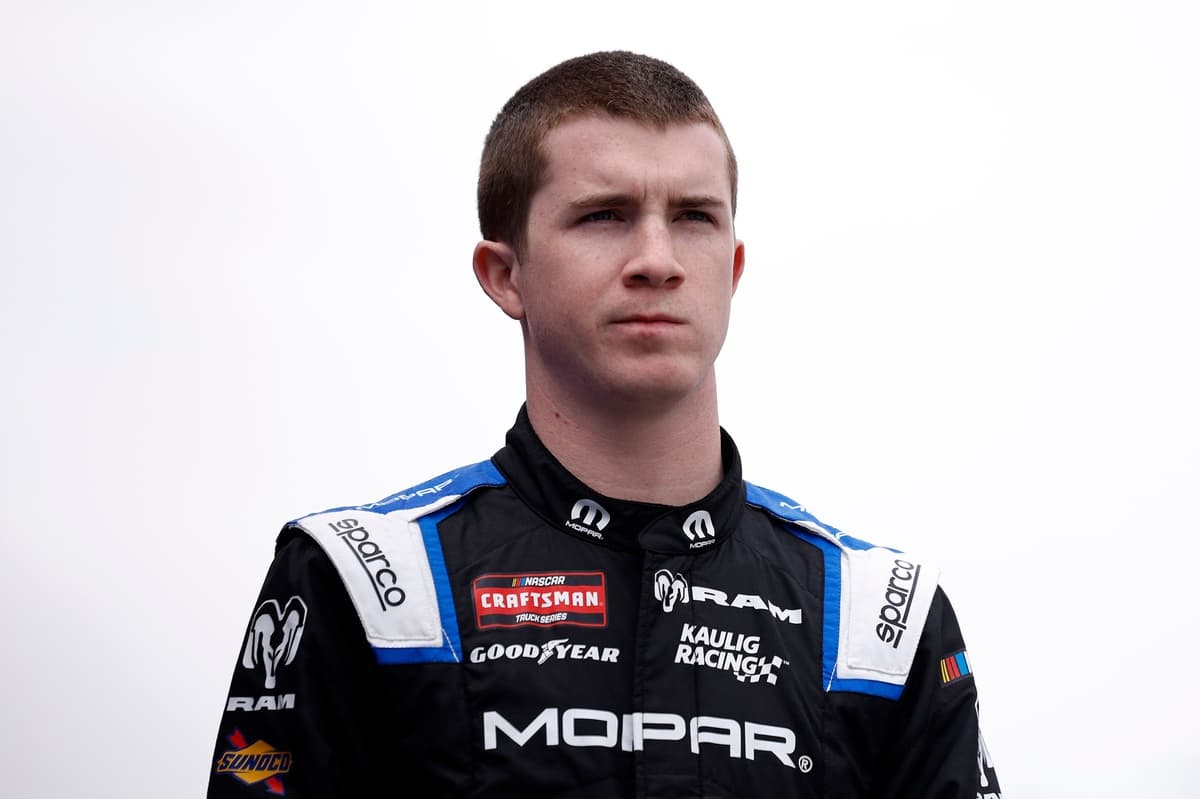
NASCAR announced an indefinite suspension for Daniel Dye, a 22-year-old driver competing in the NASCAR Craftsman Truck Series under Kaulig Racing, following anti-LGBTQ+ remarks he made during a livestream in which he mocked IndyCar driver David Malukas. The decision, issued on April 15, 2026, comes as part of NASCAR’s zero-tolerance policy on discriminatory language and behavior. Kaulig Racing, Dye’s team, also suspended him immediately after becoming aware of the comments, which were broadcast on Whatnot, an online live auction platform. Dye’s suspension is contingent on completing sensitivity training before he can return to competition.
The controversy erupted during a live stream on April 12, 2026, where Dye, alongside fellow driver Brent Crews and Crews’ stepfather Matt Lankford, discussed a recent NASCAR Truck/IndyCar doubleheader event at St. Petersburg. Dye, who admitted to not knowing much about Malukas, recounted a conversation where he asked the Team Penske IndyCar driver whether he raced on ovals. According to Dye, Malukas appeared distressed by the question and responded in a manner that Dye then mocked using a homophobic voice. The mockery escalated into direct, crude inferences about Malukas’ sexuality. Crews, visibly uncomfortable, walked away during the segment, and NASCAR has not disciplined him.
What the Incident Reveals About NASCAR’s Culture and Accountability
The incident involving Dye has ignited broader discussions about inclusivity and accountability within motorsports, a traditionally male-dominated and heteronormative industry. NASCAR, which has made efforts in recent years to diversify its fan base and driver pool, has emphasized its commitment to fostering an inclusive environment. This incident, however, underscores the ongoing challenges the sport faces in addressing discriminatory behavior, even among its younger drivers. NASCAR’s immediate and decisive action, including the indefinite suspension, signals a clear stance against hate speech, but it also raises questions about whether such incidents are isolated or indicative of deeper cultural issues.
NASCAR’s Track Record on Inclusivity and Policy Enforcement
NASCAR has taken steps in recent years to promote diversity and inclusion, including partnerships with organizations like Athlete Ally and the creation of the NASCAR Drive for Diversity program, which supports underrepresented groups in motorsports. The league has also enforced penalties for discriminatory language in the past, though typically after public outcry or formal complaints. In 2024, NASCAR issued a warning to a driver for using a homophobic slur during a post-race interview, and in 2025, a crew member was suspended for making anti-LGBTQ+ remarks on social media. These incidents suggest that while NASCAR is making progress, isolated instances of intolerance still occur, often amplified by the visibility of social media.
David Malukas Remains Silent as Dye Apologizes Publicly
As of the publication of this article, IndyCar driver David Malukas, the subject of Dye’s remarks, has not issued a public statement regarding the incident. Malukas, a 26-year-old driver for Team Penske, has been a prominent figure in the IndyCar Series, where he scored his first career win at the 2025 Indianapolis 500. The absence of a direct response from Malukas does not diminish the impact of Dye’s actions, which have drawn widespread condemnation across motorsports communities. Malukas’ silence may reflect a personal choice to disengage from the controversy or a strategic decision to allow the focus to remain on accountability rather than retaliation.
I want to first apologize to David Malukas. I recently went on a live stream with some friends and made some careless comments. I chose my words poorly, and I understand why it upset people. I'm sorry to anyone who was offended. That's not how I want to represent myself.
Dye’s apology, issued hours after the incident went viral, acknowledged the harm caused by his words and expressed remorse for offending both Malukas and others. He emphasized his commitment to educating himself and listening to those affected, framing the incident as a learning opportunity.
What I said doesn't reflect how I feel about them or anyone else. I didn't think enough before I spoke, and I in no way meant any harm. I know that intention does not erase impact and I need to do my better.
Dye, who has been open about his Christian faith and involvement in community outreach programs, has also faced scrutiny over whether his remarks were intentional or reflective of deeper biases. In an era where athletes and public figures are increasingly held accountable for their off-the-track behavior, Dye’s case highlights the tension between personal growth and professional consequences.
The Role of Social Media and Livestream Culture in Professional Sports
The incident unfolded on Whatnot, a platform primarily known for hosting live auction events, where Dye and his peers were discussing trading cards and promotional activities. The unfiltered nature of livestream platforms has become a double-edged sword for professional athletes: while they offer unparalleled access to fans and casual audiences, they also provide a space where offhand remarks, jokes, or controversial opinions can be broadcast without the usual editorial filters of traditional media. This incident is not the first to expose the risks of livestream culture in sports. In 2023, a Major League Baseball player faced backlash for making derogatory comments during a live stream, and in 2025, a college basketball coach was fired after a viral livestream captured him making insensitive remarks. For NASCAR and other leagues, the episode serves as a reminder of the need for driver education on responsible social media use.
Consequences for Daniel Dye: Career Impact and Path Forward
Dye’s suspension has immediate implications for his racing career, which had shown promise in his rookie season in the NASCAR Craftsman Truck Series. As of April 2026, Dye sits 13th in the points standings after three races, with finishes of 17th, 13th, and 17th. Kaulig Racing has not announced a replacement driver for Dye’s #10 Ram 1500 truck, but NASCAR veteran AJ Allmendinger is set to make his first Truck oval start in 18 years in Dye’s place at the upcoming race at Texas Motor Speedway. The suspension also affects Dye’s eligibility for NASCAR’s O’Reilly Auto Parts Series appearances, where he had been scheduled to compete with Am Racing earlier in the season.
The Financial and Reputational Toll of Discriminatory Remarks
Beyond the suspension, Dye’s career may face long-term consequences, including potential loss of sponsorships and reduced opportunities within the sport. In recent years, NASCAR has increasingly emphasized its commitment to social responsibility, with sponsors such as McDonald’s and Chevrolet prioritizing partnerships with teams and drivers who align with their values. A history of discriminatory behavior can deter sponsors and damage a driver’s marketability, particularly among younger, more diverse fan bases. Dye’s case is a cautionary tale for emerging athletes who may underestimate the permanence of their words in the digital age.
Kaulig Racing’s Response: Balancing Accountability and Support
Kaulig Racing, which signed Dye to its developmental driver program in 2025, moved swiftly to distance itself from his remarks. In a statement released on April 15, 2026, the team reiterated its commitment to inclusivity and respect, stating that Dye’s suspension was "effective immediately" and that he would be required to complete sensitivity training before any consideration of reinstatement. The team’s response reflects a broader trend in professional sports, where organizations are prioritizing accountability over leniency in cases involving discrimination. Kaulig Racing’s decision may also be influenced by its own corporate partnerships, many of which emphasize diversity and inclusion.
Why This Incident Matters Beyond the Sport of Racing
The controversy surrounding Daniel Dye is not just a story about one driver’s missteps; it is emblematic of larger societal conversations about accountability, identity, and the evolving expectations for public figures in the 21st century. As sports leagues and corporations face increasing pressure to address discrimination, incidents like this one serve as a litmus test for their commitment to change. For fans, the episode raises questions about whether incidents of intolerance are being taken seriously enough or if they are merely treated as PR crises to be managed. In an era where social media amplifies both outrage and redemption narratives, Dye’s case will be closely watched as a bellwether for how professional sports handle similar situations moving forward.
Key Takeaways: What Fans and Industry Insiders Need to Know
- NASCAR indefinitely suspended 22-year-old driver Daniel Dye after he mocked IndyCar’s David Malukas with homophobic language during a livestream on April 12, 2026.
- Dye’s suspension is contingent on completing sensitivity training, and Kaulig Racing has also removed him from competition pending his return.
- The incident has reignited discussions about inclusivity in motorsports, a traditionally male-dominated industry, and whether NASCAR’s zero-tolerance policy is being applied consistently.
- Livestream culture, particularly on platforms like Whatnot, poses unique risks for athletes, as unfiltered remarks can quickly go viral and damage reputations.
- Dye’s case highlights the career and financial risks associated with discriminatory behavior, including potential loss of sponsorships and reduced marketability.
Frequently Asked Questions About NASCAR’s Suspension of Daniel Dye
Frequently Asked Questions
- Why did NASCAR suspend Daniel Dye indefinitely?
- NASCAR suspended Daniel Dye after he used homophobic language to mock IndyCar driver David Malukas during a live stream on April 12, 2026. The remarks violated NASCAR’s policies against discriminatory behavior and hate speech.
- Will Daniel Dye be able to race again in NASCAR?
- Dye’s return to racing is contingent on completing sensitivity training and receiving approval from NASCAR and Kaulig Racing. There is no set timeline for his reinstatement as of April 2026.
- Has David Malukas responded to the incident?
- As of publication, David Malukas has not publicly commented on the incident. His response, if any, may come in the form of a statement or social media post at a later date.