TAMPA, Fla. — On a sun-soaked day where sailboats dotted the Gulf Coast horizon, the Pittsburgh Penguins found themselves drowning in a storm of their own making. The Tampa Bay Lightning, a team built on relentless pressure and tactical precision, lured the Penguins into a game of speed and skill that Pittsburgh simply wasn’t equipped to win. What began as a tight 2-1 lead after the first period quickly spiraled into a 6-3 defeat, a contest in which the Penguins were outchanced 31-16, outworked in every zone, and outsmarted by an opponent that has made a habit of exposing their weaknesses. The loss wasn’t just another setback in a turbulent season—it was a microcosm of a franchise struggling to reconcile its identity amid shifting dynamics, coaching adjustments, and the relentless grind of a playoff push.
Penguins Outchanced 31-16 as Lightning Exploit Every Defensive Flaw
The numbers tell a damning story. According to NaturalStatTrick.com, the Penguins were outchanced in every period: 9-6 in the first, 15-9 in the second, and 7-1 in the third. Their scoring chance rates—a metric that evaluates high-danger opportunities—painted an even grimmer picture. Tampa Bay’s ability to transition quickly from defense to offense, often with three forwards spread wide, left Pittsburgh’s blue line scrambling to recover. The Penguins’ vaunted top line, featuring Sidney Crosby and Bryan Rust, was particularly ineffective, combining for zero shots on goal and finishing with a combined minus-4 rating. 'We were up 2-1 in the first, but they were the better team,' admitted defenseman Erik Karlsson, whose candor reflected the frustration coursing through the locker room. 'And then obviously the second, I don’t know if we even played the game, or if they were just really, really that much better than us.'
Shorthanded Breakaways Seal Penguins’ Fate
The Penguins’ defensive lapses were magnified by Tampa Bay’s lethal power play and short-handed efficiency. The Lightning converted on two of their three power-play chances, but it was their shorthanded prowess that truly defined the game. Anthony Cirelli’s breakaway goal just 11 seconds into the second period—a play that stemmed from a Penguins turnover—shifted the momentum irrevocably. By the time Egor Chinakhov’s empty-net goal with 1.5 seconds remaining sealed the 6-3 outcome, Tampa Bay had tallied three shorthanded goals in their last five meetings against Pittsburgh. 'It’s been too much,' said Penguins head coach Mike Sullivan. 'We’ve got to continue to look at it and progress. The one tonight, there’s a little bit of a bounce there, and so you can still react to it. But I thought there were other ones where they’re getting space coming out, and we’re not getting above it.'
Karlsson and Sullivan Acknowledge Tampa Bay’s Superior Execution
Karlsson’s postgame assessment was as unvarnished as it was revealing. 'I just think that they outworked us and outsmarted us right from the start,' he said, echoing sentiments shared by teammates who felt the Penguins were lured into playing Tampa Bay’s game—a high-speed, high-risk contest where defensive breakdowns were punished mercilessly. Sullivan, ever the optimist, framed the loss as a learning moment rather than a systemic failure. 'They’ll do that to you,' he said. 'Every game, every day is going to have a new challenge, and none of them are going to be easy this time of year.' Yet even Sullivan couldn’t ignore the tactical missteps: Pittsburgh’s decision to abandon its structured forecheck in favor of trying to outscore Tampa Bay backfired spectacularly. 'We didn’t do the things we needed to do to get out of it,' he admitted. 'We’ve got to spend more time in the offensive zone and battle all the time.'
Penguins’ Top Line Struggles to Generate Offense
For Crosby, who has long been the face of the franchise, the 6-3 loss was another in a string of underwhelming performances. He managed just one hit, zero shots, and a minus-2 rating, a line that would have been unthinkable for the two-time Hart Trophy winner even a few seasons ago. Rust, Crosby’s frequent linemate, fared little better, finishing with a minus-2 and no points. The duo’s struggles have raised questions about their chemistry and durability, particularly as the Penguins navigate a playoff push in a highly competitive Metropolitan Division. 'Neither Rust nor Crosby had anything resembling a good game, especially by their standards,' noted the *Pittsburgh Hockey Now* analysis. 'Neither looks comfortable, and it is a fair question how injured both are.' Chinakhov, meanwhile, salvaged some pride with a pair of goals, including a late empty-netter, but his production couldn’t mask the broader issues plaguing the lineup.
Tampa Bay’s System: A Masterclass in Transition Hockey
What made Tampa Bay’s victory so emphatic wasn’t just their ability to score but their refusal to relinquish control. Head coach Jon Cooper’s system prioritizes quick, controlled exits from the defensive zone, often funneling pucks to the right side before attacking the left side of the opposition’s blue line. This approach, combined with relentless forechecking, left the Penguins perpetually on their heels. 'It’s quite impressive how they took every gained puck in the neutral zone and defensive zone and turned it into a transition rush—very often three wide,' *Pittsburgh Hockey Now* observed. 'Every slight over-commit by the Penguins meant Tampa Bay had numbers on the rush.' The Penguins’ attempts to counter by matching Tampa’s tempo only accelerated their demise, as they failed to grind along the boards or sustain offensive zone time.
Goaltending Questions Resurface After Skinner’s Struggles
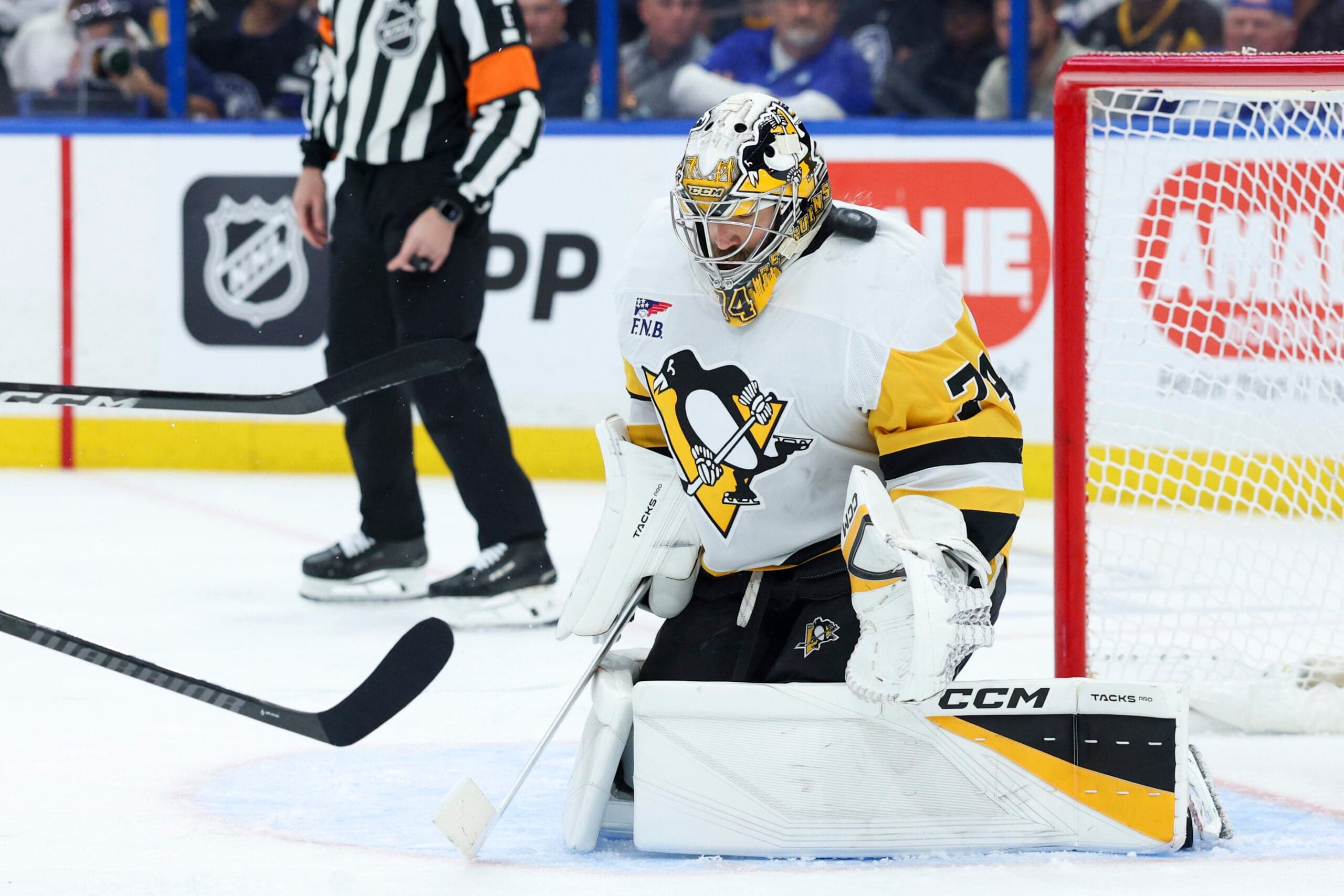
While the Penguins’ defensive breakdowns were the primary culprits, goaltender Stuart Skinner’s performance did little to steady the ship. Skinner, who has been the subject of periodic criticism this season, made just 28 saves on 34 shots—a .824 save percentage that was among the worst of his starts this year. His most glaring error came on Nikita Kucherov’s turning wrister from the corner, a shot that should have been stopped but instead found the back of the net. 'They had a hard step on us at the very beginning,' Skinner admitted postgame. 'I thought momentum kind of shifted to their side in the second period, and then it just stayed there. Third period was not even… I don’t even know.'
Key Takeaways: What the Penguins Must Fix Immediately
- The Penguins were outchanced 31-16 and outworked in every zone, exposing a lack of defensive structure against transition-heavy teams like Tampa Bay.
- Three shorthanded goals against—including one just 11 seconds into the second period—highlighted a penalty kill that has yielded 12 short-handed goals this season, second-most in the NHL.
- Sidney Crosby and Bryan Rust combined for zero shots and minus-4 ratings, raising concerns about their effectiveness and health as the playoffs approach.
- Stuart Skinner’s .824 save percentage in the loss underscored ongoing goaltending inconsistencies that have plagued Pittsburgh this season.
- Coach Mike Sullivan acknowledged the need to 'turn the page quickly,' but the Penguins must address their tactical approach to avoid similar collapses against elite opponents.
Can the Penguins Rebound Against the League’s Best?
The Penguins’ next challenge comes against the Boston Bruins, a team that shares Tampa Bay’s blueprint for success. If Pittsburgh hopes to secure a playoff spot in the cutthroat Metropolitan Division, it must rediscover the identity that carried it to consecutive Stanley Cup Finals in 2016 and 2017—a team that thrives on defensive responsibility and controlled offensive attacks. For now, the Lightning have exposed the Penguins’ vulnerabilities, and the question lingers: Is this a temporary slump or a sign of deeper systemic issues? Karlsson’s blunt assessment—'It’s one of those nights where we just didn’t come ready to play'—may be the understatement of the season. The real test will be whether Pittsburgh can heed Sullivan’s call to 'progress' before the margin for error vanishes entirely.
Frequently Asked Questions
Frequently Asked Questions
- How many shorthanded goals have the Penguins allowed this season?
- The Penguins have yielded 12 shorthanded goals this season, the second-most in the NHL. Five of those have come since March 1, including three in their last five games against the Lightning.
- What is Sidney Crosby’s shot total in the Penguins’ last loss to Tampa Bay?
- Sidney Crosby managed zero shots on goal in the 6-3 loss to the Lightning. He has struggled to generate offense in recent games, finishing with a minus-2 rating in this contest.
- Who scored the game-sealing goal for the Lightning in the 6-3 win?
- Egor Chinakhov scored the empty-net goal with 1.5 seconds remaining to seal the Lightning’s 6-3 victory over the Penguins. It was Chinakhov’s second goal of the game.