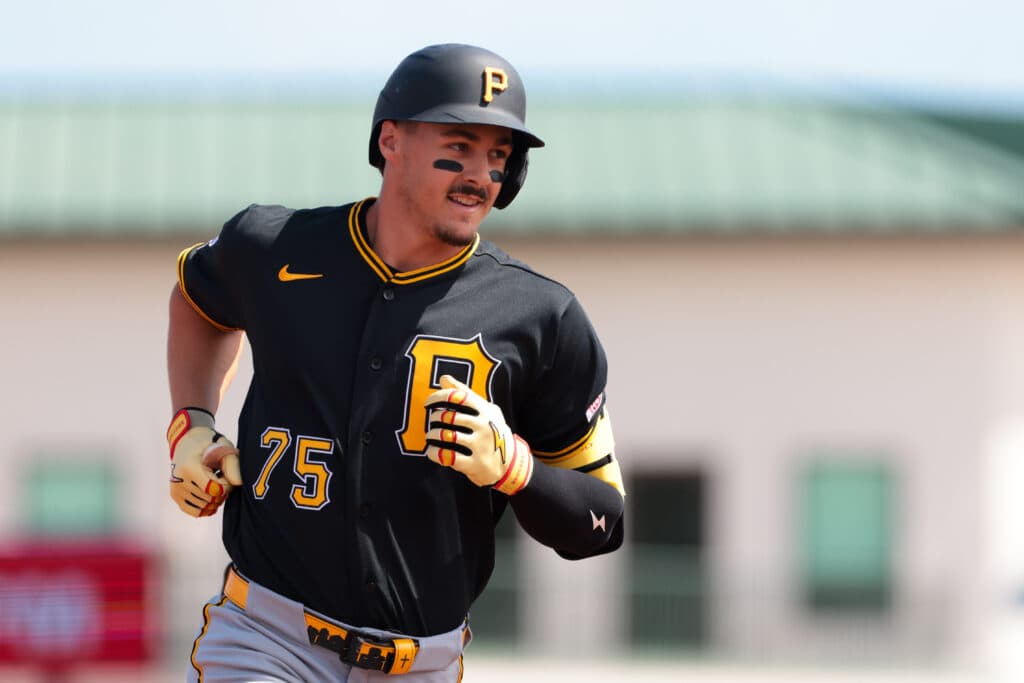
In a landmark move that cements Pittsburgh’s commitment to building a contending roster around its brightest young talent, the Pirates have officially announced a nine-year, $140 million contract extension with 20-year-old infield prospect Konnor Griffin. The deal, reported by multiple major outlets including The New York Post’s Jon Heyman and MLB.com’s Mark Feinsand, runs through the 2034 season and includes incentives that could elevate the total value to $150 million. The agreement solidifies Griffin as the highest-paid player in franchise history even before he has logged a full major league season, underscoring Pittsburgh’s aggressive push to compete in a rapidly evolving NL Central division.
Why the Konnor Griffin Extension Matters for the Pittsburgh Pirates and MLB Future
The Pirates’ decision to invest heavily in Griffin—who has been widely regarded as baseball’s consensus top prospect since 2024—reflects a franchise-wide shift toward long-term competitiveness. The organization, long criticized for its conservative approach to player development and spending, is now fully embracing a strategy centered on homegrown stars and targeted veteran additions. This extension comes just weeks after the Pirates inked reigning NL Cy Young Award winner Paul Skenes, further signaling Pittsburgh’s intent to contend within the next three to five years. With both Skenes and Griffin under team control through their late 20s, the Pirates are assembling a core that could define the franchise for more than a decade.
Griffin’s Rapid Rise: From Top Prospect to MLB Call-Up in Less Than Two Years
Konnor Griffin’s professional trajectory has been nothing short of meteoric. The Mississippi native was selected 15th overall in the 2024 MLB Draft by the Pirates, joining a class that included elite talents like Charlie Condon and Carson Greene. In his debut 2025 season, Griffin dazzled scouts and fans alike, posting a .333/.415/.527 slash line across three minor league levels—Double-A Altoona, Triple-A Indianapolis, and a brief stop at Triple-A Gwinnett—while totaling 21 home runs, 23 doubles, four triples, and an astonishing 65 stolen bases in just 122 games. His defensive prowess at shortstop, combined with elite speed and power potential, drew comparisons to two-way legends like Barry Larkin and Alex Rodriguez in their prime.
Griffin’s minor league dominance continued into 2026. He opened the season at Triple-A Indianapolis, where he went 7-for-16 (.438) over five games, with three steals, three doubles, and more walks than strikeouts. His plate discipline and bat speed hinted at the five-tool ceiling that had scouts raving. But Griffin’s transition to the majors has been met with the typical growing pains. In his first five big-league appearances in early April 2026, he batted just .176 with a .300 on-base percentage and .235 slugging—numbers that are statistically insignificant but psychologically challenging for the young star. As one evaluator noted, "There’s a reason Juan Soto was the last teenager to reach the majors before Griffin, and Mike Trout himself struggled early in his career. Griffin’s ceiling is sky-high, but the adjustment to MLB pitching is real."
Breaking Down the $140M-$150M Contract: Bonuses, Incentives, and Financial Structure
The structure of Griffin’s contract is as meticulously designed as his on-field profile. The nine-year term runs from 2026 through 2034, ensuring Pittsburgh retains his services well into his prime years. The base value is $140 million, but the deal includes escalators tied to MVP voting in the National League for the 2026 through 2031 seasons. According to New York Post reporter Joel Sherman, there are no options or deferred payments in the contract, making it a straightforward, front-loaded deal for both sides. A $12 million signing bonus is split across three payments: $5 million in 2026, $3.5 million in 2027, and $3.5 million in 2028. This structure is designed to spread the financial load over multiple fiscal years, aligning with MLB’s competitive balance tax (CBT) considerations.
For Griffin, the contract provides long-term security while preserving his path to free agency at 28—well before the traditional decline phase of most athletes. By the time the deal expires in 2034, Griffin will be entering his age-29 season, a prime window for a second contract that could rival the likes of Mookie Betts or Francisco Lindor. The contract’s incentive structure also rewards sustained excellence, with MVP-based triggers that could push the total value to $150 million, according to MLB Trade Rumors’ reporting.
How the Pirates’ Offseason Spending Reflects a Bold New Vision for Contention
The Griffin extension caps off a transformative offseason for the Pirates, one that saw the club make aggressive moves to close the gap on division rivals like the Cardinals and Brewers. In addition to locking up Griffin and Skenes, Pittsburgh added veterans Brandon Lowe, Ryan O’Hearn, and Marcell Ozuna to bolster its lineup. These signings followed high-profile misses, including failed pursuits of sluggers Kyle Schwarber and Eugenio Suárez, as well as international star Kazuma Okamoto. Despite the setbacks, general manager Ben Cherington’s front office managed to significantly upgrade the roster, raising the team’s luxury tax payroll to just under $127 million (per RosterResource), with projections placing it near $142 million once Griffin’s contract is included.
This spending spree reflects a philosophical shift in Pittsburgh. For years, the Pirates operated as one of MLB’s most fiscally restrained franchises, often trading away top prospects for short-term financial flexibility. But under Cherington—who took over in 2021—and owner David Ricketts, the club has embraced a more balanced approach: investing in young talent while selectively adding veteran pieces to accelerate contention. The Griffin contract is the centerpiece of this strategy, signaling that Pittsburgh is no longer content with rebuilding but is instead aiming to compete in the near term.
Assessing Griffin’s Role in the Pirates’ Contention Timeline: Speed, Defense, and Future Power
Even before Griffin’s offensive production stabilizes at the major league level, his impact is already being felt. His blistering speed—65 stolen bases in 2025—makes him a constant threat on the base paths, forcing pitchers to alter their approach and catchers to prioritize quick exchanges. His defensive metrics at shortstop, including a strong arm and agile range, have drawn praise from advanced analytics platforms like Statcast and Baseball Savant, which rate him as an elite glove with the potential to remain at the position long-term. Scouts compare his profile to Carlos Correa in his prime: a player who can change the complexion of a game with a single play, whether it’s a diving stop, a stolen base, or a clutch RBI.
However, the real value of Griffin lies in his offensive projection. His .333 average and .415 on-base percentage in the minors suggest a potential .300-plus hitter in the majors, with 20-25 home run power as he matures physically. His strikeout rate (just 18% in 2025) is well below league average, indicating a disciplined approach at the plate. If Griffin can harness his raw power and adjust to MLB pitching—similar to how Julio Rodríguez and Wander Franco made seamless transitions—he could become the face of the Pirates franchise for the next decade.
The Broader Implications: How Griffin’s Contract Could Reshape MLB Contract Structures
Griffin’s extension arrives at a pivotal moment in MLB’s economic landscape. The league has seen a sharp rise in long-term contracts for players under 25, including Francisco Alvarez ($175 million, Mets), Julio Rodríguez ($162 million, Mariners), and now Griffin. These deals reflect a growing trend among front offices: prioritizing homegrown talent with elite upside over expensive free-agent splashes. The Pirates’ move also underscores the increasing importance of financial flexibility in navigating the competitive balance tax threshold, which now stands at $245 million for 2026.
Moreover, Griffin’s contract could set a new benchmark for similarly situated prospects. With the MLB Draft’s amateur eligibility rules allowing teams to sign players as young as 18, Griffin’s nine-year deal—covering his age-20 through age-28 seasons—may become a model for other organizations looking to lock up generational talent early. This is particularly relevant in an era where top prospects like Dylan Crews and Chase Dollander are expected to be top-five picks in 2026, raising questions about when and how teams will structure their extensions.
What’s Next for Konnor Griffin and the Pittsburgh Pirates?
For Griffin, the immediate focus is on adjusting to MLB pitching and proving that his minor league success translates to the big leagues. The Pirates will likely limit his exposure to left-handed pitching early in his career, a common strategy for young hitters. In the long term, Griffin’s development will be critical to Pittsburgh’s contention window, which also includes Skenes—a potential three-time Cy Young contender—and a core of emerging talents like Termarr Johnson and Oneil Cruz.
For the Pirates, the Griffin extension is both a statement and a commitment. It signals that the organization is willing to spend big to reward its best talent, but it also places enormous expectations on Griffin’s shoulders. The team’s front office will need to manage his workload carefully, balancing his development with the pressure of living up to a $140 million contract. As Pirates manager Derek Shelton noted in a recent interview, "Konnor’s got the tools to be special. Our job now is to give him the environment to succeed."
- The Pirates signed Konnor Griffin, 20, to a nine-year, $140 million extension through 2034, with incentives that could push the total to $150 million.
- Griffin, baseball’s top prospect, posted a .333/.415/.527 slash line in the minors in 2025 and was called up to MLB in April 2026.
- The deal makes Griffin the highest-paid player in Pirates franchise history and reflects Pittsburgh’s shift toward long-term competitiveness.
- The contract includes a $12 million signing bonus split over three years and MVP-based incentives for the 2026–2031 seasons.
- The extension comes as the Pirates raise their luxury tax payroll to nearly $142 million, signaling a new era of spending.
Frequently Asked Questions About Konnor Griffin’s Contract and Future
Frequently Asked Questions
- How much is Konnor Griffin’s contract worth?
- The Pirates and Griffin agreed to a nine-year deal worth $140 million, with incentives that could increase the total to $150 million. The contract includes a $12 million signing bonus.
- When does Konnor Griffin’s contract expire?
- Griffin’s extension runs through the 2034 season. He will be 28 years old when the deal concludes, preserving his path to free agency at a prime age.
- What position does Konnor Griffin play?
- Griffin is a shortstop, widely regarded for his elite defensive abilities, arm strength, and athleticism. Scouts compare his profile to Carlos Correa.