The Seattle Seahawks are poised to become a key player in the 2024 NFL Draft’s first round—not necessarily as a team selecting early, but as a potential trading partner. With the 32nd overall pick in Round 1, Seattle holds a draft asset that ESPN analyst Field Yates describes as particularly valuable in a crowded mid-to-late first-round pool. The reason? The fifth-year contract option that accompanies every first-round pick, which gives teams an extra year of financial control over a promising rookie. That leverage, combined with uncertainty around quarterback selections, could make the Seahawks’ No. 32 selection a hot commodity on draft night, drawing trade offers from teams desperate to jump into the first round.
Why the Seahawks’ First-Round Pick Holds Unique Leverage in the 2024 NFL Draft
In a draft class where top-tier talent is concentrated at the very top but drops off sharply, the Seahawks’ selection at No. 32 sits in a strategic sweet spot. ESPN’s Field Yates, who joined the Seattle Sports’ Brock and Salk show on April 10, 2024, emphasized that teams in the late-first-round range—particularly picks 27 through 32—possess a rare bargaining chip: a first-round pick with five years of contract control. "There are two forces that Seattle has working for it at pick No. 32," Yates explained. "One is there is an advantage to getting a first-round pick—it has five years of contract control. If you believe the player is going to be really good, the extra year of team control is obviously valuable."
Under the NFL’s collective bargaining agreement, teams that select a player in the first round are granted a fifth-year option on that player’s contract. If exercised, this option extends the player’s rookie deal by a fifth season at a salary determined by their average position, playing time, and Pro Bowl selections. For teams evaluating a prospect who may not be an immediate starter but has high upside, this fifth year provides a low-risk opportunity to retain a young talent at a below-market rate. It’s a mechanism the Seahawks could leverage to extract additional draft capital this year, even if they ultimately opt to trade back.
The Fifth-Year Option: A Strategic Advantage in Player Evaluation
The fifth-year option, introduced in the 2011 collective bargaining agreement, has become a critical tool in franchise planning. It allows teams to delay a long-term commitment while retaining significant financial leverage. For instance, a team selecting a quarterback in the first round gains an extra year to assess their long-term starter potential. If the player develops into an elite talent, the team can secure their services for a fifth year at a cost far below market value. Conversely, if the player underperforms, the team can simply decline the option and move on. This flexibility is why first-round picks—even those outside the top 20—retain outsized trade value.
For Seattle, holding the 32nd pick means they are positioned to capitalize on this dynamic. While the 2024 draft class is not historically deep, the presence of franchise-altering talent like Indiana quarterback Fernando Mendoza (projected No. 1 overall to the Las Vegas Raiders) and Alabama’s Ty Simpson (ESPN’s No. 29 overall prospect) injects urgency into the mid-first round. Teams picking after the Raiders and New York Jets (who hold the 33rd and 34th picks, respectively) may fear missing out on a top quarterback, creating a domino effect of trade inquiries around Seattle’s pick.
Ty Simpson and the Quarterback Landscape: Why Teams May Trade Up
The quarterback position remains the most volatile and high-stakes variable in the 2024 NFL Draft. Mendoza, widely regarded as the consensus top prospect, is expected to be the first overall selection by the Raiders. Simpson, however, is viewed as a potential top-10 talent with the mobility and arm talent to start in the NFL. According to Yates, Simpson’s projection as a late-first-rounder has created a scenario where teams like the Arizona Cardinals (slated for the 34th pick) may feel compelled to trade up to avoid missing out entirely.
“There’s a world in which (Alabama quarterback) Ty Simpson is floating late in the first round – Arizona currently slated to pick 34th, the Jets currently slated to pick 33rd. If Arizona thinks, hey, the Jets might take Ty Simpson, we in turn need to jump up to get our hands on a player like Ty.”
This quarterback carousel effect amplifies the Seahawks’ leverage. Teams with early second-round picks (e.g., the 33rd and 34th selections) may view trading up into the first round as their only viable path to secure a franchise signal-caller. The Seahawks, sitting at No. 32, could serve as the gateway for such a move, offering a relatively low-cost entry point compared to the steep price of moving up from the late first round or early second round.
Seattle’s Draft Capital in Context: Fewer Picks, Greater Strategic Importance
The Seahawks’ draft strategy this year is unfolding against a backdrop of diminished selection volume. After using a franchise-record 11 picks in the 2023 draft, Seattle enters 2024 with just four selections: Nos. 32, 64, 96, and 166. If no additional picks are acquired, this would represent the second-lowest total in franchise history, trailing only the three picks made in 2021. This scarcity of draft capital makes the 32nd pick not just a potential trade asset, but a cornerstone of Seattle’s long-term rebuilding efforts.
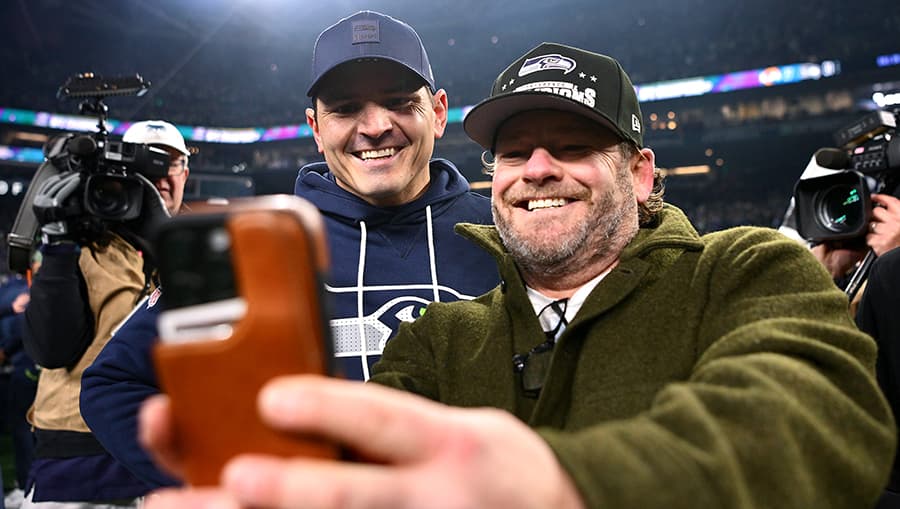
General Manager John Schneider has historically favored aggressive maneuvering in the draft, often trading up or down to maximize value. The 2024 class presents a unique opportunity to emulate that approach. By packaging the No. 32 pick with later selections, Schneider could secure additional assets without surrendering a high-value rookie contract. Alternatively, Seattle could stand pat and use the pick to add a foundational piece—particularly at premium positions like edge rusher or offensive tackle—where depth is critical.
Historical Precedents: Teams That Traded Up for Late First-Round Picks
Seattle’s position mirrors past draft-day scenarios where teams leveraged late first-round picks to move up for high-upside players. In 2019, the Miami Dolphins traded a 2020 first-round pick (No. 32) to the Saints to move up for quarterback Tua Tagovailoa, who fell due to injury concerns. Similarly, in 2017, the Chicago Bears traded up from the 39th spot to select cornerback Mitchell Trubisky at No. 2, using a package that included their 2018 first-rounder. These examples underscore how even late first-round picks can become focal points of draft-day trades when the right prospect is available.
Key Takeaways: What Seahawks Fans Need to Watch on Draft Night
- The Seahawks’ No. 32 pick is uniquely valuable due to the NFL’s fifth-year contract option, which provides five years of financial control over a rookie.
- Ty Simpson’s projected draft range (late first round) could spark a trade-up frenzy, with teams like the Cardinals or Jets potentially targeting Seattle’s pick.
- Seattle’s limited draft capital (just four picks) amplifies the importance of the 32nd selection, making it a prime trading chip.
- Teams trading up for a quarterback or high-upside player may prioritize Seattle’s pick over later options, creating a bidding war scenario.
- The fifth-year option mechanism rewards patience, allowing teams to retain young talent at below-market rates—a key incentive for teams to acquire first-round picks.
Broader Implications: How Draft Strategy Shapes Team Futures
Beyond the immediate transactional value, Seattle’s draft posture reflects a broader shift in NFL roster-building. The league’s emphasis on rookie contract extensions has elevated the importance of first-round selections, particularly at premium positions. Teams are increasingly willing to trade future picks to secure a player who can contribute for half a decade at a discounted rate. For the Seahawks, who have cycled through multiple draft classes under Schneider’s tenure, the 2024 draft offers a chance to address roster gaps while maintaining flexibility for future maneuvering.
What’s Next: How Seattle Could Deploy the No. 32 Pick
The Seahawks have several viable paths with the 32nd pick. They could package it with later selections to move up for a specific target, such as a pass rusher or offensive lineman. Alternatively, they might stand pat and use the pick to select a developmental prospect with high upside. Another option is to trade the pick outright for a combination of current-year selections and future assets, a strategy Schneider has employed in past drafts. Regardless of the outcome, the 32nd pick’s trade value is likely to be maximized, given the draft’s tight quarterback market and the inherent advantages of first-round status.
Frequently Asked Questions
Frequently Asked Questions
- Why is the Seahawks’ No. 32 pick more valuable than a typical late first-rounder?
- The Seahawks’ pick is more valuable because it comes with a fifth-year contract option, which gives any team that drafts the player five years of financial control instead of the usual four. This extra year of team control is highly sought after for high-upside prospects.
- Could Ty Simpson still be available at pick No. 32?
- Yes, Simpson is currently projected by ESPN as the No. 29 overall prospect, which places him within range of the 32nd pick. If Simpson slides due to team needs or medical concerns, Seattle could trade up to acquire him or use the pick to select another top-tier player.
- How does the fifth-year option work in the NFL draft?
- The fifth-year option is an automatic right for all first-round picks, exercisable after the player’s third season. If triggered, the team pays the player the average salary of their position’s top 10 contracts from the previous league year, adjusted for playing time and accolades like Pro Bowl selections.