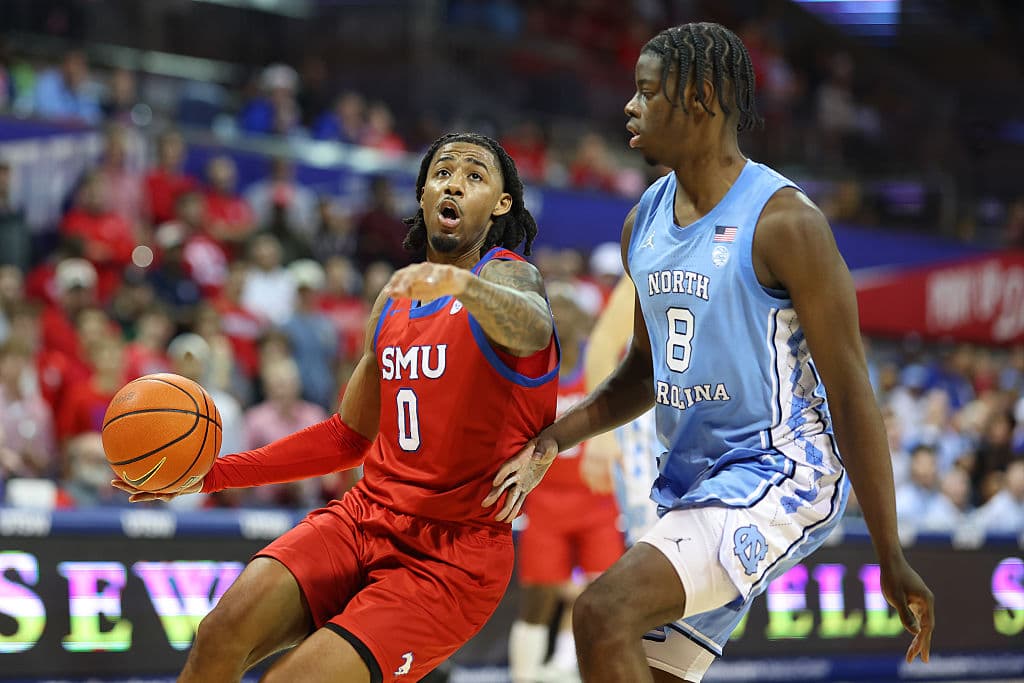
In the final hours before the NCAA Tournament selection committee revealed the 68-team field on Selection Sunday 2026, the SMU Mustangs found themselves on the razor’s edge of a postseason bid. The fate of their season rested heavily on the health of star guard B.J. Edwards, who had not played in a game since February 25 due to an injury. Just one day before the committee’s announcement, SMU released a social media statement declaring Edwards was expected to return and be available for the tournament. Yet, when the Mustangs took to the court against Miami (OH) just three days later, Edwards remained on the bench. The team’s subsequent loss eliminated them from postseason contention, but the damage was already done. Their late injury update had potentially influenced a pivotal decision by the NCAA selection committee, which had placed SMU in the field over teams like Oklahoma—with committee chairman Keith Gill explicitly citing Edwards’ expected return as a factor in their selection.
Key Takeaways: How SMU’s Injury Update May Have Altered the NCAA Tournament Landscape
- SMU announced B.J. Edwards’ return one day before the NCAA Tournament selection, which committee chair Keith Gill said influenced their decision to include the Mustangs over Oklahoma.
- Edwards did not play in SMU’s final game against Miami (OH), raising questions about the timing and accuracy of the school’s public statements regarding his availability.
- The NCAA requires injury reports to be submitted two hours before game time, leaving a narrow window for last-minute updates that could shape selection committee perceptions.
- SMU’s decision to publicly declare Edwards’ return—despite his limited game readiness—has sparked discussions about transparency and ethics in college sports injury reporting.
The Final Hours Before Selection Sunday: A High-Stakes Gamble for SMU
The NCAA Tournament selection process is one of the most scrutinized rituals in sports, where every detail—from win-loss records to strength of schedule—can tip the scales. For SMU, a team that had spent much of the season on the bubble, the health of B.J. Edwards was paramount. The 6-foot-2 guard, SMU’s third-leading scorer at 14.2 points per game, had been sidelined with an injury since late February, missing six consecutive games. His return would not only bolster the Mustangs’ offensive firepower but also signal a full recovery ahead of the tournament’s rigorous schedule.
With Selection Sunday looming, SMU faced a critical juncture. The selection committee, tasked with evaluating teams based on performance and potential, had to weigh SMU’s body of work against other bubble teams. In private conversations with the committee, SMU officials had reportedly assured that Edwards would be available if the Mustangs earned a bid. Head coach Andy Enfield emphasized this point in public statements, telling reporters, "We expect him to help us." The implication was clear: Edwards was recovering and would be ready by tournament time. But as the hours ticked down, the Mustangs released a social media post on Saturday evening, March 15, 2026, stating: "B.J. Edwards is expected to return to competition and be available for the NCAA Tournament."
Why the Timing of SMU’s Announcement Matters
The timing of SMU’s announcement was no coincidence. The NCAA selection committee finalizes its decisions based on the most recent information available, and public statements—even those on social media—can shape perceptions. By publicly declaring Edwards’ availability on the eve of Selection Sunday, SMU sent a signal to the committee that their team would be at full strength if selected. This aligns with a broader trend in college sports where schools strategically manage injury narratives to influence external evaluations, whether from the NCAA, the media, or potential recruits.
The quality of wins and obviously them getting back to full strength allowed them to kind of get that last spot.'
Committee chairman Keith Gill’s remarks during the selection show underscored the significance of Edwards’ expected return. "One of their important players, B.J. Edwards, lost five of six of those games," Gill said. "He's coming back. He's the third leading scorer, [a] defensive player. And so, the quality of wins and obviously them getting back to full strength allowed them to kind of get that last spot." The committee’s decision to include SMU over teams like Oklahoma—who had a stronger late-season push—suggests that Edwards’ projected availability was a decisive factor.
The Game-Time Reality: Edwards’ Absence and the Miami (OH) Loss
The reality of the situation became apparent on Wednesday, March 18, 2026, when SMU faced Miami (OH) in a must-win game to secure a postseason berth. Despite Edwards’ involvement in the team’s shoot-around on Tuesday, the guard did not play in the game, which SMU lost 89-79. The final injury report, submitted two hours before tip-off as required by NCAA rules, listed Edwards as unavailable. Post-game, Enfield walked back the earlier optimism, telling reporters: "I think there's a thing called game readiness, and he just didn't feel like he was quite game ready. He said, 'I could definitely play on Friday, if we win this game,' definitely going to play on Friday, but just not quite game ready."
The discrepancy between SMU’s public statement and the game-day reality has left many questioning the integrity of the process. Did SMU mislead the NCAA by suggesting Edwards was ready when he was not? Or was the school merely optimistic about his recovery timeline? The NCAA does not have explicit rules against schools expressing hope about a player’s return, but the timing of such announcements—so close to critical decisions—raises ethical questions about fairness and transparency.
The NCAA’s Injury Reporting Rules: A Loophole or a Flaw?
The NCAA’s injury reporting policies are designed to provide transparency to the selection committee and the public, but they also contain inherent limitations. According to NCAA guidelines, teams must submit an injury report two hours before game time, which includes the status of all injured players. However, the NCAA does not regulate the timing or content of a school’s public statements about a player’s recovery. This creates a gray area where schools can frame injuries in a way that benefits their postseason aspirations.
For SMU, the decision to publicly declare Edwards’ return on social media—without a corresponding guarantee from the medical staff—may have been a calculated risk. The NCAA does not penalize schools for being overly optimistic in their public communications, even if the reality later proves different. This lack of oversight has led some critics to argue that the system is ripe for manipulation, particularly when postseason bids and millions of dollars in revenue are on the line.
Comparing SMU’s Situation to Past NCAA Controversies
SMU’s situation is not without precedent. In recent years, college sports have seen several high-profile cases where injury updates and public statements have influenced decisions by governing bodies or media outlets. For example, in 2023, the University of Tennessee faced criticism when star player Dalton Knecht was listed as "out" for a game but later appeared on the court. While the NCAA did not impose sanctions, the incident sparked debates about the accuracy of injury reporting and its impact on recruiting and public perception.
The Role of Media Narratives in Shaping Perceptions
Beyond the NCAA’s oversight, the media plays a significant role in shaping the narrative around injury updates. When a school like SMU announces a player’s imminent return, it often leads to speculative reporting about how that player’s presence could change a team’s fortunes. For SMU, the narrative of "Edwards’ return" became a central storyline in the lead-up to Selection Sunday, with analysts and fans weighing whether the Mustangs’ inclusion was justified based on potential rather than recent performance.
This dynamic highlights a broader issue in college sports: the tension between transparency and strategic communication. While schools are expected to provide accurate information to the NCAA, they also operate in a competitive environment where every advantage counts. The line between informing the public and influencing external perceptions is often blurred, leaving room for interpretation—and, in some cases, controversy.
What’s Next for SMU and the NCAA? Calls for Reform
The fallout from SMU’s injury update has reignited calls for reform in the NCAA’s injury reporting and selection processes. Advocates for change argue that the current system lacks the safeguards to prevent potential manipulation. Some proposals include:
- Requiring schools to provide medical documentation when publicly stating a player’s availability for a game or tournament.
- Imposing a waiting period between a player’s last game and a public return announcement to ensure accuracy.
- Increasing transparency in the selection committee’s private conversations with schools to reduce the influence of last-minute narratives.
For now, SMU’s inclusion in the NCAA Tournament remains a fait accompli, but the questions linger. Did the Mustangs gain an unfair advantage by signaling Edwards’ return at a critical juncture? And could this incident prompt the NCAA to tighten its rules around injury reporting and public communications? As the college sports world continues to evolve, the balance between competition and integrity will remain a contentious issue.
The Broader Implications for College Basketball and the NCAA Tournament
The SMU controversy is a microcosm of larger challenges facing the NCAA and college basketball. The tournament, which generates over $1 billion in annual revenue, has become a high-stakes enterprise where every advantage—real or perceived—can have significant consequences. For teams on the bubble, the pressure to secure a bid is immense, and the temptation to shape narratives around player availability is ever-present.
Moreover, the incident underscores the growing scrutiny of the NCAA’s selection process, which has long been criticized for its opacity. Committee members like Keith Gill are tasked with making subjective judgments based on incomplete information, and even well-intentioned decisions can be called into question when new facts emerge. In this context, SMU’s late injury update serves as a case study in how minor details can have outsized impacts on the postseason landscape.
Expert Reactions: What Coaches, Analysts, and Former Committee Members Say
The reaction to SMU’s situation has been mixed, with some stakeholders defending the school’s right to express hope about a player’s recovery while others argue that the timing of the announcement crossed ethical lines. ESPN college basketball analyst Jay Bilas, known for his sharp critiques of the NCAA, weighed in on the controversy, stating: "Schools have a responsibility to be honest with the committee and the public. If you’re going to say a player is returning, you need to be confident in that statement." Bilas added that while optimism is natural, "the NCAA needs to clarify its expectations for how injuries are communicated publicly."
Former NCAA Tournament selection committee member and current Big East Conference commissioner Val Ackerman offered a more measured perspective. "The selection process is inherently nuanced," Ackerman said. "Committees rely on the information provided to them, and schools have every right to express their hopes for a player’s recovery. However, the timing of such statements—so close to critical decisions—does raise questions about whether they are intended to influence the committee’s perception."
Frequently Asked Questions About SMU’s Injury Update and the NCAA Tournament Selection Process
Frequently Asked Questions
- Did SMU lie to the NCAA about B.J. Edwards’ availability?
- SMU did not formally lie to the NCAA, as the selection committee does not have explicit rules against expressing hope about a player’s return. However, the timing of the announcement—so close to Selection Sunday—has raised ethical questions about whether the school misled the committee or the public.
- Can the NCAA penalize SMU for its injury update?
- The NCAA does not have specific rules against schools making optimistic statements about player availability. However, the organization could choose to review its policies on injury reporting and public communications in the future to prevent similar controversies.
- How does the NCAA selection committee weigh injury updates when making decisions?
- The NCAA selection committee relies on the most recent information available when making decisions. While private conversations with schools may provide context, the committee also considers public statements and media narratives when evaluating a team’s potential.