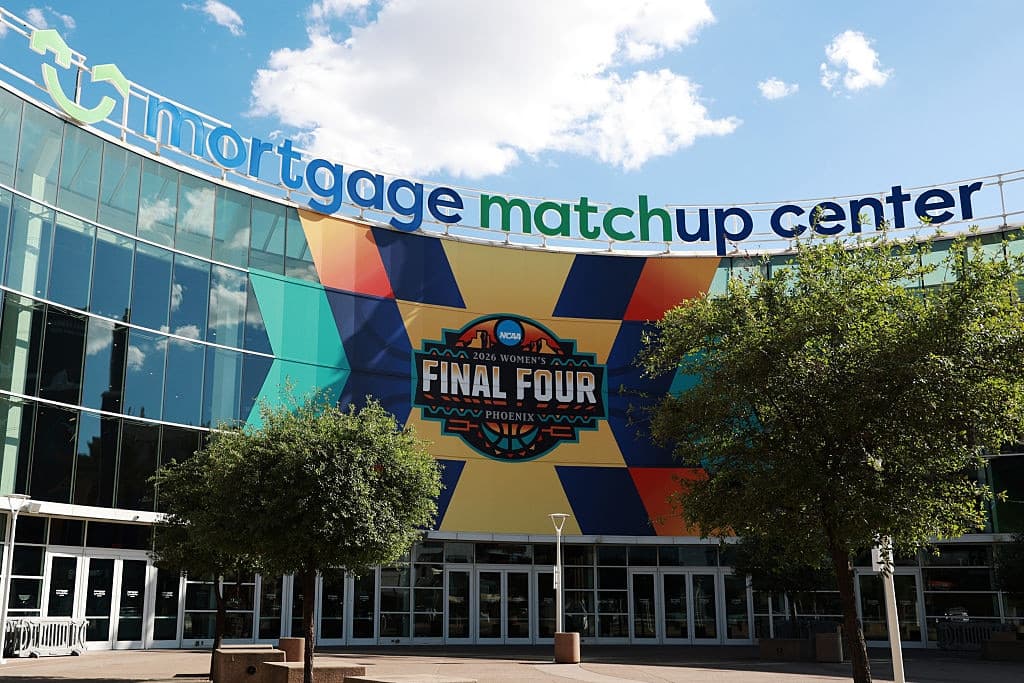
PHOENIX — When UCLA head coach Cori Close and South Carolina head coach Dawn Staley stepped onto the court for the 2024 NCAA women’s basketball championship on Sunday, they weren’t just competing for a title—they were carrying the torch for an entire generation of women in sports. The 79-51 victory by the Bruins over the Gamecocks marked UCLA’s first-ever national title in women’s basketball, a milestone achieved against the backdrop of a sport still fighting for equal recognition and financial parity. For Staley and Close, two of the most respected figures in college athletics, the game represented more than a championship; it was a statement about the future of women’s basketball and the long road still ahead.
Why UCLA’s Historic Win Matters for the Future of Women’s Basketball
The outcome of Sunday’s title game sent shockwaves through the sports world, not because of the final score alone, but because of what it symbolizes. UCLA’s victory ended South Carolina’s 45-game winning streak and marked the first time in NCAA tournament history that a team outside the traditional powerhouses of UConn, Tennessee, and Stanford claimed the championship. The win was particularly significant as it followed a dramatic upset of defending champion UConn in the Final Four, underscoring a shifting power dynamic in women’s college basketball. Close and Staley, both pioneers in a field still dominated by men, embodied the progress of a sport that has spent decades fighting for visibility and respect.
A Historic Upset That Signals a New Era
UCLA’s triumph over South Carolina was not just a basketball victory—it was a cultural one. The Bruins’ path to the championship included a thrilling 93-79 win over UConn in the semifinal, a game that featured an intense postgame confrontation between Staley and UConn’s Geno Auriemma. That moment, which dominated headlines, served as a reminder of the tensions still simmering in women’s basketball, where progress often feels one step forward and one step back. Yet, the very next day, Staley and Close stood side by side at the championship podium, delivering messages of mutual respect and shared purpose. ‘It’s special,’ Staley said after the loss. ‘You’re playing on the last day of college women’s basketball, and it’s a great honor and a great feat, whether you win or lose.’
“I want good things to happen for them, and Cori is one of those people who really works at making our game better—not just UCLA, but our entire game. She’s always speaking out and uplifting our game in so many areas.”
Close, who has led UCLA since 2011, echoed that sentiment. ‘I think both Dawn and I feel a sense of pride that we are able to continue to represent women that can coach at the highest levels to promote our game,’ she said. ‘I think both Dawn and I really see this as something bigger than ourselves. That’s an honor to be a part of that.’
The Mission Behind Women’s Sports: Growth Over Glory
While the men’s NCAA tournament often focuses on talent and tradition, the women’s tournament carries an additional weight: the mission to grow the game. This mission is embedded in the culture of women’s basketball, from the coaches’ podiums to the players’ media interactions. Close has long championed this idea, repeatedly highlighting UCLA’s championship pedigree, which dates back to the 1978 AIAW title. ‘The UCLA women’s basketball team was established in 1974 and played under the umbrella of the AIAW,’ she noted. ‘Winning that championship in 1978 was a foundation for what we’re doing now.’
Players Embrace the Role of Advocates
The mission extends beyond the court. UCLA center Lauren Betts, a vocal advocate for women’s sports and mental health awareness, framed her role as part of something larger. ‘I’ve always been really vocal about women’s sports, mental health, being an advocate for that,’ she said before the title game. ‘So, I think every time I step out on the floor, I remember that it’s not just about me. And every time that I speak to media, I remember that it’s not about me. I just continue to try to grow the game in any way that I can.’
“A huge one was just climbed recently, so that’s been really big,” Betts said, referring to the recent WNBA collective bargaining agreement that raised average salaries from $120,000 to $600,000. ‘I’m really grateful for all the players that made those commitments and the sacrifices for people like me who are entering the W next year.’
Title IX and NIL: The Double-Edged Sword of Progress
The growth of women’s basketball is inextricably linked to Title IX, the landmark 1972 legislation that prohibits sex-based discrimination in any school or education program receiving federal funding. Close and Staley, both born in 1970 and 1969 respectively, came of age in the wake of Title IX, a time when opportunities for girls in sports began to expand dramatically. Yet, despite the progress, the financial realities of women’s sports remain starkly unequal. Name, Image, and Likeness (NIL) deals, which allow college athletes to profit from their personal brands, have become a game-changer—but not uniformly so.
The NIL Disparity: Why Men Still Dominate the Earning Power
According to On3’s NIL evaluations, the top 44 highest-earning college athletes are men. LSU guard Flau’jae Johnson, ranked 45th, is the highest-earning woman with an estimated NIL value of $1.5 million. Johnson, a four-year starter averaging 18.6 points per game, boasts 2 million Instagram followers and 1.6 million TikTok followers—numbers that dwarf those of many male athletes in the top 45. Yet, she remains the sole exception in a system where men’s basketball players at Power Four institutions earned an average of $171,272 during the 2024-25 season, compared to just $16,222 for women.
The disparity is not due to a lack of skill or marketability. Johnson’s social media presence alone outpaces most male athletes, yet she remains an outlier in a landscape where male athletes dominate NIL earnings. A study by the University of Cincinnati found that the average NIL deal for a male Power Four basketball player was more than 10 times that of a female player. The reasons are complex: women’s sports receive less media coverage, fewer sponsorship opportunities, and less investment from athletic departments. Until these systemic issues are addressed, the gap will persist.
The Next Frontier: Proving the Game’s Revenue Potential
For Staley, the conversation about the future of women’s basketball must center on revenue—how the sport can generate enough income to sustain itself without relying on the largesse of universities or conferences. ‘We got [NCAA tournament] units now; we’d like to see us increase those, because that’s where the value is,’ she said after Sunday’s loss. ‘The value of our sport is going to be how much we could pour back into our budgets, how much we can actually be looked at as a sport that is revenue producing.’
Staley’s point underscores a critical tension in women’s sports: the need to prove financial viability while also advocating for equitable treatment. The NCAA women’s basketball tournament generated $110 million in revenue in 2023, yet the distribution of those funds remains heavily skewed toward the men’s tournament. Close and Staley are among the voices pushing for a reallocation of resources, including increased NIL opportunities, better media coverage, and more investment in women’s programs.
Key Takeaways: The State of Women’s Basketball in 2024
- UCLA’s historic upset of South Carolina in the NCAA women’s basketball championship signals a new era of competitiveness and growth for the sport.
- Dawn Staley and Cori Close, two of the most influential figures in women’s basketball, emphasize that the sport’s future hinges on financial viability and equitable treatment.
- NIL disparities remain a major barrier, with male athletes earning significantly more than their female counterparts despite similar marketability.
- Title IX laid the foundation for women’s sports, but the next mountain to climb is proving the game’s revenue potential and securing sustainable funding.
The Legacy of Title IX: How Two Coaches Became Flag Bearers for Change
Close and Staley represent the generation that grew up with Title IX—a law that, while transformative, did not erase decades of underinvestment in women’s sports. Close, who played at Cal Poly Pomona, and Staley, a three-time Olympic gold medalist, have spent their careers not just coaching but advocating for the sport they love. Their paths to the championship game were paved with the same challenges faced by women in sports: fewer resources, less media attention, and constant battles for respect.
Yet, their achievements—Close’s 2011 hiring as UCLA’s head coach and Staley’s 2017 national title with South Carolina—have helped redefine what is possible. Close’s Bruins, with their emphasis on player development and culture, have become a model for program-building in women’s basketball. Staley’s Gamecocks, meanwhile, have set the standard for excellence, with a 125-10 record over the past five seasons. Their success is a testament to the power of perseverance in a system that has not always been designed to reward women.
What’s Next for the Women’s Game? Staley and Close Weigh In
Asked what the next mountain to climb for women’s basketball might be, Staley pointed to the transfer portal and the need to regulate free agency in the sport. ‘There are talks of the transfer portal, just getting hold of the free agency part of our game,’ she said. ‘We got [NCAA tournament] units now; we’d like to see us increase those, because that’s where the value is.’
Close, meanwhile, sees the sport’s future as tied to its ability to attract and retain top talent. ‘We want to have really made an impact on growing the game for a long time to come,’ she said. ‘And we want to inspire that women can stay in this game.’ Her words reflect a broader truth: women’s basketball is not just about winning titles—it’s about building a sustainable ecosystem where athletes, coaches, and administrators can thrive.
The Bigger Picture: Why Women’s Sports Must Continue to Fight for Visibility
The NCAA women’s basketball tournament is one of the most-watched events in college sports, yet it still lags behind the men’s tournament in terms of media coverage, sponsorships, and financial investment. This disparity is not unique to basketball. Women’s sports as a whole receive just 4% of total sports media coverage, according to a study by the Tucker Center for Research on Girls & Women in Sport. The numbers are even starker in terms of sponsorship dollars, where women’s sports attract only 0.4% of total sports sponsorship spending.
For Close and Staley, the fight for visibility is a daily battle. Close has been vocal about the need for more women in leadership roles, from coaching to administration. Staley, who also serves as the president of the Women’s Basketball Coaches Association, has used her platform to advocate for policy changes that benefit women’s sports. Their leadership is a reminder that progress is not guaranteed—it must be fought for, game by game.
Frequently Asked Questions
Frequently Asked Questions
- How did UCLA’s women’s basketball program become a national contender?
- UCLA’s resurgence under Cori Close began with her 2011 hiring. Since then, she has built a culture of player development and recruitment, culminating in the program’s first national title in 2024. Close’s emphasis on culture and Close’s ties to the AIAW championship era have also helped shape the Bruins’ identity.
- What is the significance of the WNBA’s recent collective bargaining agreement?
- The 2024 WNBA CBA increased average salaries from $120,000 to $600,000 and raised the minimum salary from $66,000 to $300,000. The deal also expanded the salary cap from $1.5 million to $7 million, marking a major step toward financial equity for women’s professional sports.
- Why do male college athletes earn significantly more in NIL deals than women?
- The disparity stems from systemic issues, including less media coverage, fewer sponsorship opportunities, and lower investment in women’s sports. While women like Flau’jae Johnson have massive social media followings, the infrastructure to monetize that influence remains underdeveloped compared to men’s sports.