All hail the return of the World Baseball Classic! The WBC, the sport's flagship international tournament, is about to get underway with the 2026 edition. This year, the tournament is back at four locations: Miami; Houston; San Juan, Puerto Rico; and Toyko. The Championship Game will be played March 17 at loanDepot Park, home of the Miami Marlins.
The WBC showcases the top talent in the world in a best-on-best tournament, part of Major League Baseball's ongoing efforts to grow the game globally. Japan won the inaugural WBC in 2006 and repeated as champions in 2009. The Dominican Republic won the 2013 WBC and the United States won the 2017 WBC. Japan, which has finished in no lower than third place in all four WBCs, won for the third time in 2023, the most recent tournament.
As for this year's edition, we're here to lay out everything you need to know about one of the most alluring events the sport has on offer. Let's do that now.
The action gets started with pool play among four groups of five teams each. The WBC used to be a 16-team tournament, but in 2023 the field expanded to 20. The top four teams from the 2023 pools earned automatic berths for 2026, and the remaining four spots went to the winners of the qualifier rounds held in February and March of last year.
Pool play is a round robin double-elimination tournament. From there, the top two teams in Pools A and B will meet in the quarterfinals in Houston, while the top two teams in Pools C and D will meet in the quarterfinals in Miami. The semifinals and finals will again be played in Miami. After pool play, the remainder of the tournament is single-elimination format.
Pool A runner-up vs. Pool B winner
Pool A winner vs. Pool B runner-up
Pool C runner-up vs. Pool D winner
Pool D runner-up vs. Pool C winner
Quarterfinal TBD winner vs. Quarterfinal TBD winner
Semifinal 1 winner vs. Semifinal 2 winner
All 47 games of the 2026 WBC will be broadcast by Fox and affiliated networks, including FS1, FS2, Fox Deportes, and Tubi. Games can also be watched on fubo (Try for free).
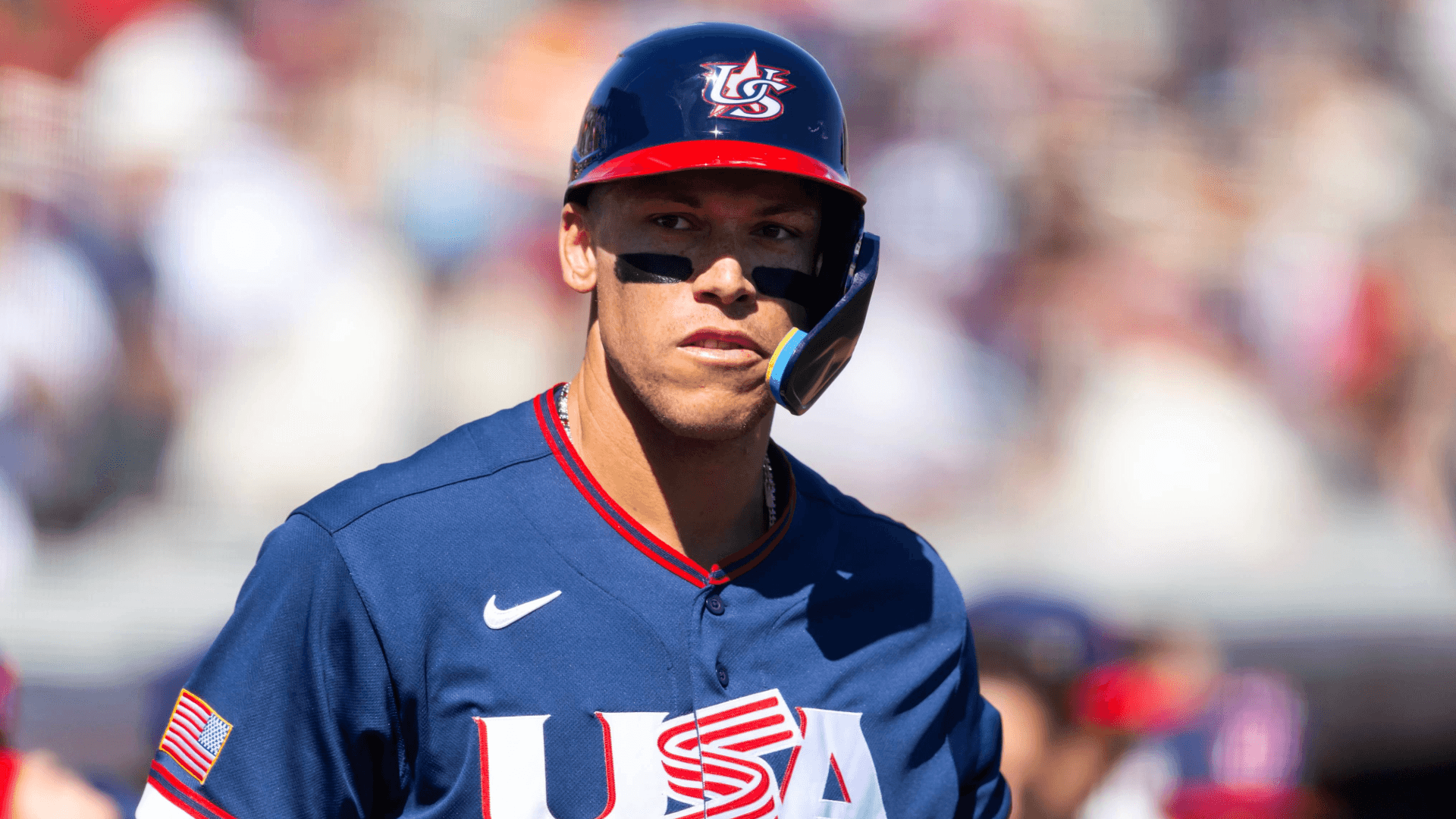
As is typically the case, WBC rosters, especially those of the traditional powers, are stuffed with stars. The U.S. this time around boasts what's probably its strongest roster ever. Suiting up for Team USA this time around will be mega-stars like Aaron Judge, Tarik Skubal, Paul Skenes, Bobby Witt Jr., Cal Raleigh, Kyle Schwarber, Byron Buxton, and others. Reigning champion Japan will again be loaded with the likes of Shohei Ohtani, Yoshinobu Yamamoto, Seiya Suzuki, and more. The Dominican Republic once again profiles as a powerhouse, what with names like Vladimir Guerrero Jr., Fernando Tatis Jr., Juan Soto, Julio Rodríguez, Manny Machado, Sandy Alcantara, and Cristopher Sánchez suiting up. Puerto Rico, meantime, was hit hard by insurance issues in assembling its roster, but there's still plenty of talent there.
On an individual level, a player is eligible to play for a country in the WBC if he:
- Was born in that country, holds citizenship, or has a permanent residence in that country.
- Has documentation showing he is eligible for citizenship in the country.
- Has at least one parent who was born in the country or holds citizenship.
- Previously represented the country in the WBC.
Pool play, of course, can be a muddled affair, as we learned in 2023, when all five teams in the Taiwan pool finished with 2-2 records. To determine which teams will advance out of such a muddled pool, the WBC will use the following methods, in order:
- Fewest runs allowed divided by outs recorded by tied teams.
- Fewest earned runs allowed divided by outs recorded by tied teams.
- Highest batting average in games between tied teams.
Simple run differential would be, well, simpler, but that's now things will be. There's a good chance that one or more of the above comes into play in determining who moves on to the quarter finals.
The handling of pitchers is always a concern when the WBC rolls around. Throwing high-stress innings for someone other than the pitcher's MLB team isn't something teams readily embrace and, given that the WBC takes place during what would otherwise be the spring ramp-up period for pitchers, those worries are compounded. For those reasons and for the general common sense of things, the WBC puts strict limits on how managers can use their pitchers during the tournament. Here's how it will work for the 2026 WBC:
- Pitchers may not exceed 65 pitches in a game in pool play unless the act of completing the final plate appearance of their outing pushes them past that limit.
- Pitchers may not exceed 80 pitches in the quarterfinals, albeit with the same "final plate appearance" qualifier above.
- Pitchers may not exceed 95 pitches in the championship game, again with the qualifier above.
- Pitchers who throw 50 or more pitches in a game must have a mandatory four days of rest before pitching again in a game.
- Pitchers who throw 30 or more pitches in a game must have at least one day of rest before pitching again in a game.
- No pitcher may pitch more than two days in a row.
Opinions will vary, but most would agree the above strike a balance between prudence and playing to win.
In broad terms, the WBC is a baseball game like any other, although some specific rules are worth noting. For example:
- There's a mercy rule in pool play and the quarterfinals. The game ends if a team leads by 10 or more runs after the seventh inning or 15 or more runs after the fifth inning.
- A pitch clock will be used for the first time in the WBC, and it will follow the MLB rules. That is, pitchers will have 15 seconds to deliver the pitch with the bases empty and 18 seconds when one ore more runners are on base. Batters will need to be in the box with their focus on the pitcher with at least eight seconds left on the pitch clock.
- The 2026 WBC will not make use of the ABS system for calling balls and strikes that will be in use in MLB this year. That's because the necessary tech infrastructure isn't in place at every venue.
Let's conclude with a brief walking tour of WBC history, shall we? The previous champs were name-checked above, but now let's put it in table format so it's official and everything:
Now let's get busy adding to that history, shall we?