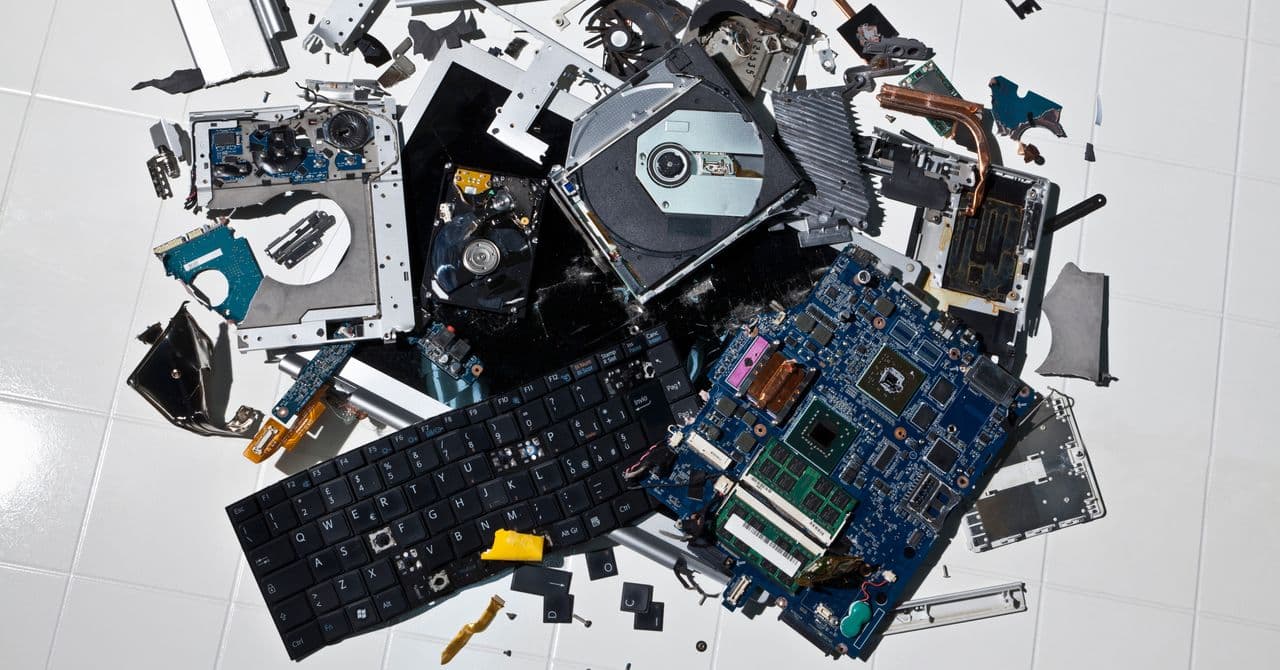
Global e-waste topped 62 million metric tons in 2022, according to the latest data published by the United Nations Global E-Waste Monitor, and just 22.3 percent of that waste was collected and recycled. Too many old electronics end up in landfills and hellish e-waste graveyards in poor countries, where they poison communities. The problem is only growing worse, with an estimated increase of 2.6 million tons every year, taking us to 82 million by 2030. Governments, companies, and people are waking up to the fact that we must do better. The big question is, how? Here are some resources, services, and ideas that can help.
Updated March 2026: We've added more donation suggestions and advice on what to do before you dispose of electronics.
Before you throw away devices, consider using them for a little longer. Do you really need to upgrade? Perhaps you can repurpose your old device to get more life out of it. For example, you might turn that old phone into a webcam. If you are dead set on shopping for a new device, research ethical and eco-friendly electronics. Look for manufacturers and retailers with trade-in and recycling programs.
Consider buying used products on eBay or other marketplaces, or look for refurbished gadgets. Manufacturers like Apple and Samsung offer refurbished devices at a discount, and you can find loads of refurbished goods at Amazon. Elizabeth Chamberlain, director of sustainability at iFixit, recommends Back Market for refurbished phones. For more tips and ideas, we have a guide on how to buy used or refurbished electronics.
Passing devices onto family members, friends, and neighbors who can use them is the best way to squeeze maximum value out of them. “Don’t let devices hibernate in a junk drawer or closet and waste away,” says Jeff Seibert, who works at SERI (Sustainable Electronics Recycling International). “Get them into someone else’s hands who can use them as quickly as possible because the older devices get, the less positive impact they can make.”
If you don’t know anyone who can use your old electronics, try the Freecycle Network or local Buy Nothing groups on Facebook to find folks interested in freebies.
Whether you plan to squeeze a bit more out of a device, want to pass it along to someone, or plan on selling it, repairing or refurbishing it first is a smart move. If you want to try to repair a device, iFixit is a great place to start. It boasts more than 90,000 step-by-step repair guides covering phones, tablets, laptops, computers, game consoles, and cameras.
YouTube is another great place to find repair videos, and Chamberlain recommends checking out repair techs like Louis Rossmann, Jessa Jones, Ben’s Appliances and Junk, and Rich Rebuilds, but there's no shortage of repair videos for the specific gadget you're looking for.
To meet experts in person and learn how to fix your gadgets, look for a Repair Café in your area. These local pop-up events offer free advice and knowledge exchange from expert repairers to help people in the neighborhood get stuff fixed. Instead of dropping devices off for repair, you sit with the expert and learn how to troubleshoot on your own. The Restart Project is a good resource for folks in the UK looking to repair or donate devices.
One thing to be mindful of when attempting to repair a phone, laptop, or another device with a battery inside is to drain the battery before you open it up. For repairs on major appliances, rubber gloves and rubber-soled boots can minimize the risk of getting shocked.
If you lack the confidence to attempt repairs, you can likely find a good local repair shop by reading reviews. The Federal Trade Commission found that independent repair shops have the same success rate and safety record as manufacturer shops. Many manufacturers have discouraged repairs with the threat of voiding a warranty, but victories for the Right to Repair movement have led to tech getting slightly more repairable.
Just be careful to back up and protect sensitive data on your devices before handing them in at repair shops. Some devices might even have a built-in solution. For example, Samsung phone owners can activate Maintenance Mode before handing a device off to ensure that photos and accounts can’t be accessed (we still advise backing up before you send any device for repair).
You can make some money if you sell old devices. Even broken devices can be sold for parts, though you will always command a higher fee if you clean and repair them first. You can also score a discount on something new with trade-in or buyback schemes. We have guides on how to sell or trade in your iPhone and how to sell your smartwatch or fitness tracker.
You can generally command the highest fees by selling directly to people through eBay, Craigslist, Facebook Marketplace, or Nextdoor. Just remember that you will need to arrange delivery or meet up to exchange the goods, and buyers often like to haggle. (Trade in or buy refurbished electronics on eBay with our eBay discounts.)
For a hassle-free sale, consider places like Swappa or Gazelle. These kinds of buyers use online questionnaires to determine a price and often provide free postage. Shop around and see who offers the best price, but be honest in your descriptions, or you may find that your quote gets reduced after inspection.
Take-back or trade-in programs are easy options, though you probably won’t make as much as you would from a sale, and you might often get your fee as store credit. Best Buy, Amazon, Verizon, Samsung, and many others offer trade-ins on electronics.
If you like the idea of your old electronics doing some good, consider donating them to worthy causes. Chamberlain says Goodwill is one of the best options because the company has a strong reuse hierarchy and aims to get as much as it can out of electronics before recycling them. You can also find local charities that accept electronics through Donation Town.
Cell Phones for Soldiers is a nonprofit that sends prepaid mobile phones to overseas troops so they can stay in touch with loved ones. Secure the Call accepts phone and tablet donations and supplies them to victims of domestic violence, senior citizens, and other vulnerable folks in the community. You can donate old electronics to the National Domestic Violence Hotline, where partner Cellular Recycler refurbishes and resells them. Recycle Health is another nonprofit that collects fitness trackers and gives them to underserved populations to encourage fitness.
For folks in the UK, Three, Vodafone, and Hubbub all run schemes to take old phones and give them to people in need. The British Heart Foundation collects some large items, and you can box up and mail smaller gadgets to them.
If you can't reuse, repair, sell, or donate your old electronics, it is important to recycle them properly. Anything with a battery inside should not be thrown into the general waste, because discarded batteries can leak toxic chemicals into the environment and start fires. But we're not just talking about phones and laptops here; you should also try to recycle smaller items, like cables and chargers.
Some of the places we have already mentioned will recycle devices that can't be reused, and it's worth checking to see whether the original manufacturer of your device has a recycling scheme. Most major manufacturers, including Apple, Google, and Samsung, will recycle your old devices, and Apple will take old Lightning cables if you're making the switch to USB-C. Retailers like Best Buy and Staples will also accept and recycle your old phones, laptops, cables, and other electronics.
Local facilities that handle electronics for reuse and recycling sometimes have community drop-off events, Seibert says, and local municipalities often have electronics collections once or twice a year, so it’s worth looking to see whether there are any scheduled in your area.
Sadly, not all recycling centers and schemes are equal. The e-Stewards certification program is focused on the responsible management of end-of-life electronics (Staples is a partner) and aligns with the Basel Convention requirements for the transboundary movement of electronic waste and components. The NAID AAA Certification and either ISO 14001 or RIOS Certification are prerequisites to being e-Stewards certified. It conducts unannounced inspections and uses GPS trackers to test partners and ensure materials are responsibly managed at every stage. You can use its global interactive map to find certified partners and locations to drop off old electronics.
Another option is SERI, which administers the R2 Standard to set best practices for protecting the environment, worker health and safety, and natural resources. An R2 Certified facility will ensure that any used electronics are processed responsibly, including any residual data on devices. While most aren’t set up for consumer drop-off, there is a search tool to filter for those that are.
You can also find a long list of international e-waste recycling links at iFixit, find recycling locations through Earth 911, and check out The Battery Network for batteries.
Before you get rid of any electronics, you must prepare them properly. Here’s what to consider:
Back up any data and remove any physical media or memory cards.
Wipe any personal information or accounts from the device. (We have a guide on how to factory-reset your phone.)
Power off fully and remove batteries or disconnect from power.
Clean the device and repack it with original accessories in its original box if you kept them. (This is important if you intend to pass on or sell it.)
Power up with unlimited access to WIRED. Get best-in-class reporting and exclusive subscriber content that's too important to ignore. Subscribe Today.