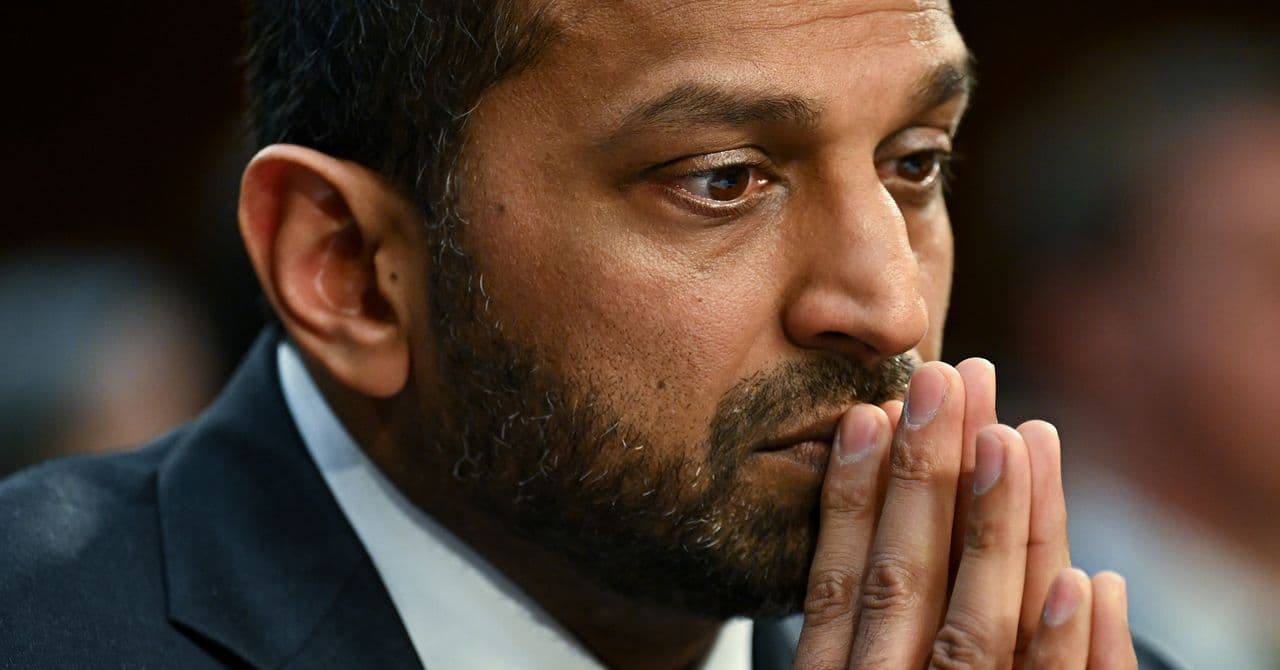
As the United States-Israel war with Iran enters its second month, a mysterious Iranian hacker group, Handala, has breached the email account of FBI Director Kash Patel, raising concerns over the US cybersecurity and the potential risks of the ongoing conflict. The hack, which was announced by Handala on its website, has been confirmed by a Justice Department official, who stated that the leaked emails appear to be real. However, experts say that the breach is likely to be a result of Handala's opportunistic hacking tactics, rather than a sophisticated cyberattack.
How the Iranian Hacker Group Handala Operates
Handala, which is widely believed to be a front for Iran's intelligence agency, the MOIS, has been known for its bombastic rhetoric and propaganda-driven cyberattacks. The group has made several claims of hacking into high-profile targets, including the FBI, but experts say that these claims are often exaggerated or false. In the case of the Patel email breach, Handala claimed that it had hacked into the FBI's systems, but evidence suggests that the breach was limited to Patel's personal Gmail account.
The Risks of Opportunistic Hacking
The Patel email breach highlights the risks of opportunistic hacking, where hackers target individuals or organizations with weak security measures. In this case, Handala appears to have targeted Patel's personal email account, which was not protected by the same level of security as the FBI's systems. Experts say that this type of hacking can be particularly dangerous, as it can provide hackers with access to sensitive information and potentially compromise national security.
- Iranian hackers breached FBI Director Kash Patel's email account
- The breach was likely a result of opportunistic hacking tactics
- The incident highlights concerns over US cybersecurity and the ongoing US-Israel war with Iran
- Apple's Lockdown Mode security feature has been effective in preventing mercenary spyware attacks
- Russia is planning to use its own encryption for 5G mobile networks
The Effectiveness of Apple's Lockdown Mode
In related news, Apple has announced that its Lockdown Mode security feature has been effective in preventing mercenary spyware attacks. The feature, which was launched nearly four years ago, works by disabling commonly exploited iPhone features and has been shown to be effective in blocking attacks from spyware groups such as NSO and Intellexa. Experts say that the feature is a significant step forward in protecting users from cyber threats and highlights the importance of robust security measures in preventing hacking attacks.
Russia's Plan to Use Homegrown Encryption for 5G
Russia is planning to use its own encryption for 5G mobile networks, according to a proposed law that is currently moving through the country's legislative process. The law would require telecoms to implement a homegrown encryption algorithm, known as NEA-7, for all domestic 5G mobile networks. Experts say that the move is part of the Kremlin's efforts to isolate and exert control over the Russian internet and could have significant implications for the country's cybersecurity and intelligence gathering capabilities.
The Risks of Data Brokers Selling Personal Information to Foreign Adversaries
In a concerning development, at least 33 data brokers have admitted to selling or sharing Americans' personal information with entities in China, Russia, North Korea, or Iran. The revelation, which was made public by the California Privacy Protection Agency, highlights the risks of data brokers selling personal information to foreign adversaries and the potential consequences for national security. Experts say that this type of data sale can provide foreign governments with access to sensitive information and potentially compromise US intelligence gathering capabilities.
Frequently Asked Questions
- What is Handala and how does it operate?
- Handala is an Iranian hacker group that is widely believed to be a front for Iran's intelligence agency, the MOIS. The group is known for its bombastic rhetoric and propaganda-driven cyberattacks, and has made several claims of hacking into high-profile targets, including the FBI.
- What is Apple's Lockdown Mode and how does it work?
- Apple's Lockdown Mode is a security feature that works by disabling commonly exploited iPhone features, such as most message attachment types and features like links and link previews. The feature has been shown to be effective in blocking attacks from spyware groups such as NSO and Intellexa.
- What are the implications of Russia's plan to use homegrown encryption for 5G?
- Russia's plan to use homegrown encryption for 5G could have significant implications for the country's cybersecurity and intelligence gathering capabilities. The move is part of the Kremlin's efforts to isolate and exert control over the Russian internet and could potentially compromise US intelligence gathering capabilities.