
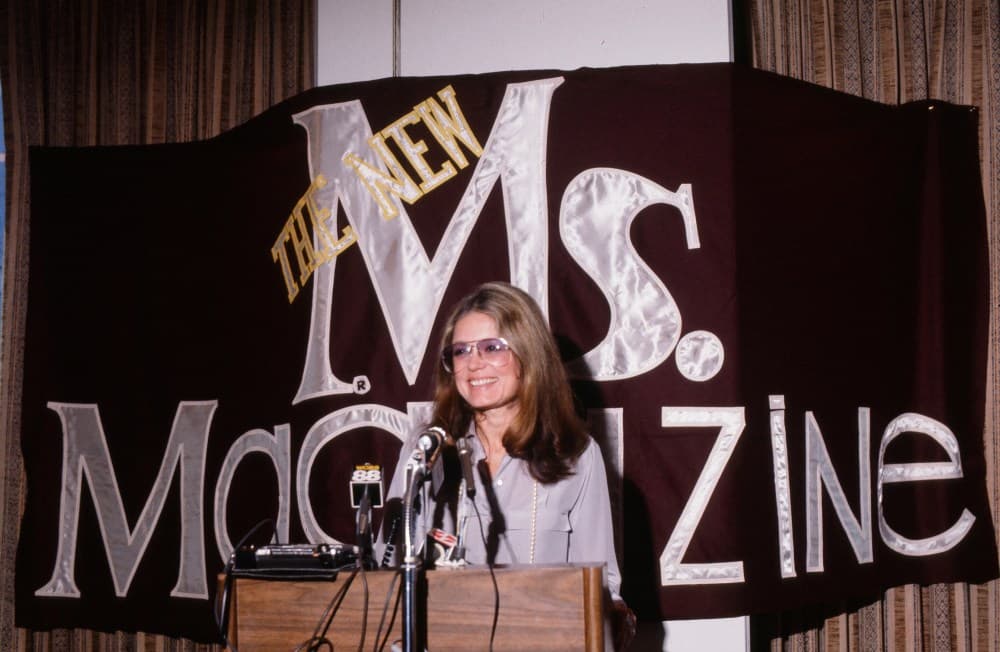
Gloria Steinem, the journalist, author and activist who became one of the most recognizable figures in the U.S. women’s movement, has died at 92. She spent six decades campaigning for equality and helped reshape the national conversation about women’s rights. Steinem died Wednesday at her home in New York City after her health had declined, according to a statement posted on her social media page. She had recently finished a memoir scheduled for release this fall.
A Voice That Defined American Feminism
Steinem became a national symbol of the women’s movement through her writing, public speaking and organizing. Her influence stretched across generations, from college campuses and political rallies to community centers and marches. She co-founded Ms. Magazine in 1972, at a time when many critics dismissed the idea of a feminist publication and predicted it would fail. Steinem remained involved with the magazine until its 2001 sale to the Feminist Majority Foundation and continued as an adviser. She also helped establish the National Women’s Political Caucus in 1971 alongside Betty Friedan, Shirley Chisholm and Bella Abzug. Her message was often direct. “Being a feminist means that you see the world as whole instead of half,” she once said.
From Journalism to Activism
Steinem began her professional life as a journalist, but her career changed dramatically after covering an abortion rights hearing in 1969. She had undergone a secret illegal abortion in London at age 22 and had never publicly discussed it. The experience helped push her toward activism. “That speak-out was the beginning of activism for me,” she later said. Before becoming a leading feminist voice, Steinem faced many of the barriers she would eventually challenge. Editors often steered her toward stories about food, fashion and lifestyle rather than politics. At one point, she said, an editor offered her a choice between spending an afternoon with him in a hotel or mailing his letters. She mailed the letters. “There was no word for sexual harassment then,” she said. “It was just life.”
The Assignment That Changed Her Career
In 1963, Steinem took an undercover assignment for Show magazine, working as a Playboy Bunny to report on conditions inside Hugh Hefner’s Playboy empire. She later described the experience as a major mistake, saying it damaged her professionally and was repeatedly used by critics to ridicule her. Her writing became increasingly political in her 30s, particularly after she joined the editorial board of New York magazine. As her activism grew, she also became a reluctant public speaker. Steinem had been deeply afraid of speaking before crowds. But working alongside Dorothy Pitman Hughes, a Black feminist and child welfare advocate, helped her develop confidence as an organizer and speaker. The pair became closely associated with an iconic image of them raising their right arms together in a Black Power salute.
Ms. Magazine Became a Lasting Institution
The launch of Ms. Magazine became one of the defining achievements of Steinem’s career. She later recalled being terrified that the publication would fail and embarrass the feminist movement. Instead, it became a lasting institution and helped give the growing women’s movement a major platform. Steinem also became a frequent target of criticism. Her appearance often attracted as much attention as her activism, something she found frustrating. She recalled being described as beautiful only after becoming publicly associated with feminism. “It was clear that label was being assigned to me,” she said, arguing that her work was sometimes discounted because of her looks. Her response to hostility was often humor. When she appeared on Larry King’s talk show in 1990, a female caller told her to “rot in hell” and blamed her for damaging the American family. Steinem had her own sharp response to critics. In a 1972 speech, she referred to President Richard Nixon as “the most sexually insecure chief of state since Napoleon.”
She Kept Working Into Her 80s and 90s
Steinem never disappeared from public life. She continued traveling and speaking about issues ranging from violence against women to international reconciliation. In 2017, she was a keynote speaker at the Women’s March in Washington, where hundreds of thousands of women gathered following the 2016 presidential election. “We are linked,” she told the crowd. “And this is a day that will change us forever because we are together.” Even late in life, Steinem continued producing new work. At 91, she collaborated with Liberian peace activist and Nobel laureate Leymah Gbowee on the picture book “Rise, Girl, Rise: Our Sister-Friend Journey. Together for All,” published in February. Her life was also dramatized in the 2020 film “The Glorias, A Life on The Road.”
An Unconventional Life
Steinem was born Gloria Marie Steinem on March 25, 1934, in Toledo, Ohio. Her father was a traveling antique salesperson, and she spent much of her childhood on the road rather than attending regular school. Her parents divorced in 1944. At age 10, Steinem took on responsibility for caring for her mother, a former journalist who struggled with running a household and eventually suffered a nervous breakdown. Steinem attended Smith College in the 1950s before traveling to India on a fellowship. She later moved to Manhattan and pursued journalism. Marriage was never part of her early plans. She eventually married David Bale at 66 in 2000. Bale, a British activist and businessman, was the father of actor Christian Bale. The couple married in a Cherokee ceremony in Oklahoma. David Bale later became ill with brain lymphoma, and Steinem cared for him until his death in 2003. Steinem never had children and said she never regretted that decision. She viewed remaining child-free as another expression of personal choice.
A Legacy Bigger Than One Person
Despite becoming one of the most famous feminists in American history, Steinem frequently resisted the idea that the movement depended on her alone. She believed younger generations should not simply follow her example. They should develop their own voices and make their own choices. “The primary thing is not that they know who I am,” she said, “but that they know who THEY are.” Steinem’s death closes a remarkable six-decade chapter in the history of American feminism, but the institutions she helped create and the ideas she championed remain part of the country's political and cultural conversation.
What Comes Next
Steinem had recently completed a memoir that is scheduled to be released this fall, giving readers one final opportunity to hear her reflect on her life and activism in her own words. Her legacy will also continue through Ms. Magazine, the National Women’s Political Caucus and the generations of activists influenced by her work. For those who knew her personally, the memories are likely to extend beyond politics. Friend and fellow activist Abigail Disney said Steinem remained funny, sharp and generous even as her physical health declined. “Everything Gloria did was rooted in kindness,” Disney said.
FAQ
Who was Gloria Steinem?
Gloria Steinem was an American journalist, author and activist who became one of the most prominent voices of the U.S. women’s movement.
How old was Gloria Steinem when she died?
Gloria Steinem was 92 years old when she died.
When did Gloria Steinem die?
Steinem died Wednesday at her home in New York City, according to a statement posted on her social media page.
What is Gloria Steinem best known for?
She is best known for her leadership in the U.S. women’s movement, co-founding Ms. Magazine and helping establish the National Women’s Political Caucus.
Did Gloria Steinem have children?
No. Steinem never had children and said she never regretted that choice.


