
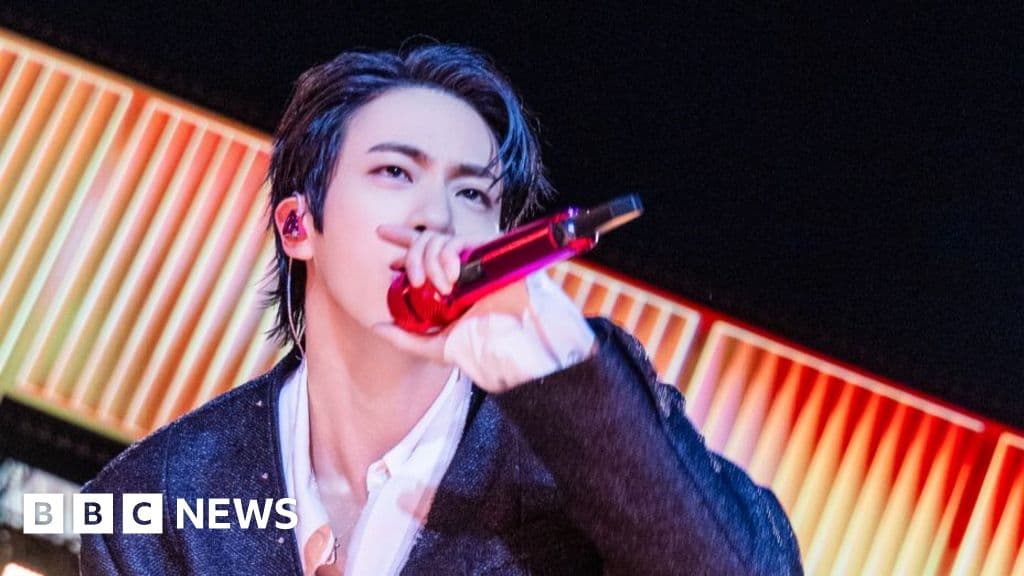
On a crisp Saturday evening, Seoul's historic Gwanghwamun Square transformed into a pulsating epicenter of global pop culture as BTS, the world's most influential K-pop group, staged an unprecedented comeback concert. The event, held at the medieval Gwanghwamun Gate, drew tens of thousands of fans to witness the band's return after a three-year hiatus caused by mandatory military service. The spectacle was more than a musical performance—it was a cultural milestone that redefined the intersection of K-pop's global dominance and South Korea's historical heritage.
A Historic Night at Gwanghwamun Square: BTS Returns to Seoul
The Venue's Significance in South Korean History
Gwanghwamun Square, a 1,000-year-old site, is the heart of Seoul's cultural and historical identity. The Gwanghwamun Gate, a 14th-century structure, once served as the main entrance to the Joseon Dynasty's royal palace. By choosing this location, BTS not only paid homage to South Korea's rich history but also symbolized the band's role in redefining the nation's global image. The venue's integration with the surrounding landscape—framed by the Han River and the surrounding mountains—created a striking visual of tradition and modernity, a duality that mirrored the band's own evolution.
‘We named the album Arirang and chose Gwanghwamun as the venue to reflect our identity,’ said Suga, one of the band’s seven members. ‘It’s a place that has witnessed the rise and fall of dynasties, and now it’s hosting the future of K-pop.’
The concert’s scale was unprecedented. Thousands of fans, clad in purple hanbok and LED lightsticks, filled the square, creating a vibrant tapestry of color and sound. The event’s logistical demands—requiring thousands of police officers and emergency responders—raised concerns about the balance between spectacle and public safety. Critics questioned whether such a massive gathering, streamed exclusively on Netflix, was justified given the resources diverted from other city functions.
The Debate Over Government Resources for the Concert
Public Safety Concerns and Resource Allocation
The Seoul Metropolitan Government faced scrutiny for mobilizing hundreds of personnel to manage the event. Social media users raised alarms about the potential risks of diverting emergency resources to a single event. One user on X wrote, ‘If something happens elsewhere, there may be no staff left to respond, and access could be blocked because of the controls.’ Critics also questioned the precedent of allowing such a large-scale event in a historic district, raising concerns about future requests from other artists or agencies.
‘If a comeback concert of this scale, one that effectively paralyses parts of the city centre, is allowed, then other artists or agencies may well request to use the same space in the future,’ said pop music critic Jung Min-jae. ‘At that point, on what criteria will the Seoul Metropolitan Government approve or reject such requests?’
Despite the controversy, the government defended the decision, emphasizing BTS’s role as a cultural ambassador for South Korea. The concert was framed as a celebration of the band’s global influence, which has elevated South Korea’s soft power through its K-pop exports. The event underscored the tension between cultural pride and logistical oversight, a reflection of the broader challenges of balancing tradition with modernity.
BTS's Rise as Global K-Pop Icons
From Underground to Global Phenomenon
BTS’s meteoric rise began in 2013 with their debut album ‘20th Century Boy,’ which catapulted them into global fame. Their unique blend of hip-hop, pop, and R&B, paired with meticulously choreographed performances, made them pioneers of K-pop. The band’s breakthrough came in 2017 with the song ‘Butter,’ which topped charts worldwide and earned them a historic spot as the first K-pop group to headline at Wembley Stadium. Their cultural impact extended to global diplomacy, with BTS addressing the UN and being invited to the White House, cementing their status as South Korea’s unofficial ambassadors.
‘We’ve broken the wall,’ said RM, referring to BTS’s global breakthrough. ‘We’ve shown that K-pop can reach every corner of the world.’
The band’s influence extended beyond music. Their fanbase, known as ‘Army,’ became a symbol of Korean cultural pride. Music critic Lim Hee-yun noted that BTS’s global success addressed South Korea’s historical feelings of cultural inferiority. ‘When we saw blue-eyed Westerners, tens of thousands of them gathered in a stadium, crying and singing along to BTS, it was the ultimate kookbbong,’ he said, referring to a Korean idiom for intense national pride.
The Impact of the Concert on South Korea's Cultural Standing
A Symbol of National Identity and Global Influence
The concert was more than a performance; it was a statement. By choosing Gwanghwamun, a site of historical significance, BTS tied their return to South Korea’s cultural legacy. The event also highlighted the country’s soft power, as the global audience of the concert—streamed on Netflix—demonstrated the reach of K-pop. The government’s decision to host the event in a historic location was a calculated move to reinforce South Korea’s role as a global cultural leader.
- BTS's historic comeback at Gwanghwamun Square redefined the city's cultural scene.
- The concert's scale and location symbolized the band's global influence and South Korea's cultural identity.
- The event sparked debate over resource allocation, highlighting the tension between cultural pride and logistical challenges.
Frequently Asked Questions
- Why was Gwanghwamun Square chosen for the concert?
- Gwanghwamun Square, a 1,000-year-old site, was selected to honor South Korea's historical legacy. The venue's integration with the surrounding landscape—framed by the Han River and the surrounding mountains—created a striking visual of tradition and modernity, a duality that mirrored the band's own evolution.
- What were the criticisms of the government's decision?
- Critics questioned the allocation of resources for the event, with concerns about diverting emergency personnel from other city functions. The event's scale, which required thousands of police and fire personnel, raised concerns about public safety and the potential for future requests from other artists.
- How did the concert reflect BTS's global influence?
- The concert demonstrated BTS's status as a global cultural icon, with their fanbase, the 'Army,' symbolizing Korean cultural pride. The event's global audience, streamed on Netflix, highlighted the reach of K-pop and South Korea's soft power.


