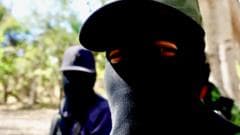
ShareSaveQuentin SommervilleInternational correspondent, in Culiacán, MexicoShareSaveDarren Conway/BBCMembers of the Sinaloa cartel have split into rival factions engaged in a deadly warMexico's president has praised the special forces for "bringing down" the country's most wanted man, drug lord Nemesio Oseguera Cervantes.
Oseguera, better known as "El Mencho", died in custody on Sunday, shortly after being captured amid a bloody firefight in Jalisco.
But as the BBC's Quentin Sommerville found in another Mexican cartel hotspot – Culiacán in northern Sinaloa state – the vacuum left by the removal of a powerful cartel leader can trigger a surge in violence as warring factions battle for control.
Warning: This article contains graphic accounts of cartel violence which readers may find upsetting.
"The fear is everywhere and the fear is constant," said paramedic Héctor Torres, 53, from the front seat of the ambulance in Culiacán.
We had just come from the scene of a shooting inside a garage in the city centre.
The owner was lying dead in his office, blood spreading across the white tiled floor. As Héctor and the other paramedic, Julio César Vega, 28, entered the premises, a woman ran in wailing.
She was the man's wife, but there was nothing to be done. Héctor checked for vitals and then placed a paper blanket over the corpse.
For the last year and a half, the Sinaloa cartel, one of the world's largest and most feared drug gangs has been at war with itself, after the son of one of its leaders betrayed another.
The removal of that cartel leader, Ismael "El Mayo" Zambada, who is now in prison in the US, has wrought mayhem across Sinaloa and provides a warning of the dangers facing the country.
How cartel leader 'El Mayo' Zambada was lured to US in elaborate sting
'El Mayo' Zambada and El Chapo's son: Who are the drug lords held in US?
Héctor said the violence in Culiacán had never been so bad or gone on for so long. Last year, their number of call outs increased by over 70%.
But in the week I spent with Héctor and Julio almost every incident they responded to ended the same way, with a dead body in a building or by the side of the road, and grief-stricken relatives nearby asking for answers.
Few cartel victims survive, and nowhere is safe; schools, hospitals and even funerals have been attacked.
"Sinaloa cartel was like a family. Everyone was united in a single cartel. They were friends, they ate at the same table," Héctor explained. "They were like brothers –parents, uncles, sisters - and suddenly they were fighting… and locked in a deadly feud," he said.
That family business was built into a billion-dollar enterprise producing the deadly drug fentanyl and flooding US streets with opioids which have cost tens of thousands of lives.
US President Donald Trump declared the cartel, and others, terrorist organisations, and labelled fentanyl a weapon of mass destruction. He's threatened Mexico with direct military action if it doesn't bring the drug and the traffickers under control.
Both Héctor and Julio were wearing body armour, 14kg of Kevlar and armour plate.
Julio said it was essential: "We don't know if the people responsible for the attacks are still at the scene or if they completed their objective and suddenly disappeared. So we run the risk of being caught in the crossfire of an attack and getting injured."
The sun was beginning to set as we drove back to the paramedic base, and a city that once came alive at night, would soon be deserted. Traffic was slow.
The Mexican government has sent thousands of troops to Sinaloa, and they'd set up checkpoints on most of the roads.
It turned out that when the garage owner was killed, three men were kidnapped from the premises at the same time. The heavily armed soldiers and marines were checking cars for any sign of them.
Warning: The following paragraphs contain descriptions of violence and torture which readers may find upsetting.
Kidnapping in Culiacán can be a fate worse than death.