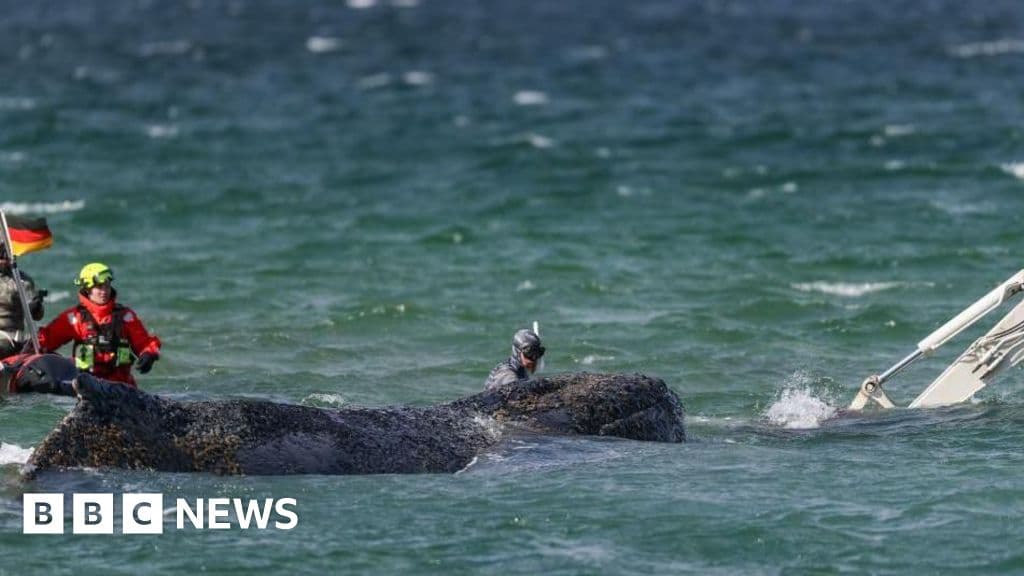
A massive humpback whale weighing approximately 15 tons is fighting for its life after becoming stranded on a sandbar in Lübeck Bay off Germany’s northern coast. First spotted on Monday, the marine mammal—estimated to be between 12 and 15 meters long—is now at the center of a high-stakes rescue effort involving environmental experts, volunteers, and heavy machinery.
The incident has drawn national and global attention, with live footage broadcast from Timmendorfer Strand in Schleswig-Holstein capturing every tense development. As authorities scramble to deepen nearby waters using dredging equipment, observers fear time is running out for the young male whale, who remains unresponsive to previous attempts at encouragement through tidal assistance, boat-generated waves, and physical nudging.
- Whale trapped on sandbar since Monday in Lübeck Bay, Germany
- Estimated size: 12–15 meters long, 15 metric tons
- Visible signs of stress; not feeding for several days
- Public following livestream; rescue seen as symbolic effort
- Cause unclear though rope in mouth suggests past entanglement
Massive Rescue Operation Underway in Freezing Conditions
Crews are working around the clock to dig a channel that would guide the endangered animal back into deeper waters. However, the operation faces significant challenges, including bitterly cold temperatures brought by an icy east wind blowing across the Baltic coastline. Weather conditions have made coordination difficult while also increasing the risk of hypothermia for both human responders and the distressed whale.
Challenges Posed by Size and Condition of the Animal
The sheer mass of the creature presents another obstacle. At roughly 15 tons, its body exerts immense pressure when lying motionless in shallow water, making breathing more laborious. Marine biologists say whales can survive extended periods without food—up to several weeks—but combined with environmental stressors, each passing hour diminishes its chances of recovery.
"He's been here in the shallow water for three days now and isn't feeding at all at the moment," said Stephanie Gross of the Institute for Terrestrial and Aquatic Wildlife Research. "Although animals can go without food for weeks, his current condition raises serious concerns."
Experts Analyze Cause Behind Whale’s Beaching Behavior
While the precise reason behind the stranding remains unknown, early assessments suggest the whale may have suffered prior injury due to entanglement in fishing gear. Rope marks visible around its mouth point toward interaction with commercial nets—an increasingly common threat among cetaceans worldwide.
Behavioral Clues May Hint at Final Rest Attempts
Some scientists posit that the whale—who appears disoriented and increasingly fatigued—may have drifted into shallower areas either in confusion or instinctively seeking a quiet end. This phenomenon, referred to sometimes as “beaching behavior,” occurs occasionally among older or weakened individuals. But researchers working on-site note that despite visibly deteriorating health indicators, the whale continues to vocalize and react to stimuli.
"It's reacting, it has both eyes open, it's vocalizing, but it's incredibly uncertain and it's scared," observed marine biologist Robert Marc Lehmann during a dive inspection captured by local broadcaster NDR.
Public Reaction and Symbolism of the Rescue Mission
Beyond the technical hurdles of the operation, the whale’s plight has ignited widespread emotional engagement online. Thousands tune in daily via livestream platforms to watch updates unfold in real-time, many expressing sympathy for what they perceive as a tragic symbol of humankind’s impact on ocean ecosystems. The ongoing drama serves as a stark reminder of how human activity—from plastic pollution to shipping lanes and abandoned nets—continues to endanger marine life.
Calls for Greater Protection of Cetacean Populations
Conservationists argue that such events highlight the pressing need for stronger regulations governing maritime industries, particularly those operating near critical habitats where whales migrate or breed. Though humpback populations rebounded modestly following bans on whaling decades ago, new threats such as vessel strikes, noise pollution, and climate change pose emerging dangers to their fragile comeback.
Technical Tactics Used So Far in Failed Efforts to Free Whale
Multiple strategies aimed at coaxing the whale away from shore have already met with failure, including leveraging high tides, manually rotating its body underwater, and generating artificial waves using motorboats. According to reports from NDR, none of these methods produced sustained movement.
Hope Rests on Ongoing Dredging Work Near Timmendorfer Strand
Now, hope centers primarily on the success of excavators carving a navigable passage into deeper waters. If successful, officials believe there’s still a chance the whale could regain momentum and return to sea voluntarily. Dr. Lehmann expressed cautious optimism: "I hope the channel is deep enough that material will slide down and that this will motivate the whale to swim in. And if not, then he'll have to be given a little nudge."
Long-Term Outlook Remains Uncertain Despite Best Efforts
Despite round-the-clock dedication from teams on the ground—including veterinarians, divers, engineers, and wildlife authorities—the outcome remains far from certain. Veterinarians monitoring vital signs suggest internal organ damage cannot be ruled out. With each passing day, the whale grows weaker, complicating prospects for intervention.
Still, those involved refuse to give up—at least not yet. For many participants, this effort transcends mere biology. It represents humanity’s moral responsibility to intervene when confronted with a fellow sentient being in peril.
Frequently Asked Questions
- Why did the whale strand itself on a sandbar?
- The cause is still unknown, but experts suspect the whale may have become confused due to illness, injury, or disorientation. Some believe it was previously caught in a fishing net based on visible rope markings around its mouth.
- Can whales survive without eating for long?
- Yes, whales can technically survive without food for several weeks depending on age and species. However, prolonged fasting combined with stress weakens them quickly and reduces survival odds.
- What happens if the rescue fails?
- If the whale does not respond to further efforts, humane euthanasia may ultimately be considered to prevent additional suffering. Otherwise, decomposition poses risks to public safety and beach ecology.