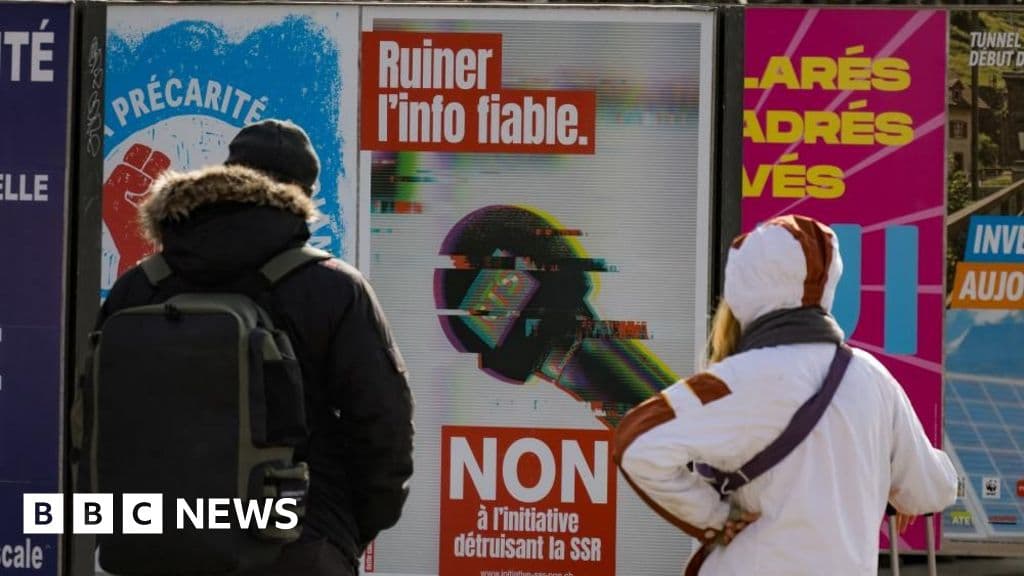
Swiss voters have rejected an initiative to sharply reduce the annual licence fee to the national broadcaster, the Swiss Broadcasting Corporation (SBC), according to initial projections.
The fee, which has already been cut in recent years, currently costs 335 Swiss francs (£320; $435) per household a year.
The initiative, backed by the right-wing Swiss People's Party, had called for the fee to be cut to 200 francs (£190; $260), annually, with businesses exempt.
But the proposal was defeated in Sunday's referendum, gaining only 38% support, according to the projections; 62% voted to keep the licence fee at the current levels.
The Swiss People's Party had argued that the fee was too high, given the rise in the cost of living. The licence fee in Switzerland is more than in neighbouring countries such as Austria or Germany.
The government and all other parliamentary parties opposed the move. They argued that the licence fee was key to ensuring that Switzerland's four languages - French, German, Italian and Romantsch - were properly represented.
There were also concerns that cuts would impact foreign news and sports coverage.
The Swiss government has already decided to reduce the contribution to 300 Swiss francs by 2029. Under the plans, more companies will be exempt from the fee.
In a separate move, the Swiss also voted in favour of having the availability of cash enshrined in the constitution.
Two proposals on the issue were up for consideration: an initiative called "Cash is Freedom" introduced by a citizens movement, MSL, and a counter proposal by the government, which also called for cash to be anchored in the constitution.
Initial projections said around 70% of voters backed the government's counter proposal, which said that the Swiss National Bank would guarantee the supply of cash.
The MSL, which insisted on "coins and banknotes" in its initiative rather than just "cash" had argued that the government proposal did not go far enough.