'What if we're left with ruins?': Doubts creep in for Iranians who supported war
"We thought they'd kill all the senior figures and the regime would collapse in days, but we are in the second week now and every night I wake to explosions," a Tehran resident told the BBC.
She initially supported the war, but her frustration is growing.
For some Iranians who oppose their country's leadership, the war they initially hoped might accelerate political change is now forcing a painful reassessment, and they are beginning to question whether the cost of the conflict could ultimately outweigh any political outcome.
Others, however, still argue that outside military pressure may be the only realistic way to weaken the system.
Many Israeli and American officials have framed the campaign largely as an effort to degrade Iran's nuclear and missile capabilities and threats.
But some, including US President Donald Trump, have also hinted that the ultimate objective could be regime change.
For some critics of Iran's clerical establishment, that suggestion initially raised hopes that external pressure might significantly accelerate that change.
Yet conversations with some Iranians inside the country suggest the picture is now far more complicated.
It has become increasingly difficult for journalists to contact people inside Iran since the conflict began, as authorities have imposed yet another near-total internet shutdown since 28 February.
Despite communication restrictions, the BBC was able to speak to several Iranians who oppose the government and who initially did not oppose the idea of military action against the Islamic Republic, particularly after another uprising attempt and nationwide protests were subdued in what has become the deadliest protest crackdown in the Islamic Republic's history.
Their names have been changed for their safety, as expressing dissenting views in Iran can lead to arrest or imprisonment.
Sama, a 31-year-old engineer in Tehran, said that when news of the strikes first broke she felt a moment of hope.
"For years we have protested," she said. "Every time they silence us, they kill us.
"When the strikes started, I thought, this is what the regime cannot survive."
Sama said she even celebrated alongside family and friends when reports emerged that Iran's Supreme Leader, Ayatollah Ali Khamenei, had been killed in US-Israeli strikes.
"I was screaming in happiness when the big news was confirmed," she said.
But two weeks into the conflict, she says the mood around her and many others has changed.
"Now I see some are terrified and people I know are wondering if their neighbourhood will be targeted next," she said.
"I can't sleep anymore. I wake up either to the sound of explosions, or because of nightmares about them."
Others say the scale of potential civilian suffering is becoming harder to ignore.
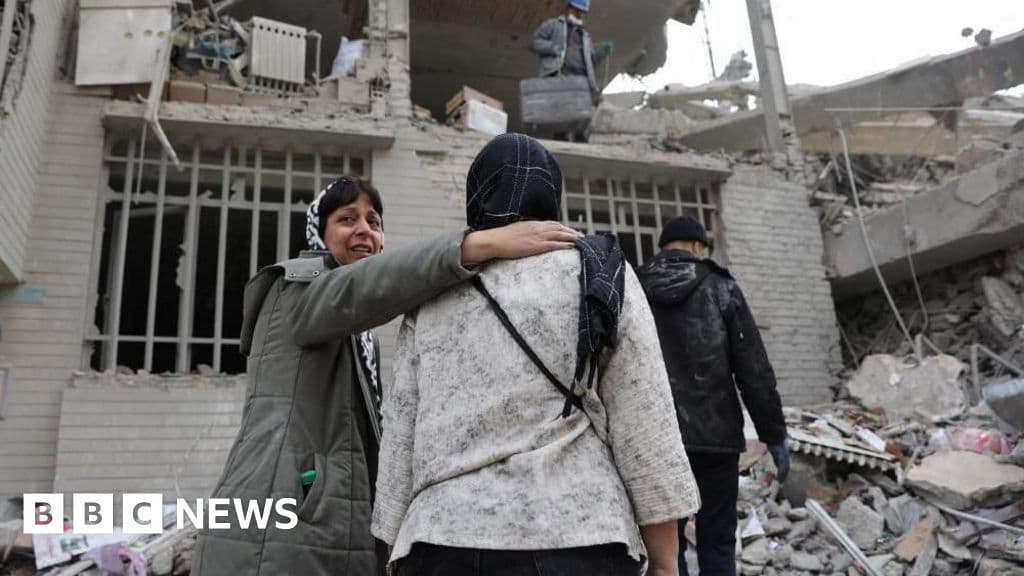
The UN Refugee Agency (UNHCR) says between 600,000 and one million Iranian households are now temporarily displaced inside Iran as a result of the ongoing conflict, according to preliminary assessments, representing up to 3.2 million people.
It said the figure is likely to continue rising as hostilities persist, marking a worrying escalation in humanitarian needs.
Mina, a 28-year-old teacher in a northern city, said she still wants an end to the ruling clerical establishment but fears the long-term consequences of war.
"This fanatic regime brought us this war, I know," she said.
"But when you see the massive fires and hear explosions, when you see young children afraid and crying, you start thinking about whether this can ruin the country you love and live in."
Mina said some friends who once openly discussed the possibility of regime collapse have grown more cautious as the war continues and many senior officials remain in place.
She said: "What if we are left with ruins and the same mullahs and the same government? Only more oppressive and more defiant?"
For others, the concern is not only whether the government might fall, but what might follow if it does, especially under conditions that cannot be controlled.
Ali, a 31-year-old shopkeeper who was injured during protests in January, said he worries about the possibility of instability or internal conflict.
"Everyone talks about 'regime change' like it's a simple switch," he said.
"But who will take power? What stops the country from falling into chaos, even if they somehow manage to bring the regime down?"
The uncertainty, he said, weighs heavily even on those who strongly oppose the government.
"I want freedom," he said. "But I also want a country left standing when this ends."
Some also argued that war has strengthened the authorities rather than weakening them when it comes to cracking down on protest and dissent.
Fatima, a 27-year-old graphic designer, said external attacks often reinforce the government's long-standing narrative about "the enemy".
"They love this," she said. "Now they are saying: 'See? We told you it was all the enemy's plan.'
"Criticism has become treason, and they are using that against their own people."
She said the presence of paramilitary forces on the streets has meaningfully increased since the war began.
"Have you seen their thugs on the street looking for excuses to attack or arrest us?" she said.