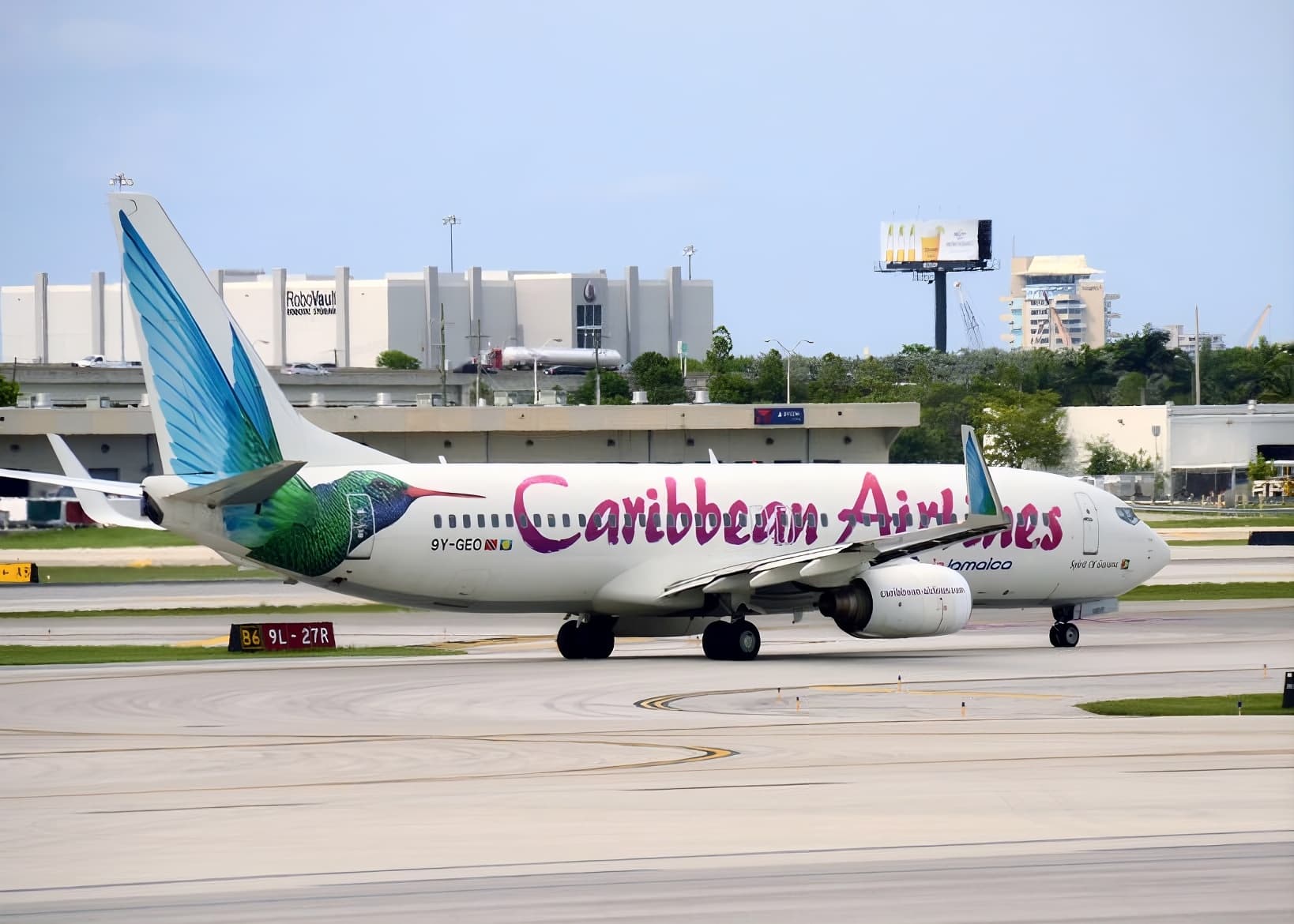
In a moment of unexpected joy and rapid coordination, a baby was born aboard a Caribbean Airlines flight as it descended toward a landing at New York’s John F. Kennedy International Airport early this morning. Air traffic controllers at Kennedy Tower swiftly arranged for medical assistance upon arrival, even playfully suggesting the newborn be named ‘Kennedy’—a nod to both the airport and the historic moment. The quick-thinking team ensured the mother and child received immediate care, while the pilot and crew managed the unfolding situation with professionalism under pressure.
- A baby was born aboard a Caribbean Airlines flight as it landed at JFK Airport around noon local time on April 4, 2026.
- Air traffic control coordinated emergency medical response and joked about the newborn’s name—'Name the baby Kennedy.'
- The incident is not the first birth related to a Caribbean airline arrival at JFK; a similar event occurred in 2005.
- The baby is automatically a U.S. citizen due to being born on American soil, per the 14th Amendment.
- Unexpected preterm labor can occur even after full-term due dates, making air travel risky for pregnant passengers.
How JFK Air Traffic Control Coordinated a Birth Mid-Flight
The drama unfolded aboard a Boeing 737 MAX 9, registration number 9Y-SUR, operating Caribbean Airlines flight 005 from Fort Lauderdale to Jamaica. As the aircraft approached New York airspace, the crew radioed Kennedy Tower to report a passenger in active labor. Instead of declaring a formal emergency, the pilot simply requested priority routing to expedite landing. Air traffic control responded immediately, clearing the flight for a direct approach via the ZETAL route and lowering its altitude to 2,000 feet for a swift descent.
Real-Time Communication Saved the Day
The exchange between the pilot and air traffic control, captured in audio shared on social media, showcased the calm yet urgent nature of the situation. Controllers confirmed medical personnel would be waiting at the gate, while the pilot guided the aircraft onto Runway 4R. Just as the plane touched down, ground control asked the pilot a simple but pivotal question: 'Is it out yet?' The affirmative response prompted the now-famous quip from air traffic control: 'Tell her she’s got to name it Kennedy.' The birth occurred safely, and the family received immediate medical attention.
This level of coordination is not uncommon at major hubs like JFK, where air traffic controllers regularly manage high-stakes scenarios, from medical emergencies to mechanical failures. The Federal Aviation Administration (FAA) trains controllers to handle such situations with a blend of technical precision and human empathy. 'Our priority is always safety and expediency,' an FAA spokesperson noted. 'When a life is at stake, every second counts.'
Not the First Time: Births on Caribbean Flights to JFK
While this morning’s event captured viral attention, it was not the first time a birth occurred during a Caribbean airline’s arrival at JFK. In July 2005, a woman gave birth approximately 10 minutes before landing on a BWIA West Indies Airways flight. Paramedics were already positioned at the gate, thanks to advance notice from air traffic control. The newborn’s safe delivery marked another rare but notable chapter in the airport’s history.
The Baby’s Citizenship: A Matter of Constitutional Law
The newborn, born on U.S. soil at JFK International Airport, is automatically a U.S. citizen under the 14th Amendment of the Constitution, which states: 'All persons born or naturalized in the United States, and subject to the jurisdiction thereof, are citizens of the United States.' This principle, known as birthright citizenship, has been reaffirmed by the Supreme Court multiple times, including in the 1898 case *United States v. Wong Kim Ark*.
Even amid political debates over immigration, the State Department has consistently upheld that babies born in U.S. airspace—whether in an airplane or on a ship—are U.S. citizens. This includes flights over U.S. territorial waters, which extend 12 nautical miles from the coastline. While the Trump administration explored narrowing birthright citizenship through executive orders and policies like pregnancy testing for certain travelers, these efforts were blocked by courts. The Supreme Court heard oral arguments in a related case just this week, underscoring the ongoing legal and political significance of the issue.
Airline Policies on Pregnant Passengers: Where Caribbean Airlines Stands
Airlines have varying policies regarding pregnant passengers, reflecting both medical advisories and liability concerns. Most carriers, including major U.S. airlines, allow travel up to 36 weeks of pregnancy for singletons and 32 weeks for multiples, though some require a doctor’s note after 28 weeks. Caribbean Airlines permits expectant mothers to fly without medical clearance until the 32nd week—a policy that may have played a role in this incident.
The Risks of Air Travel During Late Pregnancy
The risk of spontaneous labor increases significantly after 37 weeks, and even earlier for women carrying multiples. Unexpected preterm labor can occur, making air travel inherently risky for passengers near their due date. 'While rare, births on planes do happen,' said Dr. Sarah Miller, an OB-GYN based in Miami. 'The confined space, limited medical resources, and potential for turbulence create an environment where complications can arise quickly.' Airlines typically advise against travel beyond 36 weeks without medical clearance, but enforcement varies by carrier and region.
A Look Back: Other Notable Births on Commercial Flights
Though births on planes are uncommon, they have produced some of the most memorable stories in aviation history. In one high-profile case, a woman gave birth on a Saudia flight bound for New York. As the plane neared the Atlantic Ocean, the crew declared an emergency, dumped fuel, and turned back to London Heathrow. Both the mother and baby received complimentary trips as a gesture of goodwill. Similarly, a baby born on a Jetstar Asia flight was named after the airline, and the family received $1,000 in baby supplies. Other airlines have gone even further, awarding lifetime frequent flyer miles or years of free flights to newborns—a tradition that blends gratitude with marketing savvy.
What Happens Next for the Family?
As of now, the identities of the parents and newborn have not been disclosed. If the parents are U.S. citizens or residents, the baby’s birth certificate will reflect JFK Airport as the place of birth. If they are visitors, the child’s U.S. citizenship remains intact, but travel logistics for the family may require additional coordination. Caribbean Airlines has not publicly commented on whether the family will receive compensation or travel perks, though such gestures are common in aviation lore.
For the crew and air traffic controllers involved, this morning’s event will likely become a cherished memory. 'It’s not every day you get to be part of a story like this,' said one controller, who asked not to be named. 'But when it happens, you know you’ve done something meaningful.'
The Broader Implications: Birthright Citizenship and Air Travel Safety
This incident shines a light on two critical issues: the legal status of newborns born in transit and the safety protocols for pregnant passengers. Birthright citizenship remains a contentious topic, with political factions debating its continuation. Meanwhile, airlines continue to refine their policies to balance customer service with risk management. The FAA and International Air Transport Association (IATA) provide guidelines, but enforcement and cultural attitudes vary globally.
Key Takeaways: What You Should Know About Births on Planes
- A baby was born aboard a Caribbean Airlines flight landing at JFK Airport on April 4, 2026, with air traffic control coordinating emergency care.
- The newborn is a U.S. citizen by birthright, regardless of the parents’ nationality, due to being born on American soil.
- Unexpected labor can occur even after a full-term pregnancy, making air travel risky for passengers near their due date.
- Airlines have different policies on pregnant passengers, with most capping travel at 36 weeks without medical clearance.
- Births on planes, while rare, have a long history in aviation, often resulting in heartwarming or humorous outcomes.
Frequently Asked Questions About Births on Planes
Frequently Asked Questions
- Can a baby born on a plane become a citizen of another country?
- No. The baby is automatically a U.S. citizen if born on American soil, including in U.S. airspace or territorial waters, per the 14th Amendment.
- Do airlines give rewards to families when a baby is born on a flight?
- Some airlines offer complimentary flights, baby supplies, or other perks as a goodwill gesture, though it varies by carrier and is not guaranteed.
- How common are births on commercial flights?
- Births on planes are extremely rare, with fewer than 100 documented cases since the dawn of commercial aviation. Most airlines have strict policies to minimize the risk.