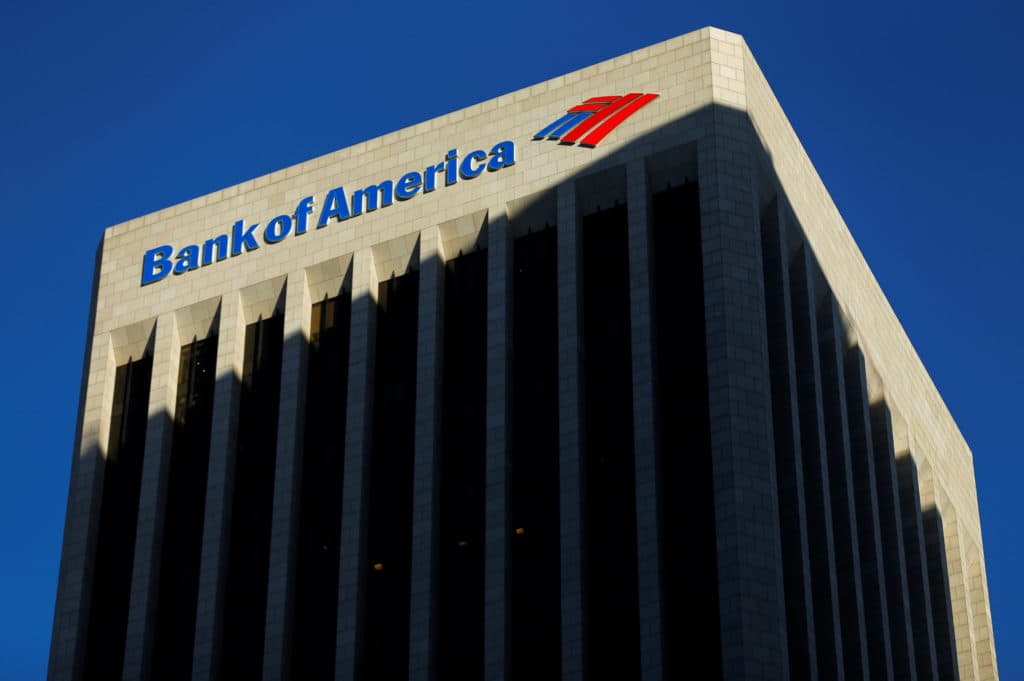
NEW YORK — Bank of America has reached a tentative settlement with victims of Jeffrey Epstein, resolving a federal lawsuit that accused the banking giant of willfully ignoring $170 million in suspicious financial transactions linked to the disgraced financier and convicted sex offender. The proposed agreement, disclosed in Manhattan federal court filings on Monday, comes nearly a year after Epstein’s death in 2019 while awaiting trial on federal sex trafficking charges—an outcome that left unresolved questions about the complicity of financial institutions in his criminal enterprise. While the terms of the settlement remain confidential, the deal marks a rare admission of institutional failure in a case that has exposed how banks and elite financial networks enabled Epstein’s predatory behavior for years.
How the Bank of America Settlement Unfolds in Epstein’s Shadow of Financial Complicity
The lawsuit, filed under seal in October 2023 on behalf of a woman identified only as Jane Doe, alleges that Bank of America facilitated Epstein’s crimes by processing hundreds of millions of dollars in wire transfers from billionaire financier Leon Black to Epstein between 2011 and 2019. These transactions were ostensibly for "tax and estate planning advice," but investigators and legal experts argue they were part of a sophisticated financial architecture Epstein used to control victims, obscure his income, and sustain his trafficking network. The lawsuit paints a damning portrait: Epstein allegedly used a Bank of America account to pay one victim’s rent, fund a fake job, and manipulate her immigration status, all while subjecting her to repeated sexual abuse at his Manhattan and Palm Beach residences.
The Victim’s Story: A Decade Under Epstein’s Control
Jane Doe, a Russian national who met Epstein in 2011 while living in her home country, described in court filings how Epstein coerced her into a "cult-like life" in which she was financially, emotionally, and psychologically dominated. Over eight years, she was forced to engage in sexual acts with Epstein on at least 100 occasions, including multiple instances of rape, according to the lawsuit. Her testimony, corroborated by other court documents, alleges that Epstein held her immigration status hostage, threatening deportation unless she complied with his demands. She only escaped in 2019, months before Epstein’s arrest in July of that year and his subsequent death by suicide in a federal jail cell on August 10, 2019.
Leon Black’s Central Role: $170 Million in Wire Transfers and a Billionaire’s Downfall
At the heart of the lawsuit is Leon Black, the co-founder and former CEO of Apollo Global Management, who transferred $170 million from a Bank of America account to Epstein over nearly a decade. These transactions, often in increments of $10 million or $20 million, were flagged by legal experts as highly irregular for "tax and estate planning" services, particularly given Epstein’s notorious reputation following his 2008 conviction in Florida for soliciting prostitution from a minor. Black, who stepped down from Apollo in March 2021 amid mounting scrutiny over his ties to Epstein, has consistently denied any involvement in Epstein’s criminal activities. In a 2021 internal review commissioned by Apollo, Black voluntarily distanced himself from the allegations, asserting that Epstein provided no services to Apollo or its funds.
The Apollo Global Management Report: What It Revealed—and What It Didn’t
The Apollo board’s review, released in January 2021, concluded that Epstein had advised Black on personal financial matters, including estate planning, tax issues, and charitable giving. However, the report explicitly stated that there was "no evidence" Black was involved in Epstein’s alleged crimes "in any way" or "at any time." Critics, including Sen. Ron Wyden (D-OR), have dismissed this defense, arguing that the sheer volume of transfers—totaling $170 million—should have triggered red flags at Bank of America. Wyden, a member of the Senate Finance Committee who has investigated Wall Street’s role in Epstein’s operations, stated in a press release that Bank of America "willfully looked the other way" as Black conducted these transactions through the bank’s accounts.
The bank's decision to settle is a step towards justice and a vindication of my staff's investigation into how major Wall Street banks enabled Epstein's crimes. Bank of America willfully looked the other way as Black paid Epstein the $170 million through huge wire transfers, often in $10 million or $20 million installments.
The Justice Department Documents: Epstein’s Web of Elite Connections
The lawsuit’s allegations are further corroborated by a trove of documents released by the U.S. Department of Justice in January 2024, which included millions of pages from law enforcement probes into Epstein’s network. A review by the Associated Press and other news organizations found that Black’s name appeared in 8,200 documents, though some entries were duplicates or unrelated references. The documents reveal Epstein’s enduring relationships with CEOs, journalists, scientists, and politicians long after his 2008 conviction—a period during which he continued to operate as a predator. These records have fueled ongoing debates about institutional accountability, with critics questioning why banks like Bank of America, financial regulators, and professional networks failed to act despite mounting evidence of Epstein’s crimes.
Why This Settlement Matters: The Broader Fight Against Financial Enablers of Trafficking
The Bank of America settlement is more than a legal resolution; it is a watershed moment in the broader fight to hold financial institutions accountable for enabling human trafficking and exploitation. Legal experts argue that cases like this highlight systemic failures in anti-money laundering (AML) protocols, which require banks to report suspicious transactions that could indicate criminal activity. The lawsuit alleges that Bank of America not only failed to flag Epstein’s transactions but actively facilitated the structure that allowed him to operate, a charge that could have far-reaching implications for how banks vet clients and monitor high-risk accounts. Sigrid McCawley, the lawyer representing Epstein’s victims, praised the settlement as a "step on the road to much deserved justice," but emphasized that the fight to dismantle Epstein’s legacy of complicity is far from over.
The Role of Whistleblowers and Investigative Journalism in Exposing the Truth
The Epstein case has underscored the critical role of investigative journalism and whistleblowers in uncovering financial complicity. The Associated Press, in collaboration with other outlets, has played a pivotal role in analyzing the Justice Department documents and exposing the scale of Epstein’s network. Whistleblowers, including former employees of Epstein and Black, have come forward with accounts of suspicious behavior and unethical practices. Their testimonies, combined with court filings and financial records, have painted a picture of a financial ecosystem that prioritized profit and prestige over ethical oversight—a dynamic that enabled Epstein to operate with impunity for decades.
Key Takeaways: What This Settlement Reveals About Systemic Failures
- Bank of America’s tentative $170M settlement resolves a lawsuit alleging the bank ignored suspicious Epstein-linked transactions totaling $170 million from billionaire Leon Black.
- The case centers on a victim who alleges Epstein controlled her through financial manipulation, including payments via a Bank of America account and threats over her immigration status.
- Leon Black, Epstein’s longtime associate, transferred $170 million in wire payments to Epstein over nearly a decade, often in $10M–$20M increments, despite Epstein’s 2008 conviction.
- Justice Department documents released in 2024 show Epstein maintained extensive ties to elite figures, including Black, who was described in court as a 'critical witness' in the case.
- The settlement is part of a broader reckoning with how financial institutions enable human trafficking and sexual exploitation through lax oversight and complicit networks.
Frequently Asked Questions: Understanding the Bank of America Epstein Settlement
Frequently Asked Questions
- How much did Bank of America agree to pay in the Epstein settlement?
- The exact settlement amount has not been disclosed in court filings. The terms remain confidential, though the lawsuit alleged $170 million in suspicious transactions linked to Epstein.
- Why was Leon Black’s deposition postponed?
- Black’s deposition was delayed after his legal team argued that the parties were close to settling. A federal judge granted a 10-day postponement in late 2023, just days before his scheduled testimony.
- Did the Apollo Global Management review find Leon Black guilty of any wrongdoing?
- No. Apollo’s 2021 internal review concluded there was 'no evidence' Black was involved in Epstein’s alleged crimes. However, critics argue the volume of his payments to Epstein should have raised red flags.