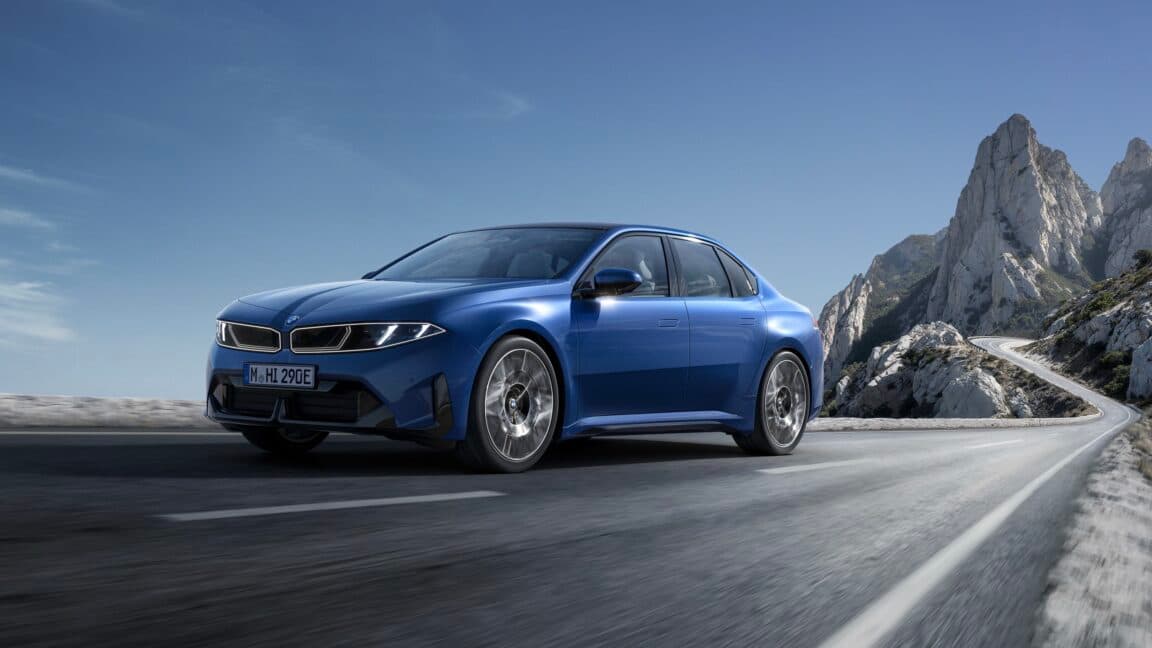
MUNICH, Germany — In a historic leap for one of the automotive world’s most iconic nameplates, BMW has officially announced the 2027 i3, the brand’s first fully electric iteration of the legendary 3 Series sedan. Set to begin production at the automaker’s flagship Munich plant in August 2024, the i3 is positioned to redefine premium electric sedans with a potent combination of long-range capability, advanced powertrain technology, and the driving dynamics the 3 Series is renowned for. As the second vehicle built on BMW’s groundbreaking Neue Klasse platform—following the critically acclaimed iX3 SUV—the i3 represents more than just an electric update; it signals a strategic pivot toward sustainability, performance, and digital integration in BMW’s core lineup.
- The 2027 BMW i3 is the brand’s first all-electric 3 Series sedan, launching in August 2024 on the Neue Klasse platform.
- Equipped with an 800V battery and 463-hp powertrain, it offers up to 440 miles of range, a 30% improvement over BMW’s 5th-generation EVs.
- The Neue Klasse platform integrates 6th-gen powertrain tech, 30% recycled materials, and AI-driven driving dynamics software.
- BMW’s first sedan to feature a redesigned “kidney within kidney” grille and Panoramic Vision display.
- Advanced driver-assist systems include hands-free operation compliant with UN R171 regulations, a first for BMW.
Why the 2027 BMW i3 Could Be the Most Important Electric Sedan Yet
The 3 Series has been the backbone of BMW’s global sales for over half a century, with more than 15 million units sold since its 1975 debut. Traditionally a combustion-engine stronghold, the nameplate’s electric transition is not just evolutionary—it’s existential. As global regulators tighten emissions standards and consumer demand for zero-emission luxury vehicles accelerates, BMW’s move to electrify its best-selling sedan line signals a shift in industry priorities. The i3 arrives at a pivotal moment: the U.S. EV market is projected to reach 40% of new car sales by 2030, up from roughly 9% in 2023, according to BloombergNEF, while Europe’s 2035 ICE ban looms large. For BMW, the i3 isn’t just a halo model—it’s a critical bridge to maintaining relevance in an increasingly electric luxury segment dominated by Tesla’s Model 3.
From Concept to Reality: How the i3 Refined BMW’s Design Language
BMW first teased the Neue Klasse platform in 2021 with the i Vision Dee concept, a futuristic sedan that showcased the brand’s vision for digital-first vehicles. The i3 sedan, while retaining the concept’s core design philosophy, has undergone significant real-world adaptations. The most striking change is at the rear, where BMW sacrificed some of the concept’s sleek lines to accommodate practicality—raising the rear deck by several inches to improve cargo space and visibility. The iconic Hofmeister kink, a signature 3 Series design cue since the 1960s, remains intact, preserving brand heritage amid the electric transition.
The front fascia introduces a radical reinterpretation of BMW’s kidney grille. Gone is the traditional chrome mesh; in its place is a digital, illuminated display composed of nested kidneys—an evolution of the iX3’s style but with a more horizontal orientation. This design, which will eventually spread across BMW’s sedan lineup, reflects the brand’s push toward software-defined aesthetics. Inside, the cabin blends minimalist digital displays with tactile controls, a nod to the ‘shy tech’ philosophy that prioritizes intuitive interaction over gimmickry.
Neue Klasse Platform: The Engine Behind the i3’s Performance and Efficiency
At the heart of the i3 is BMW’s 6th-generation electric powertrain, a system that represents a quantum leap over the 5th-generation technology found in models like the i4. The core innovation lies in the 800V battery architecture, which utilizes cylindrical cells that are 20% more energy-dense by volume than the prismatic cells used in previous EVs. Combined with a cell-to-pack design, the battery achieves a volumetric energy density increase of up to 25%, enabling the i3 to deliver up to 440 miles of EPA-estimated range—30% more than the i4’s maximum range of 340 miles.
The i3 50 xDrive, the launch model, pairs an asynchronous front motor with an electrically excited synchronous rear motor, producing a combined 463 horsepower (345 kW) and 476 lb-ft of torque. This setup delivers a 0–60 mph time of approximately 4.5 seconds, placing it in direct competition with the Tesla Model 3 Performance. Notably, BMW claims the powertrain is 40% more energy-efficient than its 5th-gen counterpart, thanks to reduced energy losses and a 10% weight reduction. The system also boasts a 20% lower manufacturing cost, aligning with BMW’s goal of making EVs more accessible without compromising performance.
Sustainability by Design: A Lighter, Greener EV Footprint
BMW has embedded sustainability into every layer of the i3’s development. The battery pack incorporates approximately 30% recycled materials, a figure that aligns with the automaker’s target to source 50% of all materials from recycled or renewable sources by 2030. The use of mono-materials in key components, such as the battery casing and interior trim, simplifies end-of-life recycling, reducing the environmental burden. Additionally, BMW states that the i3 50 xDrive achieves carbon payback in as little as one year compared to a comparable gasoline-powered 3 Series, thanks to the integration of renewable energy throughout the supply chain.
Driving Experience: Can the i3 Live Up to the 3 Series Legacy?
The 3 Series’ reputation for razor-sharp handling and balanced dynamics is not lost in translation to the i3. BMW has engineered the vehicle with a near 50:50 weight distribution and a low center of gravity, thanks to the battery pack’s placement. The suspension tuning strikes a balance between comfort and sportiness, with softer springs than the iX3 and revised anti-roll bar stiffness to reduce harshness over rough pavement. Torque delivery is rear-biased out of corners, a hallmark of BMW’s RWD-oriented driving philosophy, while regenerative braking is intelligently distributed—initially engaging the rear axle for stability before transitioning to the front as needed.
BMW’s new software-defined chassis control systems represent one of the most significant advancements. The ‘Heart of Joy’ high-performance computer, which manages traction, stability, and ABS systems, has been re-engineered from the ground up using software rather than raw processing power. This allows for more nuanced adjustments, enabling features like enhanced drift control and adaptive damping. In one-pedal driving mode, the i3 achieves a smoother stop than any previous BMW, with regenerative braking handling 95% of daily braking events. The result is a driving experience that feels familiar to 3 Series enthusiasts but with the silent efficiency of an EV.
Digital Innovation: AI, Automation, and the Future of Driver Assistance
The i3 is BMW’s most digitally advanced vehicle to date, serving as a testbed for the company’s vision of human-machine collaboration. At launch, the sedan will offer two levels of driver assistance. The entry-level system complies with UN R79 regulations, requiring driver oversight but enabling hands-on-wheel operation at speeds above 81 mph. The premium system, however, marks a milestone: it’s the first OEM implementation compliant with UN R171, which governs hands-free driving in highway environments. This system uses gaze-tracking and steering inputs to determine driver intent, avoiding unnecessary interventions during intentional lane changes.
BMW’s advanced driver-assist system can automatically stop at red lights and resume acceleration when the light turns green, a feature currently available in Germany. Future over-the-air updates are expected to expand its capabilities to include roundabout negotiation and turn assistance. Additionally, the i3 introduces remote parking via the BMW smartphone app—a feature reminiscent of Q’s gadgets in the *Tomorrow Never Dies* film. This integration underscores BMW’s ambition to blend cutting-edge technology with user-friendly convenience.
The Road Ahead: Pricing, Competition, and the Electric 3 Series Ecosystem
BMW has not yet announced official pricing for the i3, but industry analysts expect it to compete directly with the Tesla Model 3, which starts at $38,990 in the U.S. Given the i3’s premium positioning and advanced technology suite, a starting price in the mid-$50,000 range is plausible, though incentives and regional subsidies could lower effective costs. Production will initially focus on European markets, with U.S. availability slated for early 2025. The i3 will be joined by an electric M3 in 2025, featuring a quad-motor setup and up to 600 hp, further cementing the Neue Klasse platform’s role in BMW’s performance future.
The i3’s launch also sets the stage for a broader electric 3 Series lineup. While the initial model is a sedan, BMW has confirmed a Touring (wagon) variant is in development, with a silhouette previewed during the i3’s reveal. This aligns with BMW’s strategy to cater to diverse consumer preferences while maintaining the 3 Series’ versatility. Analysts at UBS estimate that by 2027, electric models could account for up to 40% of the 3 Series’ global sales, underscoring the urgency of the i3’s arrival.
What’s Next for BMW and the Electric 3 Series?
The 2027 i3 is more than just an electric sedan—it’s a statement of intent. By combining heritage, innovation, and sustainability, BMW is positioning itself to lead the premium EV segment while staying true to the driving dynamics that have defined the 3 Series for decades. As the automotive industry accelerates toward electrification, the i3’s success will hinge on its ability to attract both loyal BMW enthusiasts and new buyers seeking a luxury EV with performance credentials. With its advanced platform, compelling range, and digital-first features, the i3 may well become the benchmark by which all future electric sedans are measured.
Frequently Asked Questions
- When does the 2027 BMW i3 go on sale?
- Production begins in Munich in August 2024, with customer deliveries expected in early 2025 for European markets and later that year for the U.S.
- How does the i3’s range compare to the Tesla Model 3?
- BMW claims up to 440 miles of range for the i3, compared to Tesla Model 3 Long Range’s EPA-estimated 341 miles. However, real-world range may vary based on driving conditions and charging habits.
- What are the key differences between the i3 and the iX3?
- The i3 is the first sedan on BMW’s Neue Klasse platform, featuring a more refined interior, advanced software-defined controls, and a 30% range improvement. The iX3, while also electric, uses BMW’s 5th-gen platform and has a higher ride height as an SUV.