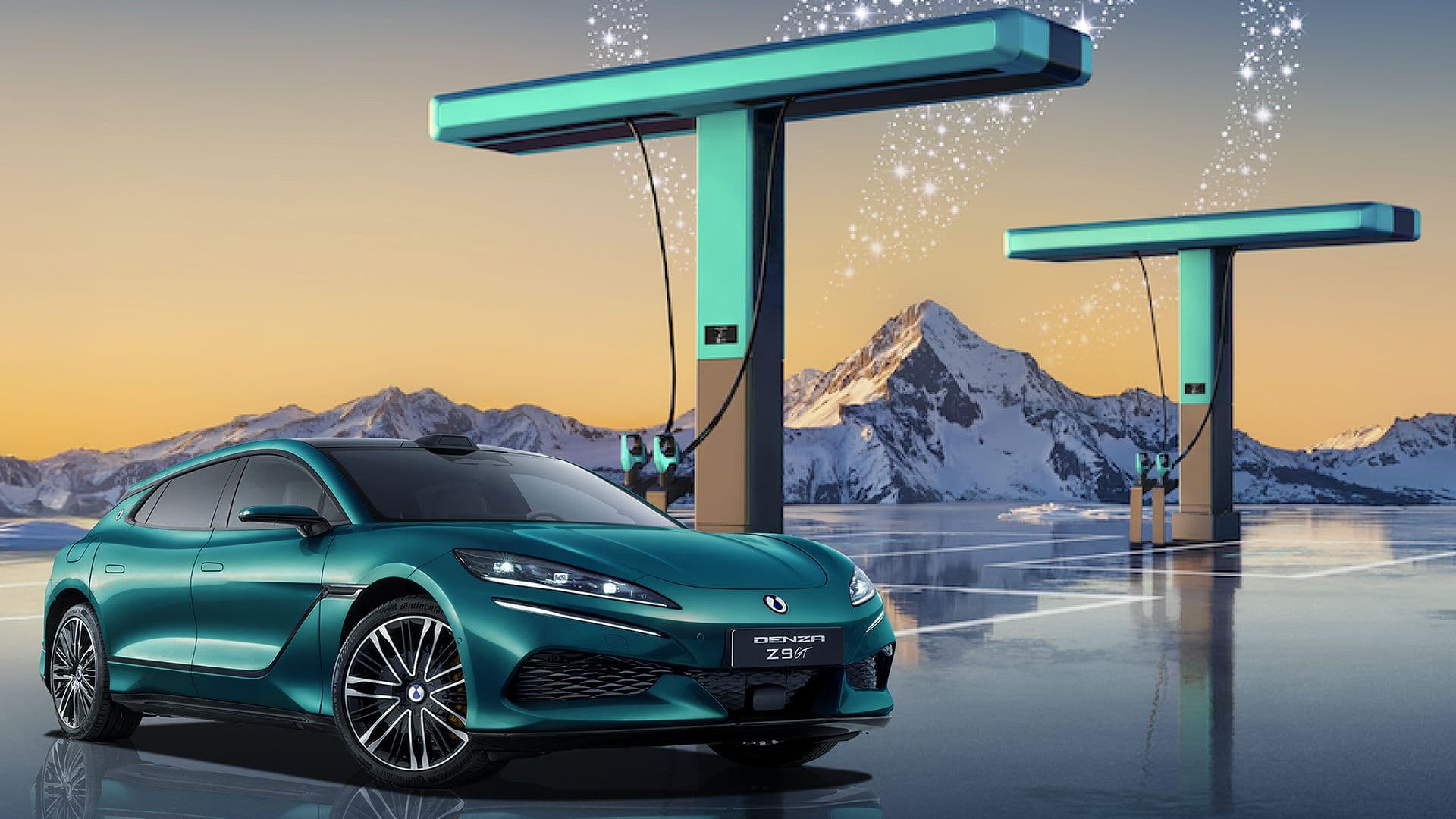
In a landmark move for electric vehicle (EV) technology, BYD’s premium brand Denza will introduce its ultra-fast-charging Z9 GT to Europe in April 2024, bringing 1.5-megawatt (MW) Flash Charging stations to the continent. The Z9 GT, which can recharge from 10% to 70% in just five minutes, represents a quantum leap in EV convenience, potentially reshaping consumer expectations for charging infrastructure. This launch comes as global automakers race to address range anxiety, with BYD positioning itself as a leader in next-generation EV technology.
- BYD’s Denza Z9 GT will launch in Europe in April 2024 with 1.5MW Flash Charging capability.
- The Z9 GT can charge from 10% to 70% in five minutes, even in extreme cold.
- BYD plans 2,000 1.5MW charging stations across Europe by 2026, starting in the UK, Germany, France, Italy, and Spain.
The Breakthrough: 1.5MW Flash Charging and Its Implications
The Denza Z9 GT’s 1.5MW charging system, already operational in China, delivers three times the power of existing ultra-fast chargers (typically 350kW). This technology enables a 10-97% charge in just nine minutes, even at -30°C, addressing a critical pain point for EV adoption: long charging times in cold weather. BYD’s ‘ready in 5, full in 9, cold add 3’ slogan underscores its confidence in reliability across climates.
How It Compares to Current EV Chargers
Most European fast-charging stations max out at 350kW, with a few 500kW outliers. BYD’s 1.5MW standard—equivalent to 1,500kW—dwarfs these, offering near-gasoline refueling speeds. However, like Tesla’s early Supercharger exclusivity, these chargers will initially serve only Denza and BYD vehicles, pressuring rivals to accelerate their own infrastructure investments.
The Denza Z9 GT: Performance and Market Positioning
Built on BYD’s bespoke e3 platform, the Z9 GT is a shooting-brake Grand Tourer with a 122kWh Blade Battery, offering up to 800km (497 miles) of range in its rear-wheel-drive variant. A high-performance version, equipped with three electric motors, boasts over 960 horsepower and a 0-62mph time under three seconds. Priced between $45,900 and $52,600 in China, the Z9 GT could undercut premium rivals like Porsche’s Taycan and Audi’s e-tron GT in Europe, despite expected import costs.
Why Denza’s Success in China Matters
Launched in China in early 2023, the Z9 GT became the fastest new-energy luxury GT to sell 10,000 units, with 5,000 orders in 36 hours. This success signals strong demand for high-performance EVs with advanced charging, a trend likely to replicate in Europe as infrastructure scales.
BYD’s European Expansion: Charging Infrastructure Plans
BYD aims to install 2,000 1.5MW Flash Charging stations across Europe by 2026, prioritizing the UK, Germany, France, Italy, and Spain. This follows China’s rapid deployment of 4,000 stations in 2023, with plans for 20,000 by year-end. The move mirrors Tesla’s Supercharger strategy, which catalyzed broader EV adoption by proving fast charging was viable.
Challenges and Industry Ripple Effects
While BYD’s technology is groundbreaking, its exclusivity may create friction. Competitors like Tesla, Porsche, and BMW will need to respond with faster chargers or risk losing customers to Denza’s convenience. Meanwhile, European governments may accelerate subsidies for high-power charging networks to meet climate goals.
Frequently Asked Questions
Frequently Asked Questions
- How does BYD’s 1.5MW charging work?
- BYD’s Flash Charging uses 1.5MW power output to deliver a 10-70% charge in five minutes, leveraging liquid-cooled cables and high-efficiency power electronics. It operates even in extreme cold (-30°C).
- Will other EVs use BYD’s charging stations?
- Initially, only Denza and BYD vehicles will access these stations. However, BYD may open them to other brands as adoption grows, similar to Tesla’s Supercharger network expansion.
- How does the Z9 GT’s price compare to rivals?
- Starting at around $45,900 in China, the Z9 GT could undercut European rivals like the Porsche Taycan (from $105,000) and Audi e-tron GT (from $102,400), though import taxes may raise the final price.