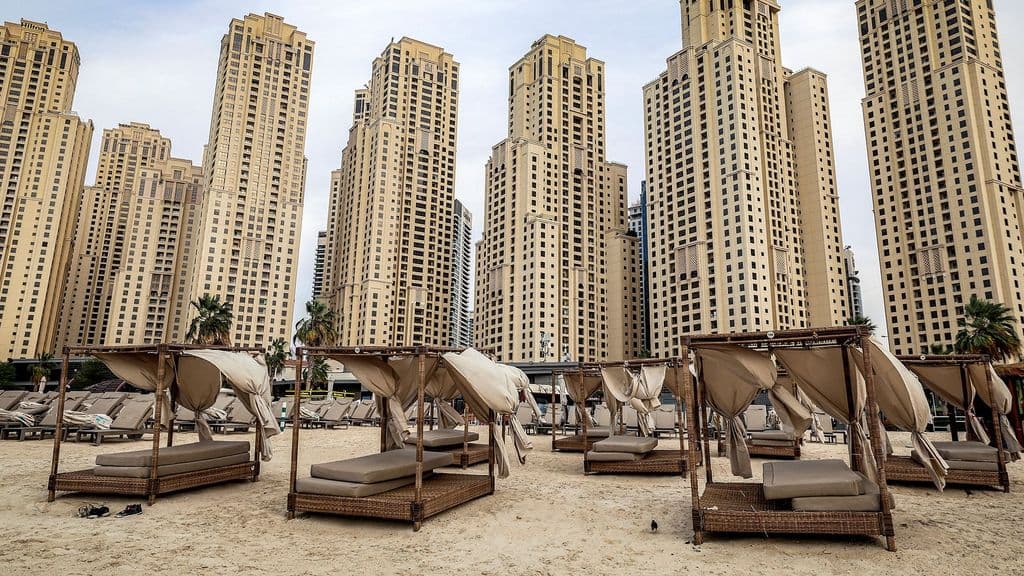
Dubai’s glittering skyline, once a magnet for 19.59 million international visitors in 2023, now casts a shadow over a city struggling to recover from the economic fallout of the Iran-Israel war. Since late February, when Iran launched retaliatory strikes targeting the UAE—including Dubai’s airports, hotels, and residential areas—the emirate’s tourism industry has been thrust into chaos. Hotels sit half-empty, restaurants slash salaries by 30%, and airlines operate skeleton crews, as the war disrupts air travel, deters tourists, and leaves migrant workers in limbo. The crisis has forced Dubai to deploy a $272 million rescue package, but experts warn the recovery hinges on whether the conflict ends soon—or drags into the summer, when the region typically thrives on seasonal travel.
Why the Iran-UAE Conflict is Crippling Dubai’s Tourism Industry
The origins of Dubai’s current crisis trace back to February 28, when Iran launched a wave of missile and drone strikes on the UAE in retaliation for Israeli and U.S. airstrikes on Iranian targets. According to UAE officials, over 2,400 projectiles were fired toward the country, with more than 90% intercepted by air defense systems. However, debris from intercepted missiles and drones still rained down on civilian areas, including Dubai’s Fairmont Hotel on Palm Jumeirah—a scene captured in viral videos that amplified global fears about travel safety. The attacks killed 11 people and injured 185 across the UAE, further chilling tourism sentiment.
Direct Hits on Key Infrastructure: Airports and Hotels Bear the Brunt
Dubai International Airport, the world’s busiest for international passengers with 95.2 million travelers in 2023, became a focal point of disruption. In the war’s early weeks, tens of thousands of tourists were stranded as flights were canceled en masse. Emirates, Dubai’s flagship airline, slashed its schedule to a skeleton operation, and while some routes have since resumed, full recovery remains uncertain. The airport’s traffic remains a fraction of pre-war levels, with industry analysts noting that global airlines are rerouting flights away from the region altogether.
Hotels, already grappling with a glut of new supply after years of expansion, are now facing occupancy rates as low as 15-20%—a stark contrast to the 80-90% levels typically seen during peak season. Mamoun Hmiden, chief business officer at travel booking platform Wego, describes the situation as one of "uncertainty disrupting everyone." Even luxury properties on Palm Jumeirah, Dubai’s iconic hotel district, have slashed prices by up to 50% during the Eid holiday period in an attempt to lure back residents. Some hotel chains have temporarily shuttered entire wings or, in extreme cases, entire properties, citing renovations—a tactic usually reserved for the quieter summer months.
Restaurants and Retail Feel the Pinch: 70% Revenue Drops and Mass Layoffs
The restaurant sector, a cornerstone of Dubai’s economy, is reeling. Natasha Sideris, founder of the Tashas hospitality group—which operates 14 outlets and employs over 1,000 people—reports that revenues have plummeted by 50% across her establishments. Outlets reliant on tourist traffic have been hit even harder, with declines of 70-80%. To avoid mass layoffs, Sideris made the painful decision to cut salaries by 30% across the board, including her own. "The current situation is brutal," she says. "I had a choice—either fire 30% of my staff or cut salaries to save jobs. I chose the latter for now."
The strain is not limited to high-end dining. A senior executive at a major restaurant chain, who requested anonymity, revealed that foot traffic at their outlets had dropped to just 15-20% of normal levels. The chain has placed more than half of its staff on unpaid leave and temporarily closed several locations. "We have no option," the executive says. "We’ve already shut down a few outlets temporarily, and the rest are operating with minimal staff."
Migrant Workers in the Crosshairs: Unpaid Leave and Financial Ruin
Behind the scenes, Dubai’s migrant workforce—who form the backbone of its hospitality and tourism sectors—are bearing the brunt of the downturn. Many have seen their hours reduced or been placed on unpaid leave, echoing the precarious conditions during the Covid-19 pandemic. A South Asian waiter at a high-end restaurant, speaking on condition of anonymity, describes the situation as feeling "like we are back to the Covid-19 period." The fear of job loss looms large, especially for workers who have taken on debt to pay recruitment fees—a common practice in the UAE’s labor system. Rights groups warn that these workers, already financially vulnerable, could face deportation if they lose their jobs and fail to secure new employment.
A Regional Domino Effect: The War’s Toll on Middle East Travel
Dubai’s crisis is part of a broader collapse in Middle East tourism. Research by Tourism Economics, a division of Oxford Economics, estimates that between 23 million and 38 million fewer travelers could visit the region in 2024, depending on the conflict’s duration. The potential loss in visitor spending ranges from $34 billion to $56 billion—a devastating blow to economies already reeling from years of instability. "If the war ends soon, there could be a quick recovery," Hmiden notes. "But if it drags on, we have to start questioning the entire summer season."
Dubai’s $272 Million Lifeline: Can Emergency Aid Stem the Bleeding?
Faced with the escalating crisis, Dubai’s government has rolled out a $272.26 million support package aimed at stabilizing businesses in the tourism sector over the next three to six months. The aid includes delayed payments on sales-related fees and tourism dirham charges—a mandatory fee levied on hotel guests. Authorities are also exploring promotional campaigns and partnerships to revive demand once the conflict subsides. "The war is out of our control," says one government official. "But we are preparing for when it ends."
The Road to Recovery: What’s at Stake for Dubai’s Future
Dubai’s tourism industry has weathered crises before, from the 2008 financial crash to the Covid-19 pandemic, but the current downturn strikes at the heart of its post-pandemic rebound. The emirate’s rapid recovery after Covid-19 was fueled by its diversification into luxury and mid-market travel, attracting visitors from South Asia, Europe, and former Soviet states. However, the war has exposed the fragility of this growth model, particularly as new hotel and short-term rental supply flooded the market just as demand evaporated. Data from AirDNA reveals that over 226,500 short-term bookings were canceled across the UAE between February 28 and March 29 alone—a 90% drop from pre-war levels.
The long-term impact hinges on several factors: the war’s duration, the resilience of global travel demand, and Dubai’s ability to reassure tourists of its safety. Industry analysts note that the city’s reputation as a safe and luxurious destination is a key asset, but one that could be undermined if the conflict persists. For now, the focus is on survival. Hotels are offering deep discounts, airlines are flying reduced schedules, and businesses are cutting costs wherever possible. Yet, as Varun Raj, cluster director of sales and marketing at Majestic Hotels, observes, "a lot of events have been cancelled, making it difficult for travelers to plan ahead."
Key Takeaways: The War’s Immediate and Long-Term Effects on Dubai
- Dubai’s tourism revenue has plunged by 50-80% since late February, with hotels operating at 15-20% occupancy and restaurants cutting salaries by 30% to avoid layoffs.
- The war has disrupted air travel, with Dubai International Airport—once the world’s busiest for international passengers—now operating at a fraction of its capacity.
- Over 226,500 short-term bookings were canceled across the UAE in the first month of the conflict, while 23-38 million fewer travelers could visit the Middle East in 2024.
- Migrant workers, already financially vulnerable, face unpaid leave and potential job losses, echoing the instability of the Covid-19 era.
- Dubai has pledged $272 million in emergency aid, but experts warn recovery depends on whether the conflict ends soon or drags into the peak summer season.
Frequently Asked Questions: Understanding Dubai’s Tourism Crisis
Frequently Asked Questions
- How many tourists visited Dubai in 2023?
- Dubai welcomed 19.59 million international visitors in 2023, cementing its status as one of the world’s most-visited cities. This figure marked a strong recovery from the pandemic years, when tourism ground to a halt.
- What triggered the current tourism collapse in Dubai?
- The collapse was triggered by Iran’s retaliatory missile and drone strikes on the UAE in late February, following Israeli and U.S. airstrikes. The attacks targeted airports, hotels, and residential areas, causing widespread travel disruptions and safety concerns.
- How is Dubai trying to revive its tourism sector?
- Dubai has announced a $272 million support package for businesses, including delayed fee payments and tourism-related charges. Authorities are also planning promotional campaigns and partnerships to attract visitors once the conflict subsides.